A routine CBC can reveal an unexpected abnormality in red blood cells.
Macrocytosis—an elevated mean corpuscular volume indicating enlarged red cells—often shows up without clear symptoms.
Knowing common causes and the right tests helps get to the diagnosis faster.
This guide covers causes from B12 and folate deficiency to alcohol, hypothyroidism, liver disease, and medications.
You’ll see why macrocytosis can exist without anemia and what symptoms or lab findings matter most.
Practical workup and treatment options are outlined so patients know when to seek care.
What is macrocytosis
Enlarged red cells describes red blood cells that are larger than typical. The term refers to cell size more than cell number.
Laboratories report red cell size as the mean corpuscular volume. The mean corpuscular volume (MCV) appears on the complete blood count (CBC) panel.
Macrocytosis is elevated mean corpuscular volume on the CBC. Many labs classify MCV greater than 100 femtoliters (fL) as macrocytosis, though mild elevations can fall between 95 and 100 fL.
A CBC with macrocytosis shows a high MCV value. Hemoglobin can be normal or low depending on the cause.
A peripheral blood smear can clarify the pattern. Megaloblastic causes may show macro-ovalocytes and hypersegmented neutrophils, while non-megaloblastic causes tend to show large cells without those features.
Common associations include vitamin B12 or folate deficiency, alcohol exposure, liver disease, hypothyroidism, and some medications. The CBC provides an initial clue, not a diagnosis.
Interpretation depends on clinical context and follow-up tests. A reticulocyte count, vitamin levels, and review of medications often guide the workup. Not medical advice; content for informational purposes only.
Can you have macrocytosis without anemia
Enlarged red cells describe red blood cells larger than normal. Clinicians measure this as an elevated mean corpuscular volume (MCV), with a typical cutoff of MCV over 100 fL.
You can have macrocytosis with normal hemoglobin. Normal hemoglobin doesn’t rule out underlying causes—lab reports can show a high MCV with hemoglobin in the reference range.
Isolated macrocytosis may be associated with vitamin B12 or folate deficiency, alcohol use, liver disease, hypothyroidism, medications, or early marrow disorders. Mild elevations (MCV 100–110 fL) often come from alcohol or thyroid changes.
Marked elevations (MCV >115 fL) may prompt a more urgent workup.
Normal hemoglobin can mask early nutrient deficiency or evolving bone marrow disease. A peripheral smear, reticulocyte count, vitamin B12 and folate tests, thyroid and liver tests help clarify the cause. Reviewing current medications often provides clues.
One example shows a person with MCV 104 fL and hemoglobin 14 g/dL. Further testing found low B12 despite no anemia—that illustrates why normal hemoglobin doesn’t exclude meaningful disease.
For related signs and symptom patterns, see anemia symptoms and causes as a reference point. Unexplained macrocytosis often needs follow-up and targeted testing. This content is for informational purposes only; consult a healthcare professional for personal evaluation.
What causes macrocytosis
The most common causes include vitamin deficiencies, alcohol use, liver dysfunction, hypothyroidism, certain medications, and bone marrow disorders. Each cause has distinct patterns that lab tests can help identify.
| Cause | Key Features | Typical MCV Range |
|---|---|---|
| Vitamin B12 deficiency | Megaloblastic changes, neurologic symptoms possible | >100 fL, often >110 fL |
| Folate deficiency | Megaloblastic changes, dietary or malabsorption link | >100 fL |
| Alcohol use | Direct marrow toxicity, reversible with abstinence | 100–110 fL |
| Hypothyroidism | Altered membrane lipids, non-megaloblastic | 100–110 fL |
| Liver disease | Membrane lipid changes, non-megaloblastic | 100–110 fL |
| Medications | Chemotherapy, antiretrovirals, antifolates | Variable |
Vitamin B12 deficiency and macrocytosis
Vitamin B12 deficiency (impaired cobalamin availability) can cause megaloblastic changes. Megaloblastic marrow shows delayed nuclear maturation while the cytoplasm matures normally.
That mismatch produces large precursors and later enlarged red cells. Mean corpuscular volume (MCV) often rises above 100 fL on a CBC.
The pernicious anemia link reflects autoimmune loss of intrinsic factor and may be a common cause in older adults. Serum B12 and methylmalonic acid testing usually help clarify the diagnosis.
Neurologic manifestations may include numbness, gait instability, and cognitive changes. These signs can appear with or without frank anemia.
Injections or oral replacement enter the diagnostic and management discussion; background on injection timing appears at vitamin B12 shot duration. Always consult a qualified healthcare professional for medical advice.
Folate deficiency and macrocytosis
Folate (vitamin B9) supports DNA synthesis and rapid cell division in bone marrow. Low folate impairs nuclear replication and slows red cell maturation.
Common causes include low dietary intake and malabsorption from celiac disease or inflammatory bowel disease. Increased needs in pregnancy and some medications that affect folate metabolism also contribute.
Low intake or missed supplementation links to folic acid uses and benefits.
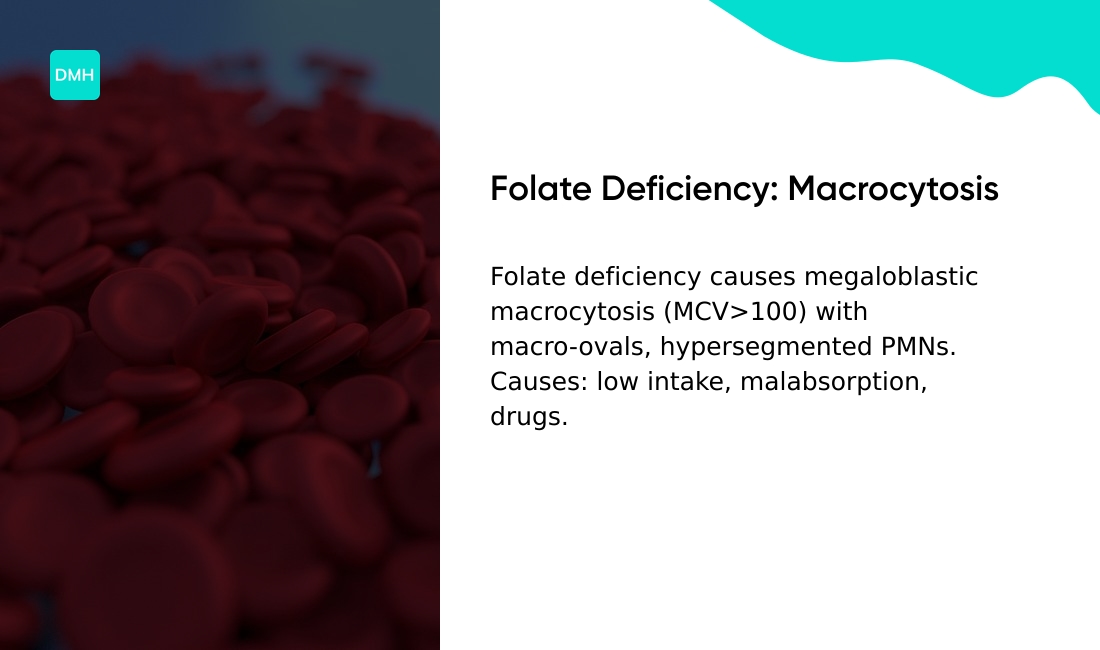
Impaired DNA synthesis produces megaloblastic changes in marrow. Cells grow but fail to divide, creating enlarged red cells. You may see elevated MCV levels on a CBC, often above 100 fL.
Peripheral smear may show macro-ovalocytes and hypersegmented neutrophils. These findings may present as folate deficiency macrocytosis and can overlap with vitamin B12 deficiency macrocytosis. Consult a qualified healthcare professional for personalized evaluation; not medical advice.
Enlarged red blood cells characterize alcohol-related macrocytosis. MCV often exceeds about 100 fL.
Alcohol-related macrocytosis follows direct toxic effects of alcohol on bone marrow. Alcohol can impair erythropoiesis and alter red cell membranes.
Some studies suggest elevated MCV appears in a substantial proportion of heavy drinkers, sometimes near 40% to 50%. Reported rates vary by population and cutoff values.
Reversibility with abstinence often occurs. MCV can fall toward normal within 8–12 weeks after sustained abstinence, reflecting new red cell production.
Distinction from vitamin deficiency matters. Peripheral smear in alcohol-related cases may lack classic megaloblastic features, though concurrent B12 or folate deficiency can coexist and should be tested.
Testing commonly includes CBC, peripheral smear, and B12 and folate levels to guide the macrocytosis workup. Always consult a qualified healthcare professional for advice specific to your situation.
Hypothyroidism and liver disease macrocytosis
Thyroid dysfunction and chronic liver disease may produce enlarged red blood cells. Macrocytosis (MCV >100 fL) may appear on your CBC as an elevated mean corpuscular reading, commonly in the 100–110 fL range.
Altered lipid handling in these conditions can change red cell shape. The liver and thyroid influence cholesterol and phospholipid balance in membranes, which can cause altered membrane lipids and slower red cell maturation.
The result is non-megaloblastic red cells without classic megaloblastic features.
Peripheral smear often lacks macro-ovalocytes and hypersegmented neutrophils. Reticulocyte counts tend to stay near normal. MCV may improve as thyroid function or liver status changes, but timing varies by case. Always consult a qualified healthcare professional for medical advice specific to your situation.
Medications that cause macrocytosis
Certain drugs can cause macrocytosis (enlarged red blood cells). An MCV above 100 fL commonly defines macrocytosis on a CBC.
Many agents act by interfering with DNA synthesis or by disrupting folate metabolism.
Common culprits include:
- Chemotherapy agents such as 5-fluorouracil, cytarabine, and hydroxyurea
- Antiretrovirals like zidovudine
- Antifolates such as methotrexate
- Some antibiotics, for example trimethoprim, which can impair folate pathways
Drug-induced macrocytosis often appears weeks to months after starting therapy. Your clinician may monitor MCV on CBC and test vitamin B12 and folate if MCV rises.
Drug changes often lead to MCV decline over months. Vitamin replacement may correct megaloblastic changes when deficiency exists. Always consult a qualified healthcare professional for medical advice specific to your situation.
What are the symptoms of macrocytosis
Isolated macrocytosis often causes no symptoms. Many people have an elevated mean corpuscular volume (MCV) found only on a CBC.
Enlarged red blood cells refers to red cells with an MCV commonly above 100 fL. You may see macrocytosis on a CBC with normal hemoglobin.
Symptoms usually arise from the underlying cause. When does low hemoglobin actually produce noticeable effects? Low hemoglobin can produce fatigue, shortness of breath, pallor, or rapid heartbeat.
Vitamin deficiencies may add other signs. Vitamin B12 deficiency may cause numbness, tingling, balance problems, or cognitive changes.
Alcohol-related macrocytosis often appears with mild lab changes and few symptoms. Liver disease or hypothyroidism can produce mild symptoms tied to those conditions.
One example is an MCV of 105 fL with normal hemoglobin. That pattern may still merit evaluation if new symptoms appear.
You may want prompt evaluation for persistent fatigue, new neurological symptoms, or an abnormal CBC with low hemoglobin. Tests often include repeat CBC, reticulocyte count, vitamin B12 and folate levels, and thyroid or liver tests. Always consult a qualified healthcare professional for advice specific to your situation.
How is macrocytosis diagnosed and worked up
Macrocytosis (enlarged red blood cells) often appears as an elevated MCV on a CBC. Clinicians start with simple, targeted tests to find common causes.
They examine the peripheral blood smear for macro-ovalocytes and hypersegmented neutrophils. A smear differentiates megaloblastic from non-megaloblastic changes.
Laboratory steps include a reticulocyte count to assess marrow response. Low reticulocytes may point to impaired production.
Order serum vitamin B12 and folate levels. Serum methylmalonic acid or homocysteine may increase diagnostic accuracy. Consider vitamin B12 testing when neurologic signs appear.
Screen for liver disease, thyroid function, alcohol use, and offending medications. Review medication lists for methotrexate, zidovudine, or chemotherapy agents that raise MCV.
When routine testing is unrevealing, pursue bone marrow studies and cytogenetics to evaluate myelodysplastic syndromes. Actually, one Blood study found that 27.9% of patients with unexplained macrocytosis later developed worsening blood count abnormalities or were diagnosed with a primary bone marrow disorder—see the significance of unexplained macrocytosis for details on follow-up monitoring.
Document trends in MCV and blood counts over time. Persistent unexplained macrocytosis may warrant hematology referral and serial evaluation every 6 months. Use clear results and timing to guide next steps. Always consult a qualified healthcare professional for medical advice specific to your situation.
You might also like: What Happens at Your First Hematology Appointment
How is macrocytosis treated
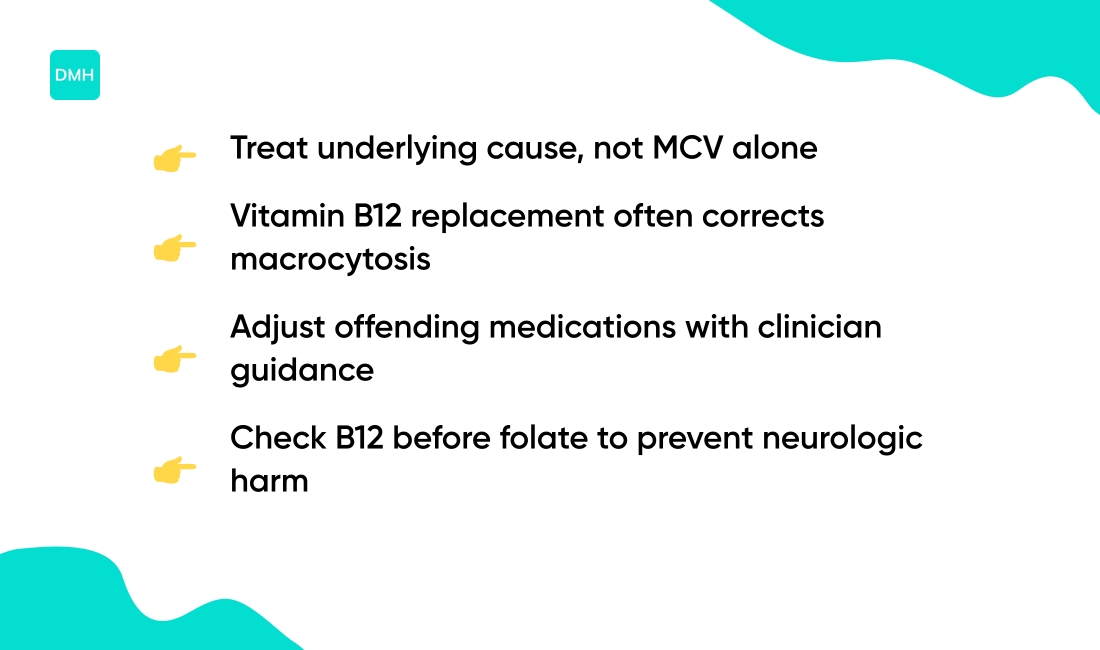
Macrocytosis (enlarged red blood cells; MCV >100 fL) may reflect distinct causes that direct treatment. Therapy targets the underlying cause rather than the lab value alone.
- Vitamin B12 replacement: Vitamin B12 deficiency often produces megaloblastic anemia. B12 repletion may raise the reticulocyte count within 3–7 days and can lower MCV over weeks to months.
- Medication regimen adjustment: Several drugs can raise MCV, including chemotherapy agents and some antiretrovirals. Reviewing medications with a clinician may identify agents to stop or substitute when safe.
- Thyroid hormone therapy: Hypothyroidism-associated macrocytosis may improve after thyroid hormone normalization, with effect sizes that can vary by patient.
- Alcohol-related macrocytosis often improves with abstinence or reduced intake. MCV changes may take 4–8 weeks to regress, and nutritional support may help when deficiencies coexist.
- Bone marrow disorders need hematology evaluation. Management can include disease-specific therapies, supportive transfusions, or close monitoring depending on diagnosis and severity.
- Folate replacement corrects folate-deficiency macrocytosis more rapidly than B12 in some cases. Confirm B12 status before folate therapy to avoid masking neurologic risk.
Diagnostic tests and follow-up guide timing and choice of therapy. For practical primary care guidance, see the AAFP review on macrocytosis. Always consult a qualified healthcare professional for advice specific to your situation; not medical advice, content for educational purposes.
You’ll also like: What Are Hematocrit Levels and Why Do They Matter?
Megaloblastic anemia and macrocytosis
Megaloblastic anemia is a form of macrocytosis caused by impaired DNA synthesis. Vitamin B12 or folate deficiency often drives the change.
Mean corpuscular volume (MCV) usually rises above 100 fL. Values commonly fall between 100 and 115 fL in affected patients.
Peripheral smear shows distinctive findings. Key signs include macro-ovalocytes and hypersegmented neutrophils. Neutrophils often show five or more lobes, while red cells appear large and oval rather than round.
Non-megaloblastic macrocytosis has different patterns. Alcohol use, liver disease, hypothyroidism, and some medications can raise MCV without megaloblastic morphology. Smears in those cases typically lack macro-ovalocytes and hypersegmented neutrophils.
Clinical workup commonly includes serum B12 and folate levels, thyroid function tests, liver tests, and a medication review. A reticulocyte count helps assess marrow response, and bone marrow biopsy becomes relevant when results remain unexplained.
If low red cell counts appear alongside macrocytosis, see the low red blood cell count resource for related information.
Evidence supports targeted testing based on presentation. How do you know which test to order first? Findings can vary from person to person. Always consult a qualified healthcare professional for medical advice specific to your situation; not medical advice, content for educational purposes.
Read also: How to Read Blood Test Results: A Simple Guide
Educational notice: This content is provided for informational and educational purposes only and is not intended as medical advice. Always consult a qualified healthcare professional for medical concerns.