That uneasy moment when your lab results show high bilirubin can spark a lot of questions.
High bilirubin doesn’t always mean severe liver disease, but it can point to conditions ranging from harmless Gilbert syndrome to hemolysis or bile duct obstruction.
Understanding what elevated bilirubin means and which tests doctors use helps avoid unnecessary worry and speeds appropriate care.
This article breaks down bilirubin types (direct versus indirect), normal ranges, and common causes organized by whether the problem is before, inside, or after the liver.
You’ll learn the symptoms that suggest a liver-related issue, which lab patterns to watch for, and when to seek urgent care.
By the end, you’ll be able to read your bilirubin results with more confidence and know what questions to ask your clinician.
What is bilirubin and what does high bilirubin mean
Bilirubin is a yellow pigment made when red blood cells break down. The liver removes it from the bloodstream.
Unconjugated (indirect) bilirubin leaves red cells and travels to the liver. The liver converts it into conjugated (direct) bilirubin. Bile carries conjugated bilirubin into the intestine for elimination.
A total bilirubin level in adults is often about 0.1 to 1.2 mg/dL (MedlinePlus, NIH). Readings above this range are often labeled hyperbilirubinemia. Jaundice (yellowing of the skin or eyes) commonly appears when levels exceed about 2.5 to 3 mg/dL.
Elevated bilirubin may reflect one of three problems. Increased red cell breakdown can raise indirect bilirubin. Reduced liver processing can raise both types. Blocked bile flow in the ducts raises direct bilirubin.
Common causes include hemolysis, hepatitis or cirrhosis, and bile duct obstruction from gallstones or tumors. For instance, a patient with gallstones blocking the common bile duct might show direct bilirubin climbing to 5 mg/dL within days. Elevated values often need fractionated testing to identify the source.
Doctors review liver function tests and other labs to interpret results. A high bilirubin causes list helps guide further testing and imaging. For guidance on reading lab reports, see how to read blood test results.
Not medical advice. Content for educational purposes only. If you have symptoms such as jaundice, dark urine, or abdominal pain, consult a qualified healthcare professional.
What is a normal bilirubin level and when is bilirubin too high
Bilirubin normal range usually means total bilirubin between 0.1 and 1.2 mg/dL in adults (MedlinePlus, NIH). Direct (conjugated) bilirubin often ranges up to about 0.3 mg/dL. Indirect (unconjugated) equals total minus direct.
Hyperbilirubinemia describes serum bilirubin above the laboratory reference range. Mild elevations may be benign or genetic. Marked elevations often indicate liver, biliary, or blood disorders.
Total bilirubin level above about 2 to 3 mg/dL commonly produces visible jaundice (yellowing of skin and eyes). Some clinicians seek evaluation for levels above 2 mg/dL. Levels above 5 mg/dL suggest significant hepatic or biliary dysfunction and prompt further testing.
Very high values such as 10 to 20 mg/dL may signal severe liver failure, bile duct obstruction, or massive hemolysis. Clinical context matters. Liver enzymes, imaging, and fractionated bilirubin tests help identify the source.
Evidence varies by condition and lab methods. Guidelines and thresholds can differ across institutions and studies. Not medical advice. Content for educational purposes only.
If you have jaundice, dark urine, pale stools, severe abdominal pain, or worsening fatigue, consult a qualified healthcare professional for personalized evaluation.
What is the difference between direct and indirect bilirubin
Bilirubin forms from the breakdown of red blood cells. The liver changes it so the body can remove it.
Fractionated bilirubin testing separates bilirubin into two parts. One part is unconjugated bilirubin. Clinicians call this indirect bilirubin.
Indirect bilirubin travels in blood bound to albumin. The liver must make it water‑soluble. That process is called conjugation.
Conjugated bilirubin appears after the liver adds a chemical tag. Doctors call this direct bilirubin.
Normal total bilirubin often falls near 0.1–1.2 mg/dL. Direct bilirubin often measures under 0.3 mg/dL. Labs report total and direct values. Indirect equals total minus direct.
Elevated indirect bilirubin may point to excess red cell breakdown, reduced conjugation, or benign conditions like Gilbert syndrome. Elevated direct bilirubin may indicate liver excretion problems or bile flow blockage, such as hepatitis, cholestasis, or bile duct obstruction.
Pattern of results helps localize the problem. High indirect with normal liver enzymes suggests hemolysis. High direct with raised alkaline phosphatase suggests biliary obstruction.
Here’s an example: total bilirubin 4.0 mg/dL with direct 0.5 mg/dL implies mainly indirect elevation. That pattern often aligns with prehepatic causes.
Not medical advice. Content for educational purposes only. If you have symptoms like jaundice or dark urine, consult a qualified healthcare professional.
What causes high bilirubin
Bilirubin is a yellow pigment formed from red blood cell breakdown. The liver normally conjugates and clears bilirubin. Elevated bilirubin levels (hyperbilirubinemia) may reflect impaired liver processing or bile flow.
Common liver causes include hepatitis (liver inflammation), cirrhosis (scarring that reduces function), alcoholic liver disease, autoimmune hepatitis, and drug‑induced liver injury. These conditions can raise total bilirubin above typical ranges, sometimes above 2 mg/dL in more severe cases (NIH).
Lab patterns help sort causes. A rise in direct (conjugated) bilirubin often points to liver or bile duct problems. A rise in indirect (unconjugated) bilirubin may reflect impaired conjugation.
Abnormal liver enzymes and imaging add diagnostic detail. For example, a person with acute viral hepatitis might show AST and ALT levels climbing above 500 U/L alongside rising bilirubin.
Symptoms may include jaundice (yellow eyes or skin), dark urine, pale stools, itch, and fatigue. Some people have mild lab changes without symptoms.
Not medical advice. Content for educational purposes only. If you have symptoms, consult a qualified healthcare professional.
Bile duct and gallbladder causes
Blockage in the bile system can raise bilirubin levels. Bile carries bilirubin from the liver to the intestine. Obstruction keeps bilirubin in the blood.
Gallstones and cholangitis can block bile flow. Cholecystitis refers to inflammation of the gallbladder. Tumors, strictures, and scarring may narrow the bile ducts.
Obstructive problems tend to cause a rise in conjugated (direct) bilirubin. Patients may notice jaundice, dark urine, and pale stools. Blood tests often show elevated alkaline phosphatase; read more about elevated alkaline phosphatase.
Bile duct obstruction usually needs imaging for diagnosis. Ultrasound and MRCP are commonly used. Endoscopic procedures can both diagnose and relieve some blockages.
Direct bilirubin elevation often signals a post‑hepatic problem. Not medical advice. Content for educational purposes only. For symptoms or abnormal tests, consult a qualified healthcare professional.
Hemolysis means rapid breakdown of red blood cells. This releases hemoglobin that the liver converts into bilirubin.
Accelerated destruction can cause indirect bilirubin elevations. The liver may not process the excess quickly enough. Total bilirubin and indirect (unconjugated) bilirubin rise on a bilirubin test.
Common causes include autoimmune hemolytic anemia, hereditary disorders like sickle cell or thalassemia, and medication- or infection-related hemolysis. These conditions often lower hemoglobin and haptoglobin and raise lactate dehydrogenase.
Jaundice is a typical sign. Lab clues include a high reticulocyte count and isolated indirect bilirubin elevation. Levels often range from mild (around 2 mg/dL) to higher values in severe cases, though values vary by patient.
This pattern may be associated with hyperbilirubinemia without primary liver disease (NIH, peer‑reviewed literature). Findings can vary from person to person. Not medical advice. Content for educational purposes only. If you have jaundice or abnormal bilirubin levels, consult a qualified healthcare professional.
Gilbert syndrome and benign causes
Gilbert syndrome is a common genetic condition that causes mild indirect bilirubin elevation. It stems from reduced UGT1A1 activity, an enzyme the liver uses to conjugate bilirubin.
Estimates vary, but it affects about 3–7% of people (NIH, MedlinePlus). Episodes often occur when people fast, feel stressed, have an infection, or exercise intensely.
Symptoms can be triggered by fasting or stress. Blood tests typically show isolated indirect bilirubin elevation with normal liver enzymes. Urine usually stays normal because unconjugated bilirubin isn’t water soluble.
Most individuals remain asymptomatic and face no liver damage. This pattern can produce a mildly high bilirubin reading without liver disease.
Lab patterns help distinguish it from hemolysis or cholestasis (clinical summaries, case series). If bilirubin rises markedly or symptoms develop, consult a healthcare professional for evaluation.
Not medical advice. Content for educational purposes only. Always consult a qualified healthcare professional.
Other factors that can raise bilirubin
Some factors can cause mild, transient increases in bilirubin without liver disease.
Dehydration and fasting concentrate blood and can raise total bilirubin by a small amount. Certain prescription medications can interfere with bilirubin processing. Examples include atazanavir and rifampin, which may increase indirect or direct bilirubin (NIH).
Strenuous physical activity can cause mild hemolysis and a temporary jump in indirect bilirubin. Acute illness, short-term fasting, and recent surgery may cause transient elevations. Gilbert syndrome can amplify these effects.
Most transient rises stay under 3 mg/dL and cause no jaundice. Doctors often repeat a bilirubin test. They check liver function tests to see if elevation persists and whether direct or indirect bilirubin is higher.
Not medical advice. Content for educational purposes only. For jaundice, dark urine, or persistent symptoms, consult a qualified healthcare professional.
What are symptoms of high bilirubin
High bilirubin (elevated bilirubin or hyperbilirubinemia) often signals altered bilirubin processing. Bilirubin is a yellow pigment from red blood cell breakdown that the liver usually clears (MedlinePlus, NIH).
Visible signs vary by level and cause. Jaundice usually appears when total bilirubin rises above about 2–3 mg/dL (MedlinePlus).
- Yellow skin and eyes — a classic sign of jaundice
- Dark brown urine — common when conjugated (direct) bilirubin is high
- Pale clay stools — suggests reduced bile flow into the gut
- Intense itching (pruritus) from bile salt buildup
- Fatigue and general weakness
- Abdominal pain, often in the right upper quadrant
- Low-grade fever if infection or cholangitis exists
Symptom patterns help narrow causes. Dark urine with pale stools often reflects bile duct obstruction or cholestasis. Yellowing without dark urine often indicates unconjugated bilirubin elevation, as seen with hemolysis or Gilbert syndrome.
Are you experiencing any of these warning signs? Seek urgent care if severe abdominal pain, high fever, confusion, bleeding, or rapid worsening of jaundice occur. These signs may indicate obstructive cholangitis, acute liver failure, or another emergency that may require immediate evaluation.
Not medical advice. Content for educational purposes only. Always consult a qualified healthcare professional for medical advice specific to an individual situation.
High bilirubin may be liver-related when the conjugated (direct) fraction rises. Fractionated bilirubin separates direct (conjugated) from indirect (unconjugated) bilirubin. Lab patterns guide the likely source.
Direct bilirubin elevation that exceeds 0.3 mg/dL or makes up more than 20% of total bilirubin often points to hepatic or biliary problems (NIH). Total bilirubin above 2–3 mg/dL commonly produces visible jaundice.
Abnormal liver enzymes help narrow the cause. Marked AST and ALT increases (for example, >100 U/L) suggest liver cell injury such as viral hepatitis or drug-induced liver injury. See the AST (SGOT) blood test for typical enzyme patterns.
Predominant alkaline phosphatase and GGT elevation with high direct bilirubin suggests cholestasis or bile duct blockage. Abnormal liver enzymes plus symptoms change probability.
Yellow eyes or skin, dark urine, pale stools, right upper quadrant pain, or itching may accompany liver-related causes. Fever with jaundice may indicate infected bile duct disease.
Imaging that shows bile duct dilation or stones supports obstruction. Persistent direct hyperbilirubinemia with rising enzymes and abnormal imaging often prompts specialist evaluation. Mild isolated indirect elevations often reflect hemolysis or benign conditions like Gilbert syndrome.
Bile duct obstruction patterns, enzyme ratios, symptom clusters, and imaging together make liver or biliary causes more likely. Not medical advice. Content for educational purposes only. If you have symptoms, consult a qualified healthcare professional.
What tests check bilirubin levels and liver function
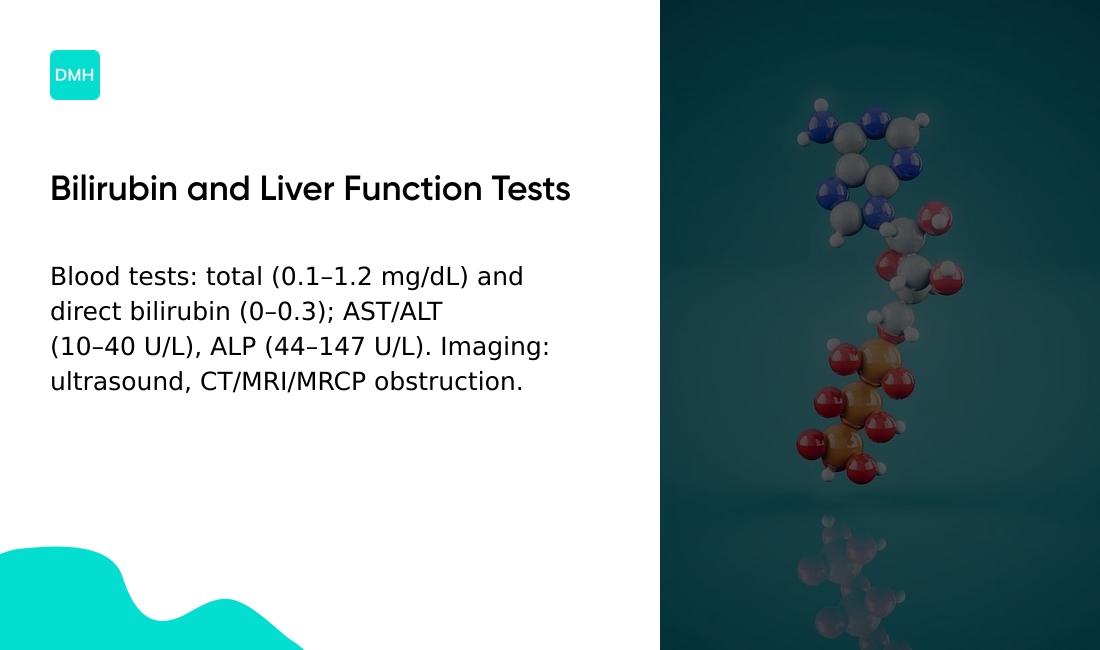
Clinicians use blood tests and imaging to evaluate bilirubin and liver function. A standard blood panel reports total bilirubin and a split into direct (conjugated) and indirect (unconjugated) values.
The fractionated bilirubin testing helps point toward liver processing problems or increased red cell breakdown (hemolysis). Typical total bilirubin falls under 1.2 mg/dL and direct bilirubin under 0.3 mg/dL, though ranges vary by lab (NIH).
The liver function tests panel lists AST, ALT, alkaline phosphatase (ALP), gamma‑glutamyl transferase (GGT), albumin and prothrombin time (INR). AST or ALT above about 40 U/L often signals liver injury. ALP elevations with high GGT suggest cholestasis or bile duct obstruction.
Normal ALP commonly ranges 44–147 U/L depending on the lab. Imaging includes abdominal ultrasound to detect gallstones or bile duct dilation. CT, MRI and MRCP provide detailed views when obstruction or mass is suspected.
| Test | What It Checks | Typical Range |
|---|---|---|
| Total Bilirubin | Overall bilirubin level | 0.1–1.2 mg/dL |
| Direct Bilirubin | Conjugated fraction | 0–0.3 mg/dL |
| AST / ALT | Liver cell injury | 10–40 U/L |
| Alkaline Phosphatase | Bile duct function | 44–147 U/L |
Hepatitis serology (A, B, C), autoimmune markers, and viral PCR tests can identify infectious or immune causes. Tests for hemolysis include complete blood count, reticulocyte count, haptoglobin and lactate dehydrogenase.
Clinicians integrate lab patterns, symptoms such as jaundice or dark urine, and imaging findings to narrow causes. See blood test markers for common lab meanings and typical ranges.
Patterns can vary from person to person and may be subtle. Not medical advice. Content for educational purposes only. Consult a qualified healthcare professional for personal medical advice.
Read also: What Is a Dangerous INR Level and Warning Signs
How to lower high bilirubin
High bilirubin means excess bilirubin in the blood. Bilirubin forms when red blood cells break down. Treatment depends on the underlying cause. Labs and imaging guide care.
Liver disease can raise bilirubin. Antiviral therapy for hepatitis and measures to reduce alcohol exposure may improve liver function over weeks (NIH). Bile duct obstruction often needs mechanical relief.
ERCP can remove stones or place stents. Surgery may follow when endoscopy isn’t possible. Hemolysis raises indirect bilirubin. Autoimmune cases may respond to steroids. Severe anemia may need transfusion support.
Lifestyle modifications help some people with mild elevations. Limiting alcohol and gradual weight loss for fatty liver can lower liver enzymes and bilirubin. Some cholestatic conditions may respond to ursodeoxycholic acid over months. Response varies by diagnosis and by individual.
Medication-induced bilirubin rises occur with certain drugs. A clinician review of current medicines may identify contributing agents. Gilbert syndrome causes mild indirect bilirubin elevation. Episodes often ease with rest, hydration, and avoidance of prolonged fasting.
Normal total bilirubin is about 0.1–1.2 mg/dL. Levels above 2–3 mg/dL often cause jaundice and prompt further testing. Ultrasound or CT can detect obstruction or liver lesions. Monitoring uses repeat bilirubin and liver function tests. Persistent or rising levels may lead to specialist referral.
Not medical advice. Content for educational purposes only. If you have yellow skin, dark urine, severe itching, or marked fatigue, consult a qualified healthcare professional.
You’ll also like: Pancreatitis When To Worry: Warning Signs Guide
Is high bilirubin serious and when to see a doctor
High bilirubin refers to elevated bilirubin levels in the blood. Bilirubin is a yellow pigment from red blood cell breakdown that the liver usually clears.
Normal total bilirubin often falls between 0.1 and 1.2 mg/dL (Mayo Clinic). Visible jaundice tends to appear above about 2.5–3 mg/dL.
Mild rises may reflect benign causes such as Gilbert syndrome. Gilbert syndrome affects roughly 3–7% of people and often causes intermittent, mild indirect bilirubin elevation. Marked rises more often signal liver injury, hemolysis, or bile duct obstruction.
These causes may be linked to serious liver disease or acute biliary problems. How do you know when to worry? Watch for these urgent medical attention signs:
- High fever with jaundice and severe right upper quadrant pain
- Confusion, drowsiness, or markedly reduced alertness
- Rapidly worsening jaundice, pale stools, or very dark urine
- Easy bleeding, vomiting blood, or fainting
Lab patterns help differentiate causes. High direct (conjugated) bilirubin with elevated alkaline phosphatase suggests cholestasis. High indirect bilirubin with anemia suggests hemolysis.
Levels above 3 mg/dL or progressive jaundice often prompt urgent evaluation. Clinical context, liver function tests, and imaging guide diagnosis. Guidance on abnormal blood tests is available at when to worry about abnormal blood tests.
Not medical advice. Content for educational purposes only. If you have symptoms, consult a qualified healthcare professional.
Read also: When To Go To Hospital For Gallbladder Attack
Educational notice: This content is provided for informational and educational purposes only and is not intended as medical advice. Always consult a qualified healthcare professional for medical concerns.