A high ferritin on a blood test can be alarming.
But here’s the thing — it’s often not caused by excess iron.
Misinterpreting elevated ferritin leads many patients and clinicians to chase hemochromatosis when inflammation, liver issues, or metabolic conditions are more likely culprits.
This guide explains how to tell iron overload apart from other high ferritin causes using transferrin saturation, liver enzymes, CRP, and clinical context.
You’ll learn common non-iron causes like infection, fatty liver, alcohol use, kidney disease, and cancer, plus which tests to order next.
You’ll also understand when ferritin is worrying (levels above 1,000 µg/L, for instance), and practical steps to lower levels safely when needed.
Clear interpretation prevents unnecessary treatment and points you toward the right follow-up and management.
What is ferritin and why is it tested
Ferritin is a protein that stores iron inside cells. Serum ferritin reflects the body’s iron stores and informs clinicians about iron balance.
Ferritin also acts as an acute-phase reactant. Levels rise with inflammation and cell damage, especially when the liver is injured.
Normal adult serum ferritin often ranges roughly 20–300 µg/L, depending on age and lab. Readings above 1,000 µg/L frequently prompt specialist referral under many clinical guidelines.
Doctors order a serum ferritin test to assess iron stores and inflammation. A ferritin result sits among other blood test markers used to interpret iron status.
Ever wonder why one number can mean so many different things? Elevated ferritin may reflect inflammation, liver disease, metabolic issues, or iron excess. Understanding high ferritin causes helps guide follow-up testing and treatment planning.
Clinicians often check a transferrin saturation test alongside ferritin to distinguish true iron overload from inflammatory elevation. Some studies suggest inflammatory markers like CRP rise with ferritin in many cases.
Always consult a qualified healthcare professional for medical advice specific to your situation.
What is considered a high ferritin level
Ferritin measures stored iron in the body and rises with inflammation or liver injury. Serum ferritin helps assess iron status and inflammatory activity.
Typical ferritin normal range values vary by lab and age. Adult men often fall between 24 and 336 µg/L. Adult women often fall between 11 and 307 µg/L. Children and infants show different ranges; newborns may have higher values than older children.
Clinicians interpret single values alongside other tests. Mild elevation commonly appears as values above typical lab limits.
Some clinicians flag ferritin over 300 µg/L in men or over 200 µg/L in women for further testing. Levels between 200 and 1,000 µg/L can reflect inflammation, liver disease, metabolic factors, or iron excess.
Very high values usually demand urgent attention. Per clinical guidelines, ferritin above 1,000 µg/L often warrants referral to a specialist for detailed evaluation. A transferrin saturation test and liver enzymes usually follow to clarify cause.
Interpretation can vary by age, sex, and clinical context. Some studies note overlap between iron overload and inflammatory causes. Not medical advice, content for educational purposes, consult a professional.
Is high ferritin the same as iron overload
High ferritin often alarms people. Ferritin stores iron and rises with inflammation or cell damage.
Here’s what many don’t realize: only about 10% of cases with elevated ferritin reflect true iron overload such as hereditary hemochromatosis. Roughly 90% result from inflammation, liver disease, infection, metabolic conditions, or malignancy.
Transferrin saturation helps separate iron overload from inflammatory ferritin rise. When ferritin is high but transferrin saturation is normal, inflammation or liver injury often explain the lab result and rank among common high ferritin causes.
A high serum ferritin with normal iron studies often links to elevated CRP, fatty liver, or recent infection. Only testing for transferrin saturation and related labs can clarify if iron overload exists.
You can discuss these results with a clinician to plan targeted testing and follow-up. Always consult a qualified healthcare professional for medical advice specific to your situation.
Common causes of high ferritin that aren’t iron overload
Inflammation and infection
Acute and chronic inflammation raise ferritin as an acute phase reactant. The liver makes and releases ferritin during inflammation.
Autoimmune diseases, bacterial and viral infections, and tissue injury increase ferritin. These represent common high ferritin causes. Levels may rise with CRP and other inflammatory markers (see elevated CRP levels).
CRP above 10 mg/L often indicates significant inflammation. Very high ferritin can reflect immune activation in hemophagocytic syndromes and severe infections. Levels in these settings can exceed several thousand micrograms per liter.
Interpreting serum ferritin requires checking transferrin saturation and liver tests. Those tests help separate inflammation from iron overload.
Some people may have elevated ferritin levels with normal iron studies, suggesting inflammation. Clinical context and trend data matter more than a single value.
Always consult a qualified healthcare professional for medical advice specific to your situation.
Liver disease and fatty liver
Liver injury often raises ferritin. Hepatocyte damage releases stored iron proteins into blood.
Fatty liver disease, also called MASLD, causes chronic liver inflammation and cell stress. Ferritin works as an acute-phase reactant and rises with liver inflammation. Hepatitis and alcohol-related liver stress cause cell breakdown and a direct rise in serum ferritin.
Some studies suggest ferritin can reach several hundred µg/L with significant liver injury. Values over 300–500 µg/L appear commonly in inflammatory liver conditions, and levels above 1,000 µg/L prompt urgent evaluation according to clinical guidance.
How can you tell if it’s your liver? Elevated ferritin often comes with high liver enzymes and raised CRP. Normal transferrin saturation alongside high ferritin points toward liver damage or inflammation rather than iron overload.
Not medical advice, content for educational purposes. Always consult a qualified healthcare professional for medical advice specific to your situation.
Metabolic syndrome, obesity, and diabetes
Metabolic syndrome, obesity, and type 2 diabetes often show a rise in elevated ferritin levels. Low-grade inflammation and liver fat can raise ferritin even when iron stores stay normal.
Insulin resistance drives excess fat into the liver. This promotes inflammation and hepatocyte stress, which can release ferritin into the blood. The insulin resistance link may be seen across many people with metabolic disease.
Some studies suggest 30–70% of people with metabolic-associated steatotic liver disease have higher ferritin. That range varies by population and testing methods.
Transferrin saturation often stays normal in these cases, which suggests inflammation or liver injury rather than iron overload. Doctors may interpret ferritin alongside CRP and liver enzymes. Improving metabolic health may lower ferritin over time, according to available research.
You may discuss abnormal results and monitoring options with your clinician. Not medical advice, content for educational purposes, consult a professional.
Alcohol use
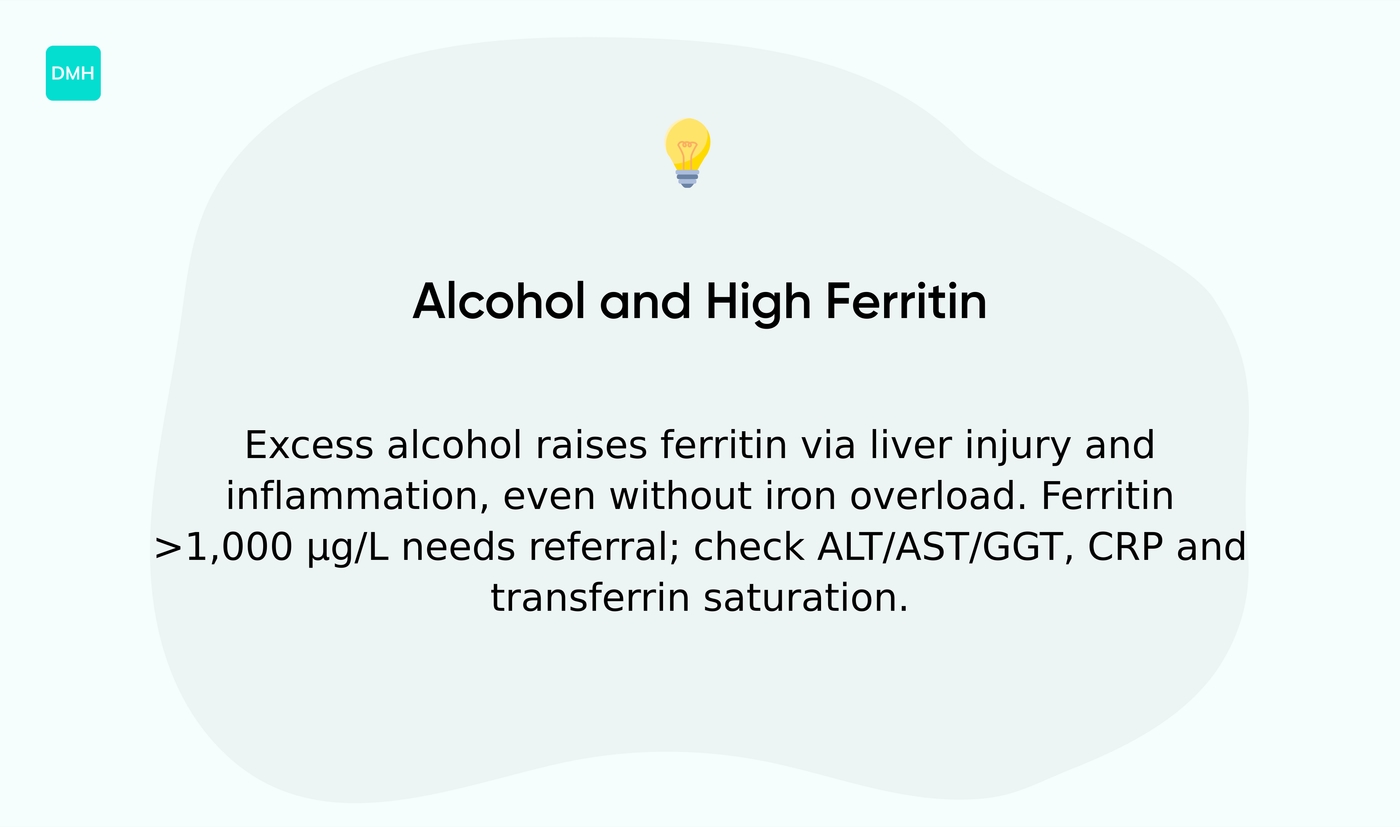
Regular or excessive alcohol use may raise ferritin and cause high ferritin test results. Alcohol stresses the liver. Damaged hepatocytes release ferritin into the bloodstream. This raises serum ferritin without iron overload.
Alcohol triggers inflammation. Inflammatory signals increase ferritin production as an acute-phase reactant. Even mild fatty liver or repeated heavy drinking can cause elevated values.
Ferritin above 1,000 µg/L often prompts specialist referral. Some people show raised ferritin despite normal transferrin saturation and mild liver enzyme changes.
Clinicians often check ALT, AST, and GGT. They measure CRP and transferrin saturation to distinguish liver-related ferritin elevation from true iron overload.
Elevated ferritin levels often appear with liver cell injury. Chronic alcohol exposure may underlie both. Not medical advice. Always consult a qualified healthcare professional for medical advice specific to your situation.
Kidney disease and chronic illness
Chronic illnesses can raise ferritin through sustained inflammation and tissue stress. Chronic kidney disease can trigger low-grade inflammation that lifts serum ferritin.
Kidney dysfunction affects iron handling by increasing hepcidin and reducing iron use. Altered iron metabolism in renal failure may keep transferrin saturation normal. Dialysis and reduced ferritin clearance can produce elevated ferritin levels without iron overload.
Some studies report median ferritin in dialysis cohorts in the hundreds of µg/L, though values vary by population. Elevated ferritin often tracks with CRP and declining kidney function, which may signal inflammation instead of excess iron.
You can discuss abnormal ferritin and iron tests with your clinician for tailored evaluation. Always consult a qualified healthcare professional for medical advice specific to your situation.
Malignancy and cancer
Certain cancers can cause high ferritin levels. Hematologic malignancies such as leukemia and lymphoma often raise ferritin. They do this via inflammation, rapid cell turnover, and tumor burden.
Solid tumors can raise ferritin when they trigger systemic inflammation. Large tumor burden may release ferritin and inflammatory signals.
Ferritin acts as an acute-phase reactant. Levels rise independent of iron stores during inflammation. Very high values may appear in malignancy. Some studies suggest ferritin above 1,000 µg/L often prompts specialist review.
Rare syndromes linked to cancer can cause extreme ferritin rises. Hemophagocytic lymphohistiocytosis has been associated with ferritin over 10,000 µg/L according to available research.
Check CRP, liver tests, complete blood count, and transferrin saturation to help sort causes. An elevated ferritin with normal iron studies often points to inflammation or liver disease. Always consult a qualified healthcare professional for medical advice specific to your situation.
What does high ferritin with normal iron mean
A result of elevated ferritin levels with normal iron studies often signals liver injury or inflammation. Ferritin acts as an acute-phase reactant. Levels rise when cells release ferritin during inflammation or liver cell damage.
A transferrin saturation normal under 45% suggests low likelihood of iron overload. Elevated CRP or abnormal liver enzymes often accompany inflammatory causes.
Common non-iron causes include fatty liver, infection, metabolic syndrome, alcohol use, and some cancers. Ferritin over 1,000 µg/L may prompt specialist review. Mild rises under 500 µg/L often reflect inflammation.
Not medical advice. Always consult a qualified healthcare professional for medical advice specific to your situation.
What is transferrin saturation and why check it with high ferritin
Transferrin saturation measures how much iron binds to transferrin. It helps tell true iron overload from ferritin raised by inflammation.
The transferrin saturation test equals (serum iron ÷ total iron-binding capacity) × 100. Normal values sit roughly between 20% and 50%.
Values above about 45% may suggest iron overload such as hereditary hemochromatosis. Values under about 20% point away from overload and toward inflammation, liver disease, or chronic illness.
| Ferritin | Transferrin Saturation | Likely Cause |
|---|---|---|
| 600 µg/L | 18% | Inflammation or liver disease |
| 600 µg/L | 65% | Iron overload (needs genetic/specialist testing) |
| 300 µg/L | 25% | Likely inflammatory or metabolic |
High ferritin with a low or normal transferrin saturation often indicates an acute-phase response or liver injury rather than excess iron. High ferritin with a high transferrin saturation more likely reflects true iron excess.
Clinicians use transferrin saturation alongside other tests. These include TIBC, serum iron, CRP, liver enzymes, and a complete blood count. Strong evidence supports this combined approach for accurate interpretation.
Learn how labs report these numbers and what they mean at how to read blood test results. Use the results to guide follow-up with your clinician.
Serum iron studies provide clearer context than ferritin alone. Always consult a qualified healthcare professional for medical advice specific to your situation.
What are the symptoms of high ferritin
High ferritin itself rarely causes symptoms. Symptoms most often reflect the underlying condition that raises serum ferritin.
About 10% of elevated ferritin cases reflect iron overload, while most follow inflammation or liver stress, according to available research. So what should you watch for?
- Fatigue and low energy occur in many people and can be persistent.
- Joint pain, stiffness, or arthritis-like aches may appear with inflammatory conditions or iron-related joint damage.
- Elevated ferritin causes tied to the liver can produce right upper abdominal discomfort, mild jaundice, or raised liver enzymes.
- Cardiac signs such as palpitations, shortness of breath, or reduced exercise tolerance may show with heart involvement.
- Skin darkening, sexual dysfunction, or new-onset diabetes can occur with long-standing iron loading, though these are less common.
- Fever, night sweats, unexplained weight loss, or high CRP may point to infection, chronic inflammation, or malignancy.
Normal transferrin saturation with high ferritin often suggests inflammation or liver disease rather than iron overload. Very high ferritin above about 1,000 µg/L may need urgent assessment.
Symptoms can vary from person to person and depend on the cause, duration, and other health issues. You can discuss targeted tests such as transferrin saturation, liver enzymes, and CRP with a clinician for clearer interpretation.
Always consult a qualified healthcare professional for medical advice specific to your situation. Not medical advice, content for educational purposes, consult a professional.
Which tests should be done for high ferritin
Elevated ferritin prompts a focused panel to clarify the cause. Tests help separate iron overload from inflammation, liver injury, or other conditions.
- Transferrin saturation: Measures iron bound to transferrin. Values above about 45% may suggest iron overload, while normal values point to inflammation or liver disease.
- Liver enzymes (ALT, AST, GGT): Detect hepatocyte injury and fatty liver. Elevated enzymes often accompany high ferritin in liver disease.
- C-reactive protein (CRP): An acute-phase marker. A raised CRP with high ferritin suggests inflammatory or infectious causes.
- CBC with indices: Checks for anemia, red cell size, and patterns that can point to chronic disease or bone marrow issues.
- Kidney function tests and creatinine: Assess renal contributions to altered iron handling.
- Iron studies panel: Serum iron, TIBC, and calculated transferrin saturation clarify iron status.
- Targeted testing: HFE gene testing, hepatitis serology, autoimmune panels, or tumor markers may be ordered based on symptoms and exam.
Very high ferritin, rapid rises, or unexplained abnormalities may lead to a referral to a hematologist for further evaluation.
Test selection can vary by patient history, medications, and physical findings. Always consult a qualified healthcare professional for medical advice specific to your situation.
When should I worry about elevated ferritin
Ferritin above 1,000 µg/L often acts as a red flag. Very high levels like this may be associated with liver disease, certain cancers, or iron overload.
Progressive elevation over weeks or months raises concern even at lower numbers. Concerning symptoms include severe fatigue, unexplained weight loss, jaundice, abdominal pain, or new joint pain.
Rapid rise alongside abnormal liver tests, low hemoglobin, or recurrent infections needs urgent evaluation. Transferrin saturation above 45% may point toward true iron overload rather than inflammation.
Very high ferritin with low transferrin saturation often points to inflammation or liver injury. Persistent mildly elevated ferritin often links to metabolic syndrome or fatty liver. Rapidly rising ferritin can reflect active cell breakdown or worsening liver injury.
Clinicians may order transferrin saturation, CBC, liver enzymes, CRP, kidney tests, and imaging. Persistent high ferritin or worrisome labs may warrant specialist input and further testing.
You can read what to expect at a first hematology appointment when a referral happens. Seek prompt medical review if you have severe symptoms or lab trends that worry you.
Always consult a qualified healthcare professional for medical advice specific to your situation.
You’ll also like: High Red Blood Cell Count: Causes, Symptoms And Treatment
How to lower ferritin levels safely
Elevated ferritin can reflect inflammation, liver injury, metabolic issues, or true iron excess. Management starts with identifying the cause and targeted steps based on test results such as transferrin saturation.
- Treat underlying causes. Reducing inflammation from infection or autoimmune disease may lower serum ferritin. Addressing liver disease or metabolic dysfunction can reduce release of ferritin from damaged cells.
- Diet and supplements. Limiting high-heme iron foods and avoiding iron supplements when iron studies are normal may help. Some clinicians discuss low-heme meal patterns for people with persistent elevated ferritin.
- Phlebotomy sessions. For confirmed iron overload, controlled phlebotomy is commonly used. A standard removal of ~450 mL blood may lower ferritin by about 25–50 µg/L per session, depending on baseline levels and frequency.
- Chelation therapy. When phlebotomy isn’t feasible, certain chelators may be considered for people with iron excess. Use appears in specialist care and varies by individual factors and risks.
- Lifestyle for metabolic causes. Weight loss of 5–10% body weight can improve fatty liver markers and may reduce ferritin in people with metabolic syndrome, according to available research.
- Monitoring and tests. Repeat ferritin, transferrin saturation, liver enzymes, and inflammatory markers guide decisions and track response over weeks to months.
Not medical advice, content for educational purposes. Always consult a qualified healthcare professional for advice specific to your situation.
You’ll also like: What Does High Hemoglobin Mean In A Blood Test
How quickly can ferritin levels change after treatment
Changes in high ferritin occur at different speeds. Individual responses can vary from person to person.
Phlebotomy removes a measurable amount of iron per unit of blood. Each unit may lower ferritin by about 20–50 µg/L. Clinicians often recheck levels at 4–12 weeks to assess response.
Reducing inflammation often cuts ferritin faster. Ferritin that rises with infection or inflammation can fall within days to weeks once inflammation resolves. Track CRP alongside ferritin for context.
Chelation therapy lowers ferritin more slowly. Expect measurable drops over months. The pace depends on iron burden and drug exposure.
Improving liver health or losing weight can reduce ferritin tied to fatty liver. Noticeable changes may appear over 3–12 months, depending on the degree of liver recovery.
Multiple factors change the speed of response. Baseline ferritin, ongoing inflammation, liver damage, and the chosen intervention all affect results. Adherence matters.
Monitor ferritin with relevant tests. Check liver enzymes, CRP, and transferrin saturation to distinguish iron overload from inflammatory causes. Repeat tests at clinically appropriate intervals to track trends.
Expect truly variable timelines. Discuss results with a clinician to interpret trends and decide on monitoring frequency. Always consult a qualified healthcare professional for medical advice specific to your situation.
Read also: What Level Of Alkaline Phosphatase Is Dangerous?
Educational notice: This content is provided for informational and educational purposes only and is not intended as medical advice. Always consult a qualified healthcare professional for medical concerns.