Monocytosis shows up on blood tests and often leaves patients and doctors asking what’s behind the spike.
An elevated monocyte count doesn’t cause symptoms by itself, so it’s easy to miss the underlying infection, inflammation, or blood disorder that’s driving it.
This article explains what monocytosis means, how it’s diagnosed, and when to worry, so you can get clear next steps.
You’ll learn normal versus high monocyte ranges, common causes (from infections to CMML), typical signs to watch for, and treatment approaches focused on the cause.
Practical tips on interpreting CBC results and when to seek specialist care are included too.
Use this guide to understand lab results and to discuss clear options with your clinician.
What is monocytosis
Monocytosis is a blood condition marked by an abnormal rise in monocytes. White blood cells called monocytes help clear infections and remove dead tissue.
They circulate in blood, enter tissues, and mature into macrophages or dendritic cells. An increased monocyte count signals immune activity—your body’s defense system kicking into gear.
Elevated monocyte counts can reflect infection, inflammation, recovery from marrow suppression, or clonal blood disorders. Lab reports show the absolute number and the percentage of monocytes.
Values labeled as monocytes guide further evaluation when the monocyte count is high. Monocytosis itself usually causes no symptoms.
Symptoms stem from the underlying condition and can include fever, fatigue, or localized signs of infection or inflammation. (Think of it this way: the high count is a clue, not the problem itself.)
Common causes include viral or bacterial infections, autoimmune inflammatory diseases, and certain hematologic cancers. Reactive monocytosis often follows acute illness, while persistent monocytosis lasting over three months can suggest a clonal process and usually prompts specialist assessment.
Available tests include a complete blood count with differential and a peripheral smear. Additional testing targets suspected causes based on clinical findings.
Not medical advice, content for educational purposes, consult a professional.
What is a normal monocyte count and how high is too high
Monocytes are a type of white blood cell involved in immune defense. Normal counts vary by age and lab methods.
Adults commonly have a normal monocyte count of about 200–800 cells per microliter (0.2–0.8 x10⁹/L). Percent values often sit between 2% and 8% of total white blood cells.
Children may show slightly higher counts. Infants and toddlers can have up to about 1,000–1,200 cells per microliter—basically, kids run a bit hotter on the immune scale.
An elevated reading often refers to an absolute monocyte count above 1,000 cells per microliter or a monocyte fraction above 10% of white blood cells. Persistent values above these levels may indicate monocytosis.
Monocytosis may be reactive to infections or inflammation. Persistent monocytosis lasting more than three months may suggest a chronic or clonal disorder, such as chronic myelomonocytic leukemia (CMML).
Lab context matters because a high percentage can occur when total white blood cell counts are low. Reports usually list both absolute and percent values; see CBC with differential values and meanings for details on interpreting results and typical ranges.
| Age Group | Normal Range (cells/µL) | Percent of WBC |
|---|---|---|
| Adults | 200–800 | 2–8% |
| Infants/Toddlers | Up to 1,000–1,200 | Varies by age |
| Monocytosis Threshold | >1,000 | >10% |
Not medical advice, content for educational purposes, consult a professional.
What causes monocytosis
Infections causing high monocytes
Monocytosis often follows infections. Viral causes include mononucleosis, measles, and mumps. Bacterial causes include tuberculosis, while parasitic infections can raise monocyte levels too.
Infections trigger the immune system. Monocytes mobilize to clear pathogens and to clean damaged tissue—think of them as your body’s cleanup crew.
This produces elevated monocyte counts or an absolute monocyte count rise on a CBC. Some infections cause a short rise, while others produce a persistent increase that looks like infections causing monocytosis.
Reactive monocytosis may last days to months depending on the cause and host factors. For instance, tuberculosis can drive a chronic elevation, whereas a viral upper respiratory infection might spike counts for just a week or two.
Laboratory patterns and clinical context guide the differential diagnosis. For more detail see infections cause high white blood cell count and discuss findings with a clinician.
Not medical advice, content for educational purposes, consult a professional.
Autoimmune and inflammatory diseases
Autoimmune conditions create ongoing inflammation that raises monocyte numbers. Chronic inflammatory conditions such as rheumatoid arthritis, systemic lupus erythematosus, and inflammatory bowel disease can cause persistent monocytosis.
Monocytes move to injured tissue and stay elevated during prolonged immune activity. Persistent elevation may present as elevated monocyte counts above 1,000 cells/µL or more than 10% of white blood cells in routine CBCs.
Clinical assessment separates a reactive monocytosis pattern from clonal disorders like CMML. Providers use CBC with differential, peripheral smear, and clinical history to guide the monocytosis differential diagnosis.
Monocyte counts may fall as inflammation improves, though results vary by disease and treatment response. (Not every patient follows the textbook, you know.)
Not medical advice, content for educational purposes, consult a professional.
Blood disorders and cancers
Monocytosis describes elevated monocyte counts in the blood. A common threshold is more than 1,000 cells per microliter, though some clinicians use over 10% of total white blood cells as a guideline.
Some blood cancers cause a clonal rise in monocytes. Leukemia, lymphoma, and chronic myelomonocytic leukemia often present with persistent monocytosis and dysplasia.
Clonal processes produce clonal monocyte proliferation rather than reactive elevation. Findings may include anemia, thrombocytopenia, and an abnormal peripheral smear.
A sustained absolute monocyte count above 1,000/µL for three months raises suspicion. Evaluation may include bone marrow biopsy, flow cytometry, and molecular testing for somatic mutations.
Not medical advice, content for educational purposes, consult a professional.
Other causes of elevated monocytes
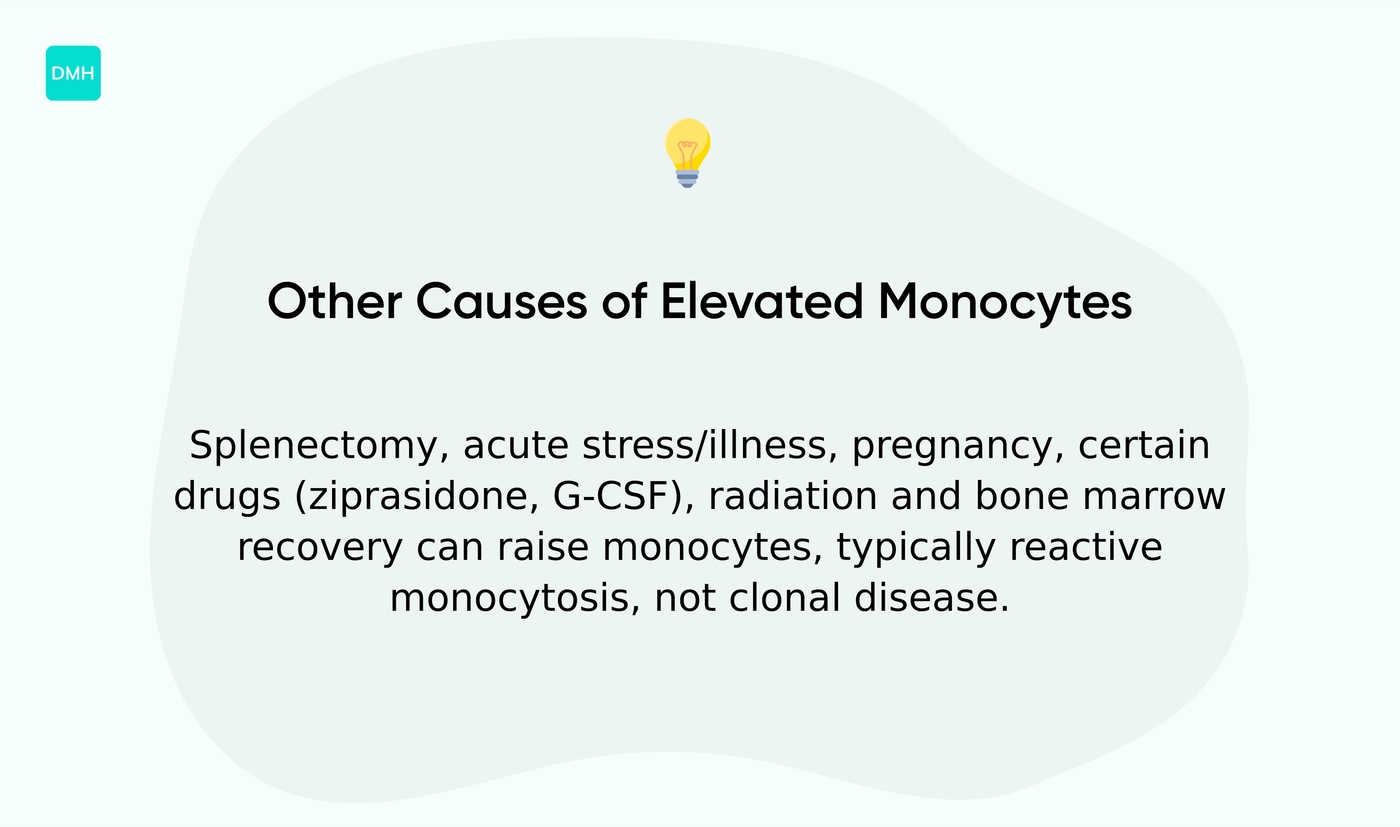
Splenectomy can raise circulating monocytes. People who had spleen removal often show a persistent rise in monocyte count (splenectomy and monocytes).
Acute stress and severe illness trigger a short-term immune shift. The body may release more monocytes during that acute stress response—basically, your bone marrow goes into overdrive.
Pregnancy can cause a moderate rise in monocyte percentage. Counts may climb while reflecting normal pregnancy changes (pregnancy related rise).
Certain medications link to higher monocyte counts. Ziprasidone and granulocyte colony-stimulating factors are reported causes. Plus, radiation therapy may produce transient white blood cell changes.
Recovery from bone marrow suppression often shows rebound monocytosis as marrow function returns. These causes usually produce a reactive monocytosis rather than clonal disease.
Not medical advice, content for educational purposes, consult a professional.
What symptoms are associated with monocytosis
Monocytosis itself causes no symptoms. The lab finding reflects an immune response or a blood disorder.
Symptoms stem from the underlying condition. Fever, night sweats, unexplained fatigue, and weight loss may occur.
Muscle aches and generalized weakness can appear with infections or inflammatory diseases. Local swelling, redness, or pain may signal tissue inflammation.
Persistent cough, night sweats, and weight loss may suggest infections like tuberculosis. Persistent lymph node enlargement or bruising may point to hematologic disorders.
Reactive monocytosis from infections often produces acute symptoms. Chronic monocytosis linked to clonal disorders can cause gradual constitutional symptoms.
Lab findings matter. An absolute monocyte count above 1,000/µL or a high monocyte percentage often prompts further evaluation. A high monocyte count with anemia or thrombocytopenia raises concern.
Have you noticed any unexplained fatigue or weight loss recently? Clinicians assess symptom pattern, duration, and other blood results to narrow the diagnosis.
Diagnostic steps may include a repeat CBC, peripheral smear, and tests for infections or inflammation. For a practical list of signs linked to elevated counts, see high monocyte count symptoms for more detail.
Not medical advice, content for educational purposes, consult a professional.
How is monocytosis diagnosed
Diagnosis of monocytosis relies on blood testing and targeted evaluation. A complete blood count (CBC) with differential measures monocyte percentage and absolute numbers.
An elevated value often means an absolute monocyte count over 1,000/µL or more than 10% of white blood cells. A peripheral blood smear shows cell shape, size, and dysplasia.
Clinicians check the CBC for anemia, thrombocytopenia, or other cytopenias. CBC monocytes high while total white blood cell count is normal can still signal monocytosis.
Additional tests help identify causes and refine the monocytosis differential diagnosis. Common follow-up studies include:
- Infectious serologies (for TB, EBV, CMV, etc.)
- Inflammatory markers like CRP or ESR
- Flow cytometry to detect clonal populations
- Bone marrow biopsy if clonal disorder is suspected
Persistent elevation over weeks or months often prompts repeat testing to separate reactive monocytosis from chronic monocytosis. Symptoms such as weight loss, night sweats, or splenic fullness guide test selection and urgency.
If you have a high monocyte count, your clinician may combine labs, exam findings, and imaging to reach a diagnosis. (It’s detective work, really.)
Not medical advice, content for educational purposes, consult a professional.
Reactive monocytosis vs chronic monocytosis
Monocytosis means an elevated monocyte count in the blood. Reactive monocytosis reflects a non-clonal rise of monocytes tied to infection or inflammation.
Common triggers include viral illnesses, bacterial infections such as tuberculosis, autoimmune disease, and recovery from bone marrow suppression. Monocyte counts often fall as the trigger resolves.
The rise can be transient and linked to a clear clinical event. Chronic monocytosis refers to persistent elevation lasting more than three months.
Persistent absolute monocyte counts above about 1,000 per microliter or a sustained high monocyte percentage may suggest a clonal disorder. Chronic myelomonocytic leukemia (CMML) is an example of a clonal condition associated with long-term monocytosis.
Bone marrow evaluation helps separate clonal from reactive causes. Evaluation may include a peripheral smear, marrow biopsy, cytogenetic tests, and molecular studies.
Findings that raise concern include persistent monocytosis, abnormal cells on smear, anemia, thrombocytopenia, or unexplained splenomegaly. These patterns may lead clinicians to order hematology assessment and targeted testing.
Not medical advice, content for educational purposes, consult a professional.
Chronic myelomonocytic leukemia (CMML) is a rare blood cancer. It typically affects older adults—median age at diagnosis centers near 70 years.
The condition features a sustained rise in blood monocytes. An absolute monocyte count above 1,000 per microliter for three months often prompts further evaluation.
The bone marrow shows abnormal cell development and increased monocyte production. Pathology often reveals bone marrow dysplasia and expanded monocyte clones.
Persistent monocytosis reflects clonal monocyte growth rather than a short immune response. That pattern helps distinguish CMML from reactive causes.
Common findings include anemia, low platelets, and an enlarged spleen. Patients may report fatigue, fever, or unintended weight loss.
Diagnosis uses a complete blood count with differential and peripheral smear. Confirmatory tests include bone marrow biopsy and genetic or molecular studies.
Treatment options range from supportive care to hematologic therapies. Some patients receive hypomethylating agents; eligible patients may be evaluated for stem cell transplant. Regular monitoring with CBCs and clinical exams guides management.
Reported incidence runs about 0.3 to 1 case per 100,000 people per year. Not medical advice, content for educational purposes, consult a professional.
How is monocytosis treated
Treatment focuses on the underlying problem rather than lowering monocytes directly. Clinicians often aim to treat the cause that drives an elevated monocyte count.
Monocytosis often reflects infection, inflammation, or a blood disorder, so therapy varies by diagnosis. Bacterial infections may respond to antibiotics for infections.
Viral infections may prompt supportive care or antiviral drugs when indicated. Persistent monocytosis with systemic signs or abnormal blood findings may require hematology evaluation and bone marrow testing.
Autoimmune and inflammatory diseases can reduce monocyte-driven inflammation with immunosuppressive or anti-inflammatory agents. Blood cancers such as chronic myelomonocytic leukemia often need targeted chemotherapy or disease-directed agents and ongoing specialist care.
Some patients with clonal disorders need transplant evaluation. Lifestyle changes can support overall immune health—smoking cessation, control of chronic inflammation, and management of metabolic conditions may lower inflammatory drivers.
Trends matter: an absolute monocyte count above 1,000/µL or more than 10% of white blood cells often prompts further workup, and persistence beyond three months raises concern for chronic or clonal causes. More details on management options appear on the site’s guide to treat high monocytes.
Not medical advice, content for educational purposes, consult a professional.
Read also: How Soon Should You Repeat a CBC After Abnormal Results?
When should I worry about monocytosis
Monocytosis refers to an elevated monocyte count in the blood. Many cases reflect a short-term immune response to infection or inflammation.
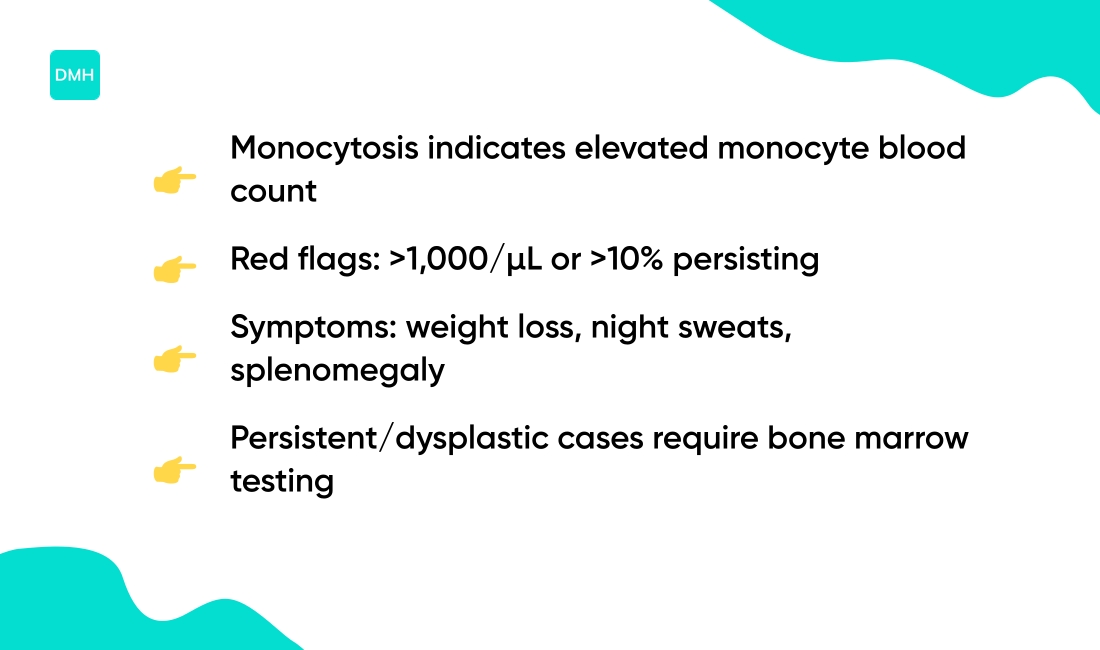
Red flags include an absolute monocyte count above 1,000 cells/µL or a monocyte percentage over 10% that persists beyond three months. A sustained rise to 1,500–2,000/µL or more often prompts deeper evaluation.
Persistent monocytosis with unexplained weight loss, night sweats, fevers, or a sense of fullness from an enlarged spleen (splenomegaly) suggests the need for specialist input. Finding dysplasia or cytopenias on a peripheral smear or CBC—for example, concurrent anemia or low platelets—raises concern for a bone marrow disorder.
Markedly high monocyte counts paired with abnormal cell shapes usually lead to bone marrow biopsy and molecular testing. When should you actually pick up the phone and call your doctor?
Here’s a quick checklist:
- Monocyte count stays above 1,000/µL for more than three months
- You’re experiencing unexplained weight loss or drenching night sweats
- Your CBC shows anemia or low platelets alongside high monocytes
- You feel persistent fatigue or notice an enlarged spleen
Evidence links chronic monocytosis to conditions such as chronic myelomonocytic leukemia. Reactive monocytosis from infection or inflammation remains common, though.
Repeat CBCs over weeks to months and clinical correlation help distinguish transient rises from chronic monocytosis. See information on a dangerous white blood cell count for related thresholds.
Always consult a qualified healthcare professional for assessment and testing specific to clinical findings. Not medical advice, content for educational purposes, consult a professional.
You might also like: What Does High Lymphocytes Mean In A Blood Test?
Common questions about monocytosis
Monocytosis means a higher than normal number of monocytes in the blood. Monocytes are white blood cells that help fight infection and clear damaged tissue.
Mononucleosis refers to a viral illness, most often Epstein-Barr virus, that can cause fever, sore throat, and swollen glands. Mononucleosis can cause elevated monocytes, but the two terms aren’t the same—one’s a lab finding, the other’s an infection.
Lab reports show percentage and absolute values. A count above about 1,000 cells/µL or more than 10% of white cells often indicates monocytosis. A high percentage may occur with low total white cells, so check the absolute monocyte count to avoid confusion.
Pregnancy can produce mild changes in blood counts, and transient elevated monocytes may occur. Children show different normal ranges and can have higher counts during common infections. Persistent elevation over weeks or months warrants further study.
Monocytosis often reflects reactive causes such as infections or inflammation. Persistent, progressive monocytosis may signal a clonal disorder. Chronic myelomonocytic leukemia (CMML) and other myeloid neoplasms show clonal monocyte proliferation.
Does high monocyte count always mean cancer? Well, not at all. The relationship between monocytosis and cancer depends on duration, associated cytopenias, and peripheral smear findings, so specialists often evaluate persistent cases to distinguish reactive from clonal causes.
You may feel concerned by abnormal counts. A CBC with differential and, if needed, a blood smear or bone marrow test help clarify the cause. Not medical advice, content for educational purposes, consult a professional.
You’ll also like: How to Understand High Neutrophil Count Results
Educational notice: This content is provided for informational and educational purposes only and is not intended as medical advice. Always consult a qualified healthcare professional for medical concerns.