A single abnormal blood count can raise alarm — and questions.
Understanding how to treat high monocytes starts with knowing what causes an elevated monocyte count.
High monocytes (monocytosis) aren’t a disease by themselves, so it’s easy to feel unsure about next steps when your results are abnormal.
This guide explains medical and lifestyle approaches that target the underlying causes rather than the number on your lab report.
You’ll learn common causes from infections to autoimmune disorders, when treatment is needed, and practical steps — including diet, monitoring, and when to see a specialist.
Armed with that information, you’ll be better prepared to discuss options with your clinician and lower uncertainty about follow-up care.
What is monocytosis
We define monocytosis as a higher than normal number of monocytes on a blood test. Monocytes are a type of white blood cell that help clear infections and remove dead cells.
Normal absolute monocyte counts run roughly 0.2–0.8 x10⁹/L. That equals 200–800 cells per microliter or about 2–8% of white cells.
For details on typical values and causes see normal monocyte count.
High monocyte count or elevated monocytes on a complete blood count represent a lab finding, not a diagnosis. The result may reflect a reactive process such as infection, recovery after bone marrow suppression, or chronic inflammation. It may also reflect clonal bone marrow disorders including certain leukemias.
Mild, isolated rises often require repeat testing and clinical correlation. Persistent or marked elevations usually prompt further tests — those can include a peripheral smear, targeted infection testing, autoimmune markers, or bone marrow evaluation.
Lab ranges vary by lab and by age. Clinical context guides interpretation more than a single number.
If you’re concerned about a test result, consult a qualified healthcare professional. Not medical advice — always consult a qualified healthcare professional for medical advice specific to your situation.
What causes high monocytes
Infections that cause high monocytes
Bacterial, viral, fungal and parasitic infections can raise monocyte numbers. Monocytes are white blood cells that help clear microbes and dead cells.
Tuberculosis and infective endocarditis can drive prolonged monocytosis. Viral infections such as cytomegalovirus or Epstein-Barr virus may increase monocytes during recovery.
Fungal infections like histoplasmosis and cryptococcosis can trigger elevated monocyte counts. Parasitic illnesses such as malaria or leishmaniasis may show monocytosis. This helps explain the high monocytes meaning seen on a CBC test.
A transient rise often appears during the monocytosis recovery phase after acute infection. Refer to infections that cause high white blood cell count for more detail.
Not medical advice, content for educational purposes. Always consult a qualified healthcare professional.
Autoimmune diseases and chronic inflammation
Autoimmune conditions may lead to persistent high monocytes. Normal monocyte range is 2–8% of white blood cells — absolute counts often fall between 0.2 and 0.8 x10⁹/L.
Conditions such as systemic lupus erythematosus, rheumatoid arthritis, and inflammatory bowel disease are associated with ongoing immune activation. This immune activation can drive sustained monocyte production and release from bone marrow.
Active autoimmune disease may raise counts above 0.8 x10⁹/L and produce a high monocyte count during flares. Inflammatory cytokines act as chronic inflammatory signals that recruit monocytes to tissues.
Monocytes support repair and may sustain inflammation. Controlling autoimmune activity with immunomodulatory therapy often coincides with falling monocyte levels over weeks to months. Monitoring blood counts helps track response.
If you’re concerned, consult a qualified healthcare professional. Not medical advice — always consult a qualified healthcare professional.
Blood disorders and cancers
Blood cancers and marrow disorders can drive abnormal monocyte production. Leukemia, lymphoma, myelodysplastic syndromes, and chronic myelomonocytic leukemia involve clonal marrow changes.
Clonal cells often produce more monocytes than reactive processes. Peripheral counts may exceed 1.0 x10⁹/L for months in CMML.
Bone marrow shows dysplasia, excess monocyte precursors, or increased blasts on bone marrow biopsy. Molecular genetic testing may detect mutations such as TET2 or SRSF2.
Reactive monocytosis after infection or inflammation usually resolves within weeks. Reactive cases show normal marrow architecture and lack pathogenic mutations. Distinguishing features guide how to treat high monocytes with specialty care.
Further testing may be warranted if counts persist or symptoms develop. Not medical advice, content for educational purposes, consult a professional. Always consult a qualified healthcare professional for medical advice specific to your situation.
Other factors that raise monocyte levels
Several non-disease factors may raise monocyte levels temporarily or persistently. Normal monocyte counts range about 0.2–0.8 x10⁹/L or 2–8% of white blood cells.
Physical or emotional stress may push monocytes up for days. Recovery after acute illness can show higher monocyte counts as the immune system resets.
Certain medicines can raise monocytes. Steroid medicines and blood growth factors used after chemotherapy are common culprits. Some anticonvulsants and immune-modulating drugs may have similar effects.
Low nutrients can change blood counts. Vitamin B12 deficiency and low folate can appear with altered monocyte levels. Removal of the spleen often causes a lasting rise in circulating monocytes.
High monocyte count after treatment for bone marrow suppression may reflect rebound production. Repeat testing and a medication and nutrition review may help identify causes.
Not medical advice, content for educational purposes, consult a professional.
What are the symptoms of high monocytes
High monocytes rarely produce symptoms by themselves. What you feel usually links to the underlying causes.
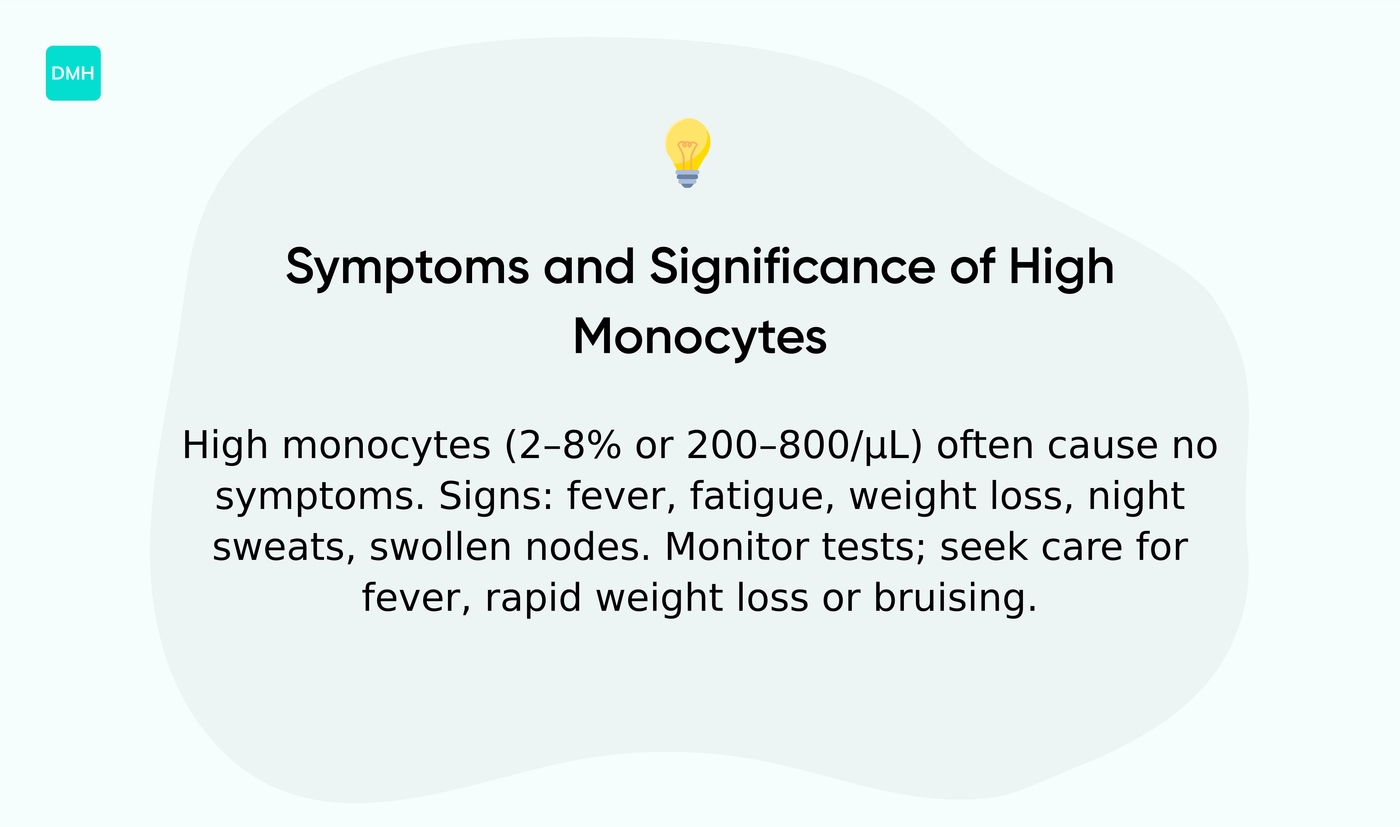
High monocyte count means the monocyte proportion exceeds normal lab ranges. Normal monocyte values run about 2–8% of white blood cells or roughly 200–800 cells/µL. Elevation may be a lab finding rather than a disease.
So what signs should you watch for? Common symptoms that may accompany elevated monocytes include:
- Fever
- Fatigue
- Unintentional weight loss
- Night sweats
- Enlarged spleen (splenomegaly)
- Swollen lymph nodes
These signs may be associated with infections such as tuberculosis or endocarditis, autoimmune conditions such as lupus, or blood disorders such as leukemia. Symptom patterns and additional blood abnormalities help clinicians decide which causes to investigate.
If blood tests show isolated monocytosis with no symptoms, clinicians may repeat testing and monitor trends over weeks to months. More urgent evaluation may occur when fever, rapid weight loss, easy bruising, or persistent night sweats appear.
Read more on specific red flags and evaluation at high monocyte count symptoms. Not medical advice, content for educational purposes, consult a professional. If you’re concerned, consult a qualified healthcare professional.
How are high monocytes treated
High monocytes on a blood test often reflect an immune response to infection. Monocytosis commonly falls as the infection comes under control.
Doctors use targeted antibiotic therapy for bacterial infections. They may prescribe specific antiviral medications for viruses that raise monocytes. Infectious disease specialists choose targeted antifungal therapy or antiparasitic drugs for fungal or parasitic causes.
Therapy focuses on the cause rather than the monocyte count. Blood counts are monitored during treatment to track response.
If counts stay high, further tests may be needed to rule out chronic or clonal disorders. Not medical advice — content for educational purposes. Always consult a qualified healthcare professional for medical advice specific to your situation.
Managing inflammation and autoimmune causes
Chronic inflammation and autoimmune disease can cause monocytosis. Searches for how to treat high monocytes often list medication options.
Anti-inflammatory drugs may reduce inflammatory signals that drive monocytosis. Clinicians may prescribe corticosteroids such as prednisone for short courses. Typical low doses range from 5 to 20 mg daily.
Doctors may start immunosuppressants and disease-modifying antirheumatic drugs (DMARDs). Methotrexate doses often fall between 7.5 and 25 mg weekly.
Biologic medicines target immune pathways such as tumor necrosis factor and interleukin. They can lower chronic immune activation that may raise monocyte counts. Clinicians often monitor blood counts and watch for infection risk.
Not medical advice, content for educational purposes, consult a professional. Always consult a qualified healthcare professional for medical advice specific to your situation.
Treatment for blood disorders
How to treat high monocytes depends on the underlying disorder. Clonal bone marrow disorders often need cancer-directed therapies.
Chemotherapy and radiation can lower abnormal cells quickly. Targeted agents may control mutations such as FLT3 or IDH1/2. Stem cell transplant may offer durable remission for selected patients — reported long-term survival often ranges from 30% to 60% in select series.
Supportive care keeps people safer during therapy. Supportive care measures include transfusions, antibiotics, growth factors, and infection monitoring. Symptom control and rehabilitation can improve quality of life.
Treatment choice depends on age, comorbidities, and disease features. Response rates vary by disease subtype and patient factors. Genetic testing often guides targeted therapy choices.
Not medical advice, content for educational purposes, consult a professional. Always consult a qualified healthcare professional for medical advice specific to your situation.
Monitoring and watchful waiting
When observation may be reasonable for mild monocytosis? Well, a single, slight rise in monocytes with no symptoms can be monitored.
Values under 1.0 x10⁹/L or a percent slightly above 8% are commonly called mild. Clinicians often classify this as mild lab abnormalities.
Typical follow-up includes repeat blood work in four to eight weeks. Check the differential on a repeat CBC with differential for context.
Watchful waiting suits patients with normal exam findings and no additional abnormal tests. Escalation to imaging or bone marrow tests can occur if counts rise or new signs appear. Short-term observation with short interval monitoring may avoid unnecessary treatment while clarifying the cause.
Not medical advice, content for educational purposes, consult a professional. Always consult a qualified healthcare professional for medical advice specific to your situation.
Can diet and lifestyle lower monocytes
Lifestyle factors can influence monocyte levels and overall immune activity. Monocytosis often reflects inflammation or infection rather than a primary disease.
An anti-inflammatory diet plan may reduce systemic inflammation. Some trials report drops in C-reactive protein (CRP) of about 15–30% after months on Mediterranean-style diets. Lower inflammation can align with lower monocyte activity in some people.
Regular movement matters. Studies that used regular moderate exercise — about 150 minutes weekly — show 10–20% reductions in inflammatory markers. Exercise may shift immune cell patterns toward a calmer profile.
Stress links to higher monocyte counts. Mindfulness and stress reduction programs can lower IL-6 and related markers in several trials. Less chronic stress may mean fewer signals that drive monocytosis.
Sleep affects immune balance. Short sleep under six hours often ties to higher inflammation. Trials using adequate restful sleep of seven to nine hours report improved inflammatory profiles.
| Lifestyle Factor | Potential Impact | Evidence Level |
|---|---|---|
| Anti-inflammatory diet | 15–30% drop in CRP | Moderate (several trials) |
| Regular exercise (150 min/week) | 10–20% reduction in inflammatory markers | Moderate (multiple studies) |
| Stress reduction | Lower IL-6 levels | Moderate (clinical trials) |
| Sleep (7–9 hours) | Improved inflammatory profile | Moderate (observational data) |
| Smoking cessation | Lower white blood cell activation | Strong (consistent data) |
Smoking raises monocyte numbers. Quitting tobacco is commonly associated with lower white blood cell activation within months. Addressing deficiencies such as low vitamin D may help when deficiency exists.
Here’s the thing — most studies assess inflammation, not monocytes directly. For guidance on how to treat high monocytes, medical evaluation and follow-up tests may be needed. Not medical advice, content for educational purposes, consult a professional.
You’ll also like: How to Understand High Neutrophil Count Results

Are high monocytes dangerous
High monocytes may reflect a mild immune response. They can reflect a deeper bone marrow problem.
Normal absolute monocyte count ranges 0.2–0.8 x10⁹/L (200–800 cells/µL). Counts above 1.0 x10⁹/L often prompt further evaluation.
Common reactive causes include recent infection, recovery from stress, and spleen removal. Persistent inflammation and autoimmune conditions can cause elevated monocytes.
Sustained monocytosis or rising counts over weeks often signal concern. What patterns should worry you? Concerning lab patterns include:
- Anemia
- Low platelets
- Immature white cells or blasts
- High lactate dehydrogenase
For overlap with other leukocyte changes see high white blood cell count.
Certain blood cancers produce high monocytes. Chronic myelomonocytic leukemia and some myelodysplastic syndromes often show a persistent high monocyte count.
Clinicians commonly repeat a CBC and inspect a peripheral smear. Bone marrow biopsy may be needed if abnormalities persist or symptoms develop.
High monocyte count gives a numeric cue. Elevated monocytes meaning depends on context. High monocytes dangerous depends on trends and other tests.
If you’re concerned, consult a professional. Not medical advice — always consult a qualified healthcare professional for medical advice specific to your situation.
You’ll also like: What Is Lymphocytes In Blood Test
When should I see a doctor about elevated monocytes
Monocytosis means a high monocyte count on a blood test. Normal monocyte values often sit at 0.2–0.8 x10⁹/L (200–800 cells/µL). Values above approximately 0.8–1.0 x10⁹/L may be considered high.
Watch for these warning signs that warrant prompt medical evaluation:
- Persistent elevation on repeat blood tests over weeks
- Fever that doesn’t ease with usual measures
- Night sweats that wake you from sleep
- Unexplained weight loss without diet change
- Easy bruising or bleeding that appears without injury
- Enlarged lymph nodes or an enlarged spleen felt in the abdomen
- Abnormal platelets on the same complete blood count
Monocytosis itself rarely causes symptoms. Underlying infections, chronic inflammation, autoimmune disease, or blood disorders may cause the signs above. A single mild rise often resolves. Persistent or progressive changes often need further testing and specialist input.
If lab results or symptoms worry you, see the guide on when to worry about abnormal blood tests for practical next steps and typical thresholds.
Not medical advice — content for educational purposes. Always consult a qualified healthcare professional for medical advice specific to your situation.
You’ll also like: How Much CRP Level Is Dangerous: Complete Guide
Educational notice: This content is provided for informational and educational purposes only and is not intended as medical advice. Always consult a qualified healthcare professional for medical concerns.