High eosinophils treatment isn’t one-size-fits-all.
Picking the wrong path can let inflammation or organ damage go unchecked.
An elevated absolute eosinophil count often reflects diverse causes—everything from allergies and asthma to parasites, medications, or rare blood disorders—so it’s easy to be misled.
Proper high eosinophils treatment starts with a targeted diagnostic workup and then treating the underlying cause, not just lowering numbers.
You’ll learn how clinicians evaluate causes, what tests are commonly done, medical and natural treatment options (including steroids, anti-IL-5 biologics like mepolizumab), and when specialist care is needed.
By the end, you’ll be able to discuss realistic timelines, medication choices, and lifestyle steps that can help lower eosinophils and protect organs.
Use what follows to prepare questions for your clinician and to understand the practical steps for eosinophilia management.
What are eosinophils and when are they considered high
Eosinophils are white blood cells that help fight parasites and shape allergic inflammation. They release proteins and signals that change immune responses.
Lab reports list the absolute eosinophil count (AEC). Normal AEC values usually fall between 0 and 500 cells per microliter.
Values above 500 cells/µL commonly indicate eosinophilia and may prompt medical evaluation. Counts from 500 to 1,500 cells/µL are often described as mild. Counts from 1,500 to 5,000 cells/µL are often called moderate, and counts above 5,000 cells/µL are frequently labeled severe and raise concern for organ injury.
Persistent AEC above 1,500 cells/µL can be associated with tissue damage and may lead clinicians to investigate for hypereosinophilic syndromes or blood disorders. The clinical context guides decisions about further testing and about high eosinophils treatment.
Some people have transient rises linked to allergies, infections, or medications. Others have sustained elevations that need targeted care. Learn more about eosinophils and related tests on the site.
Not a medical advice, content for educational purposes, consult a professional. Always consult a qualified healthcare professional for medical advice specific to your situation.
Common causes of high eosinophils
Eosinophilia means a higher than normal eosinophil count. These white blood cells help fight parasites and drive allergic inflammation.
Allergic conditions such as hay fever, eczema, and asthma often raise eosinophil counts. See white blood cell elevated in allergies for related details.
Parasitic infections, especially helminth infections like roundworm or hookworm, can cause marked eosinophil rises. Parasitic infection risks tend to be higher after travel to endemic regions.
Certain medications may be associated with eosinophilia. Examples include some antibiotics, anticonvulsants, and allopurinol.
Autoimmune disorders such as vasculitis and eosinophilic granulomatosis with polyangiitis may raise counts. Some patients develop organ inflammation linked to persistent eosinophilia.
Blood or bone marrow conditions can produce very high eosinophil levels. Blood marrow disorders include specific leukemias and hypereosinophilic syndrome.
Identifying the cause helps guide high eosinophils treatment and eosinophilia management. Tests commonly include repeat counts, parasite testing, allergy panels, and targeted blood or marrow studies.
If you have an unexplained high count, you may want to discuss it with your clinician. Not a medical advice, content for educational purposes, consult a professional. Always consult a qualified healthcare professional for medical advice specific to your situation.
What tests are done before starting treatment for high eosinophils
Clinicians order a focused diagnostic workup before starting high eosinophils treatment. A persistent absolute eosinophil count (AEC) above 500 cells/µL may prompt further testing.
- Repeat eosinophil counts — a CBC with differential confirms AEC and monitors trends. See CBC with differential values and meanings for details.
- Blood tests for allergies and autoimmune markers identify allergic disease, drug reactions, or autoimmune causes.
- Stool tests for parasites check for parasitic eosinophilia in people with relevant travel or exposure history.
- Genetic testing can detect driver mutations tied to hypereosinophilic syndrome treatment options.
- Imaging studies such as CT or ultrasound look for organ involvement from eosinophil-driven inflammation.
- Lung function tests assess asthma or other airway disease linked to eosinophilia.
- Transthoracic echocardiogram screens for cardiac involvement when symptoms or biomarkers suggest risk.
- Bone marrow biopsy or tissue biopsy clarifies bone marrow disorders or localized eosinophilic disease when blood tests remain unclear.
Results often guide eosinophilia treatment choices, from steroids for eosinophilia to anti-IL-5 therapy or targeted drugs for specific mutations. You may want to discuss test timing and implications with your clinician.
Not a medical advice, content for educational purposes, consult a professional. Always consult a qualified healthcare professional for medical advice specific to your situation.
Treatment approaches for high eosinophils by underlying cause
How to treat eosinophilia caused by parasites
Parasitic infections often raise eosinophil counts. Identifying the organism guides therapy.
Diagnosis may include stool and serology tests, imaging, and repeat CBC with differential. Effective care relies on targeted anti-parasitic drugs chosen for the specific parasite.
Common options include albendazole, ivermectin, and praziquantel, depending on the species. For example, ivermectin is commonly used for strongyloidiasis.
People may need a course of medication plus supportive care for symptoms. Follow-up labs confirm response.
The absolute eosinophil count (AEC) often falls within 2–8 weeks after successful therapy, though timelines can vary from person to person.
Monitor organ function when eosinophils were very high or symptoms involved the heart or lungs. Parasitic eosinophilia treatment pairs targeted drugs with eosinophil count monitoring to track recovery.
Not a medical advice, content for educational purposes, consult a professional. Always consult a qualified healthcare professional for medical advice specific to your situation.
Management for drug-induced eosinophilia
Drug-induced eosinophilia is a rise in eosinophil white blood cells linked to a medication. An absolute eosinophil count (AEC) above 0.5 x10^9/L is often called elevated, and levels above 1.5 x10^9/L often indicate hypereosinophilia.
Key steps begin with identifying and discontinuing the suspected drug. A careful medication review looks for recent starts, antibiotics, anticonvulsants, or herbal supplements.
Clinicians monitor labs to track eosinophil count recovery. Repeat CBCs may occur weekly or every 2–4 weeks based on severity.
Support focuses on symptom control and organ surveillance. A short course of systemic corticosteroids may be used if organ injury appears.
Use of targeted biologics occurs in specialist care for persistent cases. Persistent high counts or signs of organ damage lead to hematology or allergy referral.
You may want to discuss any medication changes with your clinician. Not a medical advice, content for educational purposes, consult a professional. Always consult a qualified healthcare professional for medical advice specific to your situation.
Treatment options for eosinophilic esophagitis
Eosinophilic esophagitis is an immune-mediated condition that raises esophageal eosinophils. Treatment aims to reduce inflammation and improve swallowing.
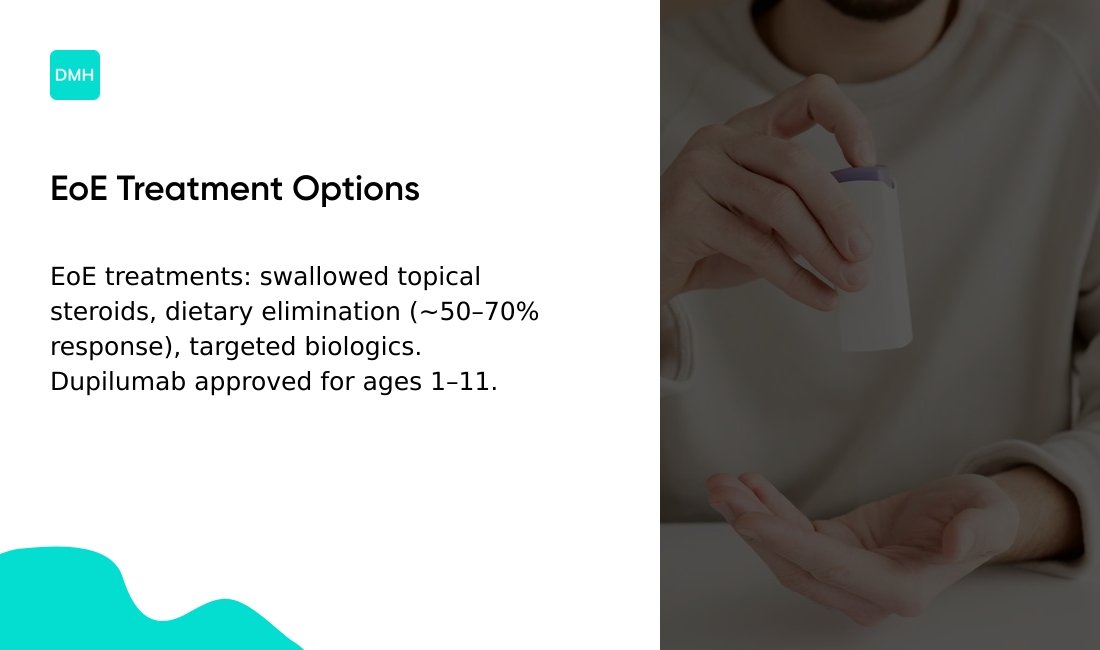
Options include FDA-approved oral therapies for adults and children, targeted biologics, topical steroid preparations, and diet changes.
Dietary approaches use targeted food elimination based on testing or stepwise removal. Some people follow a six-food elimination diet, while others try allergy-guided removal. These approaches can reduce esophageal eosinophil counts and symptoms for many patients.
Swallowed topical corticosteroids include budesonide or fluticasone given to coat the esophagus. These medications lower eosinophil numbers and improve symptoms in trials. Dietary elimination approaches show histologic response rates around 50% to 70% in some studies, depending on the protocol.
Dupilumab for pediatrics received recent approval for children aged 1 to 11. Clinical data indicate symptom relief and reduced tissue eosinophils. Read a summary of recent approvals at UNC Medicine.
Not a medical advice, content for educational purposes, consult a professional. Always consult a qualified healthcare professional for medical advice specific to your situation.
Biologics for eosinophilic asthma and who is a candidate
Biologics are targeted injectable medicines that act on immune signals. Anti-IL-5 biologics include mepolizumab and benralizumab.
These drugs block interleukin-5 signaling or its receptor. Blood eosinophil numbers fall, which can reduce airway inflammation.
People with severe eosinophilic asthma who have frequent exacerbations despite high-dose inhaled corticosteroids may be considered. A common threshold is an absolute eosinophil count ≥150 cells/µL at baseline or ≥300 cells/µL in the past year, with clinical steroid dependence or recurrent hospital visits.
Clinical trials and real-world data show reduced exacerbation rates and less oral steroid need in selected patients. Benralizumab often produces near-complete blood eosinophil depletion, while mepolizumab lowers eosinophil survival.
Side effects can include injection site reactions and headache. Have you discussed whether biologic therapy might fit your treatment plan? Talk with a clinician about eligibility, monitoring, and how this option fits eosinophil-driven inflammation management.
Not medical advice. Content for educational purposes only. Always consult a qualified healthcare professional for medical advice specific to your situation.
How hypereosinophilic syndrome is treated
Hypereosinophilic syndrome (HES) causes very high eosinophil counts. It can lead to organ damage if untreated.
First-line therapy often uses prednisone corticosteroid therapy to lower counts quickly. Eosinophil counts may fall within days to weeks.
Targeted drugs address specific mutations. Imatinib for PDGFRA can be effective for cases with a PDGFRA fusion.
Anti-IL-5 biologics such as mepolizumab target eosinophil survival and function. Mepolizumab received FDA approval for HES and may lower flare risk. These approaches form the core of hypereosinophilic syndrome treatment and contribute to high eosinophils treatment plans.
Allogeneic stem cell transplant is reserved for severe, treatment-resistant disease. This option carries substantial risk and needs specialist evaluation.
Care depends on mutation testing, organ involvement, and treatment response. You may want to discuss options with a hematologist or immunologist.
Not a medical advice, content for educational purposes, consult a professional. Always consult a qualified healthcare professional for medical advice specific to your situation.
Medications used to treat eosinophilia
Corticosteroids often serve as first-line medication to lower eosinophil counts and limit organ damage. Systemic corticosteroid therapy is used when eosinophil levels are very high or when organs like the heart, lungs, or nerves show damage.
Side effects can include high blood sugar, infection risk, and bone loss.
Anti-IL-5 drugs target the pathway that supports eosinophil survival. Mepolizumab, benralizumab, and reslizumab reduce eosinophil counts and cut exacerbations in many patients with eosinophilic asthma. Clinical trials report about a 40–60% reduction in exacerbation rates for selected patients. Common adverse events include injection site reactions and mild respiratory infections.
Targeted biologic agents may suit people with specific disease patterns. Dupilumab has approval for eosinophilic esophagitis and can reduce symptoms and tissue eosinophils. Some people with PDGFRA-positive hypereosinophilia respond to tyrosine kinase inhibitors such as imatinib.
These targeted biologic agents and mutation-specific drugs require molecular testing and specialist oversight.
| Medication Type | Examples | Common Use | Typical Response Time |
|---|---|---|---|
| Corticosteroids | Prednisone | High eosinophils with organ damage | 24–72 hours |
| Anti-IL-5 Biologics | Mepolizumab, Benralizumab | Eosinophilic asthma, HES | 4–12 weeks |
| Targeted Biologics | Dupilumab | Eosinophilic esophagitis | 4–8 weeks |
| Tyrosine Kinase Inhibitors | Imatinib | PDGFRA-positive HES | Days to weeks |
Effectiveness varies by diagnosis, baseline eosinophil count, and organ involvement. Monitoring often includes repeat absolute eosinophil counts and organ function tests.
You may want to discuss risks, expected benefits, and monitoring plans with a hematologist or immunologist. For a clinical review of available therapies and evidence, see the clinical review on eosinophilia treatments.
Not a medical advice, content for educational purposes, consult a professional. Always consult a qualified healthcare professional for medical advice specific to your situation.
Are there natural ways to reduce high eosinophils
Eosinophils are white blood cells that take part in allergic responses and parasite defense. An absolute eosinophil count (AEC) above about 500 cells/µL is often called eosinophilia, and counts above 1,500 cells/µL suggest hypereosinophilia and need specialist evaluation.
Dietary change can affect tissue eosinophils in specific conditions. For eosinophilic esophagitis, elimination diets show histologic remission in roughly 50–70% of clinical series. Data on diet lowering blood eosinophil counts are limited, though. Evidence suggests targeted diets help symptoms and local inflammation more than systemic AEC.
Allergen avoidance and allergy care can lower eosinophil-driven symptoms. Allergen testing may identify triggers, and allergen immunotherapy can reduce allergic inflammation over months. Blood eosinophil count response varies from person to person.
Lifestyle factors link to systemic inflammation. Smoking cessation, adequate sleep, weight management, and reducing chronic stress may be associated with lower inflammatory markers. Direct evidence for sustained eosinophil reduction is sparse.
Parasitic infections and drug reactions often cause high eosinophils. Those causes usually need specific medical interventions rather than natural approaches. Systemic disorders such as hypereosinophilic syndrome often require specialist-directed therapy, including medications or biologics.
Natural measures may support symptom control and sometimes reduce local eosinophilia. Some studies suggest benefits for certain diagnoses.
Not medical advice; content for educational purposes only. Always consult a qualified healthcare professional for medical advice specific to your situation.
Read also: What Causes Food Allergies? Science Explained
How long does it take for eosinophil levels to normalize with treatment
Eosinophil response times vary by cause and therapy. Timelines may be short or extend for months.
Corticosteroids often reduce absolute eosinophil count (AEC) rapidly. Counts can fall within 24–72 hours, and many people see a 50% drop in one week. Normalization often occurs in 1–4 weeks, though relapse can occur.
High eosinophils treatment with anti-IL-5 biologics may show a clear effect in 4–8 weeks. Maximal reduction can appear by 12–24 weeks, and some clinical trials report >80% blood eosinophil reduction for drugs like mepolizumab or benralizumab.
Parasitic eosinophilia treatment typically causes counts to fall within days after effective antiparasitic therapy. Full normalization may take 2–8 weeks depending on parasite burden.
Stopping an offending drug for eosinophil count high due to medications often leads to gradual decline. Expect 1–6 weeks for most cases; some cases require months for full recovery.
Monitoring commonly starts with CBC with differential every 1–2 weeks while changing therapy. Stable patients may move to monthly checks, then every 3–6 months. Clinicians tailor frequency to organ involvement and baseline AEC.
Response speed can vary with baseline AEC, organ damage, diagnosis, medication adherence, and other health conditions. What factors might affect your timeline? Discuss expected timelines and monitoring with a clinician. See how to read blood test results for tracking and interpretation: how to read blood test results.
Not medical advice; content for educational purposes. Consult a qualified healthcare professional for medical advice specific to your situation.
Read also: What Does High Basophils Mean in a Blood Test?
When to see a specialist for persistent eosinophilia
Eosinophilia is an elevated eosinophil count. Normal absolute eosinophil count (AEC) is under 0.5 x10⁹/L (500 cells/µL), and an AEC above 1.5 x10⁹/L (1,500 cells/µL) may prompt specialist evaluation.
- Rapidly rising AEC or sustained AEC over 1.5 x10⁹/L.
- Signs of organ damage such as chest pain, breathlessness, new heart rhythm changes, unexplained weight loss, or worsening cough.
- Neurologic symptoms like numbness, weakness, or vision changes.
- Persistent fevers, night sweats, or unexplained anemia or low platelets on blood tests.
- Failure of eosinophil counts to fall after treating likely causes (allergy, parasite, offending drug).
Referral to hematology or immunology may help when standard care doesn’t explain or control the count. Some people benefit from targeted testing such as bone marrow exam, molecular testing for PDGFRA/B or other mutations, echocardiogram, and organ imaging.
Hematologists assess for blood-cell disorders and hypereosinophilic syndrome. Immunologists or allergy specialists evaluate allergic, drug, or autoimmune causes.
If a referral is planned, review what to expect at your first hematology appointment.
AEC over 1.5 and any suspected organ involvement may justify faster evaluation. Not a medical advice, content for educational purposes, consult a professional. Always consult a qualified healthcare professional for medical advice specific to your situation.
You might also like: What Is A Dangerous White Blood Cell Count
Educational notice: This content is provided for informational and educational purposes only and is not intended as medical advice. Always consult a qualified healthcare professional for medical concerns.