Seeing “basophils high” on a lab report is enough to make anyone pause.
High basophils treatment focuses on finding and fixing the underlying cause rather than lowering basophils directly.
Elevated basophils can signal allergies, infections, hypothyroidism, or serious bone marrow disorders, so it’s important not to ignore the result.
Treatment ranges from allergen avoidance, antihistamines, or antibiotics to thyroid hormone replacement and specialist hematology therapies like hydroxyurea or targeted agents.
Lifestyle measures — balanced diet, stress management, hydration, and avoiding known triggers — can support normal immune function during treatment.
You’ll learn how basophilia is evaluated, common causes, practical treatments for different scenarios, and when to seek a hematologist.
What are basophils and what is the normal range
Basophils are a type of white blood cell that take part in immune response and allergic inflammation. They release histamine and other mediators during allergic reactions, signaling other immune cells to act.
Basophils usually represent less than 1% of circulating white blood cells. Absolute counts commonly fall between 0 and 200 cells/µL, though the basophils normal range may vary by lab and method.
An absolute basophil count above 200 cells/µL is typically considered elevated. This elevated basophil count can reflect allergies, infections, hormonal changes, or blood disorders.
A high basophils result often prompts further investigation. Clinicians look at symptoms and review other blood counts to guide next steps. More detail on lab interpretation appears at basophils in blood test.
Basophilia may be mild or marked. Marked basophilia often requires hematology evaluation and additional testing such as bone marrow studies. Basophil count high appears in reports as basophilia or elevated basophils, helping clinicians search for causes and management options.
Always consult a qualified healthcare professional for medical advice specific to your situation. Not medical advice; content for educational purposes — consult a professional.
What causes elevated basophils
Allergic reactions and immune responses
Basophils rise during allergic reactions because they carry high-affinity IgE receptors that bind allergens and activate quickly.
Once activated, basophils trigger the basophil activation pathway and release histamine, leukotrienes, and cytokines. Histamine causes blood vessel dilation, itch, and mucus release. Basophils also recruit eosinophils and amplify local inflammation.
An absolute basophil count above 200 cells/µL is often labeled elevated. Rapid basophil increases can occur within hours of allergen exposure. For example, someone with a severe pollen allergy might see their basophil count jump during spring months, then drop once the season ends.
Allergic basophilia may influence choices for high basophils treatment because clinicians often treat the underlying allergy rather than basophils directly. For related details, see white blood cell elevated in allergies.
Always consult a qualified healthcare professional for medical advice specific to your situation. Not medical advice; content for educational purposes — consult a professional.
Infections and inflammatory conditions
Bacterial and parasitic infections can raise basophil numbers above the typical 200 cells/µL threshold. Common causes include tuberculosis, streptococcal infections, and helminth infestations.
Chronic inflammatory and autoimmune diseases may cause persistent basophilia through ongoing immune activation. Examples include rheumatoid arthritis, inflammatory bowel disease, and systemic lupus erythematosus. Persistent rises may indicate active disease or a need for further testing.
High basophils treatment typically targets the underlying infection or inflammatory condition. Antibiotics or antiparasitic agents can resolve infection-related basophilia in many cases. Anti-inflammatory therapies and short courses of corticosteroids may reduce immune-driven basophil elevation.
See infections that raise white blood cell counts for more on infection-driven changes. Always consult a qualified healthcare professional for medical advice specific to your situation. Not medical advice; content for educational purposes — consult a professional.
Hypothyroidism and hormonal factors
Hypothyroidism is associated with mild basophilia. Low thyroid hormones alter bone marrow activity and immune signaling, which shifts leukocyte production and distribution.
An absolute basophil count above 200 cells/µL is commonly considered elevated. In hypothyroid cases, counts often remain below 500 cells/µL. Basophil increases tend to be modest and stable rather than dramatic.
Restoring thyroid hormone levels often returns basophil numbers to normal within weeks to months. Clinicians may order thyroid function tests and a complete blood count to evaluate unexplained basophilia.
Some studies suggest white blood cell shifts with thyroid hormone deficiency, though evidence comes mainly from small series and observational studies. Consideration of other causes such as allergies, infections, and bone marrow disorders remains important in evaluation.
Always consult a qualified healthcare professional for medical advice specific to your situation. Not medical advice; content for educational purposes — consult a professional.
Blood disorders and myeloproliferative neoplasms
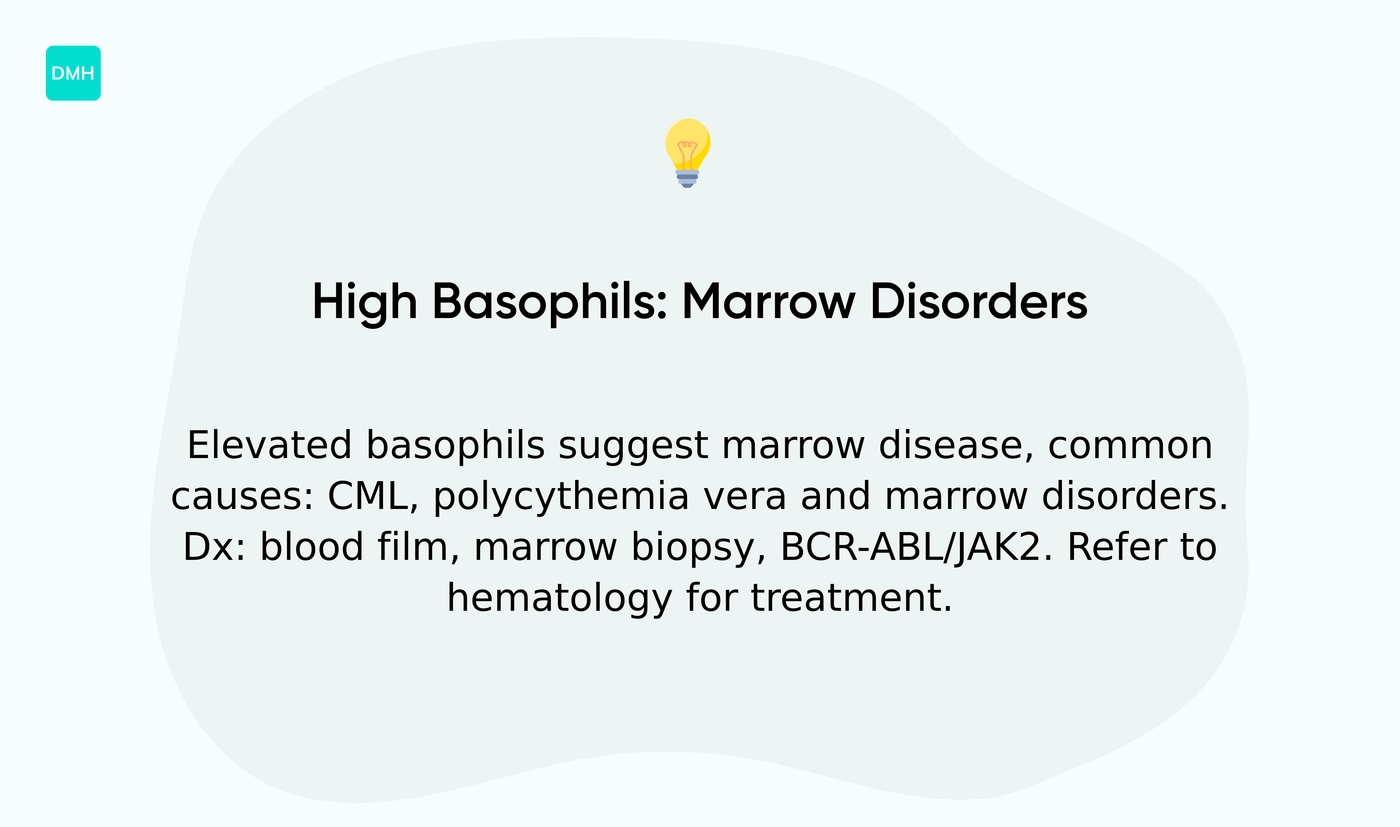
Elevated basophils can signal serious marrow problems. Common causes include chronic myeloid leukemia, polycythemia vera, and other bone marrow disorders.
Specialist evaluation often involves blood film review, bone marrow biopsy, and genetic testing. Tests may check for BCR-ABL and JAK2 mutations to confirm diagnosis.
High basophils treatment depends on the specific diagnosis. Options described by hematology teams may include hydroxyurea, interferon, targeted therapies, stem cell transplant, or splenectomy.
If your basophil count remains high, discuss referral to a hematologist. Learn more about causes of high white blood cell count at what causes high white blood cell count.
Always consult a qualified healthcare professional for medical advice specific to your situation. Not medical advice; content for educational purposes — consult a professional.
What is the treatment for high basophils
Allergic basophilia occurs when basophils rise during allergic inflammation. If you have high basophils linked to allergy, focus on exposure reduction and symptom control.
- Allergen avoidance strategies — Identify common triggers such as pollen, pet dander, or certain foods and reduce contact where possible
- Antihistamines for symptoms — Oral H1 antihistamines can lower itching, sneezing, and histamine-driven symptoms within hours
- Corticosteroids for severe cases — Short courses of systemic steroids may reduce intense inflammation in severe reactions under clinician oversight
- Immunotherapy or allergy shots — Subcutaneous or sublingual immunotherapy may lower allergic sensitivity over months to years and can reduce allergic inflammation in some people
Effectiveness varies by individual and allergy type. For instance, someone with seasonal allergies might see their basophil count normalize after a few weeks of antihistamine use combined with staying indoors during peak pollen hours.
Clinicians often track absolute basophil counts when assessing response; counts above 200 cells/µL are typically considered elevated. Always consult a qualified healthcare professional for medical advice specific to your situation. Not medical advice; content for educational purposes — consult a professional.
Infection-related basophilia often falls as the infection clears. High basophils treatment focuses on the underlying infection rather than basophils alone.
Clinicians commonly use antibiotics for bacterial infections guided by culture results or local guidelines. Parasitic causes may be managed with antiparasitic drugs such as albendazole.
Supportive measures help recovery. Rest, fluids, and fever control ease symptoms and support immune response. Hydration speeds clinical recovery in many cases.
Monitor basophil trends with repeat CBCs. Counts often decline within 2–6 weeks after effective infection control. Persistent elevation prompts further evaluation for other causes.
Always consult a qualified healthcare professional for medical advice specific to your situation. Not medical advice; content for educational purposes — consult a professional.
Treatment for inflammatory and autoimmune causes
Inflammatory and autoimmune conditions can raise basophil counts. High basophils treatment targets the underlying immune activity.
Anti-inflammatory medications reduce tissue inflammation. Disease-modifying drugs alter immune signaling in autoimmune disease, while corticosteroids lower immune activation in more severe flares.
Clinicians often use laboratory monitoring to assess response. A complete blood count tracks basophil trends. An absolute basophil count above 200 cells/µL is typically considered elevated.
Treatment effects can appear over weeks to months. You may see basophil counts fall as inflammation eases. Communication with your clinician helps guide tests and therapy changes.
Evidence supports medication choice based on diagnosis and severity. Examples include anti-inflammatory therapy for inflammatory disease and targeted immunomodulators for specific autoimmune conditions. Always consult a qualified healthcare professional for medical advice specific to your situation. Not medical advice; content for educational purposes — consult a professional.
Underactive thyroid can be associated with higher basophil counts. Restoring thyroid function often reduces that elevation.
Thyroid hormone replacement is commonly used to restore normal hormone levels. Clinicians usually prescribe levothyroxine to achieve target thyroid-stimulating hormone (TSH) values.
Basophil counts often fall as thyroid tests normalize. Counts may improve within weeks to months after hormone levels return to the normal range. An absolute basophil count above 200 cells/µL is typically considered elevated basophils.
Serial monitoring of TSH and complete blood count helps track progress. Persistent or very high basophilia may prompt hematology referral for further evaluation. Some clinical reports note this association, though evidence comes mainly from case series and clinical observation.
Always consult a qualified healthcare professional for medical advice specific to your situation. Not medical advice; content for educational purposes — consult a professional.
You’ll also like: 12 Key Markers in Complete Blood Test Interpretation
Treatment for blood and bone marrow disorders
Specialist hematology care focuses on the underlying diagnosis rather than basophilia alone. Treatment plans vary by disease, severity, and patient factors.
Options may include chemotherapy and hydroxyurea, interferon-based regimens, targeted kinase inhibitors, stem cell transplant, or splenectomy. Clinicians monitor blood counts and adjust therapy as needed.
For conditions such as chronic myeloid leukemia, specific targeted drugs may dramatically lower basophil counts and symptoms. More complex marrow disorders may need combined approaches from a hematologist and transplant team.
Basophilia treatment often requires long-term follow-up with repeat blood tests and bone marrow evaluation when indicated. Learn more about basophilia at Patient Power.
Always consult a qualified healthcare professional for medical advice specific to your situation. Not medical advice; content for educational purposes — consult a professional.
You’ll also like: How to Read Blood Test Results: A Simple Guide
Natural ways to support normal basophil levels
Basophilia often reflects an underlying issue. Lifestyle measures can support immune balance while clinicians investigate causes and decide on high basophils treatment.
| Strategy | Details | Expected Benefit |
|---|---|---|
| Balanced nutrition plan | Eat a variety of fruits, vegetables, whole grains, and lean protein. Aim for at least five servings of produce daily and include omega-3 sources like fatty fish twice weekly. | Supports overall immune function |
| Regular physical activity | Follow 150 minutes of moderate activity per week or 75 minutes of vigorous activity. Short, brisk walks lift immune resilience. | May improve white blood cell regulation |
| Adequate sleep duration | Target 7–9 hours nightly. Poor sleep can alter white blood cell counts and immune signaling. | Helps maintain normal immune balance |
| Avoid known allergens | Reducing exposure to identified allergens can lower allergy-related basophil activation. | Decreases allergic inflammation |
| Manage stress | Ten minutes of deep breathing or mindfulness can reduce inflammatory markers over time. | May lower chronic inflammation |
| Stay hydrated | Typical guidance suggests about 2–3 liters of fluids daily, varying by body size and activity. | Supports general health |
These steps may be described as natural ways to lower basophils or to support basophilia treatment alongside medical evaluation. (Keep in mind, lifestyle changes rarely address hematologic diseases alone.)
Always consult a qualified healthcare professional for medical advice specific to your situation. Not medical advice; content for educational purposes — consult a professional.
You’ll also like: Is It Serious To Be Referred To A Hematologist
When to see a doctor for elevated basophils
Basophils are white blood cells involved in allergic and inflammatory responses. An absolute basophil count above 200 cells/µL is often called elevated.
If a high basophil count appears on one test, repeat testing may clarify if the rise is temporary or persistent. Seek evaluation when counts stay high over weeks. Marked rises, such as several hundred cells per microliter or more, need prompt assessment.
When should you contact your healthcare provider?
- Persistent high basophils on repeat tests
- New or worsening fatigue, unexplained weight loss, night sweats, or fever
- New bruising, bleeding, or low red cell or platelet counts
- Noticeable spleen enlargement or abdominal discomfort
If basophilia occurs with abnormal blood counts or these red flags, referral to a hematologist is often appropriate. A specialist can order bone marrow studies, cytogenetic tests, and targeted blood work to evaluate for myeloproliferative disorders or leukemia.
For guidance on interpreting abnormal lab results, see abnormal blood tests and follow-up steps. Some elevations link to allergies, infections, or hypothyroidism. Treatment focuses on the underlying cause rather than basophils alone.
See a hematologist if blood abnormalities persist or symptoms worsen. Specialists may consider therapies used in blood disorders, depending on diagnosis. Always consult a qualified healthcare professional for medical advice specific to your situation. Not medical advice; content for educational purposes — consult a professional.
Read also: What Happens at Your First Hematology Appointment
Educational notice: This content is provided for informational and educational purposes only and is not intended as medical advice. Always consult a qualified healthcare professional for medical concerns.