
High neutrophils treatment is more than a lab number—it’s about finding and treating the underlying cause of a raised neutrophil count.
When neutrophil counts are elevated, you’re left facing uncertainty about infections, inflammation, medication effects, or rare myeloproliferative diseases.
(And that uncertainty can be stressful.)
This guide explains evidence-based approaches to neutrophilia, showing how targeted treatments—antibiotics for infections, anti-inflammatory drugs, drug adjustments, or specialized hematology care—aim to resolve the cause rather than just the lab result.
You’ll learn how clinicians decide when treatment is needed, what tests to expect, timelines for counts to normalize, and practical lifestyle steps that may help lower reactive neutrophilia.
Armed with this information, readers can have more productive conversations with their healthcare team and understand when urgent attention is required.
What does a high neutrophil count mean
Neutrophilia describes an elevated number of neutrophils, a type of white blood cell.
Normal ranges vary. White blood cell (WBC) counts often range from 4.0 to 11.0 x10⁹/L. Absolute neutrophil count (ANC) commonly sits between 1.5 and 8.0 x10⁹/L.
A high neutrophil count is often defined as an ANC above about 7.5–8.0 x10⁹/L. Mild rises may reach 10–20 x109/L. Very high values above 50 x109/L may signal a leukemoid reaction or blood cancer.
Elevated neutrophils may be associated with infection, inflammation, physical stress, smoking, pregnancy, or certain medications. Bone marrow disorders may cause persistent, marked neutrophilia.
Patterns help guide evaluation. A sudden rise with fever often points to bacterial infection, while a steady, very high count with abnormal blood cells may point to a myeloproliferative condition.
Laboratory context matters. Percent neutrophils, ANC, repeat tests, and clinical signs guide management. For deeper background, see understanding high neutrophil count.
Next steps often include repeat blood counts, infection testing, medication review, and possible referral to a hematologist. You may want to discuss those options with a clinician.
Not medical advice; content for educational purposes only. Always consult a qualified healthcare professional for medical advice specific to your situation.
What causes high neutrophils
Infection-related neutrophilia describes a rise in neutrophil numbers triggered by infection.
Bacterial components and inflammatory signals prompt the bone marrow to increase and release neutrophils. This elevated neutrophil production often shows as a higher absolute neutrophil count (ANC).
Marked bacterial infections may push ANC above 10 x109/L or more. A left shift—with increased immature neutrophils called bands—commonly appears on the differential. Trends matter more than a single value.
Antibiotics may be used for bacterial causes, and counts often fall over days once the infection is controlled. Clinical signs, fever, C-reactive protein, and cultures help distinguish infection-related neutrophilia. Clinical resources note that infections can cause high white blood cell counts.
If neutrophils stay very high or symptoms worsen, you may want to discuss further evaluation with a clinician. Not medical advice; content for educational purposes only.
Chronic inflammation and autoimmune causes
Chronic inflammation and autoimmune diseases may be associated with persistent neutrophil elevation.
Ongoing tissue injury releases cytokines that stimulate bone marrow. G-CSF and IL-6 can drive sustained neutrophil production.
Conditions that may show this pattern include rheumatoid arthritis, inflammatory bowel disease, vasculitis, and chronic lung disease.
Neutrophil counts often stay mildly to moderately high for weeks or months. Acute bacterial infections usually produce sharp spikes that return to baseline after resolution.
Evaluation may include CRP, ESR, autoantibody testing, imaging, and repeat complete blood counts. Management focuses on the underlying inflammatory disorder—this distinction affects treatment decisions.
If neutrophils remain high, you may want to discuss referral to rheumatology or hematology. Not medical advice; content for educational purposes only.
Medication and steroid induced neutrophilia
Drug-induced neutrophilia is a medication-related rise in neutrophil numbers.
Common agents include:
- Systemic corticosteroids (prednisone, dexamethasone)
- G-CSF agents (filgrastim, pegfilgrastim)
- Lithium
- Epinephrine and beta-agonists
Steroids cause neutrophil demargination within hours. Blood counts often show high neutrophils with low lymphocytes and eosinophils.
Peripheral smear commonly shows mature neutrophils without many immature forms. Clinicians correlate medication timing with lab trends to recognize the cause.
Management focuses on reviewing medications and monitoring counts. Options may include dose adjustment or switching agents under clinician oversight. Specialist input helps when counts stay high or symptoms develop.
Not medical advice; content for educational purposes only. Always consult a qualified healthcare professional for medical advice specific to your situation.
Stress and reactive neutrophilia
Stress-induced neutrophilia is a short-term rise in neutrophils after physical or emotional stress.
Physical stress—such as surgery, trauma, and heavy exercise—can trigger this response. Emotional stress can also trigger hormone release that shifts neutrophils from vessel walls into blood.
Adrenaline and cortisol prompt demargination and marrow release of neutrophils. Stress responses often raise counts into the 8–12 x109/L range for hours to days.
Chronic smoking may be associated with a modest persistent rise. Pregnancy, especially later stages, often shows higher counts according to available research.
Elevated neutrophil levels that follow clear stressors often resolve without specific drug therapy. Addressing triggers and timing repeat tests may clarify the cause.
Not medical advice; content for educational purposes only.
Bone marrow disorders and myeloproliferative conditions
Bone marrow disorders and myeloproliferative conditions are cancers of blood-forming cells that may cause persistent neutrophil elevation.
These disorders can include chronic myeloid leukemia, polycythemia vera, essential thrombocythemia, and primary myelofibrosis. They often produce sustained high neutrophil counts that don’t fall after infection resolves.
Blood counts may exceed 20,000 cells/µL and can surpass 50,000 cells/µL in advanced or leukemic presentations. Diagnosis often uses bone marrow biopsy and genetic testing for BCR-ABL or JAK2 mutations.
Treatment typically targets the driving mutation and marrow activity. Options used in practice include cytoreductive drugs (hydroxyurea), targeted agents (tyrosine kinase inhibitors for Philadelphia-chromosome positive disease), and hematopoietic stem cell transplant in select cases.
Management can vary by diagnosis and patient factors. Not medical advice; content for educational purposes only. Always consult a qualified healthcare professional for medical advice specific to your situation.
How to treat high neutrophils based on the underlying cause
Infection-related neutrophilia describes elevated neutrophil numbers driven by bacterial infection.
Antibiotics target the bacterial cause and reduce the immune stimulus. This approach is a high neutrophils treatment when bacteria cause the rise.
Effective antimicrobial therapy often lowers neutrophil production within 24 to 72 hours. The absolute neutrophil count may begin declining as infection resolves.
Mild infections commonly show neutrophil count normalization in 7 to 14 days. Severe or deep infections can extend recovery to several weeks. Persistent elevation may indicate treatment failure or an alternate diagnosis.
You may want to discuss repeat blood counts and clinical follow-up with a clinician. Not medical advice; content for educational purposes only.

Managing chronic inflammation neutrophilia
Chronic inflammation neutrophilia refers to persistent elevation of neutrophils linked to ongoing inflammatory or autoimmune disease.
Anti-inflammatory drugs such as NSAIDs and colchicine may reduce tissue inflammation and lower neutrophil activation over weeks. Corticosteroids reduce inflammation but can raise blood neutrophil counts via demargination within hours.
Immune-modulating drugs—such as methotrexate or biologics—may be used for autoimmune causes. Biologics target specific pathways such as TNF or IL-6 and can change neutrophil trends over months.
Disease-specific therapies address the underlying condition, for example gout therapy or targeted rheumatoid arthritis agents. Management plans vary by diagnosis, severity, and patient factors.
Some studies suggest neutrophil counts fall as inflammation comes under control. Not medical advice; content for educational purposes only. Always consult a qualified healthcare professional for medical advice specific to your situation.
Steroid induced neutrophilia management
Steroid-induced neutrophilia is a medication-related rise in neutrophils caused by corticosteroids.
Neutrophil counts often increase within hours of high-dose steroids. Counts can rise 30–100% depending on dose and duration.
Clinicians may consider dose reduction when rises are large, persistent, or accompanied by symptoms. Decisions depend on the original indication and risk factors.
Alternative immunosuppressive agents may be considered as steroid-sparing options for prolonged therapy. Examples include methotrexate, azathioprine, calcineurin inhibitors, and selected biologic agents.
Obtain a baseline complete blood count before prolonged therapy. Repeat CBC at 24–48 hours after starting high-dose steroids and periodically during ongoing treatment. An ANC above 10 x10⁹/L may prompt specialist review.
Not medical advice; content for educational purposes only. Always consult a qualified healthcare professional for medical advice specific to your situation.
Treatment for myeloproliferative neutrophilia
Myeloproliferative neutrophilia describes high neutrophil counts driven by bone marrow disorders.
Treatment focuses on disease control rather than a lab value. Hydroxyurea cytoreductive therapy often reduces marrow production and can lower counts within weeks. Observational series report reductions around 30–60% in some patients.
Tyrosine kinase inhibitors target the BCR‑ABL fusion in chronic myeloid leukemia. They can normalize neutrophil counts in many patients.
Stem cell transplant may offer durable remission for selected patients. Transplant carries substantial risks and needs specialist assessment.
In emergencies with very high white counts, leukapheresis can rapidly lower circulating neutrophils. Clinicians may use it as a bridge to disease-directed therapy.
Care includes regular blood counts, dose adjustments, and symptom monitoring. ANC targets vary by diagnosis and patient factors. You may want to discuss risks and goals with a hematologist.
For more detail, see the NIH myeloproliferative disorders overview. Not medical advice; content for educational purposes only. Always consult a qualified healthcare professional.
Can high neutrophils go back to normal
Neutrophilia means a higher-than-normal neutrophil count. Normal absolute neutrophil count (ANC) usually ranges from 1.5 to 8.0 x10⁹/L.
Bacterial infections often raise neutrophils within hours. Counts may fall within days after effective treatment—many people return to normal in one to two weeks.
Steroid use can cause a quick rise in neutrophils. Levels often decline over days to a week after dose reduction or stopping the drug.
Inflammatory or autoimmune conditions can keep neutrophils high. Normalization may take weeks to months while inflammation comes under control.
Myeloproliferative disorders often cause persistent elevation. Specialized therapy may be needed before counts return toward normal.
Recheck timing depends on cause and severity. For suspected reactive neutrophilia, clinicians commonly repeat a CBC in two to four weeks. If elevation persists beyond four to twelve weeks, further testing is often advised.
Very high counts, new symptoms, or counts above 50 x109/L usually prompt urgent evaluation. More details about testing and interpretation appear on our neutrophils page.
Evidence varies by cause and by individual factors. Not medical advice; content for educational purposes only.
Natural ways to lower neutrophils and lifestyle modifications
Reactive neutrophilia is a rise in neutrophils often linked to infection, stress, smoking, or inflammation.
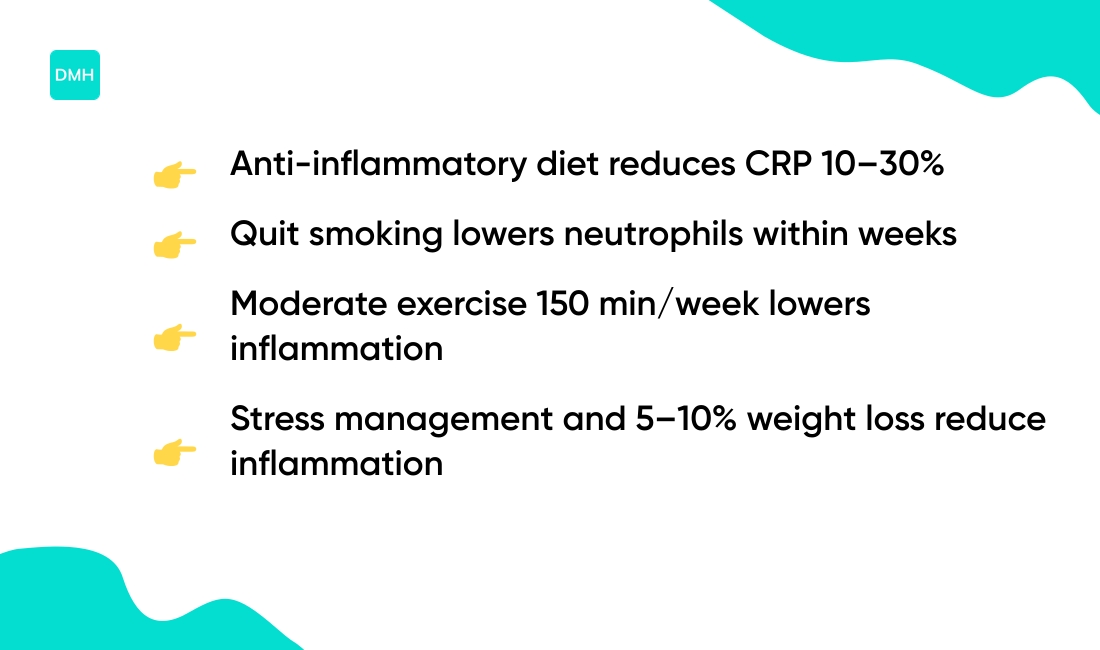
Diet can influence inflammatory markers linked to neutrophilia. Choose an anti-inflammatory diet plan with vegetables, fruit, whole grains, legumes, and olive oil. Some studies suggest this pattern lowers CRP by about 10–30% in trial and cohort data.
Some trials used 1–3 g/day of EPA+DHA from fish oil and reported modest reductions in neutrophil-related inflammation markers. Higher fiber intake links to lower systemic inflammation in observational studies. Fermented foods and probiotics may alter immune signaling, with limited trial data.
Mindfulness, cognitive therapy, and yoga reduced inflammatory markers in randomized studies. Programs often last six to eight weeks and include daily practice.
Smoking raises white blood cell and neutrophil counts. Observational data show counts fall within weeks to months after quitting, reflecting smoking cessation benefits.
Regular moderate exercise—about 150 minutes weekly—links to lower inflammation. Short periods of intense training can raise neutrophils transiently.
Losing five to ten percent of body weight often lowers CRP and leukocyte measures. Sustained weight loss may reduce reactive neutrophilia in people with obesity.
| Lifestyle Factor | Potential Impact | Evidence Level |
|---|---|---|
| Anti-inflammatory diet | 10–30% CRP reduction | Trial and cohort data |
| Smoking cessation | Count drops in weeks–months | Observational studies |
| Moderate exercise (150 min/week) | Lower inflammation markers | Observational data |
| 5–10% weight loss | Lower CRP and leukocytes | Clinical studies |
| Stress management (yoga, mindfulness) | Reduced inflammatory markers | Randomized trials |
Combine gradual diet change with stress management and activity adjustments. These measures may be part of high neutrophils treatment approaches that target underlying causes.
You may want to discuss blood test trends and possible causes with a clinician. Not medical advice; content for educational purposes only. Always consult a qualified healthcare professional for medical advice specific to your situation.
Read also: What Is A Dangerous Low White Blood Cell Count
When high neutrophils require urgent medical attention
A neutrophil rise may require urgent care when counts reach levels that threaten organs or signal severe disease.
Very high counts often refer to neutrophil or white blood cell counts above 50,000 per microliter. Levels above this can suggest a leukemoid reaction or a myeloproliferative disorder.
Look for severe systemic symptoms such as high fever, rapid breathing, confusion, severe bleeding, chest pain, or sudden organ dysfunction. These signs may be associated with life-threatening infection, tumor lysis, or bone marrow failure.
A leukemoid reaction can mimic leukemia and may require emergent evaluation. Aggressive infectious causes often need urgent broad-spectrum antimicrobials and intensive support.
Treatments used in emergencies include leukapheresis to lower counts quickly and targeted cytoreductive therapy for blood cancers. Experimental agents that aim to disarm overactive immune cells are under study—read more on new immune-targeting drugs.
For guidance on what counts are considered dangerous, see the detailed page about a dangerous white blood cell count.
If you notice severe symptoms or very high counts, you may want to discuss urgent evaluation with a clinician. Not medical advice; content for educational purposes only.
Read also: Is It Serious To Be Referred To A Hematologist
What should I do if my neutrophils are high
High neutrophils mean a higher-than-normal count of neutrophils on a blood test. This finding is often called neutrophilia and can have many causes.
A clear measure is the absolute neutrophil count. That value helps guide evaluation and monitoring.
What tests might your doctor order?
- CBC with differential
- Repeat CBC
- Peripheral blood smear
- CRP or ESR
- Blood cultures if infection is suspected
- Imaging such as chest X‑ray or ultrasound to look for infection or inflammation
- Bone marrow biopsy if high counts persist or a blood disorder is suspected
Key questions to discuss with a clinician:
- What are possible causes for my high neutrophil count?
- Could recent medications or steroids play a role?
- Do I need antibiotics or other treatment?
- How often should labs be rechecked?
- What symptom warning signs may signal urgent care?
- How do results relate to conditions like infection, inflammation, or myeloproliferative disorders?
- Could lifestyle factors—such as smoking or recent stress—affect counts?
Monitoring may vary from a few days to several weeks depending on symptoms and suspected cause. Mild, asymptomatic elevations may be rechecked in 2–4 weeks. Rapid rises or very high counts may prompt faster evaluation.
Information is for educational purposes only. Not medical advice; content for educational purposes only. Always consult a qualified healthcare professional for medical advice specific to your situation.
You might also like: What Happens at Your First Hematology Appointment
Educational notice: This content is provided for informational and educational purposes only and is not intended as medical advice. Always consult a qualified healthcare professional for medical concerns.