
That uncomfortable burn after a heavy meal is more than an annoyance—it’s a signal your body’s plumbing may be under stress.
The esophagus, a 9–10 inch muscular tube that links the throat to the stomach, moves food by coordinated muscle contractions but can be harmed by acid reflux, infections, or motility disorders.
Knowing how it works (and how the upper and lower esophageal sphincters protect you) makes it easier to spot trouble early and seek care.
It’s not just heartburn—difficulty swallowing, painful swallowing, persistent chest discomfort, or blood in vomit or stools are red flags.
In this guide you’ll learn what the esophagus does, common conditions like GERD and Barrett’s esophagus, when to see a doctor, and practical steps to keep it healthy.
What is the esophagus and how does it work
The esophagus is a 9 to 10 inch (23 to 25 cm) muscular tube connecting the throat to the stomach. It sits in the chest behind the trachea and passes through the diaphragm to reach the stomach.
The esophageal wall has four distinct layers: mucosa, submucosa, muscularis propria, and adventitia. Unlike most of the GI tract, it has no serosa—a unique feature that sets it apart.
Circular and longitudinal muscles produce coordinated contractions that move food. Peristalsis describes the wave-like contractions that propel food and liquids downward. Those contractions work whether you stand, sit, or lie down (yes, even upside down!).
Nerves coordinate the timing and strength of each contraction. The throat end opens via the upper esophageal sphincter during swallowing to allow a bite to pass.
The stomach end stays closed by the lower esophageal sphincter to help keep stomach contents from moving back up. Think of these sphincters as gatekeepers—they control what goes in and what stays down.
Impaired muscle function can cause dysphagia, esophageal spasms, or other motility disorders. Tests such as esophageal manometry measure muscle activity and motility to evaluate function.
Evidence and patient guidance about esophageal anatomy and function appear on reputable sources, including the Cleveland Clinic overview. For informational purposes only; always consult a qualified healthcare professional for medical advice specific to your situation.
What is the function of the esophagus
What does the upper esophageal sphincter do
The upper esophageal sphincter is a circular muscle at the top of the esophagus. It controls when food and liquid enter the esophagus from the throat.
The muscle stays closed at rest to protect the airway. It relaxes for a brief moment during swallowing to let a food bolus pass. Muscles above the sphincter close the airway at the same time to reduce the risk of inhaling material.
When the sphincter doesn’t open or close properly, people may cough, choke, or have trouble swallowing. Recurrent aspiration can lead to lung infections or voice changes.
Tests such as esophageal manometry measure sphincter pressure and coordination to evaluate function. Evidence shows sphincter dysfunction can be part of an esophageal motility disorder or follow neurologic injury. For informational purposes only; consult a qualified healthcare professional for medical advice specific to your situation.
How the lower esophageal sphincter protects from acid
The lower esophageal sphincter (sometimes called the cardiac sphincter) is a short ring of muscle at the esophagus-stomach junction. It sits just above the stomach and may span about 3–4 cm.
The muscle stays tonically contracted to form a barrier against stomach contents. Swallowing triggers a brief, coordinated relaxation that lets food pass into the stomach.
The diaphragm adds external support at the esophageal hiatus. The anatomical angle where esophagus meets stomach helps limit upward flow. Esophageal manometry often measures resting LES pressure near 10–30 mmHg.
Weakness or inappropriate relaxation of the LES can allow gastric acid backflow. Repeated exposure may be associated with esophagitis and Barrett’s esophagus, conditions linked to higher cancer risk.
Saliva and mucus provide minor buffering and tissue protection after brief acid exposure. For informational purposes only; always consult a qualified healthcare professional for medical advice specific to your situation.
How peristalsis moves food to your stomach
Peristalsis is a coordinated muscle action in the esophagus. It pushes swallowed food from the throat toward the stomach.
Circular muscle layers squeeze behind the food while longitudinal layers shorten the tube ahead. This pattern creates moving rings that force the bolus down the esophagus—a visible effect sometimes called esophageal muscle rings.
The upper esophageal sphincter opens to admit the bolus. The lower esophageal sphincter relaxes to allow passage into the stomach.
Peristaltic waves travel at roughly 2 to 4 cm per second in healthy adults. This speed lets people swallow while standing, lying down, or in other positions.
Weak or disorganized peristalsis can cause dysphagia or symptoms linked to an esophageal motility disorder. For informational purposes only; not a substitute for professional medical advice.
Common esophageal conditions and disorders
What causes acid reflux and is GERD the same thing
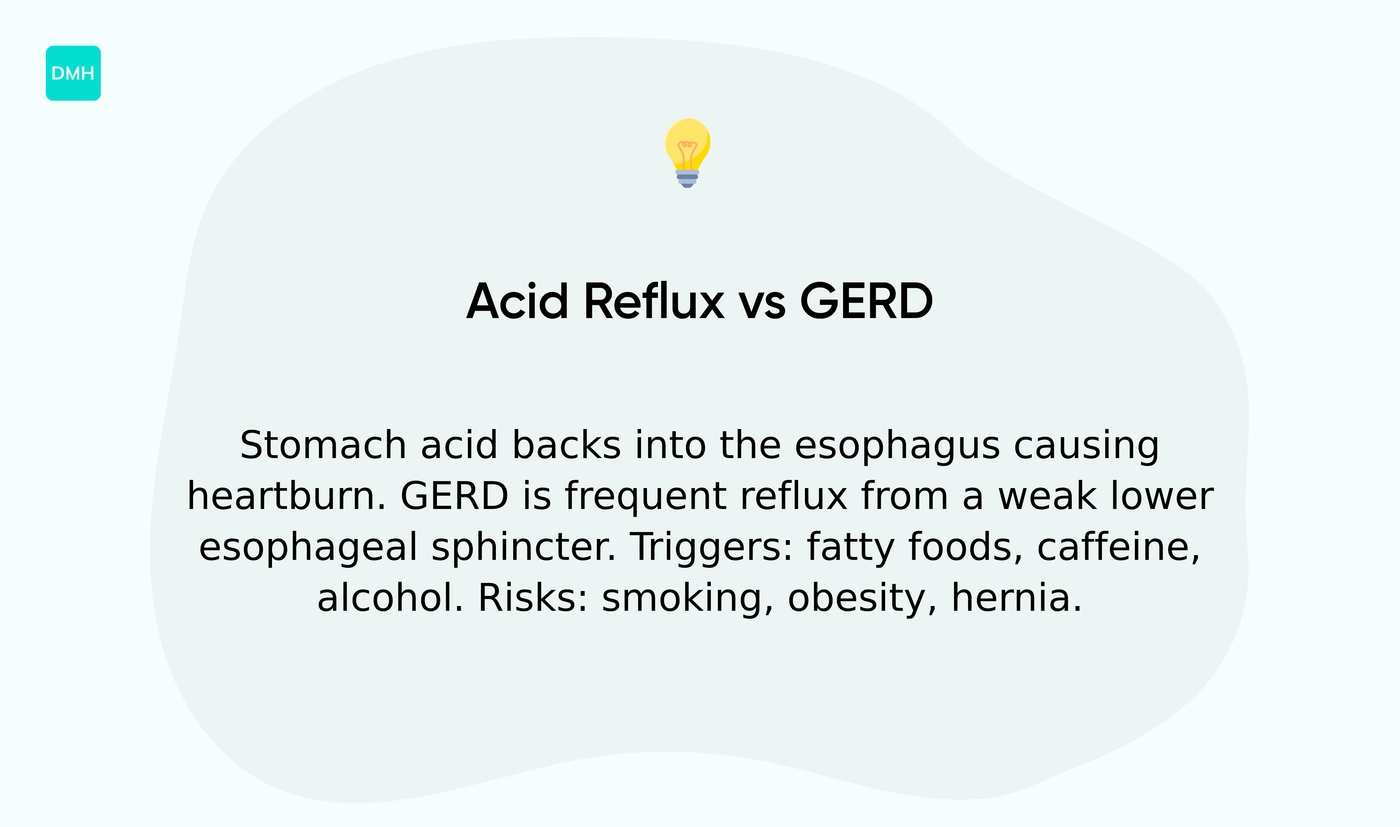
Acid reflux occurs when stomach acid flows back into the esophagus. This may irritate the lining and cause acid reflux symptoms such as heartburn and regurgitation.
Occasional reflux happens to many people after large meals or spicy foods. GERD refers to recurrent reflux—it causes frequent symptoms or injury to the esophagus. GERD often involves a weak lower esophageal sphincter that fails to close fully.
Common triggers include fatty meals, citrus, chocolate, caffeine, and alcohol. Smoking, obesity, and lying down soon after eating may increase reflux. A hiatal hernia can increase reflux by altering the esophagus-stomach junction.
Some medications may relax the sphincter or irritate the esophagus. Read more about acid reflux causes to understand prevention strategies.
For informational purposes only; not a substitute for professional medical advice. Always consult a qualified healthcare professional for medical advice specific to your situation.
What is Barrett’s esophagus and how is it diagnosed
Barrett’s esophagus is a change in the lining of the esophagus. This precancerous tissue change often follows long-standing acid reflux or GERD.
Doctors evaluate symptoms such as persistent heartburn, dysphagia, or chest discomfort. Endoscopy lets clinicians see abnormal, salmon-colored patches inside the esophagus.
During endoscopy a physician takes an endoscopic biopsy sample. Pathology looks for intestinal metaplasia, the hallmark of Barrett’s esophagus.
Management options may include acid suppression medications, endoscopic ablation, or mucosal resection for visible lesions. Some people follow regular surveillance with surveillance endoscopy intervals to monitor changes that may be associated with esophageal cancer.
Preparing for endoscopy can affect test quality. Learn how to prepare for endoscopy if a scope is planned. For informational purposes only; not a substitute for professional medical advice.
What causes esophagitis and how is it managed
Esophagitis means inflammation of the esophagus. It may cause pain, swallowing difficulty, or heartburn.
Common causes include acid exposure from gastroesophageal reflux disease, infections, medications, and allergic inflammation. Acid reflux often follows weakness of the lower esophageal sphincter and can damage the lining over time.
Infections such as Candida or herpes affect immune-suppressed people more often. Certain pills can irritate the mucosa and lead to ulcers or strictures.
Allergic esophagitis, called eosinophilic esophagitis, may link to food triggers. For example, dairy or wheat can cause symptoms in some people.
Management aims to reduce inflammation and address the cause. Lifestyle measures may reduce reflux. Medications such as proton pump inhibitors are commonly used to lower acid.
Antifungal or antiviral drugs can target infections. Swallowing therapies or dilation may help strictures. For informational purposes only; always consult a qualified healthcare professional for medical advice specific to your situation.
Can a hiatal hernia cause GERD or reflux
A hiatal hernia occurs when part of the stomach slips up through the diaphragm. This shifts the junction of the esophagus and stomach.
When the stomach moves above the diaphragm, pressure that helps close the lower esophageal sphincter can fall. That change may allow acid to travel back into the esophagus.
Heartburn and regurgitation are common acid reflux symptoms. Some studies suggest hiatal hernia often increases esophageal acid exposure measured by pH testing. Larger hernias and sliding types tend to raise reflux risk more than small ones.
For information on which specialist evaluates hernias, see what doctor to see for hernia. Not medical advice. For informational purposes only.
What are the early symptoms of esophageal cancer
Early esophageal cancer may cause subtle symptoms. Signs often relate to narrowing or irritation of the esophagus.
| Symptom | Description | Frequency |
|---|---|---|
| Difficulty swallowing | Progressive trouble swallowing solids then liquids | 60–80% of cases |
| Unexplained weight loss | Losing 5–10% of body weight over a few months | Common |
| Chest pain | Dull chest discomfort or pressure while eating | Variable |
| Chronic cough | Persistent cough or voice change | Less common |
| Vomiting blood | Blood in vomit or black stools | Requires urgent care |
Related guidance on home checks appears at how to check for throat cancer at home. For informational purposes only; always consult a qualified healthcare professional for medical advice specific to your situation.
You might also like: Why Does Ice Cream Make Me Cough
Esophageal symptoms you should never ignore
Signs in the chest or throat can point to a problem with the esophagus. Pay attention to changes in swallowing, pain, bleeding, and severe chest pain.
Difficulty with swallowing. Dysphagia means trouble moving food or liquids from the throat to the stomach. Difficulty with solids suggests a mechanical blockage such as an esophageal stricture. Difficulty with both solids and liquids may indicate an esophageal motility disorder.
Persistent heartburn symptoms. Frequent heartburn can be a sign of acid reflux or GERD. Some studies suggest about 20% of adults report weekly heartburn. Longstanding reflux may be associated with Barrett’s esophagus.
Signs of bleeding. Vomiting blood, black stools, or bright red blood with coughing require urgent attention. Bleeding can come from ulcers, varices, or tumor erosion into the esophagus.
Odynophagia refers to painful swallowing. Painful swallowing may be linked to esophagitis, infection, or an esophageal ulcer. Severe pain with fever or rapid heart rate can signal esophageal perforation.
Severe chest pain that suggests cardiac origin may overlap with esophageal pain. Learn more about hospital evaluation for chest pain at when to go to the hospital for chest pain.
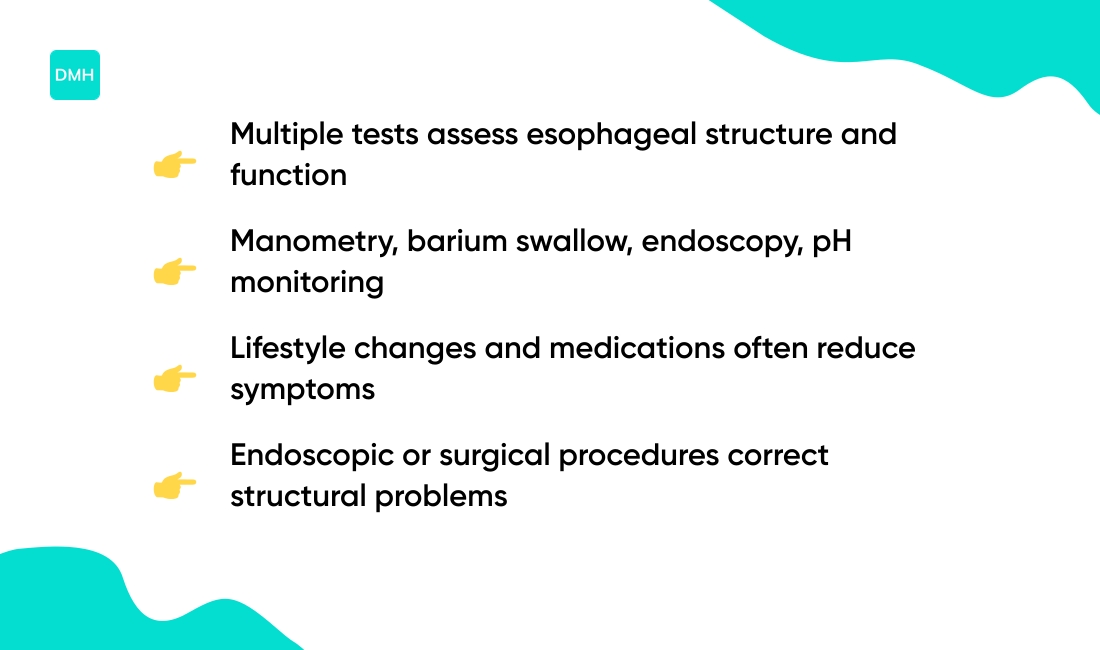
Diagnostic tests often include endoscopy, esophageal manometry, barium swallow, and pH monitoring. Test choice depends on symptoms and clinical judgment. Always consult a qualified healthcare professional for medical advice specific to your situation.
You might also like: What Helps With Nausea And When To See A Doctor
How esophageal problems are diagnosed and treated
Diagnosing esophagus problems relies on tests that assess structure and function.
- Esophageal manometry test measures muscle strength and coordination during swallowing.
- Barium swallow study uses X-rays to show narrowing, strictures, or abnormal movement.
- Upper endoscopy lets clinicians view the lining and take biopsy samples.
- pH monitoring tracks acid exposure over 24 to 48 hours to quantify reflux.
Treatment paths vary by diagnosis and symptom severity.
What lifestyle changes can reduce esophageal symptoms? Weight loss, head-of-bed elevation, and avoiding trigger foods can help. Some people consult lists like foods to avoid after endoscopy when planning meals.
Medications may lower acid production or improve motility. Proton pump inhibitors and H2 blockers are commonly used. Muscle-relaxing agents may help certain motility disorders.
Procedures and surgery address structural problems. Endoscopic dilation eases strictures. Fundoplication can strengthen the lower esophageal sphincter. Myotomy may relieve achalasia in selected patients.
Choice of test and therapy can vary from person to person. Some studies suggest combined approaches yield better symptom control for many people. For informational purposes only; not a substitute for professional medical advice.
Read also: Can Allergies Cause Laryngitis
How to keep your esophagus healthy
The esophagus moves food to the stomach. Simple habits can reduce acid reflux and strain on esophageal tissue.
- Avoid trigger foods: Limit spicy foods, tomato products, chocolate, peppermint, and high-fat meals. These items may increase heartburn and reflux.
- Maintain healthy weight: Excess weight links to more frequent reflux. Some studies suggest modest weight loss of 5–10% can reduce symptoms for many people.
- Preserve sphincter function: Avoid late large meals. Eat smaller portions and avoid lying down for two to three hours after eating.
- Limit alcohol and quit smoking: Both behaviors can weaken the sphincter and increase acid exposure to the esophagus.
- Raise the head of the bed: Elevate by 6–8 inches. Nighttime reflux may decrease with this change.
- Choose gentle produce: See the guide on low-acid fruits and vegetables for examples and choices that may suit some people.
Seek evaluation for persistent symptoms like frequent heartburn, difficulty swallowing, or unexplained weight loss. Some symptoms may signal esophagitis, Barrett’s esophagus, or other disorders that need testing.
For informational purposes only; always consult a qualified healthcare professional for medical advice specific to your situation.
You’ll also like: Why Is My Tongue White: Causes And Solutions
Educational notice: This content is provided for informational and educational purposes only and is not intended as medical advice. Always consult a qualified healthcare professional for medical concerns.