Most people underestimate their daily sodium intake.
High sodium intake quietly raises blood pressure and increases the risk of heart and kidney problems, yet it’s easy to miss because so much is hidden in processed and restaurant foods.
This guide lays out official recommendations, shows which high-sodium foods to avoid (including surprising sources like bread and cheese), and offers practical, flavor-friendly strategies to reduce salt.
You’ll learn what the recommended sodium intake for adults is, how to read nutrition labels, and simple swaps to help meet your daily sodium limit.
What is the recommended daily sodium intake?
American Heart Association guidelines
The American Heart Association recommends a maximum of 2,300 mg of sodium per day for adults.
The AHA sets an ideal target of 1,500 mg per day for most adults. This lower target may be associated with benefits for people with high blood pressure or cardiovascular risk.
One teaspoon of table salt contains approximately 2,300 mg of sodium.
Many packaged and restaurant foods add hidden sodium and raise daily totals. Actually, the average US sodium intake often exceeds 3,400 mg per day—that’s nearly 50% over the recommended limit.
Reducing intake toward the daily sodium intake goal of 1,500 mg may be associated with lower systolic pressure. Some studies suggest observed reductions may range from 5 to 10 mm Hg in certain individuals.
Effects can vary from person to person and with sodium sensitivity.
Not medical advice. Content for educational purposes only. Consult a qualified healthcare professional for medical advice specific to your situation.
World Health Organization recommendations
The World Health Organization recommends adults consume less than 2,000 mg sodium per day. This guidance equals about 5 grams of salt daily.
The target aims to lower population blood pressure and reduce related disease risk.
Global sodium intake often exceeds this target. Average intake in many countries falls between 3,000 and 4,000 mg daily.
Processed foods and restaurant meals drive most excess sodium. Bread, cured meats, canned soups, and sauces commonly add hidden sodium sources.
Reducing dietary sodium by 1,000 mg per day may be associated with lower blood pressure. Individual needs and responses can vary.
Some research shows larger reductions in people with sodium sensitivity or existing hypertension.
Not medical advice; content for educational purposes. Always consult a qualified healthcare professional for medical advice specific to your situation.
Sodium intake by age and gender
Recommended sodium intake varies by age. Health organizations set age-based limits to reduce high blood pressure risk.
Here’s the breakdown:
- Toddlers (1–3 years): 1,200 mg per day
- Children (4–8 years): 1,500 mg per day
- Preteens (9–13 years): 1,800 mg per day
- Teens and adults (14+ years): 2,300 mg per day
Guidelines apply the same numeric limits to males and females of the same age. Individual needs can vary with body size, activity level, and health status.
Clinicians may advise lower targets for people with higher blood pressure.
Tracking the daily sodium limit helps reduce hidden sodium from processed foods. You may find gradual reduction improves taste and supports a low-sodium eating pattern.
Not medical advice. Content for educational purposes. Always consult a qualified healthcare professional for medical advice specific to your situation.
Special recommendations for high-risk individuals
People with hypertension, heart disease, or other cardiovascular risk factors may benefit from a lower sodium target.
Major health groups commonly advise a daily sodium intake of 1,500 mg for these groups.
Keeping sodium near 1,500 mg can reduce pressure on the heart and arteries. Some studies suggest lowering sodium to this level may be associated with a decrease in systolic blood pressure by about 4 to 8 mm Hg in people with hypertension.
Focus on whole foods, cook with herbs instead of salt, and read labels for hidden sodium. Tracking daily sodium intake and avoiding high sodium foods such as processed meats helps reach the limit.
Resources such as how to lower blood pressure explain practical steps and monitoring tips.
Not medical advice; content for educational purposes. Consult a qualified healthcare professional for medical advice specific to your situation.
Is sodium the same as salt?
Sodium and salt are related but not identical. Sodium is a chemical element.
Salt normally refers to sodium chloride (NaCl).
Table salt contains about 2,300 mg of sodium per level teaspoon. That amount matches common targets for daily sodium intake used by health groups.
Salt intake measures the compound sodium chloride. Dietary sodium measures the sodium ion only.
Food labels list sodium in milligrams. Labels help track daily sodium intake and hidden sodium sources.
Sea salt flakes and kosher salt come from different processing and crystal shapes. By weight they contain similar sodium.
By volume, a coarse flake packs less into a teaspoon and can deliver less sodium per spoonful.
Trace minerals in some sea salts change flavor but don’t lower sodium content enough to affect health on their own. Most added sodium in diets comes from processed and restaurant foods rather than the salt shaker.
If you notice strong salt cravings, a vitamin deficiency can sometimes be related. See the discussion on vitamin deficiency and salt cravings for more information.
Not medical advice; content for educational purposes. Always consult a qualified healthcare professional for medical advice specific to your situation.
How does sodium affect blood pressure?
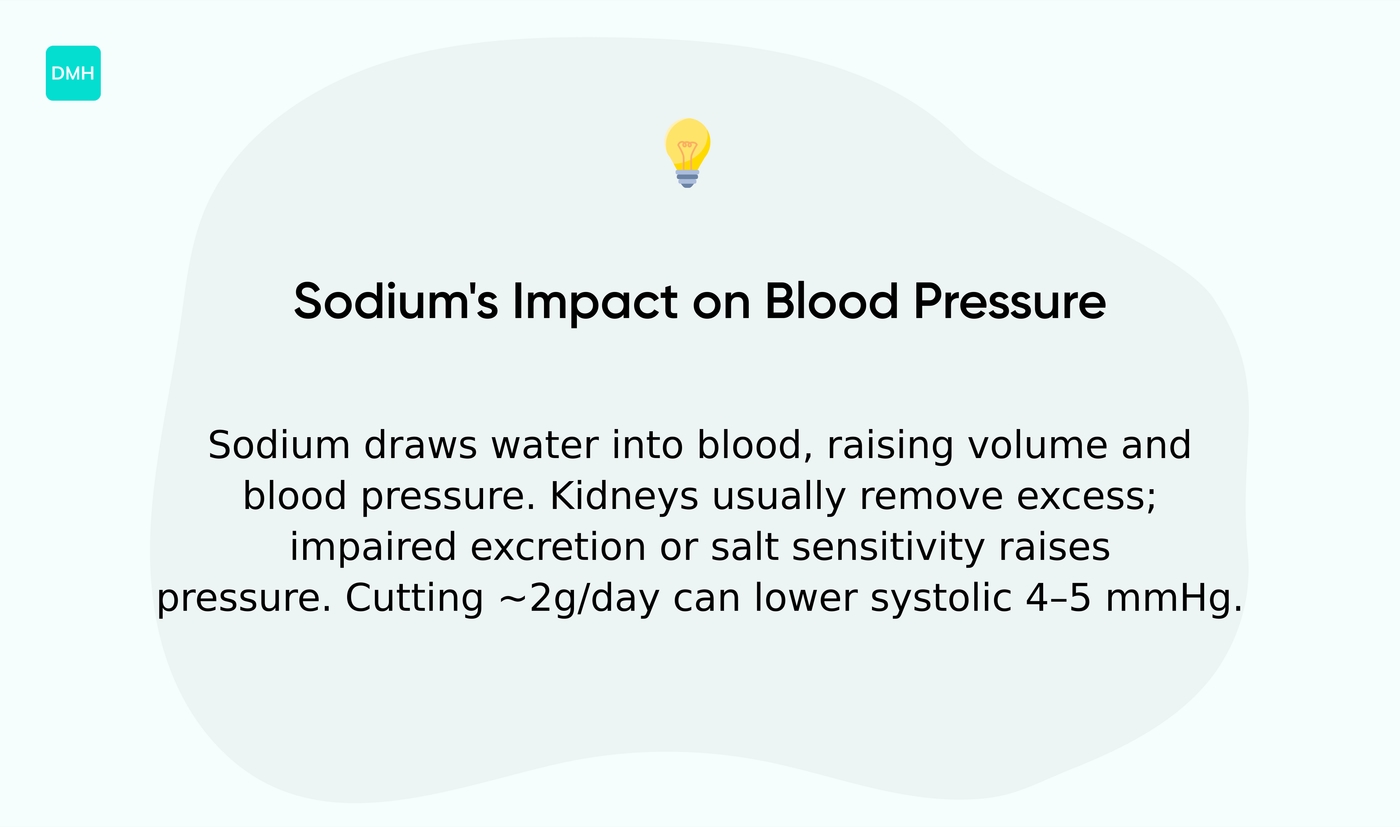
Sodium helps the body maintain the right amount of water and may influence blood pressure. Extra sodium pulls water into the bloodstream, which increases blood volume and boosts cardiac output.
Increased volume raises pressure on artery walls. The heart works harder to move blood, which can increase cardiovascular strain.
Kidneys normally remove excess sodium through urine. Impaired kidney function or slow excretion can allow sodium to build up and sustain higher pressure.
Sensitivity to dietary sodium can vary from person to person. Older adults, people with hypertension, and some racial groups often show higher sensitivity.
Some studies suggest reducing dietary sodium by about 2 grams per day may be associated with a decrease in systolic blood pressure by roughly 4–5 mm Hg in people with hypertension. Short-term changes may not apply to everyone.
Practical steps and causes for high pressure appear in high blood pressure causes and fixes.
Not medical advice. Content for educational purposes only. Always consult a qualified healthcare professional for medical advice specific to your situation.
What are high sodium foods to avoid?
Processed and packaged foods
Processed and packaged foods contribute a large share of daily sodium intake. Many items hide sodium under preservatives, flavor enhancers, and brines.
Hidden sodium sources include deli meats, frozen dinners, canned vegetables, soups, and condiments. Deli meats may contain 600–900 mg per 3-ounce serving.
Frozen dinners can pack 800–1,200 mg per meal. Canned vegetables and soups may list 200–500 mg per serving.
Here’s what you need to watch:
- Soy sauce can contain about 1,000 mg per tablespoon
- Ketchup has roughly 150–200 mg per tablespoon
- Packaged sauces and salad dressings often add 200–400 mg per two tablespoons
Reading labels helps you reduce sodium. Choose items labeled “low sodium” or compare the sodium daily value on packages to pick lower options for a low sodium diet.
Small swaps can lower your overall sodium intake over time.
Not medical advice. Content for educational purposes. Always consult a qualified healthcare professional for medical advice specific to your situation.
Restaurant and fast food meals
Restaurant and fast food meals often contain large amounts of sodium. A single meal may exceed the daily sodium intake recommended for adults. (And yes, sometimes by a lot!)
Fast-food cheeseburgers list 800–1,500 mg per sandwich. Large fries add about 300–500 mg.
Fried chicken pieces range from 1,000–1,800 mg each.
One bowl of restaurant soup can contain 1,200–2,500 mg. A deli sandwich commonly shows 1,200–2,000 mg on nutrition labels.
One tablespoon of soy sauce adds near 900 mg.
Pizza varies by topping and size. One slice often contains 700–1,000 mg.
A whole large pizza can total 2,800–4,000 mg.
Menu nutrition data may help you compare items. Choosing grilled proteins, requesting sauces on the side, and sharing portions can lower intake.
Be mindful of high sodium foods and hidden sodium sources.
Not medical advice; content for educational purposes. Always consult a qualified healthcare professional for medical advice specific to your situation.
Bread, cheese, and surprising sodium sources
Many common foods raise sodium without tasting salty. Bread, cheese, pizza, and some cereals add sodium throughout the day. They act as hidden sodium sources.
Bread often contains 100–200 mg sodium per slice. Two slices for a sandwich may supply 200–400 mg.
Firm cheeses like cheddar contain about 180–220 mg sodium per ounce. Soft cheeses and cottage cheese can contain 200–350 mg per serving.
A typical restaurant pizza slice can pack 600–900 mg sodium. One slice may equal half or more of a daily sodium intake for some adults.
Many breakfast cereals contain 100–300 mg sodium per serving. Adding milk increases that total by about 40–120 mg.
Small choices can lower totals. Selecting lower-sodium breads and cheeses and reading labels helps reduce hidden amounts.
Choosing fresh foods often reduces reliance on processed items and supports a low sodium diet.
Not medical advice; content for educational purposes. Always consult a qualified healthcare professional for medical advice specific to your situation.
How to read nutrition labels for sodium content
Nutrition labels show sodium in milligrams (mg) and as a percent of the sodium daily value. Labels help compare foods and pick lower-sodium options.
The Daily Value for sodium is 2,300 mg. “Sodium-free” means under 5 mg per serving.
“Very low sodium” means 35 mg or less per serving. “Low sodium” means 140 mg or less per serving.
“Reduced sodium” means at least 25% less sodium than the regular product.
How do you actually read a label? Check the serving size first. Multiply mg by servings if you plan to eat more than one serving.
Use %DV to see contribution to your daily sodium intake. A rule of thumb: 5% DV or less per serving is low, 20% DV or more is high.
| Label Term | Sodium Content | Meaning |
|---|---|---|
| Sodium-free | Under 5 mg per serving | Minimal sodium content |
| Very low sodium | 35 mg or less per serving | Excellent low-sodium choice |
| Low sodium | 140 mg or less per serving | Good option for daily use |
| Reduced sodium | At least 25% less than regular | Better than standard version |
When comparing products, match serving sizes or convert to mg per 100 g. Compare %DV when serving sizes differ.
Pick the product with lower mg and lower %DV for the portion you eat.
Watch for hidden sodium sources. Canned soups, deli meats, sauces, and bread can add up quickly.
Packaged meals often list high sodium per serving even when the %DV looks moderate.
Individual sodium intake needs can vary by age, health status, and medications. Some studies suggest sodium sensitivity can differ across people.
Not medical advice; content for educational purposes. Always consult a qualified healthcare professional for medical advice specific to your situation.
How can I reduce sodium in my diet?
Reducing sodium intake may be associated with lower blood pressure and reduced cardiovascular risk. The tips below focus on practical swaps and measurable steps.
- Cook at home to control salt. Use fresh ingredients and limit packaged sauces. One teaspoon of table salt contains about 2,300 mg of sodium.
- Choose whole foods. Fresh fruits, vegetables, lean proteins, and dried beans have low sodium levels compared with processed options.
- Rinse canned foods to remove surface sodium. Opt for low-sodium or no-salt-added labels. Look for canned beans with under 140 mg per serving.
- Use herbs, spices, citrus, and vinegars to boost flavor without salt. Roasted garlic, smoked paprika, and lemon zest can replace salt in many recipes.
- Reduce salt gradually to adjust taste. Cutting salt by about 10% to 20% each week may help the palate adapt over two to four weeks.
- Compare nutrition labels for the sodium daily value. Aim to keep total daily sodium toward the recommended limit for adults.
- Increase dietary potassium through fruits and vegetables. Higher potassium intake may help balance sodium effects; see foods high in potassium for options.
Small, consistent changes often yield the largest benefit. Effects can vary from person to person and depend on medical history and medication use.
Not medical advice. Content for educational purposes only. Always consult a qualified healthcare professional for medical advice specific to your situation.
Read also: How to Read Blood Test Results: A Simple Guide
Health risks linked to high sodium intake
High sodium intake may be associated with higher blood pressure and vascular disease. According to available research, excess sodium is linked to stroke, heart disease, and kidney harm.
Sodium causes the body to retain water, which raises blood volume. Raised volume increases arterial pressure and heart workload.
Population studies show higher sodium correlates with increased risk of heart events and stroke. Some trials suggest reducing sodium by about 1,000 mg daily may be associated with lower systolic blood pressure.
Observed reductions average roughly 3 mm Hg.
People with hypertension may see larger drops in blood pressure. A low sodium diet often focuses on fresh foods and herbs.
High sodium intake can worsen kidney function and raise urinary calcium. Lowering sodium may be associated with reduced kidney stone risk; see prevent kidney stones for more information.
Excess sodium can increase fluid retention and worsen heart failure symptoms. A modest sodium reduction often lowers population blood pressure and may be associated with reduced cardiovascular events.
Effects can vary from person to person and with overall diet.
Not medical advice; content for educational purposes. Always consult a qualified healthcare professional for medical advice specific to your situation.
Read also: What Is Magnesium Good For? A Research Overview
Is 1000 mg of sodium a day too little?
Sodium intake refers to the milligrams of sodium you eat daily. Major guidelines set adult targets near 1,500 mg to 2,300 mg per day.
Eating about 1,000 mg daily falls below most recommended targets. Some healthy adults may tolerate that level without symptoms for short periods.
Dietary sodium supports fluid balance and nerve function. Very low intake can lower blood pressure and reduce blood volume in some people.
That effect may cause lightheadedness or weakness.
Some observational studies suggest very low sodium may be associated with higher health risks in certain groups. These studies show associations, not proof of cause.
People on diuretics, older adults, and endurance athletes may face greater risk from low sodium. Electrolyte shifts can affect potassium and other minerals.
See this low potassium causes resource for related issues.
Low sodium intake may be safe under clinical supervision. Doctors can check blood sodium levels and adjust medicines. Practical steps include gradual dietary changes and periodic lab tests.
If symptoms like fainting or severe fatigue occur, seek medical assessment.
Daily sodium intake goals can vary from person to person. Some studies suggest personalized targets based on health status and medications.
Not medical advice; content for educational purposes. Always consult a qualified healthcare professional before making large sodium changes.
Read also: Can Dehydration Affect Blood Test Results?
Educational notice: This content is provided for informational and educational purposes only and is not intended as medical advice. Always consult a qualified healthcare professional for medical concerns.