Facing a colonoscopy can feel overwhelming before the prep even starts.
Questions about bowel cleansing, medication changes, and insurance often make people postpone the appointment.
This clear guide walks through practical steps for colonoscopy preparation, explains the procedure, and outlines recovery expectations.
You’ll learn how to follow a low-residue and clear-liquid plan, why split-dose prep works better, and which medicines to discuss with your provider.
The guide also gives tips to make bowel prep tolerable, what sedation options mean, how long a colonoscopy takes, and when polyps need repeat exams.
By the end you’ll be ready for the appointment with less anxiety and a simple checklist to follow.
Read on for step-by-step prep advice, safety notes, and practical resources about costs and screening alternatives.
What is a colonoscopy
Colonoscopy is a medical test that lets clinicians view the inner lining of the large intestine. The procedure inspects the colon for polyps, inflammation, bleeding, and tumors.
A thin, flexible tube with a camera and light passes through the rectum into the colon. The camera sends real-time images to a monitor so the clinician can examine the mucosa.
Air or carbon dioxide gently expands the colon for clearer views. The procedure can include biopsies and polyp removal during the same visit.
Removing polyps may reduce the chance that abnormal tissue becomes cancerous over time. Sedation options range from light sedation to deeper sedation, which can affect how alert you feel after the test.
Colon cancer screening commonly uses colonoscopy when a full visual exam is needed. According to CDC and USPSTF guidance, screening helps detect early cancer and precancerous polyps.
Typical procedure time in the room runs about 30 to 60 minutes, though total visit time may be longer due to prep and recovery. You may experience mild gas, bloating, or grogginess after the exam.
Not medical advice; content for educational purposes only. Consult a qualified healthcare professional for medical advice specific to your situation.
When do you need a colonoscopy
Colon cancer screening often starts at age 45 for people at average risk. Screening aims to find polyps or early cancers before symptoms appear.
For average-risk adults, a normal colonoscopy is commonly repeated every 10 years. A positive noninvasive stool test, such as FIT, usually leads to a diagnostic colonoscopy within weeks.
People with higher risk may need earlier and more frequent exams. Does your family have a history of colorectal cancer? Family history in a first-degree relative often leads to screening that begins at age 40 or ten years earlier than the relative’s diagnosis, whichever comes first.
A history of inflammatory bowel disease or genetic syndromes may shorten intervals to every 1–5 years, depending on specifics. Screening colonoscopy frequency after polyp removal depends on polyp number, size, and pathology.
| Finding | Typical Surveillance Interval |
|---|---|
| 1–2 small tubular adenomas (<10 mm) | 7–10 years |
| 3–10 adenomas or any ≥10 mm | ~3 years |
| More than 10 adenomas | 1 year |
| Sessile serrated polyps ≥10 mm or with dysplasia | ~3 years |
Polyp removal follow-up recommendations come from expert panels such as the U.S. Multi-Society Task Force. Intervals can vary by provider and individual risk.
Not medical advice, content for educational purposes only. Always consult a qualified healthcare professional for medical advice specific to your situation.
How to prepare for a colonoscopy
Diet changes before your colonoscopy
Recent guidelines emphasize that bowel prep works best when it’s personalized, split into doses, and timed close to the procedure. Low-residue diet guidelines reduce stool bulk by limiting fiber.
Many sources suggest keeping fiber under 10–15 grams per day. Favor peeled fruits, white bread, refined pasta, eggs, and well-cooked vegetables without skins.
Avoid foods that leave residue. Nuts, seeds, popcorn, whole grains, corn, and raw fibrous vegetables may interfere with bowel visualization. Read a list of foods to avoid with MiraLAX for examples often cited during prep.
Clear liquid diet generally applies the day before the procedure. Clear fluids include water, strained broth, clear apple or grape juice, tea or coffee without milk, sports drinks, clear gelatin, and popsicles. (Avoid red or purple dyes when possible.)
Hydration helps the cleansing process. Many clinicians suggest targeting about 2 liters of clear fluids in the 24 hours before the exam and using electrolyte drinks if needed for balance.
Not medical advice, content for educational purposes only. Always consult a qualified healthcare professional for advice specific to your situation.
Understanding split-dose colonoscopy prep
Split-dose bowel preparation divides the bowel cleaning solution into an evening dose and a later dose. This approach explains what to expect and why many clinicians prefer it.
Most regimens ask for the evening dose about 6 to 8 hours after dinner. The later dose is usually taken 4 to 6 hours before your appointment, with the final clear liquids allowed up to 2 hours before arrival.
Clinical studies report lower rates of inadequate prep and improved polyp detection with split regimens compared with single-dose plans. Patients often report clearer output and fewer repeat procedures.
Same-day prep options exist for afternoon procedures. An early-morning initial dose followed by a later dose about 4 hours before a midday or afternoon appointment often works for scheduling and bowel cleanliness.
According to Mayo Clinic, for many people, a 2-liter split-dose bowel prep is enough for a morning colonoscopy. Not medical advice. Content for educational purposes only. Always consult a qualified healthcare professional for medical advice specific to your situation.
Medication adjustments before the procedure
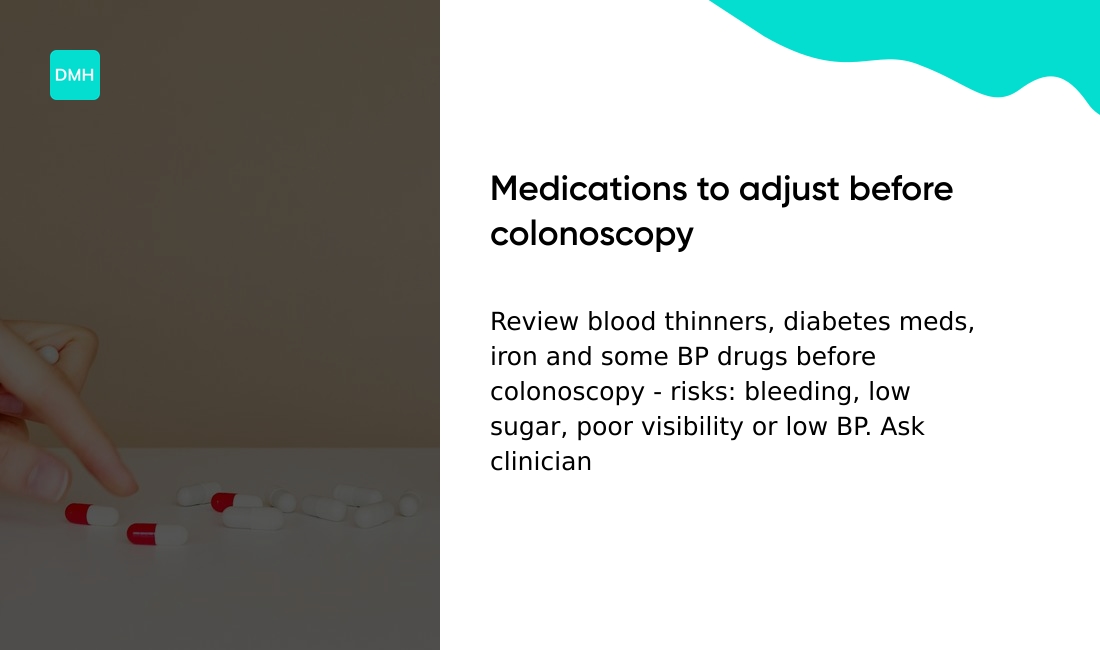
Medication adjustments can affect colonoscopy safety and image quality. Common medicines that may need review include blood thinners, diabetes medicines, iron supplements, and some blood pressure drugs.
Blood thinners may increase bleeding risk during polyp removal. Warfarin, direct oral anticoagulants, and antiplatelet agents are typical examples. Clinicians weigh bleeding risk against clotting risk when planning temporary changes.
Diabetes medicines can cause low blood sugar during fasting and bowel prep for colonoscopy. Short-acting insulin and sulfonylureas often need timing or dose adjustments to match reduced intake and laxative effects.
Iron supplements can darken stool and reduce visibility of the colon lining. Some blood pressure medications may lower pressure during sedation. Medication plans vary by drug, health history, and timing of the colonoscopy prep.
Not medical advice, content for educational purposes. Always consult a qualified healthcare professional for medical advice specific to your situation.
Tips for easier bowel prep
Colon cleansing solution may taste strong. Well, many people find simple changes reduce discomfort.
Chill the solution to dull the taste. Cold liquid often feels less bitter. Sip slowly—steady sips over 30–60 minutes can lower gag reflex.
Use a straw to direct liquid past the taste buds. Suck gently instead of gulping. Try flavored clear liquids allowed by your provider.
Stay near bathroom during and after drinking. Bowel movements may start within minutes, so plan quiet time and easy access.
Nausea or cramping may occur. Ginger or peppermint candies may help mildly. Over-the-counter antiemetics may be discussed with your clinician. For more on managing nausea, see what helps with nausea.
Not medical advice. Content for educational purposes only. Always consult a qualified healthcare professional for individualized guidance.
What to expect during the colonoscopy procedure
Colonoscopy procedure: a flexible camera exam of the colon lining. It inspects for polyps and abnormal tissue.
- Arrival and check-in at the clinic. Staff review your medical history.
- An IV is placed for fluids and medications.
- Sedation options include light IV sedation (anxiolytic plus opioid) or deeper sedation with propofol administered by an anesthetist.
- A thin, flexible tube with a camera advances through the rectum to inspect the colon.
- Air or CO2 gently inflates the colon to improve visibility.
- Polyp detection prompts immediate action when safe.
Typical procedure time ranges from 20 to 60 minutes. Total time at the facility commonly spans 90 to 180 minutes. Recovery time varies by sedation type and individual response.
If a polyp appears, the endoscopist often removes it during the exam. Polyp removal methods include snare excision or biopsy forceps. Tissue goes to pathology for analysis, with results returning in days to two weeks.
Surveillance intervals vary by number, size, and histology of polyps. Some guidelines suggest repeat exams as soon as three years for higher-risk findings.
You may feel mild bloating or cramping after the procedure. Serious complications are rare but can include bleeding or perforation. Not medical advice, content for educational purposes only. Always consult a qualified healthcare professional for medical advice specific to your situation.
Recovery after a colonoscopy
Managing discomfort after the procedure
You may notice gas and bloating after a colonoscopy. Air introduced during the exam can cause pressure and discomfort.
Cramping: brief abdominal muscle contractions that may cause pain. Mild cramping often clears within 24 hours for most people.
To relieve trapped gas, try slow walking and gentle abdominal massage. For more tips, see the guide on remove gas from stomach.
Over-the-counter acetaminophen may help mild pain. Nonsteroidal anti-inflammatory drugs can increase bleeding risk after polyp removal, so discuss options with your clinician.
- Normal signs: mild bloating, brief cramping, passing gas.
- Watch for warning signs: severe abdominal pain, heavy rectal bleeding, fever, dizziness, or persistent vomiting.
Serious symptoms may require prompt evaluation. Not medical advice, content for informational purposes only. Always consult a qualified healthcare professional for medical advice specific to your situation.
When to call your doctor after colonoscopy
Most people have mild bloating and cramping after a colonoscopy. Serious signs need prompt attention.
- Severe abdominal pain: sudden, intense, or steadily worsening pain may be associated with bowel perforation or appendicitis. Information on appendicitis symptoms is available.
- Heavy rectal bleeding: bleeding that soaks a pad within an hour or passes large clots can indicate active bleeding.
- Signs of infection: fever above 100.4°F (38°C), chills, increasing redness or drainage at an IV site may signal infection.
- Persistent nausea or vomiting that prevents fluid intake. New lightheadedness, fainting, or a rapid heartbeat.
Contacting a healthcare provider or emergency services is advised if any of these signs appear. Some symptoms may be associated with rare complications of the colonoscopy procedure, such as perforation or delayed bleeding.
Not medical advice. Content for educational purposes. Consult a qualified healthcare professional for medical advice specific to your situation.
Resuming normal diet and activities
Recovery can vary from person to person. Many people leave the clinic within an hour after a routine colonoscopy.
Start with clear liquids and progress to bland, soft foods if there’s no nausea or visible bleeding. Some clinicians suggest trying small portions within 1–2 hours.
A typical first foods list includes toast, broth, yogurt, or banana as gentle options. For people who received sedation, many facilities advise avoiding driving and heavy work for 24 hours.
Plans to return to work depend on sedation type and job demands. Limit heavy lifting and intense exercise for at least 24 hours. Light walking often feels acceptable and may help relieve gas or bloating.
Not medical advice. Content for educational purposes only. Consult a qualified healthcare professional for medical advice specific to your situation.
Colonoscopy risks and safety considerations
Colonoscopy risks explained. Colonoscopy is an exam of the colon using a flexible camera. It plays a central role in colon cancer screening and diagnosis.
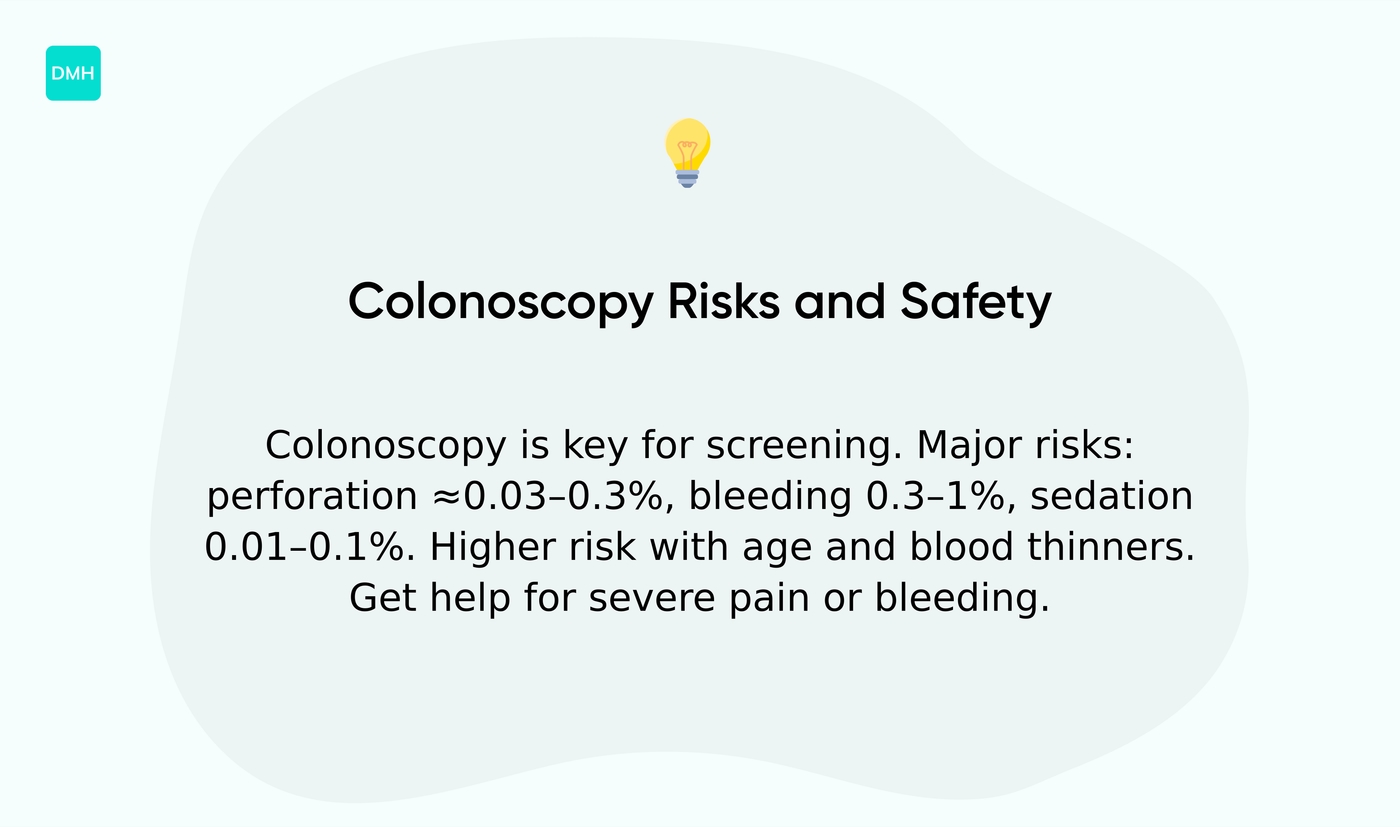
Complications remain uncommon. Perforation, bleeding, and adverse reactions to sedation represent the main concerns.
Perforation rates vary by procedure type. According to the American Society for Gastrointestinal Endoscopy and large studies, rates range from about 0.03% to 0.3% overall. Rates rise with therapeutic procedures such as polyp removal.
Bleeding after polypectomy occurs more often than perforation. Observational data report bleeding in roughly 0.3% to 1.0% of procedures that remove polyps. Most bleeding is manageable during the procedure or with brief observation.
Sedation-related complications usually involve low oxygen levels or heart rhythm changes. Serious cardiorespiratory events occur at roughly 0.01% to 0.1% in monitored settings.
- Perforation and bleeding risk factors: older age, anticoagulant use, large polyps, complex therapeutic procedures, active inflammatory bowel disease.
- Sedation related complications risk factors: severe heart or lung disease, sleep apnea, high sedative doses.
Warning signs that may require urgent evaluation include severe abdominal pain, heavy rectal bleeding, fever, chest pain, or breathing difficulty. Time from procedure to symptom onset can vary.
Not medical advice. Content for educational purposes only. Always consult a qualified healthcare professional for medical advice specific to your situation.
You might also like: What Causes Acid Reflux And How To Prevent It
Cost and insurance coverage for colonoscopy
Colonoscopy checks the colon lining with a flexible camera. Costs and coverage can vary from person to person.
Screening colonoscopy: a procedure to look for polyps or cancer in people without symptoms. Colonoscopy cost without insurance often ranges from about $1,000 to $3,000.
Facility fees, sedation, pathology for removed polyps, and regional pricing can raise total charges above that range. Private insurers and Medicare commonly cover screening colonoscopy under preventive benefits.
Some plans follow the Affordable Care Act rules and may waive cost-sharing for screening. However, coverage can change when the procedure finds and removes a polyp. Insurers may classify that visit as diagnostic.
That reclassification can result in copayments, coinsurance, or billing for pathology. Financial options exist for people facing bills. Hospitals may offer sliding-scale charity care or payment plans.
Some providers quote a lower self-pay rate up front. Health savings accounts (HSA) and flexible spending accounts (FSA) can offset out-of-pocket expenses. Medicaid and community health centers may cover screening for eligible people.
Check plan details before scheduling. Does your insurer cover pathology and polyp removal during a screening visit? You may find bills vary by provider and region.
Not medical advice; content for educational purposes only. Consult a qualified healthcare professional for advice specific to your situation.
You might also like: Can Allergies Cause Diarrhea
Alternatives to colonoscopy for colon cancer screening
Screening options exist besides colonoscopy. Each option has trade-offs in reach, accuracy, and convenience.
Virtual colonoscopy test is a CT-based scan of the colon lining. Sensitivity for large polyps (≥10 mm) can reach about 90% in some studies. It misses smaller lesions more often than colonoscopy. A positive finding usually leads to a diagnostic colonoscopy for tissue sampling or polyp removal.
Fecal immunochemical test (FIT) checks stool for hidden blood. Single-sample FIT shows cancer sensitivity around 70–80% and specificity near 90–95% in pooled analyses. Frequent annual testing improves detection compared with less frequent testing.
Stool DNA test combines DNA markers with hemoglobin detection. A large trial reported cancer sensitivity near 90% and specificity around 85–90%. Positive results commonly require follow-up colonoscopy.
Flexible sigmoidoscopy inspects the left colon only. It reduces cancer incidence in that segment but doesn’t replace full colonoscopy for full-colon evaluation.
Guidelines usually call for diagnostic colonoscopy after any positive stool test or suspicious imaging. Colonoscopy remains the only test that allows immediate polyp removal and biopsy.
Test choice can vary by age, risk factors, access, and insurance coverage. Discuss options with a clinician to match screening to personal risk and preferences.
Not medical advice, content for educational purposes, consult a professional.
Read also: Why Do I Have Diarrhea Every Morning
Educational notice: This content is provided for informational and educational purposes only and is not intended as medical advice. Always consult a qualified healthcare professional for medical concerns.