Finding and checking lymph nodes on your body can feel confusing and a little worrying.
Swollen or tender lymph nodes often appear with colds, infections, or less commonly, serious conditions, so it’s hard to know what to do.
That uncertainty can lead to overchecking, missed signs, or unnecessary worry.
This guide shows safe, simple steps to locate common lymph node areas (neck, armpits, groin) and check them without harm.
Techniques focus on gentle fingertip pressure, comparing both sides, and stopping if it’s painful.
You’ll learn how typical swollen lymph nodes feel and which findings need medical attention.
By the end you’ll be able to identify superficial nodes and spot red flags that need evaluation.
What are lymph nodes
Bean-shaped immune structures sit along the lymphatic system. They filter lymph and help the body respond to threats.
Filtering lymph fluid is a key role. Nodes collect fluid, debris, and foreign material from tissues. Trapping abnormal cells allows immune cells to identify and respond to infections and other changes.
You may find about 600 lymph nodes in the human body. Major lymph node locations include the neck, armpits, chest, abdomen, and groin. Cervical lymph nodes in the neck often become palpable during infections.
Axillary lymph nodes in the armpits and inguinal lymph nodes in the groin can swell with localized problems. Cells called lymphocytes live inside nodes and mount immune responses. Macrophages help clear debris and microbes.
Normal nodes usually measure less than one centimeter across. Soft, mobile nodes often reflect reactive lymph nodes from infection or inflammation.
Swollen lymph nodes may be associated with bacterial or viral infection, immune conditions, or less commonly, malignancy. Firm or fixed nodes, rapid growth, or persistent enlargement can warrant evaluation. Lymphadenopathy is the medical term used to describe enlarged lymph nodes.
Findings can vary from person to person and with the underlying cause. Always consult a qualified healthcare professional for medical advice specific to your situation. Not medical advice; content for educational purposes; consult a professional.
Where are lymph nodes located in the body
Cervical lymph nodes in the neck
Cervical lymph nodes sit along both sides of the neck. Common groups include submandibular nodes under the jaw and postauricular nodes behind the ears.
Anterior and posterior cervical nodes run along the sternocleidomastoid muscle. Supraclavicular nodes lie above the collarbone and deserve close attention when enlarged.
Normal lymph nodes often measure under 1 cm. During infection nodes can swell to 1–3 cm and feel tender and movable. Have you noticed a tender lump under your jaw during a cold? That’s often a reactive node doing its job.
Swollen lymph nodes that are soft and painful usually point to infection or inflammation. Firm, fixed, or rapidly growing nodes may be associated with malignancy or other serious causes. Reactive lymph nodes often shrink within days to weeks after the infection clears.
You may wish to discuss persistent or concerning findings with a clinician. Always consult a qualified healthcare professional for medical advice specific to your situation. Not medical advice; content for educational purposes; consult a professional.
Axillary lymph nodes in the armpits
Axillary lymph nodes sit in the armpit along the axillary vein and lateral chest wall. They form part of the lymphatic system and clinicians describe roughly 20 to 30 nodes grouped into levels I through III.
They drain the upper limb and contribute to breast tissue drainage. Because of that drainage pattern, axillary nodes play a role in breast cancer staging. Sentinel node biopsies often sample one to three nodes for pathology.
Infections of the arm, chest or breast can cause enlarged lymph nodes that feel tender. Firm or fixed nodes may raise concern for lymph node cancer and may prompt further clinical evaluation.
A 2025 study found that tumor-draining lymph nodes can be altered before cancer spreads there, reinforcing how important sentinel lymph nodes are in cancer assessment. Always consult a qualified healthcare professional for medical advice specific to your situation. Not medical advice; content for educational purposes; consult a professional.
Inguinal lymph nodes in the groin
Inguinal lymph nodes sit in the groin where the thigh meets the pelvis. They include superficial nodes along the inguinal ligament and a few deep nodes near the femoral vein.
These nodes handle lower limb drainage, fluids from the genital area and lower abdomen. This area is a common site of lymphadenopathy. Anatomy texts describe about 10 to 20 superficial nodes, while deep inguinal nodes usually number one to three.
They often enlarge with leg, foot or pelvic infections. A swollen node can indicate a lymph node infection or reactive change. Swollen lymph nodes may feel soft and tender with infection, while firm or fixed nodes may raise concern for malignancy and may need further evaluation.
You may wish to discuss persistent swelling or pain with a clinician. Always consult a qualified healthcare professional for medical advice specific to your situation. Not medical advice; content for educational purposes; consult a professional.
Safe techniques for checking lymph nodes
Check lymph nodes with calm, gentle attention. Wash hands and sit in good light. (No need to worry — a simple, methodical approach works best.)
| Technique | Description | Why It Matters |
|---|---|---|
| Gentle fingertip pressure | Use the pads of three fingers. Press lightly until skin indents slightly. Move in small circular motions. | Prevents tissue irritation and false tenderness |
| Compare both sides | Palpate the same spot on each side. Note size, texture, and tenderness differences. | Helps identify asymmetry that may need attention |
| Stop if painful | If pressure causes sharp pain, stop and rest the area. | Avoids irritation and false swelling from repeated checking |
Here’s the thing: feel common areas slowly — neck, under the jaw, behind the ears, armpits, and groin. Pause 2–3 seconds per spot. Short, steady checks work better than long rubbing.
Limit frequency. Repeated checking can irritate tissue and cause false tenderness. Record findings: location, rough size, whether nodes feel soft, tender, movable, or hard.
Consider seeking professional input if nodes enlarge rapidly, stay swollen beyond two weeks, or come with fever or night sweats. Soft, tender nodes often relate to a nearby infection. Hard, fixed nodes may be associated with other concerns.
Superficial lymph nodes commonly measure under 1 cm, though size can vary from person to person. Always consult a qualified healthcare professional for medical advice specific to your situation. Not medical advice; content for educational purposes; consult a professional.
What causes swollen lymph nodes
Infections that cause enlarged lymph nodes
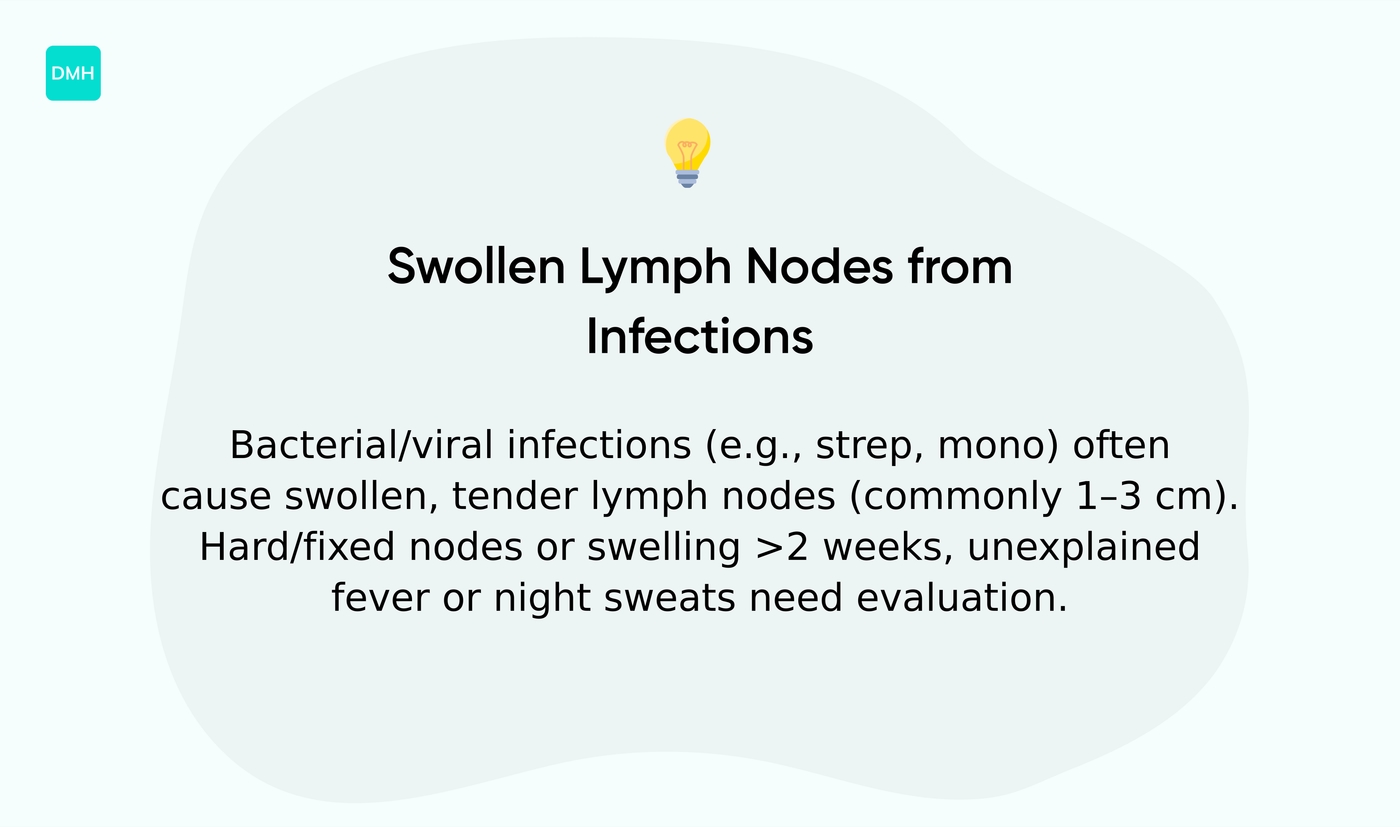
Bacterial and viral infections often cause swollen lymph nodes as part of the immune response. Strep throat commonly triggers tender cervical lymph nodes in the neck.
Infectious mononucleosis often causes widespread lymphadenopathy that can last 2–4 weeks. Upper respiratory, skin, and tooth infections may be associated with regional enlarged lymph nodes. Reactive nodes often measure 1–3 cm.
Tender lymph nodes usually indicate an infectious or inflammatory process. Hard or fixed nodes may need further evaluation. If swelling persists beyond two weeks, you may wish to discuss it with a clinician.
Unexplained fever or night sweats warrant prompt evaluation. Always consult a qualified healthcare professional for medical advice specific to your situation. Not medical advice; content for educational purposes; consult a professional.
Can allergies cause swollen lymph nodes
Allergic reactions and inflammatory conditions can cause mild enlargement of lymph nodes. This enlargement often appears bilateral and is usually less severe than with lymph node infection.
Allergic inflammation activates immune cells in nearby tissues. Lymph nodes filter lymph fluid and trap those activated cells, so nodes may feel larger or tender. Swollen lymph nodes from allergies tend to be small, soft, and mobile.
They often appear near affected areas such as the nose and throat, making the cervical lymph nodes most noticeable. Infections normally produce larger, more tender nodes and may include fever.
Hard or fixed nodes raise concern for malignancy, and reactive lymph nodes from noninfectious inflammation usually behave differently. If lymph node swelling lasts longer than two weeks, enlarges, or links with weight loss or night sweats, you may wish to discuss this with a clinician.
Always consult a qualified healthcare professional for medical advice specific to your situation. Not medical advice; content for educational purposes; consult a professional.
Do swollen lymph nodes always mean infection
Enlarged lymph nodes don’t always mean infection. They filter fluid and trap abnormal cells in the lymphatic system. Common causes include viral or bacterial infection, and reactive lymph nodes reflect a normal immune response.
Autoimmune conditions may be associated with node enlargement. Certain medications can cause swollen lymph nodes. Tender lymph nodes often hurt and move, while hard, fixed nodes may suggest lymph node cancer and usually don’t hurt.
Location informs assessment; cervical lymph nodes in the neck and axillary nodes in the armpit give clues about likely causes. If swelling lasts more than two weeks or grows, you may wish to discuss it with a clinician. Imaging or a lymph node biopsy can help clarify diagnosis.
Always consult a qualified healthcare professional for medical advice specific to your situation. Not medical advice; content for educational purposes; consult a professional.
Understanding lymphadenopathy
Lymphadenopathy means enlarged or abnormal lymph nodes. Lymph nodes filter lymph and contain immune cells that fight infection. Localized lymphadenopathy affects a single region, such as the neck or armpit.
Generalized lymphadenopathy involves two or more noncontiguous regions, such as cervical and inguinal areas. Local causes often include nearby infections, while systemic causes may include immune conditions or blood cancers.
Clinically, size matters. Nodes greater than 1 cm often count as enlarged, though inguinal nodes may be normal up to 1.5 cm. Children commonly have larger nodes during infections.
The phrase swollen lymph nodes reflects lay language. Clinicians prefer “lymphadenopathy” or “enlarged lymph nodes.” The term “swollen glands” appears in casual speech, though lymph nodes aren’t true glands.
Tender, soft nodes usually point to infection or inflammation. Firm or fixed nodes raise concern for malignancy. A lymph node biopsy may follow imaging and blood tests when findings persist or look suspicious.
If blood work shows elevated lymphocyte counts, you may wish to review the high lymphocytes blood test information and discuss results with a clinician. Always consult a qualified healthcare professional for medical advice specific to your situation. Not medical advice; content for educational purposes; consult a professional.
Warning signs that require medical attention
Do cancerous lymph nodes hurt
Cancerous lymph nodes are often painless. They feel firm or hard and may be fixed to nearby tissue. Infections often cause tender reactive nodes that feel soft and warm.
Size alone doesn’t indicate cancer. Consistency and mobility matter more. Cancerous nodes may grow slowly or quickly and resist movement on exam.
Common sites include cervical lymph nodes in the neck, axillary nodes in the armpit, and inguinal nodes in the groin. Doctors use imaging and a lymph node biopsy to confirm lymph node cancer.
You may wish to discuss hard, fast-growing, or persistent nodes with a clinician. Always consult a qualified healthcare professional for medical advice specific to your situation. Not medical advice; content for educational purposes; consult a professional.
What does a hard lymph node indicate
A firm or hard lymph node feels dense and often lacks mobility. Firm, fixed nodes that are painless may be associated with cancerous lymph nodes. Nodes that feel hard but remain small and mobile often reflect scarring or prior infection.
Size matters, but consistency often gives stronger clues than size alone. Nodes larger than about 1 cm that stay firm beyond two weeks can warrant medical evaluation.
Clinicians commonly use ultrasound and lymph node biopsy to help differentiate benign from malignant causes. If you notice a persistent firm node, you may wish to discuss it with a clinician for assessment. Swollen lymph nodes that are tender and moveable tend to signal infection or inflammation.
Always consult a qualified healthcare professional for medical advice specific to your situation. Not medical advice; content for educational purposes; consult a professional.
When should I worry about swollen lymph nodes
Swollen lymph nodes often reflect immune activity. You may feel concerned when a node behaves unusually. Seek medical evaluation if a node lasts beyond two weeks — persistent enlargement may be associated with underlying issues.
If you notice rapid progressive growth over days or a size greater than 2 cm, speak with a clinician. Single-sided, growing nodes can be more concerning than small, stable ones. What if the swelling doesn’t go away?
Watch for systemic signs such as unexplained fever, night sweats, or weight loss. New, deep fatigue with swollen nodes may signal a broader process like lymphadenopathy. Tender nodes often point to a local infection and may be warm or red.
Painless, firm, hard or fixed nodes can be associated with malignancy or other serious causes. Always consult a qualified healthcare professional for medical advice specific to your situation. Not medical advice; content for educational purposes; consult a professional.
How lymph node cancer is diagnosed
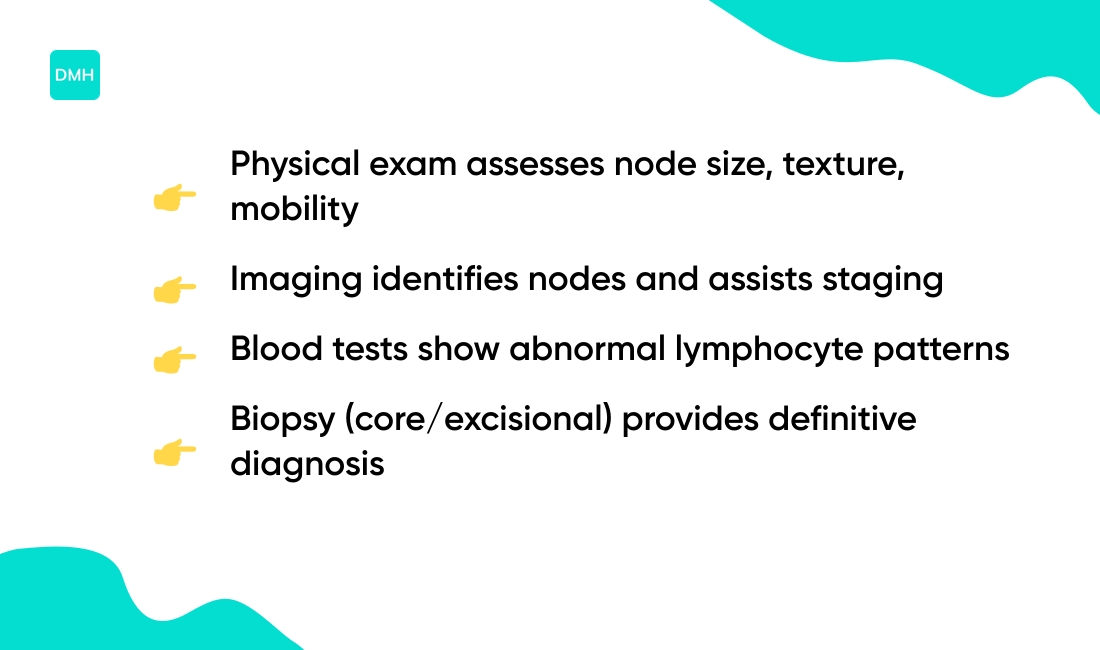
Clinicians begin with a careful physical exam. They note size, texture, mobility and tenderness of visible and palpable nodes. Malignant nodes often feel hard and fixed rather than tender or soft.
Imaging clarifies which nodes need closer study. Ultrasound evaluates superficial nodes, while CT shows deeper nodes and chest or abdominal spread. PET-CT can detect metabolically active nodes, with reported sensitivity around 80% to 90% for certain lymphomas.
Blood work helps build the picture. A complete blood count may show abnormal white blood cell or lymphocyte patterns linked to lymphoma. Read more about dangerous lymphocyte levels and what they may mean.
A tissue sample provides a definitive diagnosis. A lymph node biopsy examines cells under a microscope. Fine-needle aspiration can be informative but may miss architecture needed for typing.
Core needle biopsy or excisional biopsy yields higher diagnostic rates, often reported between 70% and 95% depending on technique and disease. Pathology and immunophenotyping identify lymphoma subtype and guide staging.
Staging uses imaging and labs to map spread. The American Cancer Society outlines staging steps for lymph nodes and cancer. You may wish to discuss imaging options and biopsy types with a clinician.
Always consult a qualified healthcare professional for medical advice specific to your situation. Not medical advice; content for educational purposes; consult a professional.
You might also like: Why Would A Doctor Order A Neck Ultrasound
How long do swollen lymph nodes last
Swollen lymph nodes often reflect active immune response. Small, tender nodes from common viral infections may shrink within 1–3 weeks. Bacterial infections can take longer, though with antibiotics, nodes may soften within days.
Full resolution can take 2–4 weeks. Mononucleosis and some viral illnesses can cause longer swelling — nodes may remain enlarged for 4–8 weeks in those cases.
Local inflammation, allergic reactions, and vaccinations can cause brief swelling. This may last a few days to six weeks. Persistent or growing nodes need more attention.
Nodes that stay enlarged beyond 4–6 weeks, feel hard or fixed, or come with unexplained fever, night sweats, or weight loss may be linked to more serious causes. These include autoimmune disease, chronic infections, or lymph node cancer.
Clinicians often use imaging and blood tests first. A lymph node biopsy may follow if tests don’t explain the swelling. What you can track: note size, pain level, temperature of the skin, and whether swelling moves.
Record how long the node stays enlarged and any new symptoms. You may wish to discuss persistent swelling with a clinician for targeted evaluation. Not medical advice; content for educational purposes; consult a professional. Always consult a qualified healthcare professional for medical advice specific to your situation.
You might also like: Strep Throat Or Mononucleosis
How to treat swollen lymph nodes at home
Swollen lymph nodes often respond to simple home care. Lymph nodes filter fluid and house immune cells, so swelling commonly means an active immune response or infection.
- Apply a warm compress for 10–15 minutes, three to four times daily. Heat can ease pain and may reduce swelling.
- Keep hydration steady. Aim for about eight 8-ounce cups or two liters of fluids daily. Proper fluids support immune function and fluid balance.
- Prioritize rest. Sleep seven to nine hours when possible. Rest supports recovery and lowers stress on the immune system.
- Use over-the-counter pain relief if needed. Options include acetaminophen or ibuprofen. Follow label directions and discuss choices with a clinician when needed.
- Try salt water gargles for sore throat and inflamed cervical lymph nodes. Some studies suggest gentle massage toward drainage points may aid comfort, though evidence is limited and effects can vary.
Monitor changes. Many reactive lymph nodes improve within 1–2 weeks. Seek medical evaluation if swelling persists beyond two weeks or if nodes grow rapidly, feel hard or fixed, or occur with unexplained fever, night sweats, or weight loss.
If blood tests show low lymphocyte counts, learn more about lymphopenia and how it may relate to swollen nodes. Always consult a qualified healthcare professional for medical advice specific to your situation. Not medical advice; content for educational purposes; consult a professional.
You might also like: Which Infections Cause High White Blood Cell Count?
Educational notice: This content is provided for informational and educational purposes only and is not intended as medical advice. Always consult a qualified healthcare professional for medical concerns.