High lymphocytes treatment decisions depend more on the cause than on the number itself.
An elevated lymphocyte count may signal a temporary infection, an autoimmune issue, or (less commonly) a blood cancer, leaving many people unsure what to do next.
This guide outlines clear approaches to high lymphocytes treatment—from watchful waiting and infection management to targeted therapies for chronic lymphocytic leukemia—so it’s easier to know what’s appropriate.
You’ll learn what tests doctors run, when to seek urgent care, treatment options by cause, and practical steps (including diet and lifestyle) to support recovery.
Most importantly, you’ll understand why treating the underlying condition matters more than chasing a specific lymphocyte number.
Daily Medical Health provides straightforward, medically grounded guidance so you can discuss the right steps with your clinician.
What does a high lymphocyte count mean
Lymphocytosis means a higher-than-normal number of lymphocytes in the blood. Normal absolute lymphocyte counts often range 1,000–4,000 cells/µL (1.0–4.0 x10⁹/L), though values can vary by lab and age.
An elevated value may be associated with infections or autoimmune activity. It can also reflect blood cancers such as chronic lymphocytic leukemia.
Laboratories report percent and absolute numbers. Clinicians focus on the absolute number and clinical signs. A high lymphocyte count can reflect a reactive immune response to viral infections—common examples include mononucleosis and pertussis.
Persistent or very high lymphocytosis can indicate chronic infections or a lymphoid malignancy. The approach to reactive lymphocytosis treatment and high lymphocytes treatment varies by diagnosis. Most reactive cases improve with infection control and observation.
Clinicians decide on observation, infection treatment, or targeted therapy based on test results. Diagnosis often involves repeat counts and blood smear review. Flow cytometry follows if a malignancy seems likely.
How concerned should you be about your elevated count? Questions about how to lower lymphocyte count or management of lymphocytosis warrant clinical evaluation. Refer to the detailed lab guide at what is lymphocytes in blood test.
Not a medical advice, content for educational purposes, consult a professional. Always consult a qualified healthcare professional for medical advice specific to your situation.
What causes high lymphocytes
Lymphocytosis means a higher than normal number of lymphocytes in the blood. Normal lymphocyte percentages often sit near 20–40% of white cells. An absolute lymphocyte count above roughly 4,000 cells/µL often indicates lymphocytosis.
Common causes may be grouped as reactive or neoplastic:
- Viral infections such as Epstein‑Barr virus, cytomegalovirus, and influenza often raise lymphocyte numbers
- Autoimmune inflammatory diseases like rheumatoid arthritis may produce persistent elevation
- Chronic lymphocytic leukemia and other blood cancers such as acute lymphoblastic leukemia can cause marked, sustained increases
- Chronic infections such as tuberculosis may lead to long‑standing lymphocytosis
Reactive lymphocytosis from infections typically resolves over weeks to months. Neoplastic causes often show very high absolute counts or steady rises over time.
Percentages in the mid‑40s or 50s often reflect mild to moderate lymphocytosis. Understanding the cause guides high lymphocytes treatment and management of lymphocytosis. More diagnostic detail appears in the high lymphocytes blood test resource.
Not a medical advice, content for educational purposes, consult a professional. Always consult a qualified healthcare professional for medical advice specific to your situation.
Do high lymphocytes always need treatment
Lymphocytosis means a higher than normal lymphocyte count. Normal absolute lymphocyte count is about 1,000–4,000 cells/µL (1.0–4.0 x10⁹/L).
An elevated lymphocyte count alone rarely requires immediate therapy. Many cases reflect a reactive response to infection or inflammation. Viral infections often cause lymphocyte rises that subside over days to weeks.
Treatment targets the underlying cause rather than the number. Supportive care and observation suit many people with mild, temporary rises. Reactive lymphocytosis treatment usually involves monitoring and treating the infection or inflammation.
Persistent or very high counts prompt further tests. Flow cytometry, blood smear review, and imaging help distinguish reactive causes from blood cancers. A diagnosis of chronic lymphocytic leukemia or acute leukemia changes management. High lymphocytes treatment for those diseases can include watchful waiting or targeted therapies when clinical criteria exist.
Decisions depend on symptoms, trend over time, absolute values, and overall health. Rapidly rising counts, weight loss, night sweats, or swollen nodes warrant prompt evaluation. Clinical context guides whether intervention helps.
Not a medical advice, content for educational purposes, consult a professional. Always consult a qualified healthcare professional for medical advice specific to your situation.
How is lymphocytosis treated based on the cause
Treatment for reactive lymphocytosis from infections
Reactive lymphocytosis treatment refers to a temporary rise in lymphocytes during infection. Lymphocyte levels often climb as the immune system responds to viral or bacterial threats.
Care targets the infection, not the lymphocyte count. Clinicians use observation and repeat blood counts to track trends over days to weeks.
Supportive care measures include rest, fluids, fever control, and symptom relief. Bacterial infections may receive antibiotics. Viral infections may receive antivirals when indicated.
Most reactive cases improve within two to six weeks. Persistent or very high counts prompt further evaluation with blood smear or flow cytometry. More detail on infections causing high white blood cell count is available at infections causing high white blood cell count, which reviews causes and monitoring.
High lymphocytes treatment focuses on the underlying cause and clinical context. Not a medical advice, content for educational purposes, consult a professional. Always consult a qualified healthcare professional for medical advice specific to your situation.

Management of chronic lymphocytic leukemia
Chronic lymphocytic leukemia (CLL) is a slow-growing blood cancer marked by rising lymphocyte counts. Some patients enter a watchful waiting approach with regular blood tests and exams when disease stays asymptomatic.
Treatment begins when symptoms, rapid lymphocyte rise, or organ involvement appear. Targeted drugs may control disease and limit toxicity compared with older chemotherapy. Common options include oral BTK inhibitors such as ibrutinib, acalabrutinib, or zanubrutinib, and BCL2 inhibitor venetoclax often combined with obinutuzumab or rituximab.
Genetic markers and overall health guide regimen choice. Combination strategies or immunotherapy may suit specific patients. Actually, modern CLL care has shifted strongly toward these oral targeted therapies and away from routine chemotherapy in many settings.
Clinical trials report meaningful response rates for many targeted agents. The National Cancer Institute offers a detailed summary for clinicians and patients: NCI CLL treatment PDQ.
Not a medical advice, content for educational purposes, consult a professional. Always consult a qualified healthcare professional for medical advice specific to your situation.
Treatment for other blood cancers causing lymphocytosis
Acute lymphoblastic leukemia (ALL) and many lymphomas may cause marked lymphocytosis and often require prompt intervention. Clinicians may start intensive chemotherapy regimens aimed at rapid disease control. Regimens vary by diagnosis and age.
Hodgkin lymphoma frequently uses ABVD chemotherapy with or without involved-site radiation. Diffuse large B-cell lymphoma often uses R-CHOP. Relapsed or high-risk disease might receive targeted immunotherapy or cellular therapies such as CAR-T.
High-risk or relapsed cases may be evaluated for a stem cell transplant to achieve long-term remission. Molecular markers and stage guide the choice of targeted immunotherapy agents and timing of transplant.
Treatment length can range from months of combination therapy to years of follow-up. Decisions depend on biopsy results, imaging, and patient factors. Management aims at the underlying cancer rather than the lymphocyte number alone.
Not a medical advice, content for educational purposes, consult a professional. Always consult a qualified healthcare professional for medical advice specific to your situation.
Managing lymphocytosis from autoimmune or chronic conditions
Persistent lymphocytosis means a sustained rise in lymphocytes above normal. Normal absolute lymphocyte counts often range near 1.0–4.0 x10⁹/L (1,000–4,000/µL) according to available research.
Management focuses on controlling the autoimmune or inflammatory process rather than the number alone. Clinicians may use immunosuppressive agents, corticosteroids, conventional DMARDs or targeted biologics to reduce immune activity. These approaches can lower lymphocyte counts as inflammation eases.
Regular monitoring guides decisions. Counts are often checked every 4–12 weeks after treatment changes. Very high absolute lymphocyte counts, progressive rise, or new symptoms often prompt hematology referral.
Infection risk often increases with immune suppression. Vaccination review, infection monitoring, and prophylaxis discussion commonly form part of care. For practical planning, discuss expected timelines, side effects, and monitoring with your clinician when exploring high lymphocytes treatment or lymphocytosis treatment and treatment for high lymphocytes.
Not a medical advice, content for educational purposes, consult a professional. Always consult a qualified healthcare professional for medical advice specific to your situation.
What tests are done before treating high lymphocytes
Clinicians run a stepwise diagnostic workup before any high lymphocytes treatment. The goal is to identify the cause and guide safe care.
| Test | Purpose |
|---|---|
| Repeat blood counts | Confirm persistent elevation and measure absolute lymphocyte count |
| Blood smear examination | Check lymphocyte appearance and look for immature or abnormal cells |
| Flow cytometry | Detect clonal lymphocyte populations and distinguish reactive from malignant causes |
| Infection tests | Assess recent or ongoing infections linked to elevated lymphocytes |
| Imaging studies | Evaluate enlarged lymph nodes or organ involvement |
| Lymph node biopsy | Confirm lymphoma or other cancers when tissue diagnosis is needed |
Test results shape the approach to lymphocytosis treatment. Reactive cases often need observation or infection management. Clonal disorders may need targeted therapy decisions.
You can prepare for specialist visits by reviewing a first hematology appointment guide. Not a medical advice, content for educational purposes, consult a professional. Always consult a qualified healthcare professional for medical advice specific to your situation.
You might also like: How to Identify Lymph Nodes in Your Body Safely
When should I worry about a high lymphocyte count
Lymphocytosis means an elevated lymphocyte number on a blood test. It may be associated with viral infections, autoimmune conditions, or blood disorders.
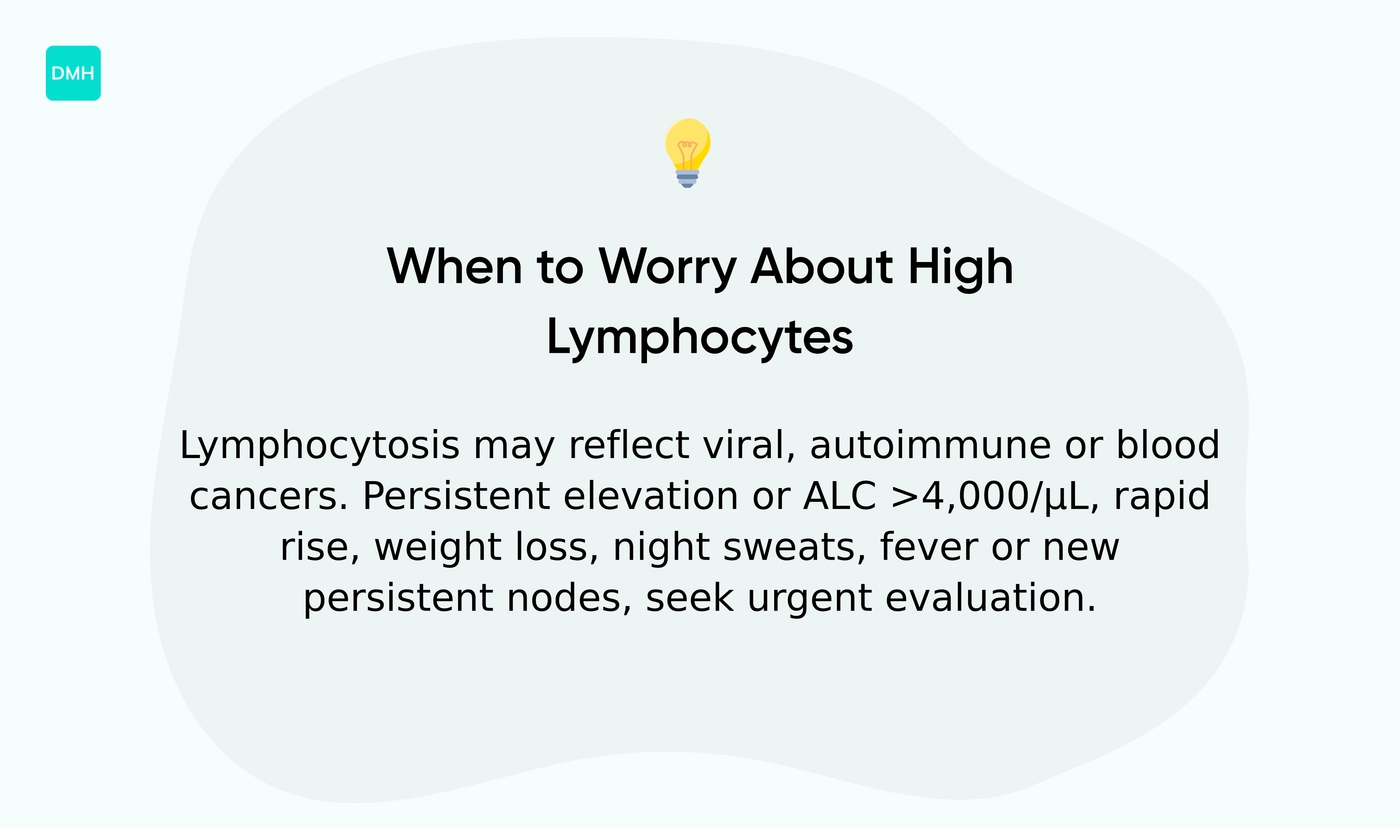
Persistent elevation that lasts weeks may prompt further evaluation. An absolute lymphocyte count above about 4,000/µL can trigger urgent review.
What warning signs should you watch for? Here’s the thing—certain red flags require prompt attention:
- Very high counts or rapidly rising counts suggest aggressive processes
- Unexplained weight loss, drenching night sweats, or persistent fever
- New swollen lymph nodes that don’t resolve
- Localized pain, easy bruising, or extreme fatigue developing quickly
Rapid symptom progression increases the chance that specialist tests are needed. Clinicians commonly repeat a complete blood count and examine a blood smear. They may order flow cytometry, imaging, or a lymph node biopsy to determine cause.
For guidance on thresholds and warning signs, review the detailed resource on dangerous lymphocyte levels.
If you notice any listed signs, prompt medical evaluation may be warranted. Management of high lymphocytes focuses on the underlying diagnosis rather than the raw number.
Not a medical advice, content for educational purposes, consult a professional. Always consult a qualified healthcare professional for medical advice specific to your situation.
You might also like: Low Lymphocytes High Neutrophils: Complete Guide
Can high lymphocytes be lowered naturally without medication
High lymphocytes, or lymphocytosis, means a higher-than-normal lymphocyte count on a blood test. Normal absolute lymphocyte counts often range near 1.0–4.0 x10⁹/L and percentages often fall between 20% and 40%.
Some lifestyle measures may support immune balance and relate to high lymphocytes treatment strategies. Regular sleep, stress management, steady aerobic exercise, and maintaining a healthy weight can support immune regulation. Smoking cessation and limiting excess alcohol can reduce chronic immune activation.
Dietary patterns that emphasize whole foods may help. Some studies suggest diets rich in vegetables, fruit, fiber, and omega‑3 fatty acids can modulate inflammation and immune signaling. Probiotics and adequate hydration may influence gut-immune interactions. These approaches may assist with natural lymphocyte reduction for reactive cases.
But here’s what really matters: addressing the underlying cause remains the priority. Reactive lymphocytosis after a viral infection often resolves without specific therapy. Persistent or very high counts may reflect autoimmune disease or blood cancer and may need targeted medical care.
Plus, monitoring, diagnostic tests, and condition-specific treatment guide the management of lymphocytosis. Not a medical advice, content for educational purposes, consult a professional. Always consult a qualified healthcare professional for medical advice specific to your situation.
You might also like: When Should You Worry About Abnormal Blood Test Results
Educational notice: This content is provided for informational and educational purposes only and is not intended as medical advice. Always consult a qualified healthcare professional for medical concerns.