Waking up exhausted after a full night’s sleep isn’t just annoying—it’s a signal something’s off.
The exact cause of chronic fatigue remains unknown, though experts point to multiple potential triggers that explain why it varies widely among individuals.
People often dismiss persistent tiredness, which delays diagnosis and leaves them struggling with brain fog, weakness, and reduced work or family life.
This guide explains the main chronic fatigue causes—from infections and immune changes to thyroid issues, anemia, vitamin deficiencies, sleep disorders and stress—so you can get targeted testing and treatment.
You’ll learn which symptoms point toward chronic fatigue syndrome, which tests to ask for, and why fatigue can look different from person to person.
What is chronic fatigue syndrome
Myalgic encephalomyelitis/chronic fatigue syndrome (ME/CFS) is a long-term illness that causes deep, disabling tiredness. Rest doesn’t fully resolve the exhaustion.
Ordinary fatigue differs from ME/CFS. Regular tiredness often clears with sleep, better diet, or reduced stress. ME/CFS requires clinical evaluation and specific diagnostic criteria.
Diagnostic criteria commonly include persistent fatigue lasting at least six months and a cluster of other symptoms. Key features include severe fatigue and reduced activity tolerance.
- Post-exertional symptom worsening after minimal activity
- Unrefreshing sleep
- Problems with memory or concentration
- Orthostatic intolerance or dizziness on standing
Some estimates suggest 1 to 2.5 million Americans may have ME/CFS. Symptom severity can vary from person to person. Ever notice how even a short walk leaves you wiped for days? That’s post-exertional symptom worsening, and it often lasts 24 hours or longer.
Common medical causes can overlap with ME/CFS. For a broader look at possible triggers and tests, see the detailed page on causes of chronic fatigue.
Not medical advice. Content for educational purposes; consult a qualified healthcare professional for medical advice specific to your situation.
What causes chronic fatigue syndrome
Infections as chronic fatigue triggers
Infections rank among the most frequently cited starting points for chronic fatigue. Viruses such as Epstein-Barr virus (which causes mononucleosis), SARS-CoV-2, and herpes viruses can trigger prolonged tiredness.
Bacterial infections such as Lyme disease can also lead to long-lasting fatigue. Post-viral fatigue syndrome often follows mononucleosis or COVID-19.
Some studies suggest 10–30% of people report fatigue after COVID-19 beyond four weeks. Other research reports about 10% of people with infectious mononucleosis have lingering symptoms at six months.
Ongoing immune activation, autonomic dysfunction, and impaired cellular energy may explain persistent symptoms. You might notice severe tiredness, brain fog, and reduced exercise tolerance. Presentation can vary from person to person.
Not medical advice. Content for educational purposes; consult a qualified healthcare professional.
Immune system changes and inflammation
Immune system shifts can drive persistent fatigue without clear tissue damage. Low-grade inflammation keeps immune pathways active, and cells release cytokines that can affect brain and muscle function.
Some studies suggest elevated interleukin-6 and tumor necrosis factor alpha in about 20–40% of people with chronic fatigue or post-viral fatigue. That pattern links to altered immune responses and may share traits with conditions like fibromyalgia or rheumatoid arthritis.
Autoantibodies appear in subsets of patients in select studies. Immune cell changes, such as altered T-cell or B-cell profiles, appear in some reports. These changes can occur without obvious tissue injury yet produce profound tiredness.
Clinicians may order simple inflammation tests such as C-reactive protein or erythrocyte sedimentation rate to look for signals. Advanced immune testing remains investigational and varies by clinic.
Not medical advice. Content for educational purposes; consult a qualified healthcare professional for advice specific to individual cases.
Stress and hormonal imbalances
Physical or emotional stress can trigger hormonal shifts that leave people deeply tired. Trauma, surgery, or extreme exertion can also initiate symptoms, sometimes leading to autonomic nervous system dysregulation or hormonal imbalances like low cortisol.
Cortisol follows a daily pattern, peaking within 30-45 minutes after waking and falling by night. Chronic stress or trauma can flatten that rhythm.
Some studies suggest cortisol rhythm disruption may be associated with persistent fatigue. Autonomic nervous system dysregulation alters heart rate, blood pressure, and hormone release. These changes can worsen sleep and increase daytime tiredness.
Some people choose to test cortisol levels at home to map values across the day. Finding altered patterns offers measurable data to discuss with clinicians and can clarify why constant tiredness occurs.
Not medical advice. Content for educational purposes; consult a qualified healthcare professional for medical advice specific to your situation.
Energy production and mitochondrial dysfunction
Mitochondria act as tiny energy factories inside cells. They drive cellular energy conversion by producing ATP, the main fuel for muscles and the brain.
Damage or dysfunction in these organelles can lower ATP output. Issues in cellular energy production, such as mitochondrial dysfunction or impaired conversion of fats and sugars into fuel, result in reduced energy output across cells, muscles, and the brain.
Many cells contain hundreds to thousands of mitochondria. Muscle fibers and neurons often hold more to meet high energy demands. (Think of your heart muscle—it never stops working!)
Some studies suggest infections, immune activation, and oxidative stress can impair mitochondria and lead to post-viral fatigue or long COVID fatigue. You may notice more weakness, brain fog, or quick energy loss during simple tasks when mitochondrial function drops.
Lab markers of mitochondrial activity sometimes appear altered, though findings vary from person to person and need clinical context.
Not medical advice. Content for informational purposes only; consult a qualified healthcare professional for evaluation.
Genetic factors and family history
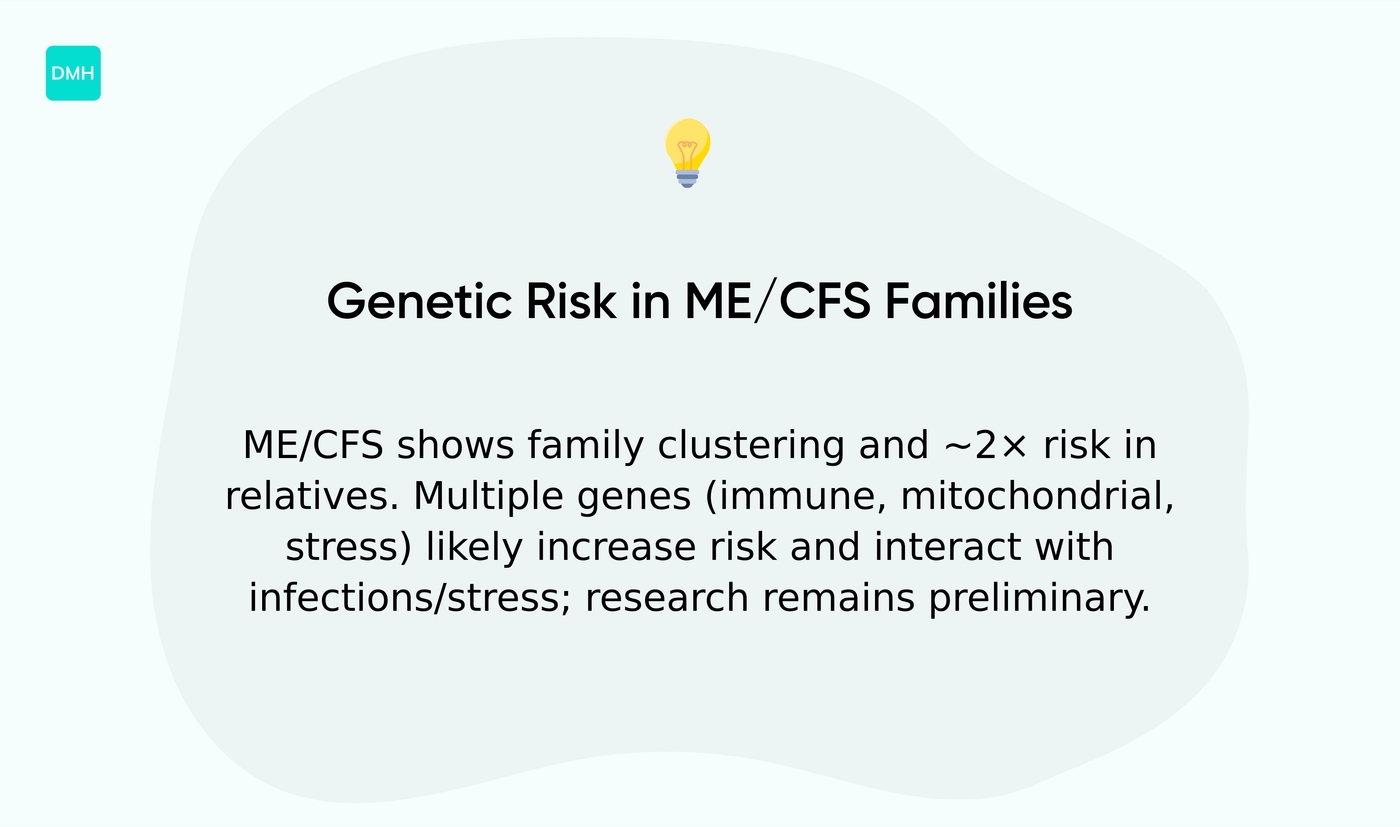
Genetic factors play a role, as ME/CFS can run in families. Researchers observe family clustering patterns in some studies, suggesting inherited susceptibility combined with environmental triggers.
People related to someone with ME/CFS may show higher rates of persistent fatigue. Some studies suggest a twofold increase in risk among close relatives.
Genes can affect immune response, mitochondrial energy production, and stress systems. These genetic susceptibility factors may change how the body reacts to infection or stress. That creates environmental trigger interactions where infections, physical stress, or toxins spark symptoms.
Genetic research remains limited and findings vary by population. Large genome studies are underway, but results remain preliminary. No single gene explains ME/CFS—many small genetic effects likely combine.
If you have a family history, your risk may be higher. Not medical advice. Content for educational purposes; consult a qualified healthcare professional.
What medical conditions cause extreme fatigue
Thyroid disease and fatigue
The thyroid controls metabolic rate and energy use. When it malfunctions, people may feel deeply tired despite rest.
Underactive thyroid, or hypothyroidism, slows metabolism. Lab signs often include elevated TSH levels and low free T4. People may report weight gain, cold sensitivity, dry skin, slow thinking, and persistent exhaustion symptoms.
Overactive thyroid, or hyperthyroidism, speeds metabolism. Low TSH and high T4 or T3 often appear on tests. Symptoms may include weight loss, rapid heartbeat, heat intolerance, and fragmented sleep that leads to chronic tiredness.
Thyroid problems rank among common chronic fatigue causes. Thyroid-related fatigue can mimic other conditions like anemia or sleep disorders. Thyroid tests may include TSH, free T4, free T3, and antibody panels.
Suspect thyroid involvement when fatigue pairs with clear metabolic signs such as unexplained weight change, temperature sensitivity, or hair changes. Not medical advice. Content for educational purposes; consult a qualified healthcare professional.
Anemia and low iron levels
Anemia means fewer red blood cells or reduced hemoglobin. Low hemoglobin limits oxygen carried from the lungs to tissues.
Iron deficiency reduces hemoglobin production, so tissues receive less oxygen and muscles tire quickly. People often report weakness, breathlessness with activity, and chronic tiredness.
Brain fog, pale skin, and reduced exercise tolerance may appear. Simple blood tests measure hemoglobin and ferritin to confirm anemia. Lab values guide whether iron supplementation or other treatments may help.
Read more on anemia symptoms, causes and treatments for detailed information and common causes of persistent fatigue.
Not medical advice. Always consult a qualified healthcare professional for medical advice specific to your situation.
Vitamin D and B12 deficiencies
Low vitamin D and vitamin B12 can reduce energy production at the cellular level. Vitamin D supports muscle strength and immune responses, while B12 supports nerve function and red blood cell formation.
Deficiencies may cause persistent fatigue, muscle weakness, numbness, and slower thinking. Population studies report vitamin D deficiency in roughly 20–40% of adults in some regions.
B12 deficiency appears in about 6% of adults under 60 and up to 20% of older adults. Testing commonly uses a 25-hydroxyvitamin D blood test and a serum B12 level. Methylmalonic acid can clarify low B12 results.
More on vitamin D testing and symptoms is available at vitamin D deficiency symptoms. Clinical evaluation may include these tests when persistent tiredness occurs.
Not medical advice. Content for educational purposes; consult a qualified healthcare professional.
Sleep apnea and sleep disorders
Disrupted breathing during sleep causes restorative sleep loss. Episodes of shallow breathing and brief awakenings interrupt deep sleep stages, so the body gets less repair time.
You may notice persistent fatigue, daytime exhaustion symptoms, and cognitive fog the next day. Sleep fragmentation also reduces concentration, slows reaction time, and worsens mood.
Some studies suggest untreated moderate to severe sleep apnea may be associated with increased cardiovascular risk. Diagnosis often involves a sleep study called polysomnography.
Management depends on the underlying problem and severity and can vary from device support to behavioral changes. Not medical advice. Content for educational purposes only; consult a qualified healthcare professional for personalized evaluation.
How depression, anxiety, and stress contribute to fatigue
Mental health factors play a significant role in chronic fatigue. Neurochemical changes link mood and energy—low serotonin and altered dopamine can reduce motivation and drive.
Stress activates the hypothalamic-pituitary-adrenal axis, and sustained cortisol can disrupt sleep and metabolic energy. Practical lifestyle steps that may lower cortisol appear at how to lower cortisol levels.
Inflammation often appears with anxiety and depression. Elevated cytokines such as IL-6 and TNF-alpha can produce fatigue and brain fog.
Sleep disturbance commonly links to mood disorders. Poor sleep limits restorative processes and increases chronic tiredness.
A fatigue-depression cycle forms when low mood reduces activity. Reduced activity lowers fitness and mitochondrial energy production. Ever feel too tired to exercise, then even more tired because you didn’t? That’s the cycle in action.
Post-viral fatigue and long COVID show how infections can trigger persistent fatigue alongside mood symptoms. Combining mental health, immune signals, and hormonal shifts explains many chronic fatigue causes and varied presentations.
People with persistent fatigue may benefit from clinical evaluation and tailored testing. Not medical advice. Content for educational purposes; consult a qualified healthcare professional for advice specific to your situation.
You’ll also like: What Does Sleep Apnea Sound Like
Why chronic fatigue varies between individuals
Symptoms can range from mild tiredness to severe disability. Multiple triggers can combine—viral infections, immune changes, hormonal shifts, sleep disorders, nutrient deficits and stress may all play a role.
Some cases begin suddenly after an infection. Other cases develop slowly over months or years. Genetic differences can influence symptom patterns and vulnerability.
Some studies suggest specific genes affect immune response and energy metabolism. Family clustering appears in some reports, which hints at inherited contributions.
Biological systems interact in complex ways. Mitochondrial dysfunction may reduce cellular energy. Autonomic nervous system changes can alter heart rate and blood pressure control. Chronic low-level inflammation may reduce exercise tolerance and cognitive stamina.
Symptoms often reflect dominant drivers. Post-viral fatigue and long COVID fatigue commonly show sudden onset and fluctuating symptoms. Thyroid disease fatigue and anemia-related fatigue present with more constant tiredness and measurable lab changes.
Assessment usually requires a tailored plan. Evaluation may include targeted blood tests, sleep studies, and focused clinical history. A personalized diagnostic approach helps match tests to likely causes and guides symptom management.
Some estimates suggest ME/CFS affects about 0.2–0.4% of the population. Some studies report that up to 25% of affected people become housebound or bedridden. (That’s a staggering impact on daily life.)
Not medical advice. Content for educational purposes; consult a qualified healthcare professional for medical advice specific to your situation.
Read also: Why Fatigue Lingers After The Flu: Complete Guide
Which tests identify causes of chronic fatigue
Medical tests help narrow causes of chronic fatigue and persistent fatigue. Tests target common drivers such as anemia, thyroid disease fatigue, vitamin deficiencies, inflammation, sleep disorders, and metabolic problems.
| Test | What It Checks | Key Threshold |
|---|---|---|
| Complete Blood Count (CBC) | Anemia, red blood cell levels | Hemoglobin under ~12 g/dL (women) or ~13 g/dL (men) |
| Iron Studies Panel | Ferritin, transferrin | Ferritin under 30 ng/mL |
| Thyroid Hormone Panel | TSH, free T4 | TSH outside ~0.4–4.0 mIU/L |
| Vitamin D Level | 25-hydroxyvitamin D | Below 20 ng/mL |
| Vitamin B12 Level | Serum B12 | Below 200 pg/mL |
| Inflammation Markers | CRP, ESR | CRP above 3 mg/L |
| Metabolic Screen | Fasting glucose, HbA1c | Elevated values point to diabetes |
| Sleep Study (Polysomnography) | Sleep apnea, sleep disorders | AHI 5+ events/hour |
Targeted tests for infections, autoimmune markers, mitochondrial function, or cortisol rhythms may be useful for post-viral fatigue or suspected endocrine causes. Well, the right test depends on your symptom pattern and clinical history.
Medical evaluation is advisable for fatigue that lasts over three months, causes marked daily impairment, or comes with unexplained weight loss, chest pain, or new neurological signs. Not medical advice. Content for educational purposes; consult a qualified healthcare professional for advice specific to your situation.
You might also like: Rare Fibromyalgia Symptoms
Educational notice: This content is provided for informational and educational purposes only and is not intended as medical advice. Always consult a qualified healthcare professional for medical concerns.