
That sinking feeling when blood work brings confusing numbers is common.
Especially with kidney markers like the BUN blood test.
A result can leave people wondering if their kidneys are failing, if dehydration is the issue, or whether medication or diet played a role.
This guide explains what a BUN blood test measures, normal and abnormal levels, how it compares to creatinine, and when to seek care.
You’ll learn how to prepare for the test, how hydration and common medications affect results, and practical steps to address elevated BUN.
By the end you’ll be better equipped to discuss results with clinicians and know which follow-up actions matter most.
What is a BUN blood test
A BUN blood test measures the amount of blood urea nitrogen in the bloodstream. Urea forms in the liver as a waste product of protein metabolism.
Amino acids break down and the liver converts ammonia to urea. The kidneys then filter urea from blood and remove it in urine. Efficient kidney filtration keeps urea levels in circulation low.
A BUN value reflects kidney filtration, hydration status, and protein turnover. Elevated BUN may be associated with reduced kidney function or low fluid volume.
Typical adult ranges are about 6 to 24 mg/dL. Labs vary, so reference intervals can differ by facility and age. A simple blood draw provides the sample, and results often return within 24 to 48 hours.
If you get this test, your provider may include it in routine blood work. Interpretation pairs BUN with creatinine and clinical context. A single BUN result rarely gives a definitive diagnosis.
Some medications, diets, pregnancy, and liver disease can change BUN levels. Normal BUN levels vary from person to person, and trends over time often matter more than isolated numbers.
Not a medical advice, content for educational purposes, consult a professional. Always consult a qualified healthcare professional for medical advice specific to your situation.
What does a BUN blood test measure
The BUN blood test measures the amount of blood urea nitrogen in your blood. Urea forms in the liver as proteins break down during metabolism.
Labs report BUN in mg/dL. The value reflects how well the kidneys remove urea from your bloodstream—lower filtration can raise BUN.
Hydration affects the result. Low fluid levels concentrate blood and can increase BUN levels. Protein intake and protein breakdown change urea production, so high protein diets or tissue breakdown can raise readings.
Liver function influences BUN as well. Reduced liver production of urea may lower values.
Typical adult reference ranges run about 6 to 24 mg/dL, though labs vary. A BUN of 23 mg/dL sits near the upper limit in many reports. Clinicians commonly compare BUN with creatinine—the BUN/creatinine ratio helps distinguish reduced kidney filtration from dehydration.
BUN alone cannot diagnose kidney disease. Results gain meaning when paired with symptoms, creatinine, and estimated GFR. Some clinicians repeat testing after fluid correction to see if values fall, which can clarify whether hydration drove the change.
Not a medical advice, content for educational purposes, consult a professional. Always consult a qualified healthcare professional for medical advice specific to your situation.
When should I get a BUN test
A BUN blood test checks blood urea nitrogen, a waste product cleared by the kidneys. Clinicians use this value as part of a renal function test panel.
A BUN test may appear on a basic metabolic panel or comprehensive metabolic panel. It often serves for kidney disease screening in people with diabetes or high blood pressure.
Patients on dialysis may have BUN measured before and after sessions to assess how well dialysis removes waste. Trending BUN levels over time helps monitor dialysis adequacy.
New or worsening symptoms such as fatigue, swelling, or decreased urine output may prompt a clinician to order a BUN test. Acute illness, dehydration, heavy protein intake, gastrointestinal bleeding, or certain medications can also trigger testing.
BUN levels that fall outside the typical adult range, about 6 to 24 mg/dL, usually prompt further evaluation with creatinine and estimated GFR. Single abnormal values can reflect hydration or recent diet rather than chronic kidney damage.
If concern exists after a test, clinicians often repeat testing or add related labs to interpret results in context. Not a medical advice, content for educational purposes, consult a professional.
Understanding BUN levels and normal ranges
What are normal BUN levels
Blood urea nitrogen (BUN) measures urea nitrogen in blood. It reflects protein breakdown and kidney filtration.
Standard adult reference ranges often run 6 to 24 mg/dL or 7 to 20 mg/dL. Reported normal BUN levels vary by lab.
Age, sex, muscle mass, and hydration can change results. Older adults may show slightly higher BUN levels, while pregnancy may lower BUN values.
Values above the lab’s upper limit may indicate reduced kidney clearance, dehydration, high protein intake, or other conditions. Values below the lab’s lower limit may reflect low protein intake or liver dysfunction.
A single abnormal value rarely gives a full picture. Correlation with creatinine and clinical context matters for a renal function test.
Not a medical advice, content for educational purposes, consult a professional. Always consult a qualified healthcare professional for medical advice specific to your situation.
What causes high BUN levels
High BUN levels on your blood test may signal several underlying issues. High BUN levels commonly occur with impaired kidney function.
Kidneys that filter poorly let blood urea nitrogen rise. Typical adult range is about 6–24 mg/dL. Dehydration concentrates blood urea nitrogen—see details at dehydration blood test results.
A high-protein diet increases urea production. Heart failure reduces kidney perfusion and raises BUN. Gastrointestinal bleeding boosts urea via protein absorption.
Urinary tract obstruction blocks urine flow and raises BUN. Some medications, major burns, severe stress or shock can elevate BUN as well. Results vary from person to person and need clinical context.
Values above 24 mg/dL may prompt further clinical evaluation. The BUN creatinine ratio helps distinguish dehydration from intrinsic kidney injury.
Not a medical advice, content for educational purposes, consult a professional. Always consult a qualified healthcare professional for medical advice specific to your situation.
What causes low BUN levels
Low blood urea nitrogen means less urea in the bloodstream. A BUN blood test may report values below about 6 mg/dL as low—values vary by lab and age.
Liver disease or damage can lower urea production. Severe liver dysfunction reduces conversion of ammonia to urea and may drop BUN levels.
Low protein intake or malnutrition reduces urea formation. Extended low-protein diets or starvation can push BUN down. Overhydration dilutes blood markers, and intravenous fluids or drinking large volumes can lower BUN levels without changing kidney function.
Pregnancy alters metabolism and plasma volume. Mild BUN reduction often appears in healthy pregnancies (the change can be truly subtle on routine tests).
If your BUN value appears low, clinical context and other tests like creatinine matter. Not a medical advice, content for educational purposes, consult a professional.
What level of BUN is concerning
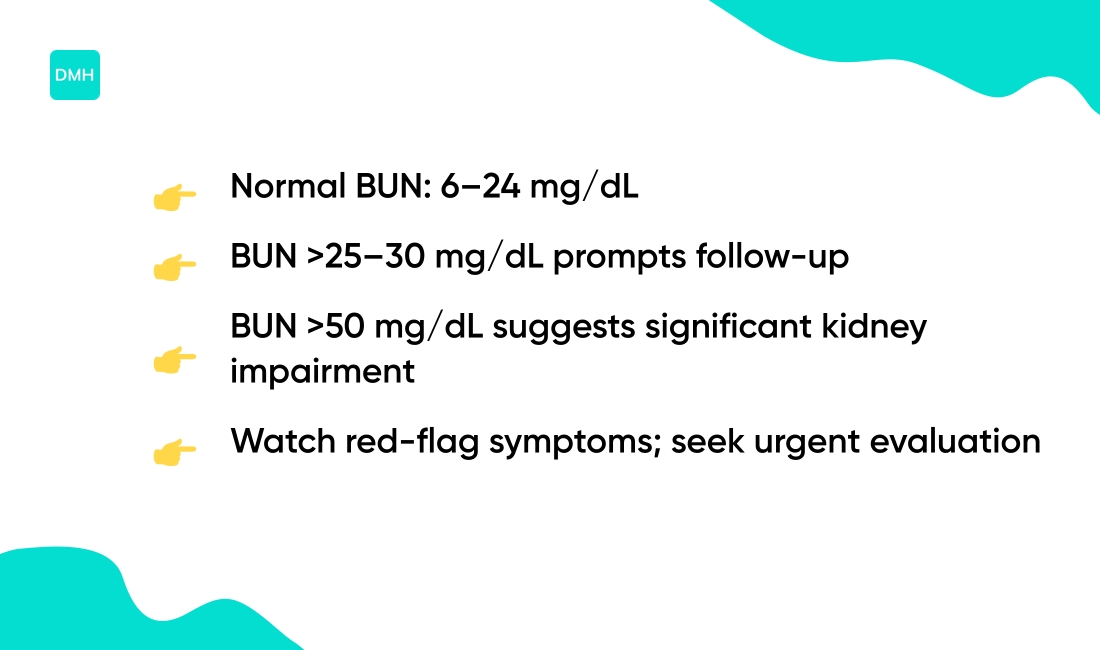
BUN stands for blood urea nitrogen and measures urea nitrogen in the blood. Normal BUN ranges vary by lab but commonly fall between 6 and 24 mg/dL.
Values above about 25 to 30 mg/dL often trigger clinical follow-up for dehydration or reduced kidney filtration. Markedly elevated readings above 50 mg/dL can indicate significant kidney impairment, gastrointestinal bleeding, or severe dehydration.
Extremely high values, for example over 100 mg/dL, frequently occur with acute kidney failure or advanced kidney injury and may coincide with rising creatinine.
What symptoms should raise immediate concern? Watch for red flag symptoms such as very low urine output, sudden swelling, confusion, persistent vomiting, shortness of breath, or signs of bleeding.
Readings that are high alongside abnormal creatinine or those paired with the listed symptoms may merit urgent evaluation and further renal testing. Lab results can vary and individual factors alter interpretation.
Not a medical advice, content for educational purposes, consult a professional. Always consult a qualified healthcare professional for medical advice specific to your situation.
What is the BUN to creatinine ratio
The BUN blood test measures blood urea nitrogen. The BUN to creatinine ratio compares that value to serum creatinine.
Calculate the ratio by dividing BUN (mg/dL) by creatinine (mg/dL). A BUN of 20 mg/dL and creatinine of 1 mg/dL yields a 20:1 ratio.
Typical normal ratio ranges sit between 10:1 and 20:1. Some labs report slightly different cutoffs. Values above 20:1 may be associated with reduced kidney perfusion or dehydration.
Very high ratios, for example above 30:1, can occur with gastrointestinal bleeding or high protein intake. Ratios below 10:1 may be associated with intrinsic kidney damage or low protein intake.
The BUN creatinine ratio helps differentiate prerenal causes from renal causes. Clinicians interpret the ratio alongside absolute BUN and creatinine, estimated GFR, urine tests, and clinical signs.
One concrete example: a BUN of 40 mg/dL and creatinine of 2 mg/dL gives a 20:1 ratio. That pattern often points toward reduced blood flow rather than primary kidney injury.
Limitations exist. The ratio does not provide a definitive diagnosis and can vary from person to person. Read more about creatinine levels for context.
Not a medical advice, content for educational purposes, consult a professional. Always consult a qualified healthcare professional for medical advice specific to your situation.
What is the difference between BUN and creatinine
Blood urea nitrogen (BUN) and creatinine are common markers used in a BUN blood test to assess kidney function. BUN measures urea nitrogen, a waste product from protein breakdown made in the liver.
Creatinine reflects muscle metabolism and is produced at a relatively steady rate. BUN levels often range from 6 to 24 mg/dL in adults and can rise with low fluid intake, high-protein diets, bleeding in the gut, or reduced kidney filtration.
The BUN result can vary with hydration and liver function. Creatinine normal ranges vary by sex and muscle mass—typical adult ranges run about 0.6–1.3 mg/dL. Creatinine rises when the kidneys filter less effectively and gives a more specific estimate of glomerular filtration than BUN.
Clinicians often interpret both tests together. The BUN creatinine ratio helps distinguish causes. A ratio above about 20:1 may point toward reduced blood flow to the kidneys or dehydration.
Low BUN with normal creatinine can suggest low protein intake or liver issues. One example: BUN 40 mg/dL with creatinine 1.5 mg/dL yields a ratio near 27:1, a pattern seen with volume depletion.
Using both markers reduces misinterpretation from a single value. Trends over time and other labs, such as estimated GFR, provide a fuller picture.
Not a medical advice, content for educational purposes, consult a professional. Always consult a qualified healthcare professional for medical advice specific to your situation.
How to prepare for a BUN test
Do I need to fast for a BUN test
A BUN blood test measures blood urea nitrogen, a waste product from protein breakdown in the liver. Most laboratories do not require fasting when the BUN is ordered alone.
If the BUN appears in a comprehensive metabolic panel that includes glucose, fasting of about 8 to 12 hours is commonly requested. Fasting affects glucose testing, not the BUN itself.
Hydration and recent protein intake can change BUN levels. Dehydration may raise values, and a high-protein meal can cause a modest rise. Your lab or clinician can provide test-specific instructions—practices vary by facility and clinical context.
Results interpretation also varies by age and medical history. Not a medical advice, content for educational purposes, consult a professional.
How does dehydration affect BUN levels
Blood urea nitrogen measures urea in the blood. Urea forms when the liver breaks down protein.
Dehydration lowers plasma volume and reduces renal blood flow. Kidneys filter less blood, so urea clearance falls and concentration rises. Reduced kidney perfusion increases tubular reabsorption of urea, which raises the BUN value and can push the BUN/creatinine ratio higher.
BUN blood test results vary by lab, but the normal BUN range often sits between 6 and 24 mg/dL. Mild to moderate dehydration can raise BUN by several mg/dL and alter result interpretation.
Proper hydration before a blood draw may reduce false high readings. According to available research, fluid status is an important factor when clinicians interpret BUN results.
Not a medical advice, content for educational purposes, consult a professional. Always consult a qualified healthcare professional for medical advice specific to your situation.
Can medications change BUN levels
The blood urea nitrogen test measures urea in blood. Urea comes from protein breakdown and leaves via the kidneys. Several medicines may alter BUN levels—effects can vary from person to person.
- Diuretics can raise BUN by reducing blood volume and concentrating serum urea.
- Antibiotics may affect BUN when they impair kidney function or interact with lab assays. Aminoglycosides and some cephalosporins have been reported to change kidney markers.
- Steroids can increase protein breakdown and produce a modest rise in BUN.
Typical shifts are small, often a few mg/dL, but may be larger with dehydration or kidney impairment. Informing the clinician about current prescriptions and recent over-the-counter use helps interpret results and avoid misclassification.
Not a medical advice, content for educational purposes, consult a professional. Always consult a qualified healthcare professional for medical advice specific to your situation.
How are BUN results interpreted
Reading a BUN blood test result starts with the reported value and the lab reference range. Labs often list normal BUN levels as about 6–24 mg/dL or 7–20 mg/dL.
A single number gains meaning only alongside other markers. Compare BUN to serum creatinine and estimated glomerular filtration rate (eGFR). The BUN creatinine ratio often falls between 10:1 and 20:1.
A high ratio may be associated with reduced blood flow to the kidneys or dehydration. A high BUN with a matching rise in creatinine may suggest impaired kidney filtration.
| BUN Pattern | Possible Cause | BUN/Creatinine Ratio |
|---|---|---|
| High BUN, normal creatinine | Dehydration, high protein diet, GI bleeding | Above 20:1 |
| High BUN, high creatinine | Reduced kidney filtration | 10:1 to 20:1 |
| Low BUN | Liver dysfunction, low protein intake, overhydration | Below 10:1 |
Low BUN levels can be linked to liver dysfunction, low protein intake, or overhydration. High BUN levels can be linked to dehydration, high protein diet, gastrointestinal bleeding, heart failure, or certain medications.
Interpretation should consider symptoms, medications, hydration status, and recent diet. For a clear walkthrough on lab reports, see how to read blood test results.
One abnormal BUN value does not diagnose kidney disease. Trends over time and additional tests, such as creatinine, urinalysis, and imaging, inform clinical assessment.
Not a medical advice, content for educational purposes, consult a professional. Always consult a qualified healthcare professional for medical advice specific to your situation.
Is BUN part of a kidney function test
Blood urea nitrogen measures urea nitrogen in the blood. Urea forms in the liver from protein breakdown and the kidneys filter it out.
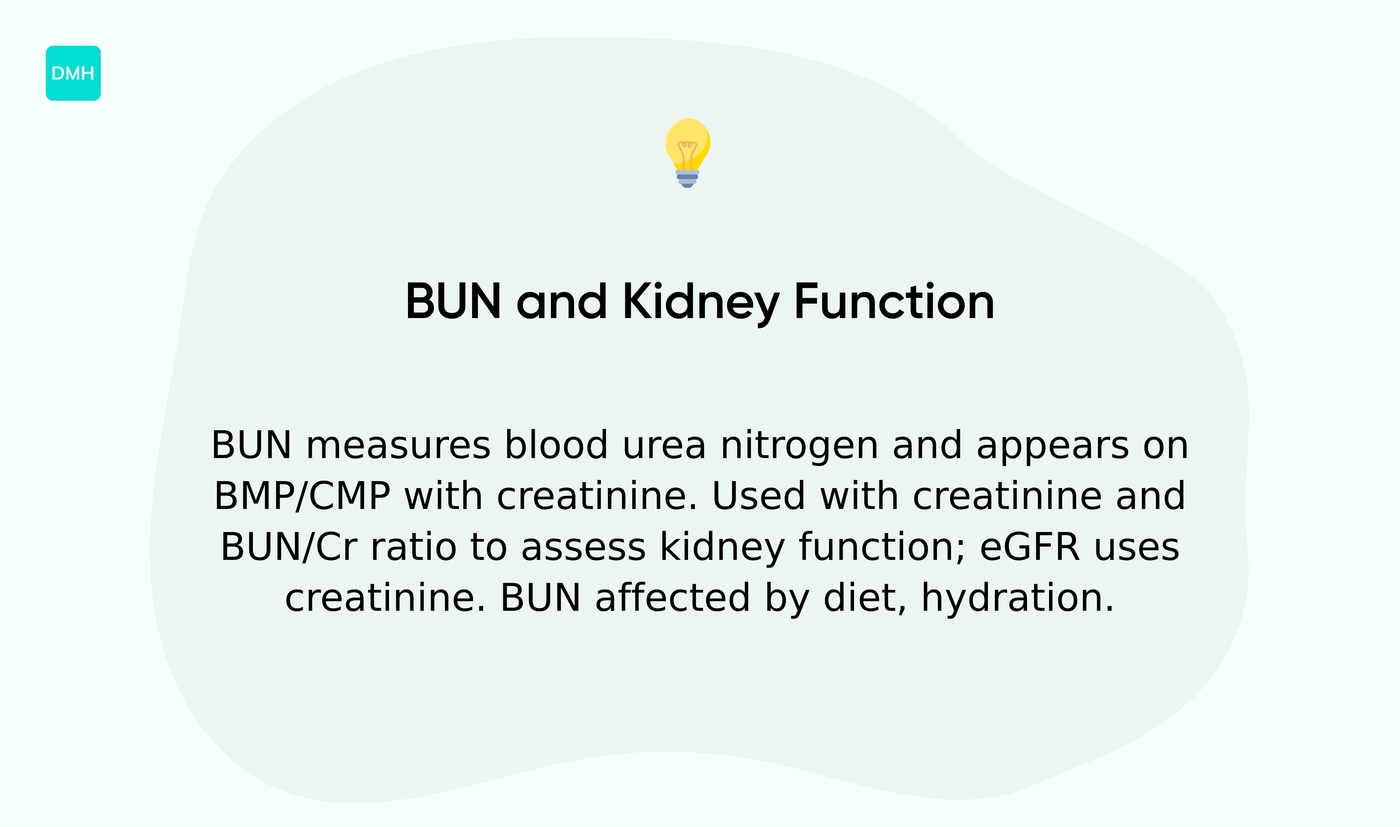
Renal function panel and common metabolic panels routinely list BUN. Panels such as a basic metabolic panel (BMP) or comprehensive metabolic panel (CMP) report BUN alongside creatinine and electrolytes.
Clinicians use BUN together with creatinine to assess kidney function. The BUN-to-creatinine ratio helps suggest dehydration, reduced kidney perfusion, or intrinsic kidney injury.
Estimated GFR calculations rely on serum creatinine, age, sex and sometimes cystatin C. BUN does not enter standard eGFR equations but adds interpretive context for abnormal values.
Example metric: a BUN of 30 mg/dL with creatinine of 1.0 mg/dL gives a BUN/creatinine ratio above 20. This pattern often points toward prerenal causes such as low blood volume.
Interpretation requires context. Diet, hydration, liver function and certain medications can change BUN levels—BUN alone cannot confirm kidney disease.
Not a medical advice, content for educational purposes, consult a professional. Always consult a qualified healthcare professional for medical advice specific to your situation.
Read also: How To Prevent Kidney Stones: Complete Guide
How can I lower elevated BUN
Elevated blood urea nitrogen (BUN) means higher urea nitrogen levels in the bloodstream. BUN often reflects kidney filtration and fluid status—values above about 20 mg/dL commonly raise clinical concern.
Hydration can affect BUN. Mild dehydration can raise BUN by concentrating blood urea. Clinicians may restore fluids carefully for many patients to lower BUN while monitoring electrolytes.
Dietary protein adjustments can change urea production. Lowering excessive protein intake often reduces urea generation. Registered dietitians typically tailor protein plans to kidney function and overall health.
Treat underlying conditions often reduces BUN. Heart failure, urinary obstruction, gastrointestinal bleeding, and certain medications can raise BUN. Addressing these causes usually improves BUN over days to weeks.
Medication review can matter. Diuretics, corticosteroids, and some antibiotics can alter BUN. Clinicians commonly review prescriptions and adjust therapy when risks outweigh benefits.
Advanced kidney dysfunction may require renal replacement therapies. Dialysis removes urea directly and lowers BUN quickly—nephrology teams determine timing based on symptoms, labs, and clinical guidelines.
Laboratory trends matter more than a single value. Serial BUN with creatinine and estimated GFR helps clarify whether elevation reflects dehydration, increased protein breakdown, or reduced kidney filtration.
Not a medical advice, content for educational purposes, consult a professional. Always consult a qualified healthcare professional for medical advice specific to your situation.
You might also like: Is ginger good for kidneys
BUN test cost and results timeline
BUN blood test pricing varies by setting. Out-of-pocket cost ranges from $10 to $75.
A standalone BUN test often costs $10–$30. A comprehensive metabolic panel that includes BUN may cost $20–$75. Insurance often covers lab tests ordered by a clinician—copays, coinsurance, or deductibles may affect final payment.
Location affects price. Hospital labs commonly charge more than retail or independent labs. Some community clinics offer sliding-scale fees or bundled pricing, and online lab marketplaces list pre-negotiated cash prices.
Point-of-care testing returns results within minutes. Standard outpatient labs commonly report results in 24 to 48 hours. Reference labs or mailed samples can take 3 to 5 business days, while emergency or stat testing may report in 1 to 4 hours.
Turnaround time depends on specimen transport and lab workload. Added tests such as creatinine or reflex panels add time. A BUN is one piece of a broader kidney function test—abnormal values may prompt repeat testing or additional assays.
Confirm billing estimates with the ordering clinician, lab, or insurer before testing. Cost transparency reduces unexpected bills. Results turnaround time varies by provider and urgency.
Not a medical advice, content for educational purposes, consult a professional. Always consult a qualified healthcare professional for medical advice specific to your situation.
Read also: When Should You Worry About Abnormal Blood Test Results
Educational notice: This content is provided for informational and educational purposes only and is not intended as medical advice. Always consult a qualified healthcare professional for medical concerns.