When sudden memories, panic, or constant worry show up, it’s hard to know what’s happening.
This guide on PTSD vs anxiety helps separate trauma-related reactions from broader worry patterns.
Many people can’t tell PTSD symptoms vs anxiety symptoms apart, which can delay the right care.
This article explains how PTSD stems from specific trauma while anxiety centers on future-focused worry, and where they overlap.
You’ll get clear signs—like flashbacks versus panic attacks and hypervigilance versus generalized restlessness—to help recognize what’s going on.
The post also covers how clinicians diagnose PTSD vs generalized anxiety disorder and common treatment paths, from EMDR to CBT and medications.
By the end, you’ll understand when to seek professional assessment and what questions to ask to get the right help.
What is the difference between PTSD and anxiety?
Post-traumatic stress disorder (PTSD) is a mental health condition tied to a specific traumatic event. Symptoms often follow exposure to actual or threatened death, serious injury, or sexual violence.
Anxiety disorders describe persistent worry or fear about future events. They don’t require a triggering trauma to appear.
The core difference lies in time and cause. PTSD centers on past trauma and includes re-experiencing symptoms like flashbacks or nightmares. Anxiety centers on future-focused worry, rumination, and constant tension.
PTSD vs anxiety shows distinct symptom clusters. PTSD often brings avoidance of reminders, emotional numbness, and trauma-linked hyperarousal. Anxiety disorders bring excessive worry, muscle tension, and concentration problems.
Clinical criteria require documented trauma for a PTSD diagnosis. Anxiety diagnoses use patterns of worry and physical signs over weeks to months.
Estimates suggest lifetime PTSD prevalence near 6.8% in U.S. adults, based on large surveys. Anxiety disorders occur more frequently and include generalized anxiety disorder, panic disorder, and social anxiety disorder.
If symptoms trace back to a specific traumatic event and include intrusive memories or flashbacks, could PTSD be more likely? If worry focuses on many future outcomes without trauma, an anxiety disorder may fit better.
Not a medical advice, content for educational purposes only. Always consult a qualified healthcare professional for medical advice specific to your situation.
Is PTSD an anxiety disorder?
PTSD stands for posttraumatic stress disorder. It describes symptoms that can follow exposure to actual or threatened death, serious injury, or sexual violence.
DSM-IV listed PTSD under anxiety disorders. DSM-5 reclassified PTSD in 2013. The American Psychiatric Association moved it into a new chapter called Trauma- and Stressor-Related Disorders.
The World Health Organization’s ICD-11 also treats PTSD separately and recognizes Complex PTSD as a related condition. This trauma-related disorder category reflects focus on symptoms tied to a past event, such as flashbacks, nightmares, and avoidance.
People with PTSD often show anxiety, but the diagnosis requires a qualifying traumatic exposure. Generalized anxiety disorder doesn’t require trauma and centers on excessive future-focused worry.
Reclassification helps clinicians differentiate diagnoses. It can guide assessment and may inform treatment approaches that emphasize trauma processing rather than only anxiety management.
Some surveys report lifetime PTSD prevalence near 6–8% in the United States. Rates vary by population and type of trauma.
Overlap between PTSD and anxiety disorders remains common. Comorbid panic, depression, or substance use can appear alongside PTSD symptoms. (Actually, research suggests roughly half of people with PTSD meet criteria for another anxiety disorder.)
Not a medical advice, content for educational purposes only. Always consult a qualified healthcare professional for medical advice specific to your situation.
Key symptoms of PTSD vs anxiety
PTSD symptoms: trauma-focused and past-oriented
Post-traumatic stress disorder (PTSD) is a trauma-related condition. People re-experience past events through intrusive memories or physical reactions.
Core symptoms center on reliving the trauma. Flashbacks and nightmares can involve vivid scenes, sensory details, or replayed feelings. Intrusive memories may surface without warning.
People often avoid places, people, or conversations linked to the event. Emotional numbness appears as detachment, reduced interest, or restricted affect. Guilt or shame about the trauma is common.
Hypervigilance and startle lead to constant scanning for danger and an exaggerated jump response. For instance, a combat veteran may drop to the ground when hearing fireworks, while a car accident survivor might grip the steering wheel tightly at every intersection.
Surveys estimate about 3.6% of U.S. adults report PTSD symptoms in a 12-month period. These figures may vary by study.
More detail appears on the PTSD episode page. Not medical advice. Always consult a qualified healthcare professional for personal concerns.
Anxiety symptoms: future-focused worry
Anxiety disorder refers to persistent, excessive worry about likely or imagined future events. It centers on anticipation and uncertainty rather than a past traumatic event.
Common signs include future-focused worry, restlessness, muscle tension, fatigue, and difficulty concentrating. Physical manifestations can include sweating, shaking, nausea, shortness of breath, and a rapid heartbeat.
Symptoms can vary from person to person. Generalized anxiety disorder often requires symptoms to persist for six months or more for formal diagnosis.
Physical signs may resemble medical conditions, so clinicians often rule out other causes through history and basic tests. Differential assessment clarifies PTSD vs anxiety by focusing on timing and trigger relation.
For a clear comparison of symptom patterns, see the detailed review of anxiety symptoms vs illness. Content is for informational purposes only and not medical advice.
Flashbacks vs panic attacks
Flashbacks are a core PTSD symptom. They involve re-experiencing traumatic memories with dissociation and vivid sensory detail. People may feel transported back to the event.
Episodes can last seconds to minutes and sometimes longer. During a flashback, someone might smell smoke from a house fire years later or hear the exact sound of screeching brakes from a past crash.
Panic attacks present as sudden intense fear without replaying a past trauma. Symptoms peak within about ten minutes and include chest tightness, trembling, and shortness of breath.
The key distinction lies in memory content. Flashbacks replay parts of a trauma. Panic attacks show strong physical fear but often have memory replay absent.
Both can co-occur. A clinician uses symptom timing, trauma history, and dissociation signs to distinguish PTSD vs anxiety or PTSD vs panic attacks. Not medical advice; content for educational purposes. Always consult a qualified healthcare professional for medical concerns.
Hypervigilance vs generalized anxiety
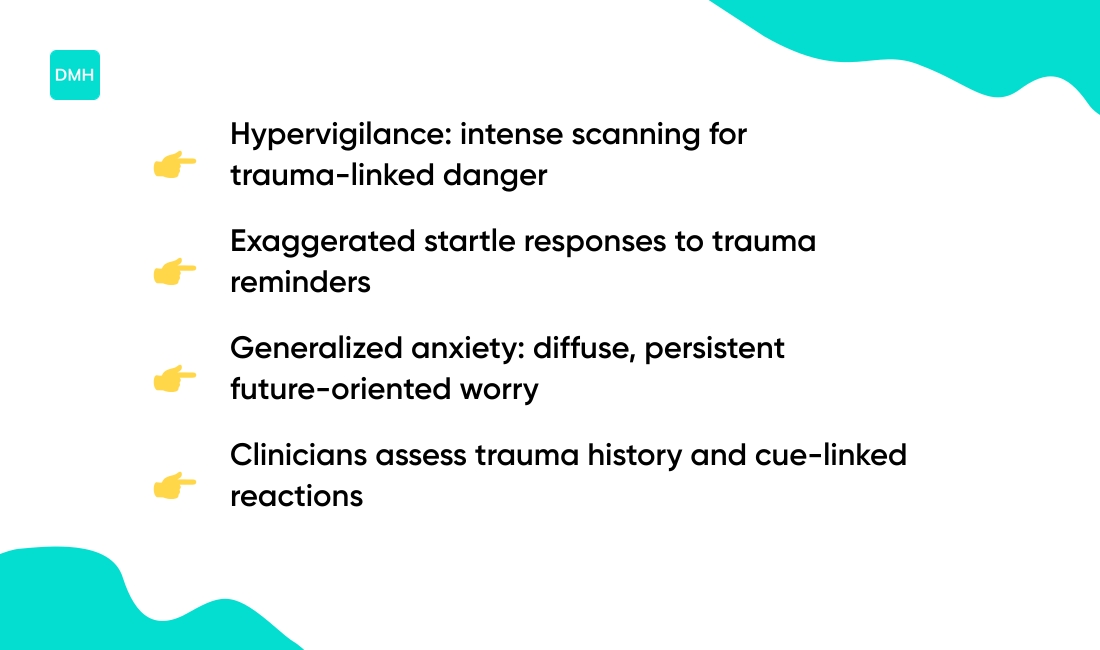
Hypervigilance means intense scanning for danger linked to a past trauma. People with PTSD often react with an exaggerated startle response.
That reaction tends to follow clear reminders, such as a sound or smell. Well, someone who survived an assault might constantly check door locks or scan every room for exits.
Generalized anxiety disorder causes broad, persistent worry about future events. Worry in anxiety can feel diffuse and hard to pin down.
Hypervigilance focuses on trauma-specific threat signals. Anxiety scans for many possible problems without a trauma anchor. This difference helps distinguish generalized anxiety disorder from PTSD.
Both conditions can overlap and share sleep problems, concentration issues, and tension. Clinicians assess trauma history and cue-linked reactions to tell PTSD vs anxiety apart.
Not medical advice. Content for educational purposes only. Consult a qualified clinician for an individual assessment.
PTSD triggers vs anxiety triggers
A trigger is a stimulus that provokes distressing symptoms. Triggers can be sensory, situational, or thought-based.
PTSD triggers link directly to a past traumatic event. People may react to sights, sounds, or smells that match their trauma. These responses can include flashbacks, nightmares, and intense panic. Clinicians describe these as trauma reminder cues.
Anxiety triggers usually lack a direct trauma tie. Everyday pressures, social demands, and worries about future events often spark symptoms. Responses may include persistent worry, restlessness, and physical tension. Many clinicians call these everyday stress triggers.
PTSD triggers tend to provoke re-experiencing and avoidance specific to the trauma. Anxiety triggers produce broad worry and hyperarousal without trauma replay. Panic attacks often rise rapidly and peak within about ten minutes.
Overlap can occur. A traffic noise may cause a PTSD flashback for one person. The same noise may spark anxiety for another person. Assessment focuses on symptom timing, content, and any trauma history.
| Feature | PTSD Triggers | Anxiety Triggers |
|---|---|---|
| Source | Linked to specific trauma | Everyday stress, future worries |
| Response | Flashbacks, avoidance, re-experiencing | Persistent worry, restlessness, tension |
| Timing | Tied to trauma reminders (sights, sounds, smells) | Broad, fluctuating, often anticipatory |
| Memory Replay | Yes—vivid sensory detail | No—focused on future scenarios |
This comparison helps clarify PTSD vs anxiety for clinical screening and discussion of PTSD symptoms vs anxiety symptoms. Content here is for informational purposes only. Always consult a qualified healthcare professional for medical advice specific to an individual situation.
Can you have PTSD and anxiety at the same time?
Post-traumatic stress disorder describes symptoms that follow a traumatic event. Anxiety disorders describe persistent worry or fear about future situations.
These conditions can co-occur. Some studies suggest roughly half of people with PTSD meet criteria for another anxiety disorder such as generalized anxiety or panic disorder.
Shared signs include sleep disturbance, irritability, difficulty concentrating, and heightened startle. Distinct signs help separate diagnoses. Flashbacks and trauma-linked avoidance point toward PTSD. Persistent, future-focused worry points toward anxiety.
A key reason for overlap involves symptom interaction. Trauma memories can fuel ongoing worry. Chronic worry can intensify hyperarousal and avoidance.
Clinicians use a comprehensive clinical assessment to sort out overlapping symptoms. Assessment focuses on trauma exposure, symptom timing, and specific triggers. Structured interviews and validated questionnaires often inform diagnosis.
Treatment planning may address both conditions. Integrated approaches that combine trauma-focused methods and anxiety-focused strategies can be useful for some people.
Practical steps for individuals include:
- Tracking symptom timing and noting when distress peaks
- Identifying specific triggers and whether they relate to past trauma or future worries
- Sharing a clear trauma history with a clinician
- Asking about comorbid conditions during assessment
These steps help clinicians target the most relevant diagnosis and care plan. Not a medical advice, content for educational purposes. Always consult a qualified healthcare professional for medical advice specific to your situation.
How doctors diagnose PTSD vs generalized anxiety disorder
Post-traumatic stress disorder (PTSD) is a trauma-related diagnosis. It describes intrusive memories, avoidance, negative mood, and arousal after a traumatic event.
Generalized anxiety disorder (GAD) involves persistent, excessive worry about multiple areas of life with physical symptoms such as restlessness and muscle tension.
PTSD requires a history of qualifying trauma and symptoms that last more than one month after the event. Clinicians use the PTSD diagnostic criteria from DSM-5 and structured tools like the CAPS-5 to confirm exposure and symptom clusters.
GAD requires excessive anxiety more days than not for at least six months. Screening tools such as the GAD-7 help quantify worry; a score of 10 or above often indicates moderate anxiety that warrants further evaluation. Clinical decisions consider duration and functional impact rather than single scores.
Assessment uses clinical interview, symptom calendars, medical review, and standardized measures. Clinicians look for trauma-linked triggers, intrusive recollections, and avoidance to separate PTSD from general worry. Use of GAD symptom duration and structured clinical interviews improves diagnostic clarity.
Wondering which condition fits your experience? A trained clinician can complete these assessments and evaluate co-occurring disorders. For a practical comparison and treatment overview, see the BrightQuest guide on PTSD vs anxiety.
Not medical advice. Always consult a qualified healthcare professional for guidance specific to your situation.
PTSD treatment vs anxiety treatment
EMDR vs CBT for PTSD and anxiety
EMDR for PTSD stands for Eye Movement Desensitization and Reprocessing. It helps people process deeply disturbing memories using bilateral stimulation while they recall the event.
CBT for anxiety means Cognitive Behavioral Therapy. It focuses on identifying and changing thoughts and behaviors that maintain worry and avoidance.
EMDR directly targets sensory and emotional memory networks to reduce vividness and distress. CBT targets unhelpful beliefs and avoidance that fuel anxiety and panic.
Clinical guidelines from the American Psychological Association and the VA/DoD list both approaches as evidence-based for PTSD. Some randomized trials report symptom reductions of roughly 40–60% on standard PTSD measures with trauma-focused CBT or EMDR.
Trauma-focused CBT often suits people with clear trauma memories and avoidance. CBT often suits people with generalized worry, panic, or phobic avoidance. Selection depends on symptom pattern, therapist training, and patient preference.
Not a medical advice; consult a qualified clinician for assessment.
Medication for PTSD vs anxiety
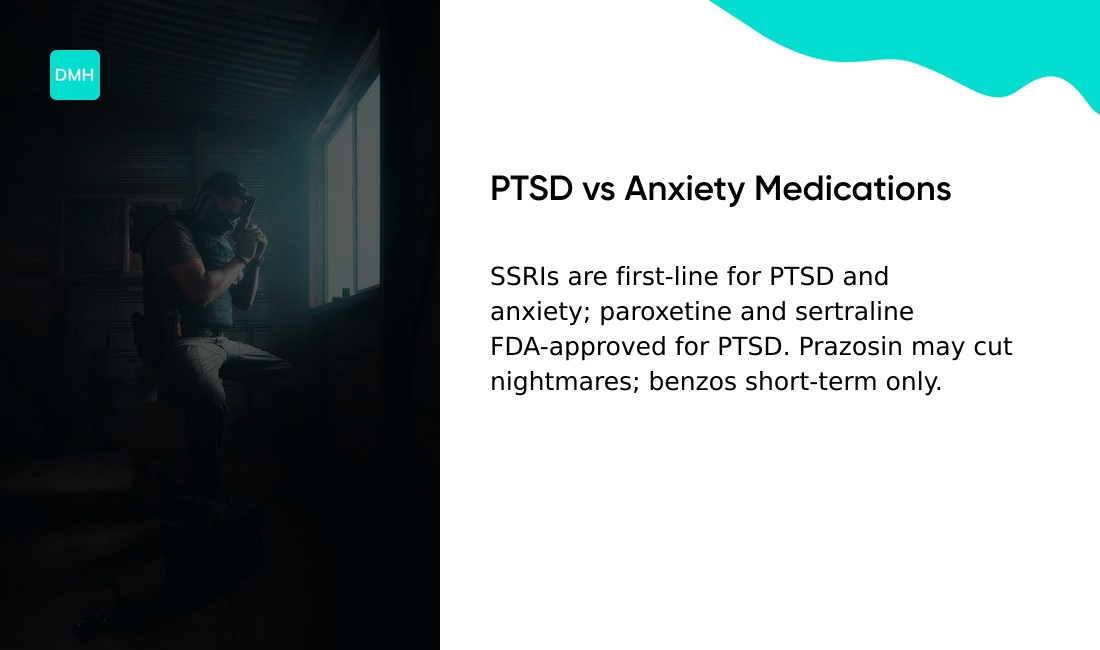
Serotonin reuptake inhibitors such as SSRIs are commonly used for both PTSD and anxiety disorders. These drugs target serotonin to reduce core symptoms.
Paroxetine and sertraline have FDA approval for PTSD in adults. Escitalopram and fluoxetine are common choices for generalized anxiety disorder, and venlafaxine often treats GAD.
Prazosin for nightmares is prescribed off-label to reduce trauma-related nightmares. Some trials report fewer nightmares, while other studies show mixed results.
Benzodiazepines short-term use can relieve acute anxiety rapidly. Clinical guidance generally advises caution with benzodiazepines in PTSD because of limited benefit and dependence risk.
Medication selection depends on symptom profile, co-occurring conditions, and side effect tolerance. Not a medical advice, content for educational purposes, consult a professional.
Read also: How To Lower Cortisol Levels Quickly
Trauma-focused therapy approaches
Trauma-focused therapies target memories and reactions tied to a specific traumatic event. They differ from standard anxiety treatments that focus on future worry.
Prolonged exposure therapy asks patients to safely revisit trauma memories and avoided situations. Many randomized trials report large symptom reductions, with effect sizes often near 0.8 in controlled studies. Typical courses run 8–15 weekly sessions.
Cognitive processing therapy helps people reframe unhelpful beliefs about the trauma, such as persistent self-blame. Sessions commonly span 12 weeks and show comparable symptom change to exposure in clinical trials.
Trauma-informed care emphasizes safety, trust, and choice across services. It reduces the risk of retraumatization during assessment and treatment and guides clinicians to tailor care to trauma histories.
Here’s the thing: choosing the right therapy depends on individual trauma history, symptom severity, and personal comfort with exposure-based methods. Not a medical advice. Content for educational purposes only. Always consult a qualified healthcare professional for advice specific to your situation.
You might also like: Top 7 Benefits of Online Therapy for Men Today
How to know if it’s PTSD or anxiety
Start by defining both. Post-traumatic stress disorder (PTSD) describes persistent symptoms after a traumatic event. Generalized anxiety disorder (GAD) describes chronic, future-focused worry without required trauma exposure.
Check the timeline. PTSD symptoms commonly persist for more than one month after a trauma. Symptoms within the first month may be acute stress reactions. GAD requires excessive worry most days for at least six months.
Compare symptom focus. PTSD often involves intrusive memories, nightmares, flashbacks, and avoidance tied to a specific event. Anxiety disorders often show persistent worry, restlessness, muscle tension, and concentration problems not linked to a single trauma.
Timeline after trauma helps clarify diagnosis. Track when symptoms began and how long they last. Note whether triggers are trauma reminders such as sights, sounds, or smells.
Symptom patterns reveal differences. Flashbacks replay past events and can include dissociation. Panic attacks peak within minutes and often lack trauma memory replay.
Seek professional evaluation if symptoms last past one month, cause daily impairment, or include thoughts of harming self or others. A clinician uses structured interviews and DSM-5 criteria to distinguish PTSD vs anxiety and to plan care.
Plus, accurate diagnosis can catch comorbidities that self-assessment might miss. Brief example: hearing a smell that triggers vivid memories indicates trauma-linked re-experiencing. Persistent, broad worry about many topics points toward GAD.
Key questions to ask yourself:
- Did symptoms start after a specific traumatic event?
- Do you experience flashbacks or intrusive memories of that event?
- Are your worries focused on future uncertainties or tied to past trauma?
- How long have symptoms persisted—weeks, months, or years?
Not medical advice. Content for educational purposes only. Consult a qualified healthcare professional for advice specific to an individual situation.
You’ll also like: What are the top-rated online therapy services for couples
Educational notice: This content is provided for informational and educational purposes only and is not intended as medical advice. Always consult a qualified healthcare professional for medical concerns.