A sharp twinge or a dull ache in a joint is more than an annoyance—it can derail work, sleep, and mood.
Understanding what causes joint pain helps you tell when it’s a minor flare-up or when it needs medical care.
Symptoms often overlap—stiff mornings, sudden swelling, or pain after activity—so warning signs get missed.
This guide explains key causes (arthritis, injuries, inflammation, infection, and systemic conditions) and their typical treatments.
You’ll learn how osteoarthritis, rheumatoid arthritis, and gout differ and when to see a doctor.
You’ll also get quick red-flag advice—fever, severe swelling, sudden loss of joint use—and next steps.
What causes joint pain?
Joint pain describes discomfort in one or more joints. It affects millions of people worldwide.
A joint connects two bones and allows movement. Cartilage cushions the bones and synovial fluid reduces friction.
About 54 million adults in the U.S. report arthritis (CDC). Causes of joint pain can vary by age, activity level, and health status.
Osteoarthritis joint pain stems from cartilage wear in weight-bearing joints like knees and hips. People often notice stiffness and limited motion, particularly after age 45.
Joint inflammation causes include autoimmune diseases such as rheumatoid arthritis and lupus. In those conditions, the immune system attacks the joint lining.
Overuse joint pain results from repetitive motion and sports injuries. Tendonitis, bursitis, sprains, and meniscus tears produce localized pain.
Gout causes sudden severe pain when uric acid crystals form in a joint, often the big toe. Septic arthritis involves infection and can cause fever and rapid joint damage.
Systemic factors like obesity, metabolic disorders, and low vitamin D may worsen joint symptoms. Symptoms can vary from sharp acute pain to chronic aching.
Evidence shows many causes overlap and differ by person (NIH, CDC). Not medical advice—content for educational purposes only. Always consult a qualified healthcare professional for medical advice specific to your situation.
Common medical conditions that cause joint pain
How does osteoarthritis cause joint pain?
Osteoarthritis causes joint pain through gradual loss of cartilage, the smooth tissue that cushions bones.
Weight-bearing joints such as knees, hips, and the spine often show early damage. Cartilage wears down, joint space narrows, and bone surfaces can rub together. Bone spurs may form and local inflammation can develop.
These changes cause stiffness and reduced mobility. Risk rises in people over 45 as wear accumulates with age and repeated stress.
Pain often appears with activity and stiffness often follows periods of rest. Symptoms can vary from mild aching to limits in daily tasks.
People concerned about bone health may find related information in the prevent osteoporosis guide.
Not medical advice. Content for educational purposes only. Always consult a qualified healthcare professional for medical advice specific to an individual’s situation.
How does rheumatoid arthritis cause joint pain?
Rheumatoid arthritis is an autoimmune disorder that causes the immune system to attack joint linings.
The synovium, the thin tissue that lines joints, swells and becomes inflamed. Inflammation damages cartilage and nearby bone, producing pain, stiffness, and loss of motion. This pattern explains many cases of autoimmune joint pain (NIH).
Rheumatoid arthritis joint pain often begins in the small joints of the fingers and wrists. The disease commonly affects multiple joints on both sides of the body.
Symptoms can vary from person to person and may flare unpredictably. It affects about 1% of adults (NIH).
Not medical advice. Content for educational purposes. Consult a qualified healthcare professional for individualized guidance.
How does gout trigger joint pain?
Gout causes sudden joint pain when uric acid crystals form inside a joint.
Uric acid rises as the body breaks down purines. Crystals can deposit in joint tissue and the lining, leading to sudden severe pain with swelling and redness. Gout joint pain often affects the big toe, a pattern called podagra.
Crystal deposits provoke a strong inflammatory response. White blood cells try to remove crystals and release chemicals that increase joint inflammation.
Hyperuricemia is often defined as serum urate above 6.8 mg/dL (NIH). Triggers may include high-purine diets such as red meat, shellfish, and organ meats, plus alcohol, obesity, and some diuretics.
Gout affects about 4% of U.S. adults, roughly 8 million people (CDC). This description is for informational purposes only. Always consult a qualified healthcare professional for advice about symptoms.
Which autoimmune diseases cause joint pain?
Understanding what causes joint pain often includes autoimmune causes.
Autoimmune conditions make the immune system attack joint tissues. This immune response targets the synovium and cartilage, producing inflammation, swelling, pain, and sometimes lasting joint damage (NIH).
Common examples include:
- Rheumatoid arthritis — causes symmetric hand and wrist swelling
- Systemic lupus erythematosus (lupus) — can cause multi-joint pain and systemic symptoms
- Ankylosing spondylitis — affects the spine and sacroiliac joints and may cause chronic back and hip pain
- Psoriatic arthritis — links skin disease with joint inflammation and can affect fingers and toes
Diagnosis combines clinical exam, blood tests such as ANA or anti-CCP, and imaging. People with persistent or severe symptoms may seek evaluation from a qualified healthcare professional for further testing and management.
Injuries and overuse as causes of joint pain
Can overuse lead to joint pain?
Overuse joint pain may be associated with repeated stress on joint tissues.
Repetitive movements and repetitive joint stress place pressure on cartilage, tendons, and bursae. High-impact activities such as running load the knee heavily—forces can reach three to five times body weight per stride.
This load can speed cartilage breakdown, trigger inflammation, and cause wear on joints. Symptoms commonly include swelling, stiffness, and pain that worsen with activity.
People who train heavily or perform repetitive jobs face higher risk. They may develop chronic joint pain or injury-related joint pain.
Some studies suggest repeated microdamage raises osteoarthritis risk over years (NIH, academic research). This content is for educational purposes only. Always consult a qualified healthcare professional for medical advice specific to your situation.
Can an injury cause joint pain without swelling?
Some injuries cause joint pain without visible swelling. Understanding what causes joint pain helps individuals interpret symptoms.
A sprain stretches or tears a ligament. A strain affects muscle or tendon. Pain can come from damaged soft tissue, irritated nerves, or cartilage tears.
Swelling may appear later or stay minimal after minor sprains or small tears (Mayo Clinic). Injury-related joint pain can vary by location and severity.
For ankle problems, a useful reference is sprained ankle recovery tips.
Individuals may consider medical review if pain lasts beyond 48 to 72 hours, causes instability, numbness, fever, or limits joint use. Evidence suggests early assessment helps rule out fractures or infections.
Not medical advice—content for educational purposes only. Always consult a qualified healthcare professional for medical advice specific to an individual’s situation.
Can bursitis cause joint pain?
Bursitis may cause sharp, localized pain near a joint and reduce movement.
Bursae are small fluid-filled sacs that cushion bones, tendons, and muscles. Inflammation of these sacs creates pressure and pain around hips, knees, elbows, and shoulders. Repetitive motion or direct injury often links to this inflammation.
Bursitis can produce localized joint pain that flares with activity. Pain may worsen when lying on the affected side or when pushing off a step.
Trochanteric bursitis in the hip and subacromial bursitis in the shoulder are common examples. Symptoms usually include tenderness, warmth, and limited joint movement.
Severity can vary from mild soreness to pain that limits daily tasks. Not medical advice—content for educational purposes. Consult a qualified healthcare professional for medical advice specific to your situation.
Can tendonitis cause joint pain?
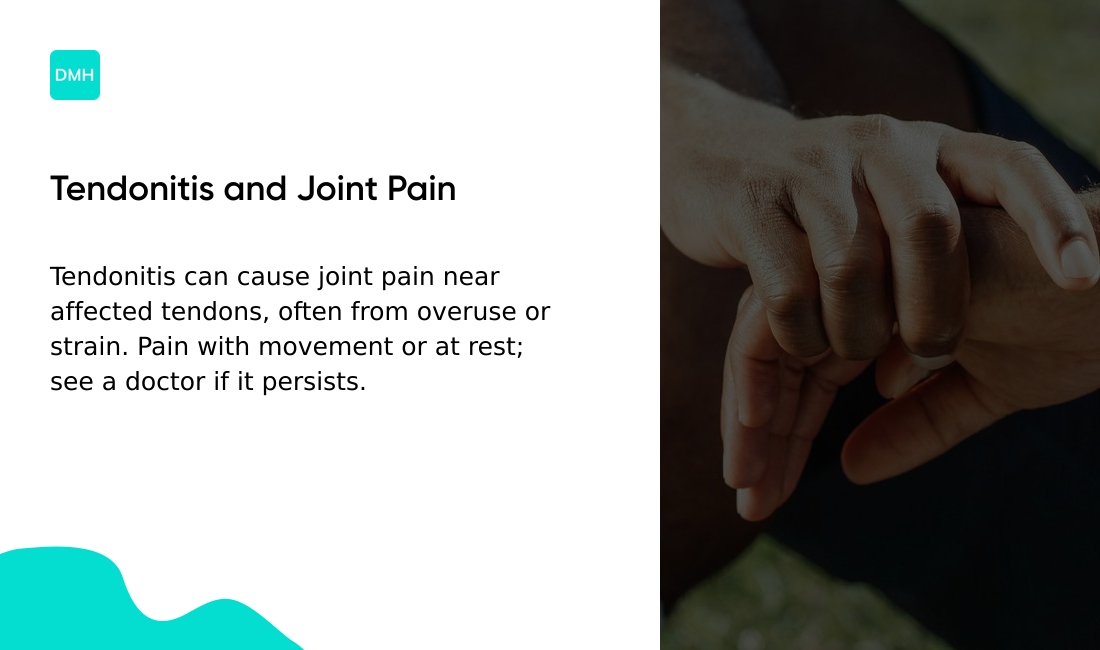
Tendonitis may be associated with joint pain near the affected tendon.
Tendonitis describes tendon inflammation. A tendon links muscle to bone and commonly affects the elbows, heels, and shoulders. Symptoms include pain during movement and pain at rest.
Overuse, sudden strain, and degenerative changes can be associated with tendonitis and related joint pain. Calcific tendonitis can disturb sleep; see how to sleep with calcific tendonitis for practical guidance.
Severity and recovery vary from person to person. Individuals with persistent or worsening joint pain may benefit from medical evaluation.
Not medical advice. Content for educational purposes only. Always consult a qualified healthcare professional for medical advice specific to an individual’s situation.
What causes joint pain in specific body parts?
What causes knee joint pain?
The knee is the body’s largest weight-bearing joint. Common causes of knee joint pain include osteoarthritis and meniscus tears.
Ligament injuries, bursitis, and patellar tendonitis also appear often. Arthritis affects over 32 million U.S. adults (CDC).
Osteoarthritis means cartilage breakdown in weight-bearing joints. Risk rises with age and prior injuries. A torn meniscus causes meniscus tear pain with twisting motions.
Ligament tears often cause instability and limited movement. Bursitis causes localized swelling and pain near the joint. Patellar tendonitis links to repetitive jumping and kneeling.
Athletes and manual laborers have higher knee injury rates. Mild sprains may improve in weeks; learn about sprained knee healing time.
Individuals with severe, persistent symptoms or inability to bear weight may need medical evaluation. Not medical advice—individuals may wish to consult a healthcare professional.
What causes finger joint pain?
Finger joint pain often stems from wear, inflammation, or nerve and tendon problems.
Autoimmune inflammation such as rheumatoid arthritis attacks the synovial lining. Pain, swelling, and morning stiffness may follow. Rheumatoid arthritis affects roughly 1% of adults (CDC).
Cartilage breakdown in osteoarthritis in hand leads to stiffness and reduced grip strength. Risk rises with age and prior joint injury (NIH).
A tendon catch or locking can signal trigger finger. Repeated tasks can cause repetitive strain injuries that limit motion and weaken grip.
Infections and gout can cause sudden severe pain. Evaluation may include physical exam, imaging, and blood tests. Findings vary by condition and person.
Seek evaluation from a qualified healthcare professional for personalized advice. Not medical advice; content for educational purposes only.
What causes shoulder joint pain?
Shoulder pain often links to soft tissue injury or joint wear.
Shoulder joint pain causes include rotator cuff tears, frozen shoulder syndrome, bursitis and tendonitis, and arthritis.
Rotator cuff injuries may result from trauma or gradual wear. Tears may affect about a quarter of older adults. Recovery timelines vary—see how long a torn rotator cuff heals without surgery for typical ranges.
Bursitis and tendonitis often follow repetitive overhead use or acute strain. Pain often worsens with overhead reaching and lifting.
Frozen shoulder, or adhesive capsulitis, may limit motion for months. Arthritis causes joint surface wear and may cause pain with movement.
Diagnosis depends on clinical exam and imaging. Individuals with persistent pain may benefit from clinical evaluation. Always consult a qualified healthcare professional for medical advice.
What causes hip joint pain?
Hip joint pain often limits walking and other weight-bearing activities.
Osteoarthritis results from cartilage wear in the hip. It’s common after age 45 and causes stiffness and reduced range of motion (NIH).
Bursitis causes pain from inflamed fluid sacs that cushion the joint. Pain often worsens with pressure or when lying on the affected side.
Hip labral tears affect the cartilage rim around the socket and can cause catching or groin pain during movement. Avascular necrosis may be associated with loss of blood supply to the femoral head and can lead to bone collapse over time.
Symptoms can range from a mild ache to sharp pain with weight-bearing. If symptoms concern you, consult a qualified healthcare professional for medical advice specific to your situation. Not medical advice; content for educational purposes only.
Why do my joints hurt suddenly?
Sudden joint pain may be associated with crystal-driven flares, infections, injuries, or viral illnesses.
Gout causes sharp, severe pain from uric acid crystals in a joint. Attacks often peak within 24 hours and commonly affect the big toe. Some medications and diets raise uric acid levels.
Infections such as septic arthritis produce intense pain with fever, redness, warmth, and limited motion. Septic arthritis can damage a joint within days and often requires urgent care.
Viral illnesses can cause widespread joint pain that starts quickly and then eases over days to weeks. Trauma and sprains create localized sudden pain after a fall or twist.
Gout joint pain and septic arthritis symptoms overlap at times. Lab tests and imaging help distinguish causes. Autoimmune flares may also cause abrupt pain when inflammation rises.
Overuse injuries can present suddenly after repetitive strain or a single overload event. Prompt assessment matters when pain is severe, fever is present, or joint use stops.
Cleveland Clinic offers an overview of joint pain causes and red flags.
Not medical advice. Content for educational purposes only. Always consult a qualified healthcare professional for medical advice specific to an individual’s situation.
What causes chronic joint pain?
Chronic joint pain may be associated with long-term wear, persistent inflammation, or systemic disease.
Joints connect bones and allow movement. Chronic pain lasts months and affects daily tasks. Understanding what causes joint pain helps guide evaluation and care plans.
| Cause | Description | Prevalence/Impact |
|---|---|---|
| Progressive osteoarthritis | Cartilage breaks down in weight-bearing joints like knees and hips | About 32 million U.S. adults (CDC) |
| Untreated rheumatoid arthritis | Autoimmune process attacks joint linings, causing swelling and damage | Roughly 1.3 million adults (CDC) |
| Fibromyalgia | Widespread pain that can include joint discomfort | About 2% of adults (NIH) |
| Chronic overuse | Repetitive motions wear tissue and cause persistent pain in athletes and workers | Varies by occupation and activity |
| Persistent inflammation | Low-grade inflammation from metabolic disease or infection | Can vary by underlying condition |
| Obesity-related stress | Extra body weight increases load on knees and hips | Raises osteoarthritis risk (CDC) |
Symptoms can vary from person to person and may limit mobility and sleep. If you notice pain that limits daily activities or lasts weeks, consult a healthcare professional.
Not medical advice. Content for educational purposes only.
What causes morning joint stiffness?
Morning joint stiffness often reflects joint inflammation, wear of joint cartilage, inactivity during sleep, or fluid shifts that make joints feel tight on waking.
Inflammatory arthritis causes such as rheumatoid arthritis involve immune-driven inflammation of the joint lining. This inflammation can make joints feel stiff for an hour or more after waking (NIH).
Osteoarthritis joint pain comes from worn cartilage in weight-bearing joints like knees, hips, and spine. People commonly report stiffness that eases after moving for 20 to 60 minutes.
Inactivity during sleep reduces joint movement and circulation. Joints may accumulate fluid and inflammatory cells overnight, producing stiffness on first movement.
Fluid buildup overnight can add pressure inside a joint. That pressure makes motion harder until gentle use redistributes fluid and warms tissues.
You may notice stiffness that improves with light activity, stretching, or a short walk. Stiffness that lasts longer than an hour, follows swelling, or limits daily tasks can vary by diagnosis and severity.
Evidence links these patterns to common conditions like osteoarthritis and rheumatoid arthritis (Arthritis organizations, NIH). Not medical advice—content for educational purposes only. Always consult a qualified healthcare professional for medical advice specific to your situation.
Can vitamin D deficiency cause joint pain?
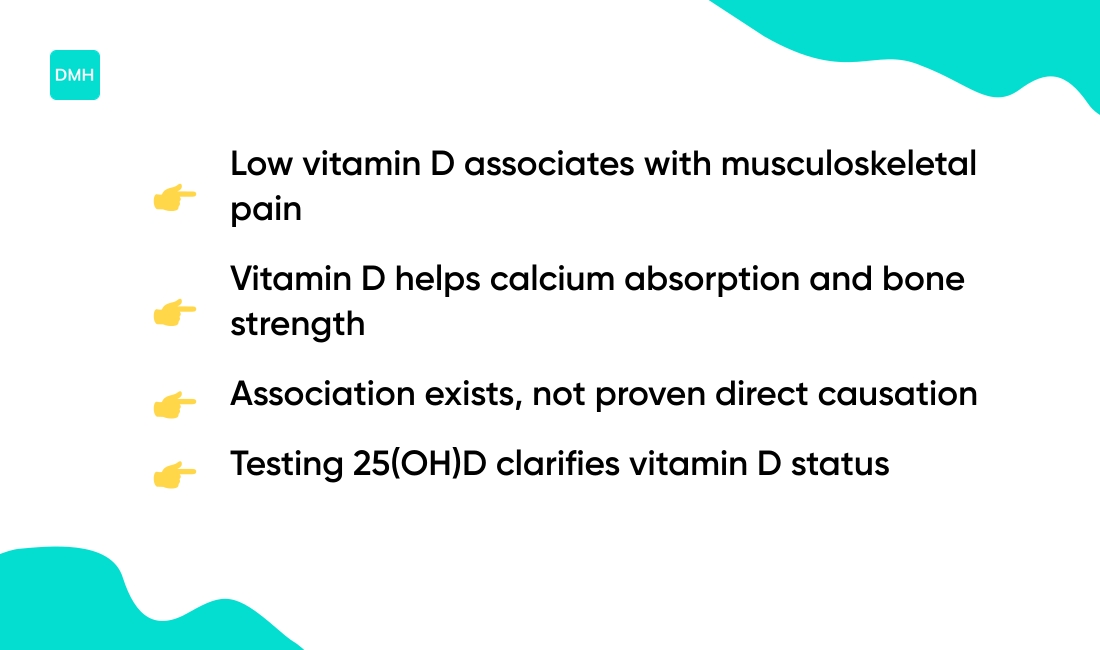
Low vitamin D levels may be associated with bone weakness, muscle pain, and joint discomfort.
Vitamin D helps the body absorb calcium and supports bone strength. Low levels often link to lower bone density and muscle weakness.
Some studies suggest people with low vitamin D report more musculoskeletal pain and worse arthritis symptoms (National Institutes of Health). Evidence shows an association rather than a direct cause.
Biological pathways offer one explanation. Vitamin D influences calcium balance and muscle function. Reduced calcium absorption can weaken bones and place extra stress on joints.
Certain groups face higher risk. Older adults, people with limited sun exposure, and those with darker skin often show lower vitamin D status. Some population studies estimate up to 1 billion people worldwide have low vitamin D levels.
Testing blood 25(OH)D levels helps clarify status. Addressing deficiency may reduce muscle pain for some individuals. Learn more about vitamin D deficiency symptoms and treatment.
Bone and muscle links appear in studies. Low levels can worsen joint discomfort in some people. Research also notes an increased arthritis risk association for certain populations.
Not medical advice. Content for educational purposes only. Consult a qualified healthcare professional for evaluation and personalized guidance.
You might also like: Things to Avoid with Degenerative Disc Disease
What are the symptoms of septic arthritis?
Septic arthritis can cause rapid, severe joint pain with fever and swelling.
Septic arthritis is a joint infection. Bacteria or fungi enter the joint and trigger inflammation.
Common symptoms include:
- Severe joint pain that starts suddenly
- Fever and swelling near the affected joint
- Joint redness and warmth to the touch
- Inability to move the joint or reduced range of motion
- Chills, sweating, or general feeling unwell
Most cases involve a single joint. The knee is the most common site. Estimates range from 2 to 10 cases per 100,000 people yearly.
Symptoms can resemble flare-ups of gout or inflammatory arthritis. Lab tests, joint aspiration, and imaging help doctors confirm the diagnosis.
Septic arthritis often requires emergency medical treatment to prevent joint damage. Prompt drainage of the joint and antibiotics are typical components of care.
Not medical advice. Content for educational purposes only. Always consult a qualified healthcare professional for medical advice specific to your situation.
Read also: When To Worry About Leg Pain And What To Do
When should I see a doctor for joint pain?
Seek medical evaluation for joint pain that shows clear red flags or that limits daily life.
Joint pain often improves with rest and simple care. Persistent pain that lasts more than a few days may signal an underlying issue.
Is your joint pain severe enough to stop daily activities? Watch for intense signs like severe swelling, fever or rash, or sudden joint weakness.
Pay attention to sudden loss of joint use or visible deformity. Sharp pain with redness and warmth can be a sign of infection. Septic arthritis symptoms may require immediate treatment.
Severe pain that stops you from performing daily tasks needs prompt review. Pain that wakes you at night or follows trauma may require imaging and tests. Some causes can vary from person to person and aren’t obvious on first exam.
People with immune conditions, recent infections, or weakened immunity may have higher risk of joint infection or inflammation. Gout and autoimmune arthritis can cause sudden severe pain that mimics infection.
For an overview of causes and warning signs, see the Mayo Clinic page on joint pain.
Not medical advice. Content for educational purposes only. Always consult a qualified healthcare professional for medical advice specific to your situation.
You’ll also like: Psoriasis: What It Is, Causes, Symptoms, and Treatment
Educational notice: This content is provided for informational and educational purposes only and is not intended as medical advice. Always consult a qualified healthcare professional for medical concerns.