A single percentage on your lab report can explain why you’re exhausted or short of breath.
If you’ve ever wondered what is hematocrit in blood test, it’s the percentage of blood volume made up of red blood cells and a key factor in oxygen transport.
Abnormal hematocrit—too low with anemia or too high from dehydration or polycythemia—can be missed without clear context, leaving patients and clinicians with unanswered questions.
This guide lays out how hematocrit is measured, the normal ranges for men, women and pregnancy, and common causes of low and high values.
You’ll learn how hematocrit relates to hemoglobin and other CBC values, when results warrant follow-up, and practical steps to address abnormal levels.
Read on to get clear, actionable information so a lab number helps your health decisions.
What is hematocrit in a blood test
Hematocrit shows the percentage of blood volume made up of red blood cells. It gives a clear sense of how many cells carry oxygen in blood.
The measurement appears on a routine hematocrit blood test or as part of a complete blood count (CBC). Labs may label the value as packed cell volume (PCV).
Red blood cells contain hemoglobin, the protein that binds oxygen. A higher red cell percentage can increase oxygen capacity per blood volume. A lower percentage can signal reduced oxygen delivery to tissues.
Labs measure hematocrit by spinning a blood sample in a centrifuge. Spinning separates plasma from red cells. Technicians read the red cell layer and report it as a percent.
Automated analyzers can calculate hematocrit from cell counts and mean corpuscular volume. Manual centrifugation gives the packed cell volume number used in some clinical settings.
Values vary by sex, age, and special states like pregnancy. Small shifts may reflect hydration changes rather than true cell mass. For detailed reference ranges and testing steps, see MedlinePlus.
Not a medical advice, content for educational purposes, consult a professional. Always consult a qualified healthcare professional for medical advice specific to your situation.
What does hematocrit measure
Hematocrit measures the percentage of blood volume made up of red blood cells.
Red blood cells carry hemoglobin, the protein that transports oxygen. Hematocrit gives a quick sense of how much of the blood can carry oxygen.
Laboratories measure hematocrit by spinning a blood sample in a centrifuge. Spinning separates plasma from cells. The resulting packed layer shows the packed cell volume.
Technicians express that layer as a percentage. Automated analyzers can calculate hematocrit from red cell count and mean corpuscular volume.
Both manual PCV and automated values appear on reports labeled hematocrit blood test. Hematocrit appears alongside hemoglobin and cell indices on the complete blood count.
See complete blood count (CBC) values and meanings for how these markers work together. Clinicians use hematocrit with hemoglobin to evaluate anemia and polycythemia.
Low hematocrit often links to iron deficiency, blood loss, or chronic disease. High hematocrit can reflect dehydration, increased red cell production, or lung disease.
Typical adult reference ranges vary by sex and age. Interpretation depends on symptoms and other lab values. If concerned about a specific result, consider consulting a qualified healthcare professional.
Not a medical advice, content for educational purposes, consult a professional.
Normal hematocrit levels and ranges
Hematocrit normal range for men
Hematocrit normal range for adult men typically sits between 41% and 50%. Laboratories may report the result from a hematocrit blood test as part of a CBC or as packed cell volume (PCV).
Values below 41% often indicate low red blood cell volume. Common causes include iron deficiency, chronic disease, or recent blood loss.
Values above 50% may reflect dehydration, polycythemia, or living at high altitude. Clinicians interpret hematocrit alongside hemoglobin, MCV, and clinical findings.
A single abnormal reading may prompt a repeat test or further evaluation. For instance, a hematocrit of 55% often leads to assessment for polycythemia and dehydration.
Reference ranges vary by lab, age, and individual health factors. Not a medical advice, content for educational purposes, consult a professional. If concerned, consider consulting a qualified healthcare professional.
Hematocrit normal range for women
The hematocrit normal range for adult women is 36% to 48%.
Lower values may reflect menstruation or hormonal differences. Pregnancy often lowers hematocrit because blood volume increases.
Dehydration can raise hematocrit by reducing plasma volume. Hematocrit appears on a CBC and as packed cell volume (PCV).
Clinicians may compare hematocrit with hemoglobin, MCV, and iron studies. Values below about 36% can signal anemia and need follow-up testing.
If concerned, consider consulting a qualified healthcare professional. Not a medical advice, content for educational purposes, consult a professional.
Normal hematocrit during pregnancy
Pregnancy expands plasma more than red cell mass. This creates a dilution effect called hemodilution.
Clinical sources note plasma volume can rise about 40% while red cell mass rises about 20%. That gap lowers the hematocrit.
Typical trimester ranges vary by lab. Normal hematocrit levels often measure 33–42% in the first trimester.
Values often fall to 30–36% in the second trimester. The third trimester commonly shows 31–35%.
Lower numbers during pregnancy usually reflect healthy volume expansion rather than disease. Very low values may indicate anemia and merit evaluation.
Hematocrit in pregnancy links closely with hemoglobin and iron status. Tracking trends matters more than a single value.
Increased blood volume helps meet fetal needs and supports delivery. Not a medical advice, content for educational purposes, consult a professional. If concerned, consider consulting a qualified healthcare professional.
What hematocrit level is considered dangerous
Dangerous hematocrit levels appear at both extremes. Hematocrit below about 20% often signals severe anemia.
Levels under 15% may cause dangerously low oxygen delivery and may need emergency care. High hematocrit raises blood viscosity and clot risk.
Values above roughly 60% associate with increased thrombosis and hyperviscosity problems. Some guidelines suggest keeping hematocrit below 45% for patients with polycythemia vera to lower thrombotic risk.
Abnormal results on a hematocrit blood test require context from hemoglobin, symptoms, and medical history. We advise discussing results with a clinician who can interpret packed cell volume and CBC findings.
If concerned, consider consulting a qualified healthcare professional. Not a medical advice, content for educational purposes, consult a professional.
Low hematocrit causes and symptoms
What causes low hematocrit
Low hematocrit means the percentage of blood made up of red blood cells falls below normal ranges.
The most common cause is iron deficiency anemia from poor dietary intake or chronic blood loss. Vitamin B12 deficiency or folate shortage can impair red blood cell formation and lower hematocrit.
Acute or chronic blood loss reduces circulating red cells quickly. Heavy menstrual bleeding and gastrointestinal bleeding are frequent examples.
Bone marrow disorders such as aplastic anemia or myelodysplastic syndromes cut production of new red cells. Kidney disease reduces erythropoietin production, which lowers red blood cell output.
Chronic inflammatory conditions may blunt marrow response and shorten red cell lifespan. The average lifespan of a red blood cell can influence counts.
If concerned, consider consulting a qualified healthcare professional. Not medical advice, content for educational purposes, consult a professional.
Symptoms of low hematocrit
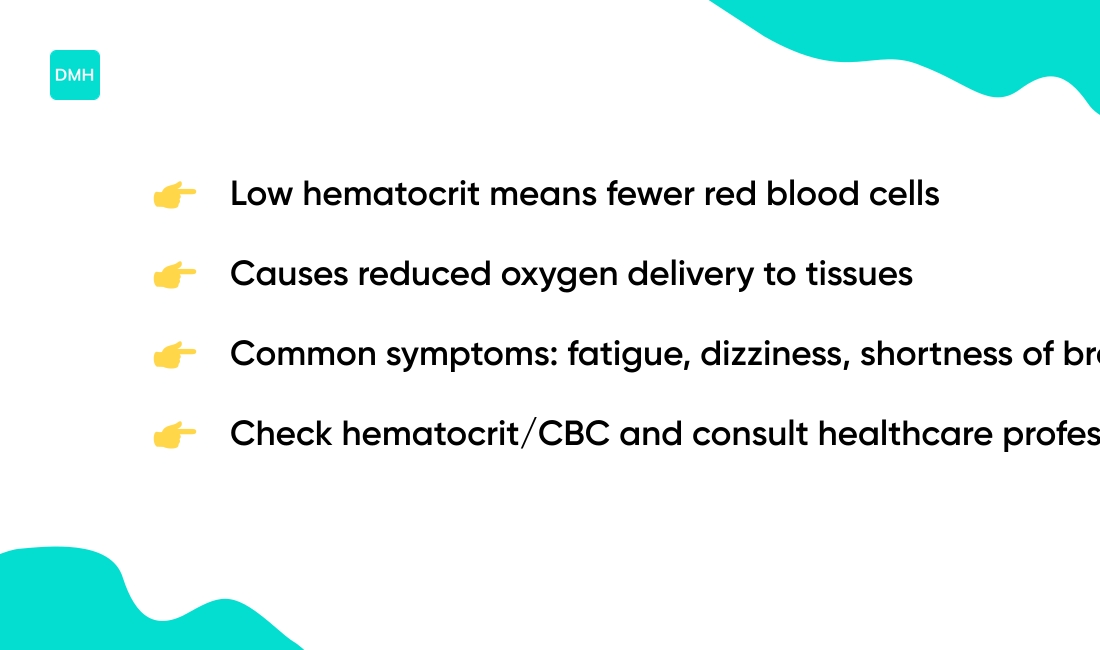
Low hematocrit means a smaller percentage of red blood cells in the blood. Red blood cells carry oxygen to tissues. Low levels can cause less oxygen delivery.
- Fatigue — feeling tired with routine activities.
- Weakness — muscles feel less able to perform.
- Dizziness — lightheaded or faint spells.
- Shortness of breath — breathlessness during mild exertion.
- Pale skin — noticeably lighter complexion or pallor.
- Cold hands and feet — poor warmth in extremities.
- Rapid heartbeat — heart beats faster to compensate.
These signs often appear together and vary by cause and severity. We note that a hematocrit blood test and other CBC values help clarify the reason for symptoms.
Have you noticed any of these symptoms recently? If symptoms concern someone, consider consulting a qualified healthcare professional. Not a medical advice, content for educational purposes, consult a professional.
Can anemia cause low hematocrit
Anemia often links to a low hematocrit on a blood test. Hematocrit measures the percentage of blood made up of red blood cells.
Low values indicate fewer circulating red cells or diluted blood volume. Many anemias reduce red blood cell production.
Iron deficiency, vitamin B12 or folate shortages and bone marrow disorders lower production rates. Chronic disease can suppress marrow activity and lower hematocrit.
Some anemias shorten red cell lifespan. Hemolytic conditions destroy cells faster and drop hematocrit. Acute bleeding reduces circulating volume and causes a rapid hematocrit fall.
Clinicians use hematocrit with hemoglobin, MCV and RDW to narrow causes. A low hematocrit with low MCV often points to iron deficiency.
A low hematocrit with high MCV may suggest B12 or folate issues. Typical low hematocrit values often fall below about 36% for women and 41% for men, though labs vary.
More testing usually identifies the specific cause. Not a medical advice, content for educational purposes, consult a professional.
How to increase hematocrit levels
Low hematocrit reflects a low proportion of red blood cells. It can reduce oxygen delivery and cause fatigue.
Addressing nutrient gaps that limit red blood cell production helps. Iron supplementation targets iron deficiency, which causes about half of anemia cases globally.
Eating heme iron sources, legumes, and fortified cereals helps. Vitamin C may boost iron absorption.
Correcting B vitamin deficits supports healthy red cell formation. Vitamin B12 and folate intake matter for many people with low hematocrit.
Clinicians may assess for blood loss, kidney disease, or bone marrow disorders and treat underlying causes. Medical options range from oral or intravenous therapy to erythropoiesis-stimulating agents or transfusion in severe cases.
See practical steps on how to raise hematocrit for more detail. Not a medical advice, content for educational purposes, consult a professional.
High hematocrit causes and treatment
What causes high hematocrit
High hematocrit means a larger share of blood is red blood cells.
High hematocrit causes include dehydration, smoking, and bone marrow disorders. Dehydration can concentrate blood by lowering plasma volume and raise hematocrit.
Smoking and chronic lung disease can reduce oxygen and stimulate more red cells. Polycythemia vera is a marrow disorder that can raise red cell mass in some patients.
Obstructive sleep apnea can raise hematocrit through repeated low oxygen episodes during sleep. Living at high altitude can lead to higher hematocrit as the body adapts.
Testosterone therapy may raise red cell counts in certain people. Learn more on our high red blood cell count page.
If concerned, consider consulting a qualified healthcare professional for evaluation. Not a medical advice, content for educational purposes, consult a professional.
Does dehydration affect hematocrit
Dehydration reduces plasma volume and concentrates blood cells. Dehydration and hematocrit may cause an artificial rise in hematocrit percentage.
Small fluid loss can raise values by a few percentage points. Greater volume loss can raise hematocrit more noticeably.
Lab results can show elevated hematocrit despite unchanged red cell mass. Interpreting a high hematocrit often requires checking hydration, hemoglobin, and packed cell volume (PCV).
Plasma volume loss alters readings in a CBC. People scheduled for a hematocrit blood test may benefit from normal fluid intake before the draw.
Repeating the test after rehydration can clarify true red cell status. Hematocrit test results work best when viewed with clinical context.
Not a medical advice, content for educational purposes, consult a professional. If concerned, consider consulting a qualified healthcare professional.
Does high altitude increase hematocrit
High altitude exposure reduces available oxygen and raises erythropoietin from the kidneys. That signal boosts production of red blood cells.
Initial hematocrit can rise within hours as plasma volume falls. New red cell mass increases over days to weeks and may take months to stabilize.
People living at altitude commonly have higher hematocrit values. Ranges depend on elevation and acclimatization. Values often reach 45–60% in long-term residents.
Sea level hematocrit normal range sits near 36–50% for adults. Marked increases above 60% may indicate polycythemia or chronic mountain sickness and need medical evaluation.
Not a medical advice, content for educational purposes, consult a professional. If concerned, consider consulting a qualified healthcare professional.
How to lower high hematocrit
High hematocrit means a larger share of red blood cells in blood. Elevated levels may raise clot risk and strain circulation.
Treatment often starts with a therapeutic phlebotomy session. Phlebotomy commonly removes about 250–500 mL per session and may lower hematocrit by several percentage points.
- Proper hydration habits can reduce concentration from dehydration and lower measured hematocrit.
- Addressing underlying conditions like lung disease or sleep apnea can reduce red cell production.
- Gradual lifestyle changes include smoking cessation and weight management to improve oxygen delivery.
- Medication adjustments, such as changing testosterone or erythropoietin therapy, may be considered by clinicians.
For practical steps and monitoring, see our guide on how to lower hematocrit.
Not medical advice. Content for educational purposes. Always consult a qualified healthcare professional for medical advice specific to your situation.
You might also like: When Should You Worry About Abnormal Blood Test Results
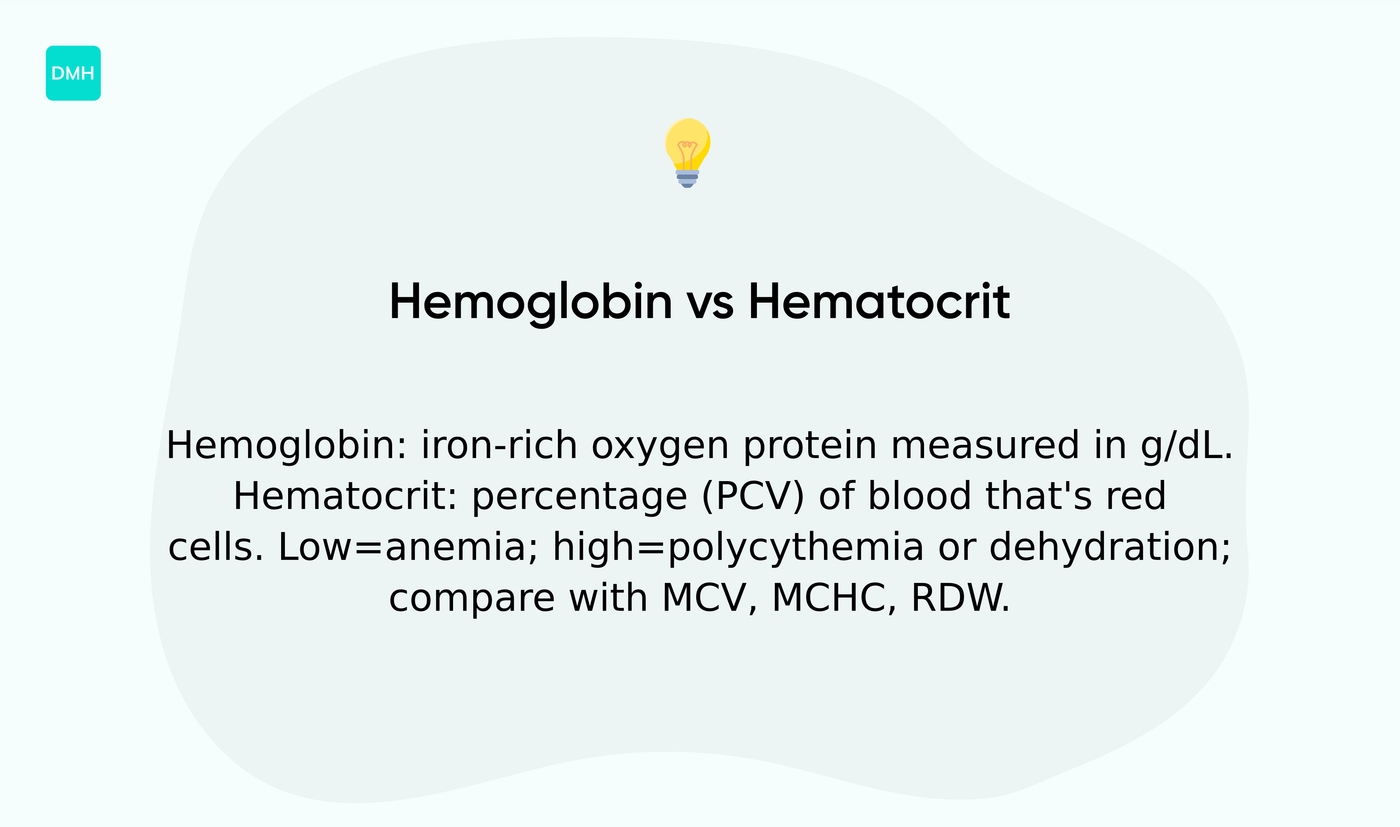
Hemoglobin vs hematocrit difference
Hemoglobin and hematocrit both assess red blood cells, but they measure different things.
Hemoglobin names the iron-rich molecule inside each red cell that carries oxygen. Laboratories report hemoglobin in grams per deciliter (g/dL).
| Measure | What It Measures | Normal Range (Men) | Normal Range (Women) |
|---|---|---|---|
| Hemoglobin | Grams of oxygen protein per deciliter | 13.8–17.2 g/dL | 12.1–15.1 g/dL |
| Hematocrit | Percentage of blood volume that’s red cells | 41%–50% | 36%–48% |
Hematocrit gives the percent of blood made of red cells. Laboratories measure hematocrit by centrifuging or by automated counters.
Hematocrit appears as a percent or as packed cell volume (PCV). Low hematocrit and low hemoglobin often reflect anemia and low red cell mass.
High values may signal polycythemia and increased red cell mass. Dehydration can raise hematocrit by reducing plasma volume.
Comparing hemoglobin and hematocrit helps clarify causes of abnormal CBC results. Clinicians review MCV, MCHC, and RDW alongside these values. That review narrows likely diagnoses and guides further testing.
For related information on elevated hemoglobin, see high hemoglobin blood test.
If concerned about test results, consider consulting a qualified healthcare professional. Not a medical advice, content for educational purposes, consult a professional.
Read also: What Happens at Your First Hematology Appointment
Hematocrit test procedure and preparation
Hematocrit measures the percentage of blood volume made up of red blood cells. You will sit while a phlebotomist cleans your skin and places a tourniquet.
A needle draws about 2–5 mL of blood from a vein in your arm. The draw usually takes under a minute.
Most labs don’t require fasting for a hematocrit blood test. Bring a list of medicines and recent health changes.
Stay hydrated to avoid falsely high values due to low plasma volume. Laboratories use automated CBC analyzers to calculate hematocrit from red cell count and mean cell volume.
Some labs measure packed cell volume by centrifuging a capillary tube. Results print as a percentage, for example 42%.
Point-of-care devices can report results within minutes. Hospital or outpatient labs often post results within a few hours to 24 hours. Complex panels or repeat tests may take longer.
Accuracy can vary with hydration, recent bleeding, altitude, smoking, heavy exercise, or improper sample handling. Lab hemolysis, clotted samples, or delays in processing may skew numbers.
Repeat testing helps confirm unexpected values. Compare your value to normal hematocrit levels for context and to related CBC markers like hemoglobin and MCV.
If concerned about results, consider consulting a qualified healthcare professional. Not a medical advice, content for educational purposes, consult a professional.
You’ll also like: Is It Serious To Be Referred To A Hematologist
Understanding your hematocrit test results
We explain how your hematocrit fits into a complete blood count (CBC). Hematocrit shows the percentage of blood made up of red blood cells.
A hematocrit blood test often appears next to hemoglobin. Compare hematocrit with mean corpuscular volume.
The mean corpuscular volume (MCV) helps classify anemia as microcytic, normocytic, or macrocytic. An MCV under about 80 fL may point to iron deficiency.
An MCV above about 100 fL may point to B12 or folate issues. Look at MCHC and RDW for more detail.
Low MCHC can mean pale red cells. High RDW (above ~14.5%) may mean mixed deficiencies or early change in cell size.
Hematocrit often approximates hemoglobin times three. For instance, hemoglobin 12 g/dL often pairs with hematocrit near 36%.
Low hematocrit with low MCV and high RDW commonly suggests iron deficiency. Low hematocrit with high MCV may suggest vitamin deficiency or marrow issue.
High hematocrit can reflect dehydration, smoking, or a condition that raises red cell mass. Does your result fall outside the reference range?
If a result lies outside reference ranges, your clinician may repeat the test. They may order iron studies, B12 and folate levels, kidney tests, or imaging.
Urgent evaluation may be considered for very low or very high values. Not a medical advice, content for educational purposes, consult a professional. Always consult a qualified healthcare professional for medical advice specific to your situation.
You might also like: Can Dehydration Affect Blood Test Results?
Educational notice: This content is provided for informational and educational purposes only and is not intended as medical advice. Always consult a qualified healthcare professional for medical concerns.