Cholesterol is a waxy molecule your body needs for building cells and producing hormones.
Low-density lipoprotein carries cholesterol toward artery walls.
High levels raise plaque buildup.
High-density lipoprotein helps remove cholesterol from arteries.
Higher HDL links with lower heart risk.
Your liver makes most cholesterol. Diet and genetics affect blood levels.
Plaque narrows arteries and reduces blood flow. Narrowed arteries increase heart attack and stroke risk.
Lowering LDL by about 1 mmol/L cuts cardiovascular events by roughly 20% based on large trials. A standard lipid panel shows LDL, HDL, triglycerides, and total cholesterol.
Use those numbers to track progress.
I really think that focusing on LDL gives the clearest benefit for heart health. Tracking makes lifestyle changes measurable.
Simple actions change numbers in weeks. Eating soluble fiber, choosing healthy fats, and regular exercise help you learn how to lower cholesterol.
We recommend discussing LDL targets with your clinician and using diet and activity to reach them.
Lower LDL cholesterol matters most for reducing risk. Use raise HDL cholesterol strategies to support artery health. Adopt habits that reduce cholesterol naturally for lasting gains.
What is cholesterol and why does it matter
Ever wonder what cholesterol actually does in your body? Well, it’s essential for cell structure and hormone production, but the type and amount matter enormously for your heart.
LDL carries cholesterol to artery walls where it can build up as plaque. Think of it as the delivery truck that sometimes leaves packages in the wrong place. HDL, on the other hand, works like a cleanup crew—it hauls cholesterol away from arteries back to your liver for disposal.
Your liver produces about 80% of your cholesterol. The rest comes from your diet and genetic factors. When LDL levels climb too high, plaque accumulates inside arteries, narrowing the passageways and restricting blood flow to vital organs.
That narrowing raises your risk of heart attack and stroke significantly. Large clinical trials show that dropping LDL by roughly 1 mmol/L can slash cardiovascular events by about 20%—a huge win for your ticker.
A standard lipid panel measures LDL, HDL, triglycerides, and total cholesterol. These numbers give you a clear baseline and help you track progress as you make changes.
Focusing on LDL offers the most direct path to better heart health. Plus, when you can see your numbers improve on paper, it keeps you motivated to stick with new habits.
Simple actions deliver measurable results within weeks. Adding soluble fiber, swapping saturated fats for healthier options, and moving your body regularly all teach you how to lower cholesterol effectively.
Talk with your clinician about your personal LDL targets. Then use diet tweaks and physical activity to hit those goals and protect your cardiovascular system for the long haul.
Best foods to lower cholesterol naturally
Soluble fiber foods that reduce LDL
We recommend building your meals around soluble fiber foods that actively pull cholesterol out of your bloodstream. Include oats, kidney beans, lentils, Brussels sprouts, apples, and pears in your daily rotation.
These foods can supply over 10 grams of soluble fiber each day, which is the sweet spot for lowering LDL cholesterol. Here’s a quick breakdown:
- Oats, 1 cup cooked—about 3 g soluble fiber (beta‑glucan)
- Kidney beans, 1/2 cup—about 2 g
- Lentils, 1/2 cup—about 1.5 g
- Brussels sprouts, 1 cup cooked—about 2 g
- Apple, medium with skin—about 1.5 g
- Pear, medium with skin—about 1.5 g
Soluble fiber binds to bile acids in your gut, forcing your liver to use cholesterol to make more bile. That process pulls cholesterol out of your blood.
I’d say combining two of these items per meal works wonders. You can easily hit over 10 grams daily that way, and that’s a cornerstone of any lower cholesterol diet.
Expect your LDL to drop within a few weeks when you stick with this approach. It’s one of the fastest natural strategies you’ll find.
Omega-3 fatty acids for heart health
Adding fatty fish like salmon, mackerel, and trout to your weekly menu delivers powerful omega-3 benefits. EPA and DHA—the active forms of omega-3—can reduce triglycerides by about 20–30% when you consume 2–4 grams daily.
You can see those gains in as little as four weeks. Omega-3s also support cardiovascular function and tamp down inflammation throughout your body.
Wondering how to lower cholesterol with simple swaps? Start with two servings of fatty fish each week. One serving equals roughly 3.5 ounces cooked.
If fish isn’t your thing, talk with your clinician about a high-quality omega-3 supplement. High-dose options at 2–4 grams daily deliver even stronger triglyceride reductions, but you’ll want medical guidance before jumping in.
In my opinion, grilled salmon beats fried options every time for your lipid profile. That choice helps lower triglycerides and supports overall heart health without adding unhealthy fats.
Other solid picks include sardines and rainbow trout. Mix them into salads, pasta dishes, or simply grill them with lemon and herbs for a quick weeknight meal.
Plant sterols and stanols benefits
Plant sterols and stanols are natural compounds that block cholesterol absorption in your intestines. They’re found in small amounts in nuts, seeds, and vegetables, but fortified foods make it easier to hit your daily target.
Consume 2–3 grams daily from fortified spreads, yogurt, snack bars, or whole foods. At that intake, lower LDL cholesterol typically drops about 6–12% within four weeks.
For anyone asking how to lower cholesterol quickly, pairing plant sterol foods with soluble fiber and regular exercise delivers a one-two-three punch. I really think these foods offer a fast, reliable boost to heart health.
Check nutrition labels so you reach the 2–3 gram target each day. After four weeks, retest your LDL and adjust your plan based on the results.
Healthy unsaturated fats to include
Swapping saturated fats for unsaturated fats is one of the smartest moves you can make for your cholesterol ratios. Studies show this simple switch lowers LDL by about 5 to 15%.
We recommend olive oil, avocados, nuts, and seeds as daily staples. Use one tablespoon of extra-virgin olive oil for cooking or salad dressings, and track how your numbers change over a few weeks.
Eat a quarter of an avocado or a handful of nuts—think almonds, walnuts, or cashews—about four times per week. Sprinkle chia or flax seeds on yogurt, oatmeal, or salads for an extra dose of omega-3 and soluble fiber.
I’d say small swaps yield measurable changes when you’re figuring out how to lower cholesterol fast. Try replacing butter with olive oil for four weeks, then measure your LDL to see the progress firsthand.
Foods to avoid with high cholesterol
We recommend cutting foods that raise LDL and lower HDL. These choices give you the fastest, safest impact on your numbers. (Let’s be honest—nobody loves giving up favorite treats, but your heart will thank you!)
Want to know how to lower cholesterol effectively? Start with clear food swaps:
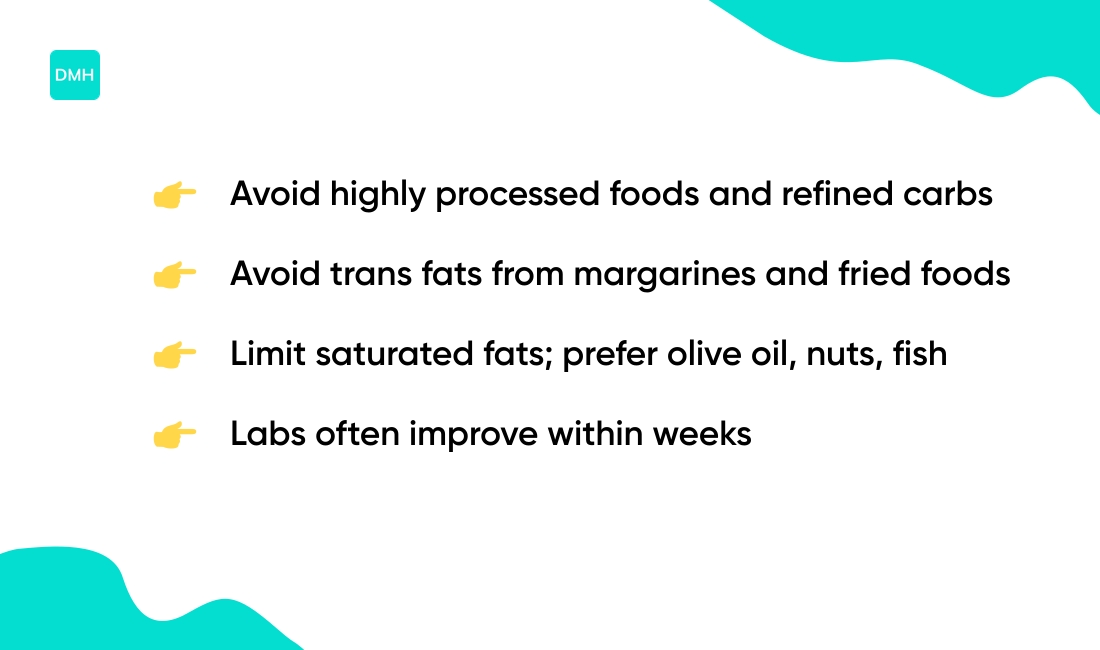
- Highly processed foods—chips, instant meals, frozen dinners. They pack refined carbs and hidden fats that spike LDL.
- Partially hydrogenated oils—some margarines, bakery items, and fried fast food. These trans fats raise LDL and lower HDL at the same time.
- Fatty red meats—burgers, sausages, bacon. They deliver large amounts of saturated fat in every serving.
- Full-fat dairy—butter, cream, whole milk, cheese. Regular consumption raises LDL significantly.
- Added sugars—soda, candy, pastries. Sugary drinks raise triglycerides and worsen your overall cholesterol profile.
Limit saturated fat to a small portion of your daily calories. Replace it with olive oil, nuts, avocados, or fatty fish. Swap sugary drinks for water, sparkling water, or unsweetened tea.
Choose oats, beans, and vegetables as regular staples. These whole foods deliver fiber and nutrients without the cholesterol baggage.
I really think removing these items gives you quick wins. I’ve seen lab numbers improve within weeks when people follow these swaps and add simple exercise routines.
For practical limits and more guidance, check out the Mayo Clinic guide to reduce cholesterol.
Best diet plans for lowering cholesterol
Mediterranean diet for cholesterol management
The Mediterranean diet lowers LDL and raises HDL through whole foods, healthy fats, and lean proteins. This pattern shows you how to lower cholesterol without feeling deprived.
Swap butter for extra-virgin olive oil in your cooking and dressings. Use two tablespoons daily as your go-to fat source.
Eat fatty fish like salmon and mackerel twice weekly to capture omega-3 benefits. Aim for fish two to three times per week, grilled or baked rather than fried.
Add oats, beans, and lentils to your meals for soluble fiber that actively lowers LDL cholesterol. Target at least 10 grams of soluble fiber each day.
Snack on unsalted nuts—a small handful daily—and pile more vegetables onto your plate to raise HDL cholesterol. Choose colorful veggies for extra antioxidants.
Studies report a 7–10% LDL drop with Mediterranean eating patterns within a few months. Mediterranean diet benefits include better lipid profiles, lower inflammation, and improved blood pressure.
In my opinion, this pattern fits most lifestyles and sustains better lipids over the long haul. Actually, many people find it easier to stick with than restrictive diets.
Start by replacing one saturated fat source—like butter on toast—with olive oil today. Measure your lipids after 8–12 weeks to track your progress and celebrate those wins.
Plant-based diet benefits
Plant-based eating lowers cholesterol by cutting saturated fat and flooding your system with fiber and phytonutrients. We recommend whole grains, legumes, nuts, seeds, and plenty of vegetables.
Oats rank among the top soluble fiber foods. Eating three grams daily can lower LDL about 5%. Beans, lentils, and Brussels sprouts add even more fiber to your daily total.
Plant sterols from fortified foods and whole plants lower LDL cholesterol by 6 to 12% in about four weeks when you consume 2 to 3 grams daily.
I’d say fiber density and nutrient variety outperform simple low-fat swaps for lasting cardiovascular benefit. Plus, you’ll likely feel more energized within weeks.
Make practical swaps: replace red meat with beans in tacos or chili, use olive oil instead of butter, and add oats to your breakfast routine. Small changes add up fast.
Check your cholesterol after 8 to 12 weeks to measure the impact. This approach reduces heart disease risk over years while improving your day-to-day energy levels.
For more on vitamins that support weight management alongside cholesterol goals, see what vitamin is good for weight loss.
Sample meal plan to lower cholesterol
We recommend a simple, practical menu to lower cholesterol without overthinking every bite. Here’s a full day that hits all the key targets:
| Meal | Menu | Key Nutrients |
|---|---|---|
| Breakfast | 1 cup cooked oats topped with berries and 1 tbsp ground flaxseed | ~3 g soluble fiber, omega-3 |
| Lunch | Large mixed salad with grilled salmon, chickpeas, avocado, olive oil dressing | Omega-3, fiber, healthy fats |
| Snack | Apple and small handful of walnuts, or yogurt fortified with plant sterols | Fiber, plant sterols, omega-3 |
| Dinner | Grilled mackerel, quinoa, steamed Brussels sprouts or green beans | Omega-3, fiber, lean protein |
Aim for 3 grams of plant sterols daily and at least 10 grams of soluble fiber from oats, beans, and vegetables. Eat fatty fish twice weekly to boost omega-3 intake for cholesterol control.
I’d say swapping butter for olive oil and adding daily walks speeds up your results noticeably. This plan supports lower LDL and helps you lower cholesterol fast when you stick with it for at least four weeks.
Limit processed meats and full-fat dairy to keep saturated fat in check. Track your lipids after four to eight weeks and adjust portions based on your progress.
Exercise strategies to lower cholesterol
We recommend combining aerobic exercise and strength work to lower cholesterol fast and safely. Aim for 150 minutes of moderate aerobic activity per week, or 75 minutes of vigorous work if you’re already fit.
Pick brisk walking, cycling, swimming, or stair climbing. StairMaster benefits include raising your heart rate and burning calories efficiently, which directly impacts your lipid profile.
Do weight sessions two times per week. Hit major muscle groups with compound moves like squats, rows, and presses. Keep sessions to 20–30 minutes if you’re short on time.
Cardio helps lower LDL cholesterol and trims triglycerides. Resistance training helps raise HDL and preserve muscle during weight loss, which keeps your metabolism humming.
Exercise boosts enzymes that shuttle cholesterol to your liver for removal. Combined training can change blood lipids within four to eight weeks.
Studies often report LDL falling about 5 to 10% and HDL rising around 3 to 6%.
Here’s a simple weekly template:
- 3 sessions of 30–50 minutes moderate aerobic activity (brisk walking, cycling, swimming)
- 2 sessions of 20–30 minutes resistance training (bodyweight, dumbbells, or machines)
- 1 high-intensity interval session per week if your doctor clears you
Use the talk test to gauge intensity. You should be able to speak in short phrases during moderate workouts but not hold a full conversation.
In my opinion, adding two short strength sessions each week makes the biggest difference for lasting change. Plus, building muscle helps your body manage blood sugar and inflammation better.
Track progress with a baseline lipid panel, then retest after eight weeks. Losing 5 to 10% of your body weight often improves cholesterol even further, so combine exercise with smart eating for maximum impact.
How to raise HDL cholesterol levels
Raising HDL protects your heart and improves your overall cholesterol balance. If you want to know how to lower cholesterol risk, boosting HDL is a key piece of the puzzle.
We recommend simple habits you can maintain for life. Here’s what works:
- Regular physical activity: Aim for 150 minutes of moderate aerobic exercise weekly plus two resistance sessions. Exercise to lower cholesterol can lift HDL by about 5% over several weeks.
- Healthy fats: Replace saturated fats with olive oil, avocados, nuts, and fatty fish. Omega-3 for cholesterol from salmon twice weekly helps triglycerides and supports HDL.
- Avoid trans fats: Cut packaged baked goods, margarine with partially hydrogenated oils, and fried fast food. Removing trans fats prevents HDL drops and lowers LDL at the same time.
- Moderate alcohol: One standard drink daily links to higher HDL in some studies. But don’t start drinking for this reason if you avoid alcohol now—other strategies work just as well.
I really think small, consistent moves beat big, short-lived efforts every time. I’ve seen clients raise HDL within 8–12 weeks by adding brisk walks and swapping butter for olive oil.
Try these steps for 8–12 weeks, then check a lipid panel to measure your gains. Track weight loss, sleep quality, and smoking cessation for extra improvements across the board.
How fast can you lower cholesterol
How fast can you lower cholesterol? You can see measurable change in weeks with focused steps. The timeline depends on which strategy you use and how consistently you apply it.
We recommend getting baseline labs before you change your diet or start supplements. That way you’ll know exactly what’s working.
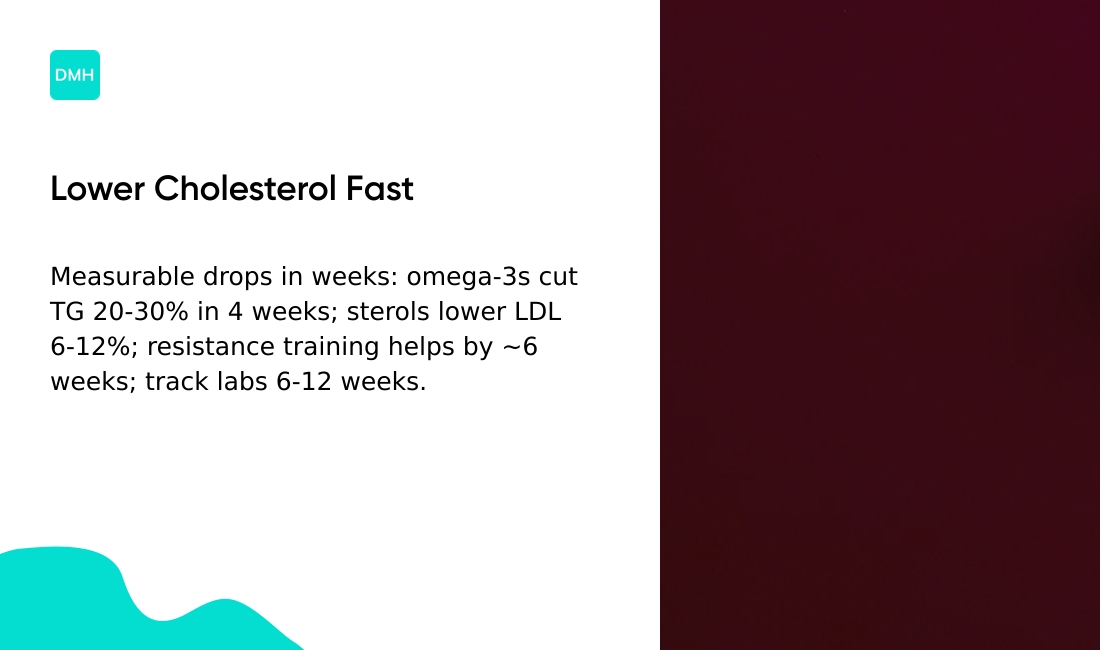
High-dose omega-3s can cut triglycerides about 20 to 30% in just four weeks. Plant sterols at 2 to 3 grams daily often lower LDL by 6 to 12% in the same timeframe.
Regular resistance training raises HDL and trims LDL within roughly six weeks. Include cholesterol-lowering foods like oats, beans, and nuts to add soluble fiber to every meal.
Diet shifts deliver steady gains over months. A Mediterranean or plant-focused diet can lower LDL 5 to 15% in three months when you stick with it consistently.
I’d say combining diet, exercise, and targeted supplements gives you the fastest, safest results for most people. Each piece reinforces the others, speeding up your progress.
Track your labs at 6 to 12 weeks to measure real progress. Talk with your clinician about medications if numbers don’t budge—sometimes you need both lifestyle changes and prescriptions.
Small, consistent changes add up over time and help you reduce cholesterol naturally. Start with one or two swaps this week, then build from there.
You’ll also like: All about Nutrition – DailyMedicalHealth
Weight loss and cholesterol reduction
We recommend modest weight loss to improve cholesterol levels across the board. Losing just 5% of your body weight often lowers LDL and triglycerides while raising HDL slightly.
I really think small changes matter here. If you weigh 200 pounds, dropping 10 pounds equals 5%—and that’s enough to shift your lipid panel in the right direction.
Aim for a 500-calorie daily deficit to lose about 1 pound per week. Pair diet changes with 150 minutes of moderate aerobic activity weekly, plus two resistance sessions to protect muscle mass.
Eat more soluble fiber foods like oats, beans, and fruit. Include omega-3-rich fish and replace saturated fats with unsaturated fats from olive oil, avocados, and nuts.
These shifts help lower LDL cholesterol and support overall heart function.
Track waist changes to watch metabolic improvement unfold. Learn where to measure your waist for body fat to get accurate readings. A smaller waist often signals better cholesterol control and lower inflammation.
I’ve seen patients cut LDL by single-digit percentages after 5% weight loss. Greater loss typically yields larger drops and better triglyceride response, so keep going if you have more to lose.
Modest weight loss combined with regular exercise can raise HDL cholesterol too. Set a 12-week goal and track your weight weekly. Log food and activity for simple accountability and to spot patterns.
Talk with your clinician before changing medications or launching major plans. If you want a clear next step, start with a 5% target and a basic calorie plan—that gives you fast, measurable wins to lower cholesterol.
You might also like: Are Chickpeas Keto Friendly? Carbs Analysis
Lifestyle changes beyond diet and exercise
You can lower cholesterol fast with habits that go beyond what you eat and how you move. If you ask me how to lower cholesterol, I’d start with smoking, alcohol, stress, and sleep—all four play huge roles.
Quitting smoking cuts heart disease risk by about half within a year. It helps raise HDL cholesterol and lowers LDL at the same time. (Ugh, quitting is tough—but your arteries will celebrate!)
Use nicotine replacement patches, prescription options like varenicline, or counseling programs to quit. Join a support group or call a quitline for extra accountability when cravings hit.
Limit alcohol to one drink daily for women and two for men. Track weekly units and avoid binge episodes, which spike triglycerides and stress your liver.
Aim for seven to nine hours of sleep nightly. Poor sleep raises inflammation markers and can worsen cholesterol over time. Read practical sleep tips for high blood pressure to protect both sleep quality and heart health.
Here are quick sleep fixes:
- Keep a consistent bedtime, even on weekends
- No screens 60 minutes before sleep
- Limit caffeine after mid-afternoon
Manage stress with deep breathing, short walks, counseling, or meditation. Small sessions lower your pulse and calm cortisol levels, which helps you reduce cholesterol naturally.
Schedule three five-minute breathing breaks daily. Try progressive muscle relaxation before bed to unwind your body and mind.
We recommend tracking sleep hours, alcohol intake, and smoking status each week. I’d say small changes stack into big wins when you monitor trends and adjust as needed.
Try these habits for 4 to 12 weeks to notice lipid shifts. Talk to your clinician before changing any medications or supplements—teamwork makes the dream work!
Read also: Apex of The Heart: Definition & Location
Educational notice: This content is provided for informational and educational purposes only and is not intended as medical advice. Always consult a qualified healthcare professional for medical concerns.