INR matters because it tells you how fast your blood clots and guides safe anticoagulant dosing.
International Normalized Ratio is a standardized number that helps clinicians compare results across laboratories.
Labs measure clotting with prothrombin time, then convert those seconds into an INR.
What is INR and why does it matter
INR shows whether anticoagulation sits too low or too high. A typical target for warfarin often sits at 2.0 to 3.0.
High INR levels raise bleeding risk because your blood takes longer to clot. Low INR levels raise clot risk, leaving you vulnerable to stroke or deep vein thrombosis.
Regular INR checks prevent emergencies and keep treatment on track. Pair INR monitoring with routine blood work like CBC with differential to get a fuller picture of bleeding risk and overall blood health.
Check your INR on the schedule your clinician recommends. Tell your provider about any unusual bruising, nosebleeds, or blood in stool or urine right away.
If you take warfarin, follow testing and dosing instructions closely to stay within the safe INR target range.
What is the therapeutic INR range on warfarin
The standard therapeutic INR range on warfarin is 2.0–3.0 for most indications. That range balances clot prevention with bleeding risk.
Atrial fibrillation and most venous clots aim for INR 2.0–3.0. Mechanical heart valves often require higher targets—typical targets span 2.5–3.5 for many valves, while some high-risk valves or prior thrombosis need 3.0–4.0.
A person not on anticoagulants has a normal INR level near 1.0. If your INR stays above the target, your bleeding risk rises. If it falls below target, your clot risk climbs.
Strict INR control saves lives and reduces complications. Follow your clinician’s monitoring plan and report any bleeding, bruising, or new clot symptoms immediately.
What INR level is considered dangerous
Is an INR of 4 dangerous
An INR of 4 is a moderate elevation that raises bleeding risk above the therapeutic INR range. If you have no bleeding, clinicians usually hold or reduce the warfarin dose and repeat the INR within 24–72 hours.
Active bleeding, bloody stools, vomiting blood, or new neurological signs require urgent care. An INR above 4.9 or any major bleed moves management from dose adjustment to reversal and possible hospitalization.
Expect closer checks until your INR returns to target. Hold doses as directed, avoid extra aspirin, and keep consistent vitamin K intake.
Use the INR monitoring guidelines your clinician gives and ask about vitamin K if values climb. Most cases at INR 4 need cautious outpatient management and prompt retesting, not emergency intervention unless symptoms appear.
Is an INR of 5 dangerous
An INR of 5 is dangerous because it meaningfully raises bleeding risk above the therapeutic range of 2.0–3.0. You need prompt assessment to decide on reversal and monitoring.
An INR at 5 increases the chance of spontaneous bruising, nosebleeds, or blood in stool or urine. Guidelines mark values above 4.9 as requiring urgent attention.
Clinicians often hold or lower warfarin doses and may give oral vitamin K at low doses to bring the INR down.
Treating an INR of 5 early prevents progression to major bleeding. If you have minor bleeding, providers may give vitamin K 1–2.5 mg orally and repeat INR in 24 hours.
Major bleeding or neurologic signs need IV vitamin K, factor replacement, and rapid transfer to hospital.
Contact your clinician immediately for INR 5. Seek immediate care if you have heavy bleeding, fainting, severe headache, or sudden weakness.
Critical INR values above 8
An INR above 8 is a medical emergency because bleeding risk becomes life-threatening. Treating this quickly saves lives.
Any INR above 8 needs immediate hospital care. Rapid action prevents catastrophic hemorrhage. This supratherapeutic INR is a dangerous level with very high bleeding risk.
|
INR Level |
Risk Category |
Action Required |
|---|---|---|
|
2.0–3.0 |
Therapeutic |
Continue monitoring per schedule |
|
4.0–4.9 |
Moderate elevation |
Hold dose, recheck in 24–72 hours |
|
5.0–7.9 |
High risk |
Oral vitamin K, urgent assessment |
|
8.0+ |
Critical emergency |
IV vitamin K, PCC, hospital admission |
Manage with emergency reversal protocols. Give IV vitamin K 5–10 mg slowly. Give prothrombin complex concentrate (PCC) 25–50 IU/kg IV for rapid factor replacement.
Use fresh frozen plasma 10–15 mL/kg if PCC is unavailable. Monitor vitals and hemoglobin closely.
Repeat coagulation tests every 30–60 minutes until stable.
Go to the ER for major bleeding, neurologic signs, low blood pressure, or any rapid drop in hemoglobin. Call emergency services for high INR levels and active bleeding. Urgent hospital evaluation and rapid reversal reduce severe bleeding risk.
Warning signs of high INR levels
When to go to the ER for high INR
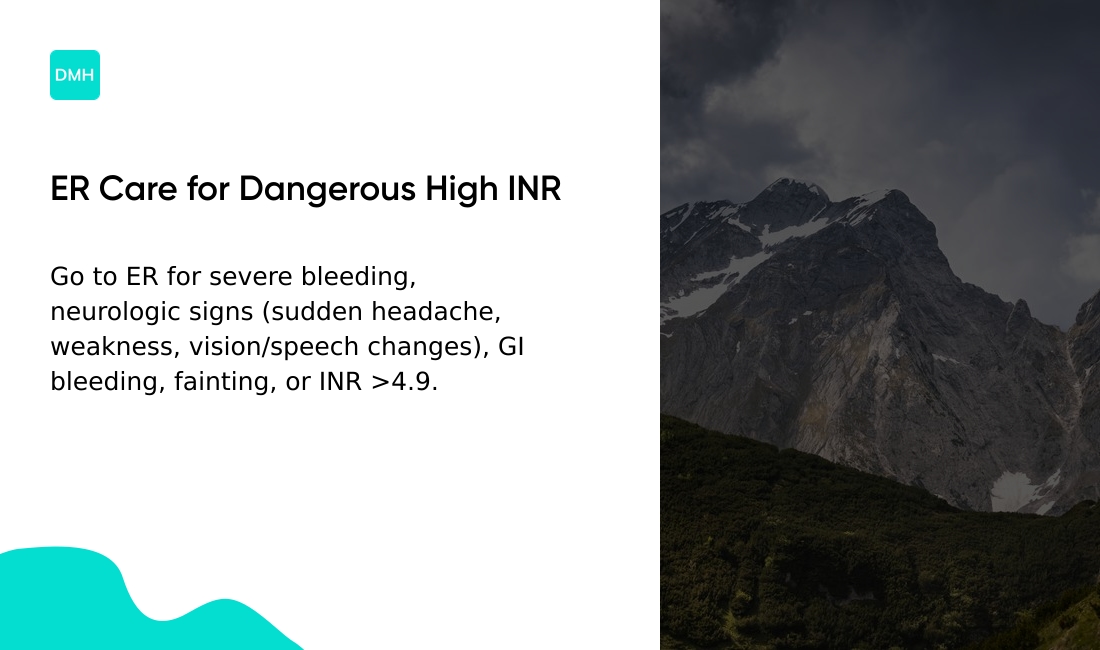
Go to the ER for high INR if you have severe bleeding or neurologic signs. Bleeding can be sudden and life-threatening.
Watch for these emergency signs:
-
High INR levels with uncontrolled bleeding from any site
-
Intracranial hemorrhage symptoms: sudden severe headache, weakness, vision change, slurred speech, or confusion
-
Vomiting blood or passing black or bloody stool suggests GI bleeding
-
Fainting, dizziness, fast pulse, or low blood pressure
-
INR above 4.9 with any bleeding or neurologic symptom
What is a dangerous INR level? Treat any supratherapeutic INR with symptoms as an emergency. If a specialist is recommended, read about being referred to a hematologist.
Prompt ER care reduces major harm. Go to the ER now or call emergency services if you have these signs.
Symptoms of low INR
Low INR raises clot risk and needs prompt attention. It leaves insufficient anticoagulation protection and increases chances of thrombosis.
Watch for increased clot risk signs such as leg swelling, warmth, redness, or persistent calf pain. Chest pain, sudden shortness of breath, or a fast heartbeat suggest pulmonary embolism.
Sudden weakness, numbness, slurred speech, or vision change suggest stroke from a clot. Subtherapeutic INR commonly means an INR under 2.0 for most indications.
Routine INR checks and timely dose changes prevent many clot events. Clot risk rises when INR stays below target across two tests or after missed doses.
If you notice these thrombosis warning signs, contact your clinician immediately or go to the emergency room.
Difference between subtherapeutic and supratherapeutic INR
Subtherapeutic INR means below-target anticoagulation and supratherapeutic INR means above-target anticoagulation. These distinctions matter because each state drives opposite risks and different treatment steps.
Subtherapeutic INR risk means your INR sits below the therapeutic INR range of 2.0–3.0 for most warfarin users. Your clot risk rises—you face higher chance of stroke or deep vein thrombosis.
Typical actions include checking adherence, reviewing interacting drugs, and increasing dose if needed.
Supratherapeutic INR risk means your INR exceeds the target. Your bleeding risk increases with higher INR values. Small rises often need dose reduction or holding a dose.
Marked elevations may require vitamin K and urgent care.
Routine INR monitoring prevents harm. If your INR falls outside the target range, contact your clinician promptly for clear next steps.
What causes a high INR level
High INR levels indicate factors that amplify blood thinning and raise bleeding risk. This matters because a high INR can lead to serious bleeding without warning.
-
Medication interactions: many drugs increase warfarin effect. Common culprits include antibiotics (metronidazole, trimethoprim-sulfamethoxazole), amiodarone, and azole antifungals.
-
Vitamin K intake: sudden drops in vitamin K from diet changes raise INR. Skipping leafy greens or sudden fasting can shift levels quickly.
-
Liver dysfunction: impaired liver lowers clotting factor production and raises INR.
-
Acute illness or fever alters warfarin metabolism and protein binding, pushing INR up.
-
Excessive warfarin dosing: dosing errors or missed monitoring cause supratherapeutic INR and greater bleeding risk.
A quick med review prevents most dangerous INR level spikes. For example, a new antibiotic can raise INR within 3 days.
Check INR within 48–72 hours after starting or stopping interacting drugs. If INR rises above 4.9, contact your clinician or seek urgent care.
Track meds, keep a steady diet, and test INR often when changes occur. Ask your provider for a clear monitoring plan.
What causes a low INR level
Low INR levels increase clot risk and need rapid evaluation. Identifying causes helps prevent thrombosis and guide treatment.
-
Vitamin K intake: large servings of spinach, kale, broccoli, or Brussels sprouts can lower INR below the target 2.0–3.0 range.
-
Missed warfarin doses: skipped pills often produce a measurable drop within days.
-
Drug interactions that reduce warfarin effect—examples include rifampin, carbamazepine, phenytoin and St. John’s wort.
-
Increased metabolic clearance from smoking or weight gain. Faster metabolism can cut warfarin levels.
-
Genetic differences in CYP2C9 or VKORC1 change individual warfarin sensitivity.
-
Poor adherence to monitoring—long gaps between INR checks allow subtherapeutic INR to persist.
Review new foods and medicines with your clinician right away. Tracking diet and a simple medication list prevents most drops.
Measure INR within 3–7 days after any change. Call your clinician if INR falls below 2.0 or if you notice clotting signs like sudden leg swelling or chest pain.
How to lower a high INR safely
Act fast to lower a high INR because bleeding risk rises as values climb. Values above 4.9 need attention.
Clear, guideline-based steps reverse elevated INR and protect you. Prompt vitamin K use prevents major bleeding and reduces hospital stays.
-
Hold warfarin doses: omit 1–2 doses for INR 4.5–10 with no bleeding.
-
Reduce the weekly warfarin dose by 10–20% for persistent supratherapeutic INR.
-
Vitamin K administration: give oral vitamin K 1–2.5 mg for INR 4.5–10 if bleeding risk is high.
-
For INR greater than 10 without bleeding give oral vitamin K 2.5–5 mg and monitor closely.
-
Major bleeding needs IV vitamin K 5–10 mg slow infusion plus PCC (preferred) or FFP and urgent hospital care.
Close monitoring strategies: check INR at 24 hours after vitamin K, then every 1–3 days until stable. Adjust dosing based on trend and clinical risk.
Always manage changes under physician supervision and document dose changes.
Refer to formal NCBI reversal protocols for dosing ranges and PCC guidance. Call your clinician right away for severe bleeding, new neurologic signs, or INR above 8.
You might also like: What Is Lymphocytes In Blood Test
How often should INR be monitored
Tailor INR checks to your stability and risk. Regular checks keep you in the therapeutic INR range and reduce your bleeding risk.
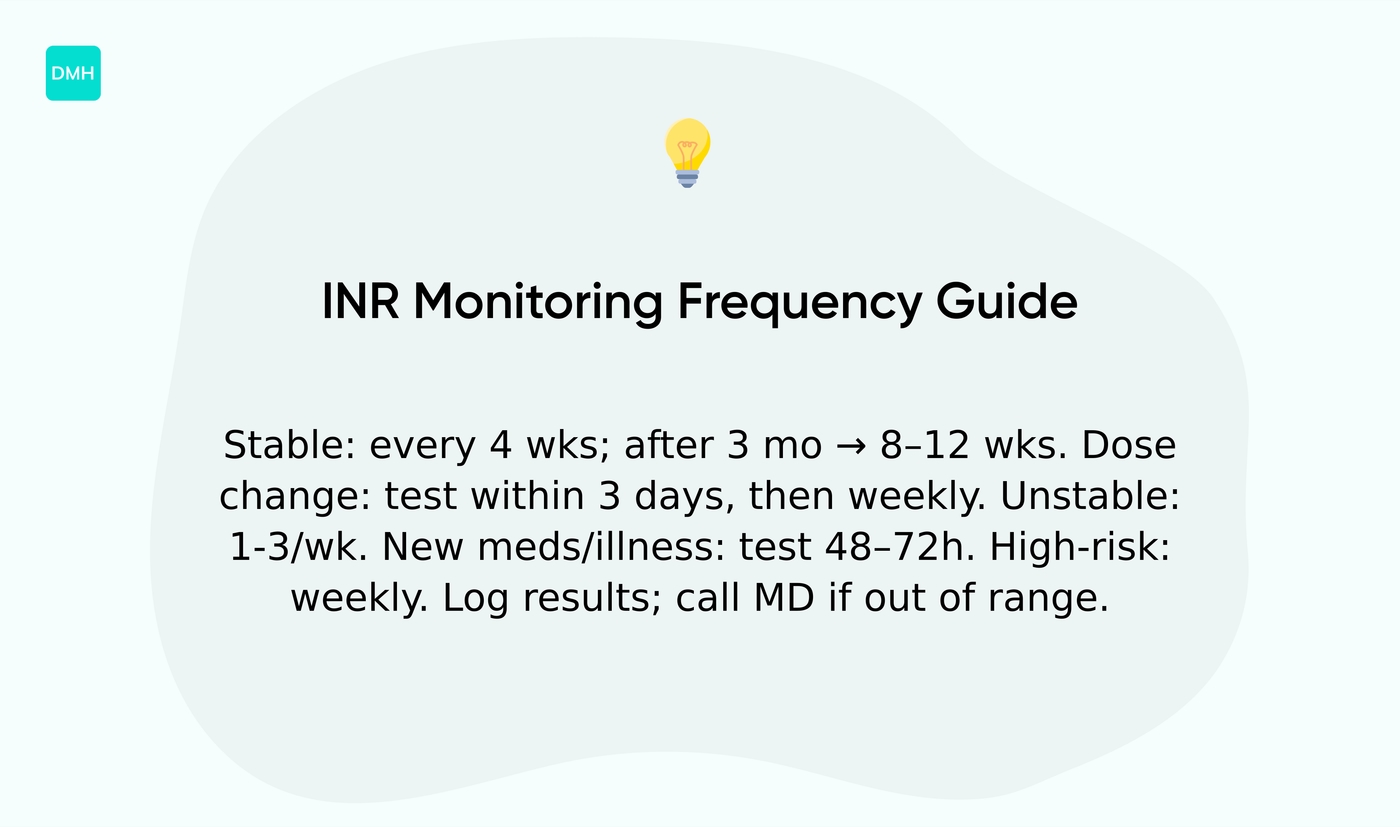
Many stable patients do well with monthly testing. Stable means no dose changes, no new medications, and consistent diet.
-
Stable patients: test every 4 weeks. After 3 months of stability, tests may move to every 8–12 weeks.
-
After a dose change: test within 3 days and again weekly until stable.
-
Unstable patients: test 1–3 times per week until values steady.
-
New meds, illness, or diet shifts: test within 48–72 hours and repeat as advised.
-
High-risk cases (mechanical valves, pregnancy): test weekly or more often per clinician direction.
Frequent checks prevent supratherapeutic INR and subtherapeutic INR. Track numbers and watch trends on an INR monitoring guidelines chart.
If a value falls far from your target, contact your clinician right away.
Prepare for visits and questions by reading our hematology appointment guide. Keep records of doses, diet changes, and symptoms.
Test as your clinician prescribes, log results, and seek care for any out-of-range value. We’ll help you interpret the numbers at each visit.
You might also like: Neutrophils: definition, absolute count, high, low and normal range
What happens if INR is too high for surgery
A high INR often delays or cancels surgery because bleeding risk rises. High INR adds blood loss, transfusion need, and wound complications.
Most operations require a target INR below 1.5. Neuraxial or major procedures often need an even lower value to allow safe anesthesia and closure.
What is a dangerous INR level for surgery? Supratherapeutic INR values trigger action. If INR is clearly above the operative threshold, clinicians delay the procedure and start reversal.
Surgical teams usually stop warfarin 5 days before elective procedures. Teams check INR within 24 hours before surgery and confirm it’s in the safe range for the planned procedure.
Urgent cases need fast reversal. Providers use IV vitamin K and prothrombin complex concentrate for rapid correction.
Fresh frozen plasma works but requires more volume and time.
Balancing bleeding versus clotting risk takes patient-specific planning. Patients with mechanical valves or recent clots may need bridging with heparin, while low thrombotic risk patients avoid bridging to reduce bleeding.
Clear communication with your surgical and anticoagulation teams prevents surprises and delays. Ask your clinician about your INR target, reversal timing, and the monitoring plan before surgery.
You’ll also like: Low Red Blood Cell Count: Causes, Symptoms And Treatment
Educational notice: This content is provided for informational and educational purposes only and is not intended as medical advice. Always consult a qualified healthcare professional for medical concerns.