Cold symptoms can start with a scratchy throat or a single sneeze and quickly make daily life miserable.
When a runny nose, nasal congestion, cough, or low-grade fever appear, it’s hard to tell what’s mild and what’s worth medical attention.
This Daily Medical Health guide explains the typical causes, a clear timeline from incubation to recovery, and straightforward treatments to ease discomfort and limit spread.
You’ll learn early signs, how symptoms differ in adults and children, and how to tell a cold from flu or allergies.
Expect practical relief tips for sore throat, post-nasal drip, chest congestion, and when a lingering cough should prompt a doctor’s visit.
By the end you’ll know when rest and home care are enough and when to see a doctor.
What are the common cold symptoms
Early signs of a cold
You may notice a scratchy throat as one of the earliest cold symptoms. Mild fatigue can follow within hours and feel like low energy.
Occasional sneezing may start early and come in brief bursts. A light runny nose or mild nasal congestion often appears within hours.
Available research indicates onset can occur within 10–12 hours to 3 days after exposure. Low-grade fever is less common in adults and more common in children, though patterns vary by virus.
Post-nasal drip can cause throat clearing or a tickle that worsens at night. Body aches and significant fatigue are uncommon at onset but can develop as symptoms progress.
Most adults see symptoms peak around days three to five and recover within 7 to 10 days, while cough may linger longer. Not medical advice—content for educational purposes only. Always consult a qualified healthcare professional for medical advice specific to your situation.
Cold symptoms in adults vs children
Patterns for cold symptoms in adults and cold symptoms in children differ quite a bit. These common cold symptoms include runny nose, sore throat, sneezing, and cough.
Adults typically have milder signs and usually recover in 7–10 days. Fever is uncommon in adults. Most adults have nasal congestion and a scratchy throat, and you may feel truly fatigued at symptom peak.
Children often show stronger symptoms. They commonly develop fever that may reach 102°F (38.9°C) or more. Children may have higher mucus production, cough more, and develop ear or sinus issues.
According to available research, children can shed some cold viruses longer than adults. That may prolong symptoms and increase spread within households. Symptom severity and duration can vary from person to person and by virus type.
Not medical advice—content for educational purposes. Always consult a qualified healthcare professional for medical advice specific to your situation.
Head cold symptoms
A head cold is commonly used to describe a viral infection that mainly affects the nose and sinuses. You may notice symptoms concentrated in the face, forehead, and nasal passages rather than the chest.
- Nasal congestion causing blocked breathing and reduced smell
- Runny nose with clear or thicker mucus and frequent sneezing
- Sinus pressure felt as aching or fullness around the eyes, cheeks, or forehead
- Post-nasal drip leading to throat tickle and cough, especially at night
- Headaches and facial pressure that worsen with bending or heavy coughing
- Mild sore throat and low-grade fever may occur in some people
Symptoms often peak around days 3 to 5 and can last up to 10 days. Not medical advice—content for educational purposes. Always consult a qualified healthcare professional for medical advice specific to your situation.
Can you have a cold without a fever
Adults often get a cold without developing a fever. You may notice common cold symptoms like sore throat, runny nose, nasal congestion, sneezing, and cough.
This pattern may reflect different immune responses and the typical viruses adults catch. Studies suggest adults mount milder systemic responses, so fever appears less often.
Children more often show a low-grade fever with colds. Low-grade fever usually falls between 100.4°F and 102°F and can accompany body aches and fatigue.
High fever above 102°F, sudden high fever, intense body aches, and marked fatigue may indicate influenza. Fever that lasts more than 48–72 hours or appears with severe chest pain or breathing difficulty can suggest another infection and may warrant evaluation.
Not medical advice—content for educational purposes. Always consult a qualified healthcare professional for medical advice specific to your situation.
Cold symptoms timeline and stages
Incubation period
The incubation period refers to the 1–3 day span after virus exposure before symptoms appear. During this phase the virus replicates in nasal or throat tissues, and you may have no symptoms yet.
The period may last one to three days for typical cold viruses. Rhinoviruses commonly show symptoms within that time, though it’s possible to develop symptoms as soon as 10 to 12 hours after exposure.
This incubation stage helps explain why cold symptoms appear suddenly. Viral load can rise while you feel fine—the virus replicates silently and immune markers start to change.
Children sometimes show symptoms sooner and may have low-grade fever. Environmental factors such as humidity and initial viral dose can influence timing.
Not medical advice—content for educational purposes only. Always consult a qualified healthcare professional for medical advice specific to your situation.
Onset stage
The onset stage covers the initial 24 to 48 hours after symptoms appear. Symptoms reflect early immune activity as the body recognizes the virus.
You may notice a scratchy throat that feels dry or irritated. Mild tiredness often appears as low energy or restless sleep. Light nasal stuffiness or a runny nose can occur, and occasional sneezing and mild cough may start during this window.
Immune signaling causes small increases in mucus and fatigue. These changes may be subtle at first and can vary from person to person.
Symptom severity tends to peak around days three to five after onset. Symptoms that worsen rapidly or include high fever may indicate another illness. Symptoms may resemble allergies; for more details, see sore throat and allergies.
Not medical advice—content for educational purposes. Always consult a qualified healthcare professional for medical advice specific to your situation.
Peak stage
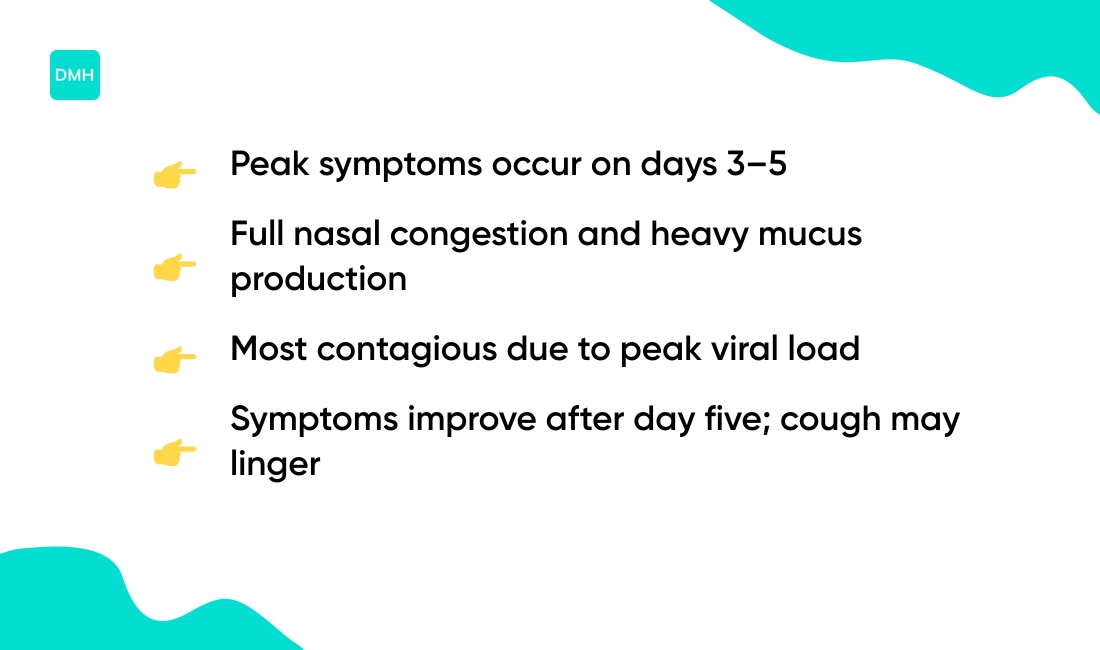
Days 3-5 mark the peak stage of common cold symptoms. Symptoms reach highest severity, and you may notice full nasal congestion and increased mucus production.
Persistent sneezing and a cough with post-nasal drip often occur. You may feel deeply fatigued and have mild body aches or low-grade fever.
Viral load often peaks during this period, making it the most contagious phase. Nasal congestion can worsen at night; read why sinus colds get worse at night for more details.
Symptoms often start to improve after day five, though a cough may linger. Not medical advice—content for educational purposes only. Always consult a qualified healthcare professional for medical advice specific to your situation.
Recovery stage
Days 6-10 mark the recovery stage of common cold symptoms. Nasal congestion begins to improve and mucus often thins. Expect the nose to clear as congestion slowly eases.
Energy levels return for many people, but you may feel tired. You may notice a lingering tickle or cough, and mild fatigue can persist for a bit longer.
Cough or chest congestion can continue for up to three weeks. Contagiousness usually falls after the peak stage around days 3-5. Symptoms can vary from person to person and by age.
For more on prolonged chest symptoms, see how long do chest colds last. Not medical advice—content for educational purposes. Always consult a qualified healthcare professional for medical advice specific to your situation.
Cold vs flu symptoms
Colds often start gradually over 1–3 days. You may notice a scratchy throat and mild fatigue early. Cold symptoms usually include a runny nose, nasal congestion, sneezing, sore throat, and a light cough.
Children may have a low-grade fever under 100.4°F. Adults often have no fever.
Influenza can appear suddenly within 12–48 hours. Fever often rises to 100–104°F and lasts about 3–4 days. Muscle aches and deep fatigue occur more often with flu.
Severity differs. Colds cause mild discomfort and limited daily impact. Flu can cause severe symptoms that limit activity for several days.
Body aches and fatigue tend to be mild with colds and severe with flu. Cough with colds is usually milder and productive at times. Flu coughs often feel dry and relentless.
Contagious patterns differ. Cold viruses peak around days 2–4 after symptoms begin. Flu can spread one day before symptoms and for about 5–7 days after onset in adults.
Watch for rapid high fever, sudden severe muscle pain, or trouble breathing. Those signs may be associated with influenza and warrant clinical evaluation. For guidance after known exposure, read how to prevent the flu after being exposed.
Not medical advice—content for educational purposes. Always consult a qualified healthcare professional for medical advice specific to your situation.
How to tell if it’s allergies or a cold
Colds result from viruses. Allergies result from immune reactions to allergens. Cold symptoms last about 7 to 10 days, while allergic symptoms can last weeks or longer if exposure persists.
Itchy, watery eyes point to allergies. Sneezing and clear, watery runny nose support that pattern. Sore throat signs often appear with colds, along with nasal congestion, cough, and mild body aches.
Mucus color clues can offer hints. Thick yellow or green mucus may show during a cold. Color alone doesn’t confirm bacterial infection.
Colds often start within 1 to 3 days after exposure and often peak on days three to five. Allergic reactions often follow contact with pollen, dust, or pet dander and may recur seasonally.
Low-grade fever appears more in children with colds. High fever suggests influenza or another infection and is less common with allergies.
Symptom timing and pattern help with understanding. Persistent sinus pressure and prolonged symptoms may warrant a comparison to sinus infection vs allergies. A short symptom log over 7 to 14 days may help clinicians interpret signs.
Not medical advice—content for educational purposes only. Always consult a qualified healthcare professional for medical advice specific to your situation.
You might also like: Is It Okay To Take A Bath When You Have Colds
Common cold symptom relief and treatment
Relief options for common cold symptoms focus on comfort and shorter symptom duration. Saline nasal irrigation can clear mucus and ease nasal congestion. Some studies suggest daily irrigation cuts symptom days by about 10–20% in mild cases.
Warm saline gargles and lozenges may soothe a sore throat. Small randomized trials report reduced throat pain for several hours after a gargle.
Over-the-counter cough suppressants and expectorants can reduce cough frequency and help clear mucus. Randomized studies show modest benefit in adults.
Steam inhalation and room humidifiers loosen secretions and lessen sinus pressure. They can ease post-nasal drip and improve sleep for many people. Hot fluids, gentle movement, and rest support the immune response and relieve body aches.
Hydration helps thin secretions and may speed mucus clearance. Topical nasal sprays that shrink swollen tissue may reduce congestion for short periods. Short courses carry risk of rebound congestion when used long term.
Symptom duration can vary from three days to two weeks. Lingering cough may persist up to three weeks in some people.
Warning signs include fever above 102°F, severe shortness of breath, chest pain, or symptoms that worsen after initial improvement. These signs may indicate complications and warrant clinical evaluation.
Not medical advice—content for educational purposes. Always consult a qualified healthcare professional for medical advice specific to your situation.
You might also like: How To Stop Runny Nose When Working Out
When to see a doctor for cold symptoms
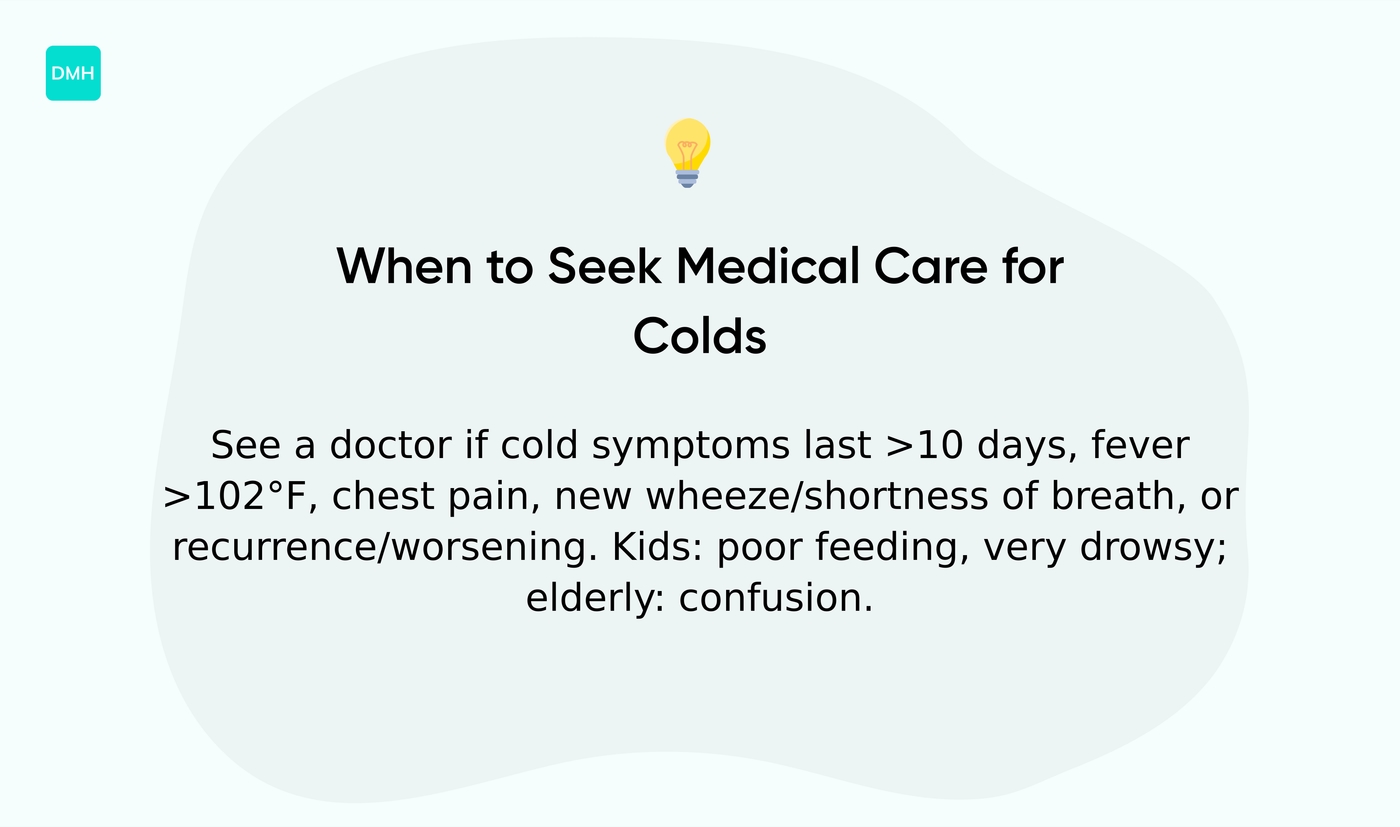
Warning signs may indicate complications from a common cold. These signs can be associated with bacterial infection or lower respiratory involvement.
- Symptoms lasting beyond 10 days with no improvement—persistent symptoms can signal a sinus infection or another secondary problem
- Fever above 102°F—high fever may be associated with bacterial infection or influenza rather than a simple cold
- Sharp chest pain or new, severe chest discomfort—this may point to pneumonia or another lung issue
- Wheezing, noisy breathing, or sudden breathlessness—these signs often require urgent assessment
- Worsening symptoms after initial improvement—a return of fever or cough can suggest a secondary infection
You may notice different warning signs in children compared with adults. Young children may show poor feeding, extreme drowsiness, or rapid breathing. Older adults may have confusion or a high fever.
Persistent sinus pain or prolonged high fever may need hospital evaluation. See guidance on when to go to hospital for sinus infection for related signs and thresholds.
Not medical advice—content for educational purposes. Always consult a qualified healthcare professional for medical advice specific to your situation.
You’ll also like: How Long Does the Flu Last? Timeline & Recovery
How contagious are cold symptoms
Common cold viruses such as rhinovirus spread easily. The incubation period often lasts 1 to 3 days, and you may be infectious before symptoms start.
Viral shedding tends to peak when symptoms intensify. The peak contagious period often falls on days 2 to 4 after symptom onset. Adults typically remain contagious for about 5 to 7 days. Children can shed virus for up to 2 weeks.
Transmission occurs by respiratory droplets, close contact, and contaminated surfaces. Viral particles travel when someone coughs or sneezes. Touching a contaminated surface then touching the face can transfer virus.
Symptom stages match contagiousness. Early signs of a cold like a scratchy throat and sneezing may coincide with virus spread. Full nasal congestion, cough, and increased mucus often align with the highest spread risk.
Limiting contact during the peak contagious period reduces the chance of passing the virus. If sinus symptoms develop, readers may find related guidance on is a sinus infection contagious useful.
Lingering symptoms such as cough or mild fatigue can persist after infectiousness falls. The respiratory droplets transmission risk usually declines as symptoms subside.
Not medical advice—content for educational purposes. Always consult a qualified healthcare professional for medical advice specific to your situation.
| Stage | Timeline | Key Symptoms | Contagiousness |
|---|---|---|---|
| Incubation | 1-3 days | No symptoms | Low to moderate |
| Onset | Days 1-2 | Scratchy throat, mild fatigue, light sneezing | Moderate |
| Peak | Days 3-5 | Full congestion, increased mucus, persistent cough | Highest |
| Recovery | Days 6-10 | Easing congestion, lingering cough, mild fatigue | Low to moderate |
You’ll also like: How Long Does It Take To Get Your Taste Back After The Flu
Educational notice: This content is provided for informational and educational purposes only and is not intended as medical advice. Always consult a qualified healthcare professional for medical concerns.