
What is magnesium good for isn’t just a diet question—it’s tied to sleep, mood, muscles, and heart health.
Many people don’t get enough from food, so they face sleep problems, muscle cramps, constipation, or higher cardiovascular risk.
This research overview examines what magnesium does in the body and which uses are supported by clinical studies.
You’ll learn how different forms (like glycinate and citrate) affect absorption and symptoms.
You’ll also get practical guidance on food sources, safe dosages, side effects to watch for, and when to talk to a clinician.
What is magnesium and what does it do for the body
Magnesium is an essential mineral involved in hundreds of biochemical reactions in the human body, according to the NIH Office of Dietary Supplements.
It plays critical roles in converting food into usable cellular energy (ATP). Magnesium-dependent enzymes help drive energy production at the cellular level.
It can regulate how muscles contract and relax. Smooth muscle function may improve when magnesium levels are adequate, enabling proper calcium flow in muscle cells.
Magnesium influences nerve cell activity by modulating ion channels and neurotransmitter release. Nerve signaling pathways may respond to magnesium status, affecting everything from mood to muscle coordination.
It may support bone health by interacting with calcium and vitamin D metabolism. Higher intake often links to better bone density in some studies, though results vary by population and study design.
Low magnesium can show as muscle cramps, fatigue, or irregular heartbeat in some people. Deficiency symptoms can vary from person to person, and almost half of U.S. adults don’t consume adequate amounts from their diet.
Not a medical advice, content for educational purposes, consult a professional.
Research-backed health benefits of magnesium
Cardiovascular health and heart disease prevention
Some studies suggest magnesium may be associated with lower blood pressure and reduced risk of heart disease and stroke. Magnesium supports muscle and nerve function that influence heart rhythm and vascular tone.
Observational research links higher magnesium intake or blood levels with reduced cardiovascular risk. Women with the highest magnesium levels showed a 37 to 77 percent lower risk of sudden cardiac death in pooled analyses. Other studies report modest drops in systolic blood pressure and lower heart disease risk.
Evidence comes mostly from observational and cohort studies, so association doesn’t equal cause. For practical steps that may help lower blood pressure, see the how to lower blood pressure guide.
You may want to discuss magnesium status with your clinician, since effects can vary from person to person. Not medical advice—consult a qualified healthcare professional for personalized guidance before changing supplements or treatment.
Type 2 diabetes risk reduction and blood sugar control
A meta-analysis reported that higher magnesium intake may be associated with lower type 2 diabetes risk. Each 100 mg daily increase was linked to about a 15 percent lower risk.
Comparing people with the highest versus lowest intakes showed a 23 percent relative risk reduction. These results come from pooled observational studies, so causation can’t be assumed.
Magnesium may support metabolic pathways involved in glucose regulation and insulin sensitivity. Dietary sources matter for steady intake—see lower blood sugar foods for magnesium-rich options and practical tips.
Benefits can vary from person to person. Not medical advice, content for educational purposes. Always consult a qualified healthcare professional for guidance specific to your situation.
Bone health and osteoporosis prevention
Magnesium may be associated with stronger bones and better mineral balance. Some studies link higher magnesium intake levels with greater bone mineral density in postmenopausal and elderly women.
Meta-analyses of observational studies including tens of thousands of participants report these positive associations with bone outcomes. Magnesium helps activate vitamin D and supports calcium transport in bone cells.
This vitamin D synergy can be linked to modest gains in bone density when magnesium accompanies vitamin D and calcium in trials. Common food sources include nuts, seeds, whole grains, and leafy greens.
You may discuss low dietary intake and possible supplementation with a clinician, since needs can vary from person to person. Not medical advice, content for educational purposes, consult a professional.
Migraine headache relief and prevention
Magnesium may reduce migraine frequency and severity by affecting nerve signaling and neurotransmitter regulation. Research on magnesium for migraines often examines these mechanisms.
It can influence cortical excitability and reduce cortical spreading depression. It may also regulate serotonin and NMDA receptor activity.
Some randomized trials used oral magnesium oxide at 400 to 600 mg daily. These trials reported fewer migraine days or milder attacks in some participants, though study sizes varied and effects differed across populations.
Benefits may not occur for everyone. Evidence quality ranges from small randomized trials to observational studies, and results vary across studies and people.
Common study doses often involve magnesium oxide, magnesium citrate, or magnesium glycinate. People with low magnesium status may show greater benefit in some studies.
Magnesium supplements can cause gastrointestinal side effects and interact with medications. Consultation with a qualified clinician can help assess safety and appropriateness for your situation.
What is magnesium good for in specific health conditions
Magnesium for sleep quality and insomnia
Magnesium supports sleep by helping regulate the nervous system and stress response. It may influence GABA activity, lower nighttime arousal, and reduce cortisol reactivity.
Some studies suggest modest improvements in sleep onset. Trials reported gains in sleep efficiency in adults with insomnia, though many trials had fewer than 100 participants, which limits certainty.
Forms often used for sleep include magnesium glycinate and magnesium threonate, which may cross the blood-brain barrier. Magnesium oxide shows lower absorption. Some trials used 300 to 500 mg daily, and responses varied by age and baseline magnesium levels.
Struggling to fall asleep despite trying everything? You may want to discuss supplement form, timing, and interactions with a clinician if you take medications or have kidney disease.
This content is for informational purposes only. Always consult a qualified healthcare professional for medical advice specific to your situation.
Magnesium for anxiety and stress reduction
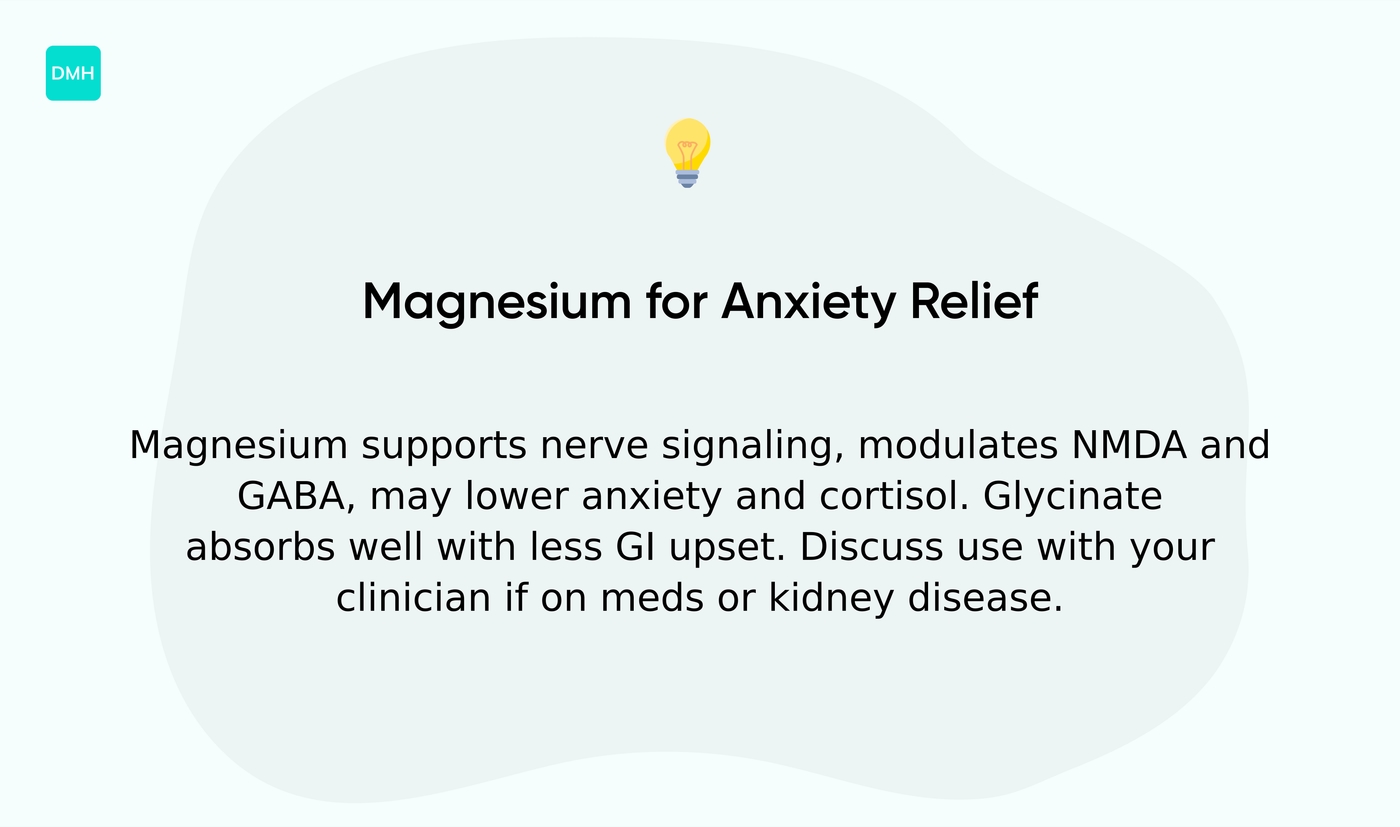
Magnesium may support nerve signaling and neurotransmitter balance. It can modulate NMDA receptor activity and boost GABA pathways, lowering neural excitability.
These actions may reduce anxiety symptoms by calming mood and altering the nervous system’s stress response. Magnesium for anxiety research examines these effects in various populations.
Supplement form can affect absorption. Magnesium glycinate is often discussed for calming effects and may cause less digestive upset. Some studies suggest oral magnesium supplements lower anxiety scores in adults.
Low magnesium levels may be associated with increased anxiety, muscle cramps, and fatigue. Magnesium may influence cortisol release—related guidance appears at lower cortisol levels.
You may want to discuss magnesium use with a qualified healthcare professional, especially if you take medications or have kidney disease. For informational purposes only.
Magnesium for muscle cramps and spasms
Magnesium helps muscles contract and relax smoothly. It regulates calcium flow in muscle cells and supports ATP-dependent pumps that return cells to a resting state.
Low magnesium levels are often linked to more frequent cramping. Some studies suggest oral magnesium supplements can reduce cramp frequency and intensity for exercise-related and nocturnal cases.
Reported effects vary—some small trials show reductions around 30 to 50 percent in cramp episodes, while others show minimal change. Form matters: magnesium glycinate and magnesium citrate are commonly used for muscle symptoms and absorption.
Benefits can vary from person to person depending on baseline levels and study quality. If you experience frequent or severe cramps, you may want to discuss magnesium testing or supplementation with a clinician.
Not medical advice, content for educational purposes, consult a qualified healthcare professional.
Magnesium for constipation relief
Magnesium citrate is commonly used as an osmotic laxative and may draw water into the intestinal lumen. That osmotic effect can increase stool water content and soften stools.
Increased fluid can stretch the colon wall and trigger stronger peristaltic contractions. These actions may speed stool transit and ease bowel movements.
| Mechanism | Effect |
|---|---|
| Osmosis | Dissolved magnesium salts pull water into the gut lumen |
| Stool softening | More water reduces stool hardness and bulk |
| Motility | Luminal stretch stimulates colonic contractions and improves bowel motility |
Onset can vary by dose and individual factors—some reports note effects from about 30 minutes to 6 hours. Different forms act differently: magnesium glycinate appears less likely to cause laxation than citrate or hydroxide.
Not medical advice, content for educational purposes, consult a professional. You may want to discuss magnesium use with a clinician before trying it.
What are the symptoms of low magnesium
Low magnesium, or magnesium deficiency, may occur when serum or tissue magnesium falls below expected levels. Symptoms can vary from mild to severe and differ from person to person.
- Muscle cramps: Muscle twitching, spasms, and cramping are common signs and may relate to impaired muscle contraction and relaxation.
- Fatigue and weakness: Low magnesium can reduce energy production and may cause persistent tiredness or weakness.
- Irregular heartbeat: Palpitations, fast heart rate, or arrhythmias can occur and may be associated with low magnesium.
- Neurological signs: Numbness, tingling, tremor, anxiety, and in severe cases seizures have been reported.
- Gastrointestinal symptoms: Loss of appetite, nausea, or constipation can appear with low magnesium.
Some surveys suggest about half of U.S. adults consume less magnesium than recommended. Overt low blood magnesium appears uncommon in healthy people but some studies report 2 to 15 percent prevalence, rising in hospitalized or elderly groups.
Risk factors include chronic alcohol use, uncontrolled diabetes, gastrointestinal malabsorption, and prolonged diuretic or proton pump inhibitor use. Poor intake of magnesium-rich foods and certain medical conditions can increase the likelihood of deficiency.
Symptoms overlap with other conditions and can vary by individual. Not medical advice, content for educational purposes. If symptoms persist or feel severe, seek evaluation from a qualified healthcare professional.
What foods are high in magnesium
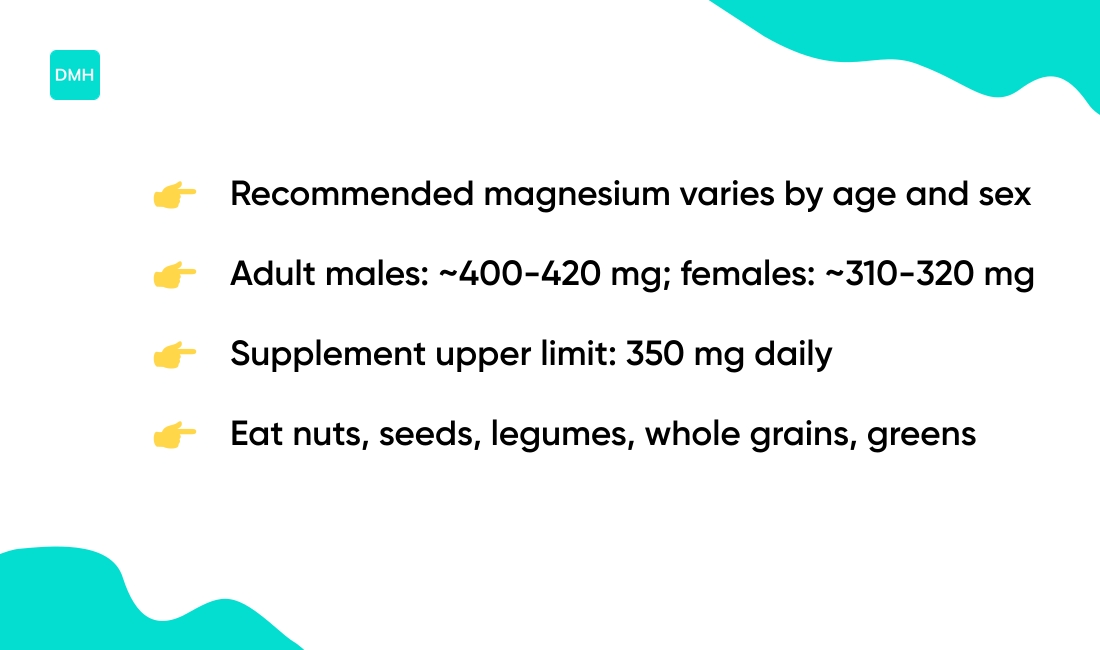
Magnesium helps many cellular processes and supports muscle and nerve function. Foods supply most dietary magnesium, and adult recommended intake may range from about 310 to 420 mg per day.
- Magnesium-rich foods: Pumpkin seeds may contain about 150 mg magnesium per ounce, and sunflower seeds may provide roughly 37 mg per ounce.
- Nuts: Almonds may offer about 80 mg per ounce and cashews about 74 mg per ounce.
- Beans and legumes: Black beans may provide near 120 mg per cooked cup. Lentils may supply about 70 mg per cooked cup.
- Leafy green vegetables: Cooked spinach may contain roughly 150 mg per cup. Swiss chard may also contribute significant amounts.
- Whole grains: Brown rice may offer about 80 mg per cooked cup. Oats may supply near 60 mg per cooked cup.
- Fish and dairy: Salmon and mackerel may add modest magnesium, often 20 to 30 mg per serving.
- Dark chocolate: A one-ounce piece of 70 to 85 percent chocolate may contain around 60 to 65 mg magnesium. (Yes, chocolate counts!)
Combine servings across categories to meet intake goals. For example, one ounce of almonds plus one cup cooked spinach may supply over half of a typical daily need.
Some studies suggest absorption can vary with fiber and phytate content. Consider dietary variety and whole foods as the main strategy. Not medical advice—content for educational purposes. Always consult a qualified healthcare professional for personalized advice.
Magnesium supplement types and which is best
Magnesium supplements come in several chemical forms with different uses and absorption. Choosing a form may depend on goals, symptoms, and gastrointestinal tolerance.
Magnesium glycinate pairs magnesium with the amino acid glycine. It may absorb well and often causes less stomach upset. Some studies suggest glycinate is commonly discussed for sleep and anxiety support.
Magnesium citrate dissolves easily and may increase stool water. It’s often used when bowel movement support is desired. Some reports show citrate bioavailability near 25 to 30 percent compared with much lower rates for oxide in certain tests.
Magnesium oxide shows low absorption, near 4 percent in some comparisons. Magnesium malate may be chosen for muscle energy support. Magnesium chloride can be used orally or in topical products.
Magnesium absorption rates vary by form, dose, food, and stomach pH. Individual response can vary. See MitoHealth’s complete magnesium guide for a deeper review of forms and studies.
Match form to the symptom and tolerability. Compare supplement needs with laboratory testing using supplements blood test results. You may want to discuss options with a clinician before starting supplements.
Not medical advice. Content for educational purposes only. Consult a qualified healthcare professional.
How much magnesium should I take daily
Daily magnesium needs may vary by age, sex, and life stage. Recommended Daily Allowances for dietary magnesium may be close to these values according to the NIH Office of Dietary Supplements:
- Children 1 to 3 years: about 80 mg
- Children 4 to 8 years: about 130 mg
- Children 9 to 13 years: about 240 mg
- Males 14 to 18 years: about 410 mg
- Females 14 to 18 years: about 360 mg
- Adult males 19 to 30 years: about 400 mg; 31+ about 420 mg
- Adult females 19 to 30 years: about 310 mg; 31+ about 320 mg
- Pregnancy and lactation: needs may rise modestly (about 310 to 360 mg depending on age)
Tolerable Upper Limit for supplemental magnesium may be 350 mg daily for adults, based on the limit for non-food sources. Excess supplemental intake can cause diarrhea or nausea.
Supplements may be helpful for people with low intake, malabsorption, certain chronic conditions, or prolonged diuretic use. Whole foods often supply adequate magnesium. Focus on magnesium-rich foods such as nuts, seeds, legumes, whole grains, leafy greens, and fortified foods to meet needs from diet.
Individual needs can vary and blood tests may not reflect total body stores. Not medical advice. Content for educational purposes only. Consult a qualified healthcare professional for personalized guidance.
You might also like: Prenatal Vitamin Mechanism Of Action
What are the side effects of magnesium
Magnesium side effects can occur when intake exceeds what the body handles. Mild effects often involve the digestive tract—diarrhea, nausea, and abdominal cramping may occur with oral supplements.
High supplemental doses may lower blood pressure and slow heart rate in some people. Severe magnesium excess can cause muscle weakness, confusion, and trouble breathing, though such toxicity is uncommon with normal kidney function and from food sources.
Magnesium may interact with certain medications. Some antibiotics and bisphosphonates can bind with magnesium and reduce absorption. Diuretics and some heart medications can alter magnesium balance and may change blood levels.
The tolerable upper intake level for supplemental magnesium is often listed as 350 mg daily for adults. Individual needs and risks can vary with age, kidney function, and other health conditions.
Certain forms cause stronger laxative effects. Magnesium citrate and magnesium oxide commonly act as osmotic agents in the gut. Magnesium glycinate often reports gentler digestive effects for some users.
If you take supplements and notice persistent symptoms, consider discussing them with a clinician. Not medical advice, content for educational purposes, consult a professional.
Read also: How Long To Rid Body Of Vitamin B6 Toxicity
When is the best time to take magnesium and how to improve absorption
Timing depends on your goal. Magnesium supports sleep, muscle function, digestion, and metabolic processes, and the best time varies by use.
For sleep, taking magnesium near bedtime may improve sleep quality for some people. Some trials report small benefits for sleep onset and sleep efficiency.
For muscle cramps or post-exercise recovery, taking magnesium after activity may aid muscle relaxation and recovery. For bowel regularity, forms like magnesium citrate may draw water into the intestines and can ease stool passage for some users.
- Magnesium absorption: Take magnesium with a small meal to reduce stomach upset; high-fiber meals can slightly lower absorption.
- Magnesium glycinate benefits: This form may cause less diarrhea and may be better tolerated for sleep or anxiety support.
- Avoid pairing with high-dose calcium at the same time; splitting doses through the day may improve uptake.
Magnesium and vitamin D interact. Magnesium helps activate vitamin D and low magnesium may alter vitamin D status according to available research.
Wondering if morning or evening makes a difference? Individual response can vary from person to person. Consider discussing timing and supplement choice with a qualified healthcare professional.
Not medical advice, content for educational purposes, consult a professional.
Read also: How to Get Rid of Heartburn Easily
Educational notice: This content is provided for informational and educational purposes only and is not intended as medical advice. Always consult a qualified healthcare professional for medical concerns.