Immune system overreactions to certain foods cause true allergic reactions.
Your immune system mislabels specific proteins as threats.
It makes IgE antibodies that bind to mast cells and prompt rapid inflammation.
Specific food proteins like peanut, shellfish, milk, and egg trigger most reactions. Symptoms range from hives and vomiting to airway swelling and low blood pressure.
Food intolerances don’t involve the immune system and usually cause milder digestive symptoms. True food allergies can be life threatening when they cause anaphylaxis.
About 8% of children report a food allergy, which shows how common this immune response is. Our team recommends testing and an emergency plan rather than guessing from symptoms.
Early evaluation and a written action plan lower risk and ease stress for families. True food allergies require confirmation by an allergist using history, skin tests, or blood tests. If tests are unclear, an oral food challenge in a clinic provides a definitive result.
Start by tracking what you eat and when symptoms appear. See an allergist for testing and a clear emergency plan if you suspect a food allergy.
How does the immune system cause food allergies
What is IgE-mediated food allergy and what causes it
IgE-mediated food allergy explains what causes food allergies that trigger fast immune attacks. Sensitized people make IgE antibodies that attach to mast cells.
Mast cells show the high-affinity receptor FcεRI for bound IgE. When a food protein matches, it cross-links those antibodies and starts rapid mast degranulation.
That triggers allergic mediator release including histamine, tryptase, prostaglandins, and leukotrienes. Symptoms appear within minutes and can range from mild hives to breathing collapse. IgE-mediated reactions are the main cause of rapid anaphylaxis after eating.
You can confirm sensitization with skin-prick testing or serum specific IgE tests. See related immune roles on our page about eosinophils.
If you suspect a food allergy, get tested and carry an epinephrine auto-injector if prescribed. Ask your clinician about avoidance plans and emergency action cards.
What causes non-IgE food allergies
Non-IgE food allergies come from slower, cell-mediated immune responses that don’t involve IgE antibodies. T cells react to food proteins presented by antigen-presenting cells and drive inflammation over hours or days.
Symptoms often affect the gut or skin and appear long after eating. Standard skin prick tests and blood IgE panels often miss these reactions.
Cell-mediated reactions produce delayed symptom onset and rely on less defined testing like patch tests or supervised elimination diets. In my opinion, careful symptom tracking speeds diagnosis.
If you suspect a non-IgE reaction, record what you eat and when symptoms start. Share that diary with an allergist to plan targeted testing or an elimination trial.
The role of leukotrienes in anaphylaxis
Well, here’s the thing: leukotrienes, not histamine, often drive food-induced anaphylaxis. A 2025 study from Yale and Arizona State University found specialized intestinal mucosal mast cells release leukotrienes that trigger severe systemic reactions.
The study shows blocking the leukotriene pathway prevented collapse in experimental models. It reduced symptom severity dramatically. This links directly to what causes food allergies by pinpointing a mediator behind severe food allergy triggers.
I’d say this finding should change how clinicians assess high-risk patients. If you have severe allergies, talk with your allergist about leukotriene-modifying options like Zileuton and emergency planning.
Are food allergies genetic
Genes raise the risk of food allergies but they don’t determine fate. Family history matters.
Children with a parent or sibling who has an allergic condition show roughly double the risk of developing a food allergy. Twin studies report heritability estimates from about 30% to 70% across different foods, showing strong genetic influence yet variable expression.
Researchers have identified specific variants that change how the body reacts. One example is the DPEP1 variant that slows leukotriene breakdown in the gut. People with this variant can have more severe reactions despite similar IgE antibody levels as others.
Genetic susceptibility factors interact with the environment. Broken skin, altered gut bacteria, and early food exposures shape immune training. Combining family history with targeted genetic markers will improve risk prediction and personalized care.
We encourage you to record allergic conditions in close relatives and share that history with your clinician. Ask about leukotriene pathways if reactions are severe and explore referral for allergy testing or research programs.
Start by listing affected relatives and key symptoms before your next visit; that simple step improves risk assessment and care decisions.
Why are food allergies becoming more common
Do environmental factors increase the risk of food allergies
Environmental factors raise the risk of food allergies. If you ask what causes food allergies, reduced exposure to microbes in modern life is a top explanation.
The hygiene hypothesis says immune systems need diverse microbes to learn tolerance. Cleaner industrialized environments lack that exposure, driving the immune system to misidentify food proteins as threats.
Skin barrier damage lets proteins enter through the skin, starting the skin sensitization pathway that leads to IgE production and reactions. Food allergy rates climbed to about 1 in 10 U.S. children by 2026 and link that rise to environmental change.
Protecting infant skin and preserving healthy microbial contact matter a great deal. Start by guarding skin and discuss early allergen introduction with your clinician.
Does the gut microbiome affect food allergy risk
The gut microbiome strongly shapes food allergy risk. Bacterial communities guide immune pathway development and support oral tolerance development.
Microbial metabolites train regulatory T cells, which calm allergic responses. Low diversity alters antigen presentation and skews immunity toward allergy.
Research links low microbial diversity in infancy to about double the risk of food allergies. Early antibiotic exposure associates with roughly 1.5 times higher allergy rates. (That’s a significant jump, honestly.)
Modern diets low in fiber and high in processed foods reduce protective strains. That loss weakens the signals that teach the gut to accept food proteins instead of attacking them.
We recommend discussing antibiotic decisions and feeding plans with your clinician. Protecting gut microbial diversity early gives the immune system a better chance to learn tolerance.
Start by asking your clinician about safe early allergen introduction and simple microbiome-friendly habits like fiber-rich foods and cautious antibiotic use.
Can eczema lead to food allergies
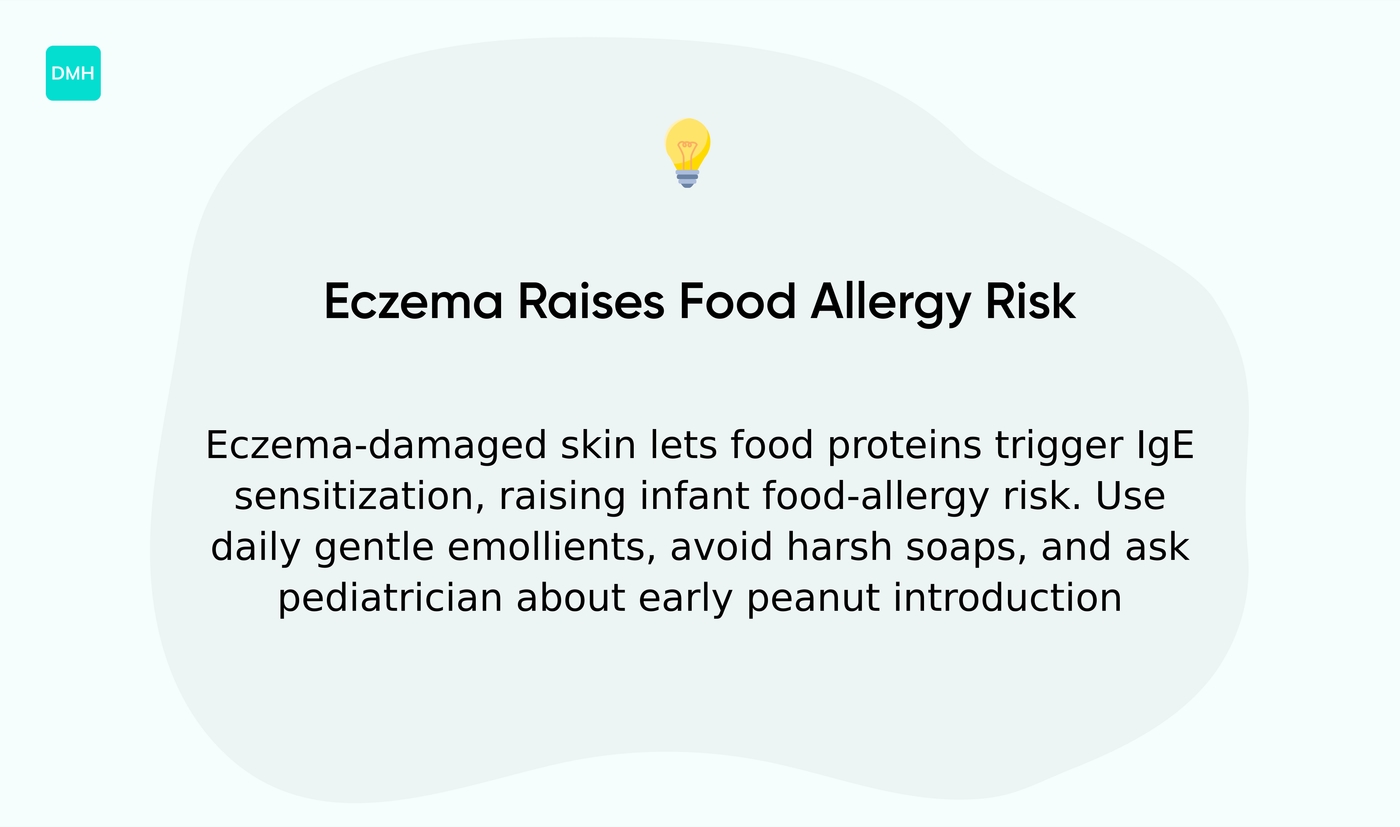
Eczema raises the risk of developing food allergies. The dual allergen exposure hypothesis explains why.
A damaged skin layer lets food proteins cross into skin and meet immune cells. That contact drives IgE antibodies and sensitizes the immune system. Skin antigen-presenting cells activate T cells and B cells. B cells then produce IgE that arms mast cells to react on re-exposure.
Epidemiological data show infants with early, moderate-to-severe eczema face higher rates of peanut sensitization and other food allergy triggers. Prioritizing skin care in infancy reduces the chance that food proteins will trigger a lasting allergy.
We recommend daily gentle emollients, avoiding harsh soaps, and discussing early peanut introduction with your pediatrician. Protect skin early and consult an allergist if you notice signs of sensitization.
Food processing and delayed introduction guidelines
Processing changes and delayed infant feeding likely raised food allergy rates. Food processing changes like high heat and hydrolysis alter protein shape.
Those altered proteins can expose new immune targets that the body treats as threats. Delayed introduction guidelines in U.S. pediatrics discouraged peanuts and eggs before 2000.
Studies show early peanut introduction cuts peanut allergy risk by about 80% in high-risk infants. That shift in exposure timing interacts with manufacturing changes and with rising rates that now affect roughly 1 in 10 U.S. children.
We recommend pragmatic early introduction under pediatric guidance to support oral tolerance. Pairing diverse early feeding with less-processed options reduces risk for many families; talk with your pediatrician to plan safe steps.
What are the most common food allergy triggers
Most food allergy reactions trace back to eight foods that cause roughly 90% of cases. We list those eight as the primary food allergy triggers to watch:
| Food Category | Common Examples | Typical Onset |
|---|---|---|
| Milk and Eggs | Cow’s milk, chicken eggs | Infancy; often outgrown |
| Peanuts and Tree Nuts | Peanuts, almonds, walnuts | Early childhood; often persists |
| Fish and Shellfish | Salmon, shrimp, crab | Childhood or adulthood; often persists |
| Soy and Wheat | Soybeans, wheat flour | Infancy; often outgrown |
These foods provoke immune responses via IgE antibodies or slower cell-mediated pathways. IgE mediated food allergy causes rapid hives, swelling, vomiting, or breathing trouble. Non-IgE reactions show delayed symptoms like gut inflammation.
Genetic factors in food allergies raise risk when family members are affected. Environmental causes of food allergies include altered microbiome and skin exposure from eczema, which links to higher sensitization.
Knowing the specific triggers matters more than fearing every food. For example, causes of peanut allergy often involve early skin sensitization and strong IgE responses. Causes of shellfish allergy usually persist into adulthood and often show up as adult onset food allergies causes.
If you suspect a food allergy, start with a food diary and seek testing from an allergist. Carry an epinephrine auto-injector if you’ve had systemic reactions. Tracking triggers helps you avoid risky exposures and keeps daily life safer.
What causes peanut allergy
Peanut allergy happens when the immune system treats peanut proteins as harmful invaders. Sensitization often begins when peanut proteins cross skin or gut barriers.
Antigen-presenting cells display peanut peptides to T cells. T cells help B cells make IgE antibody production. IgE sticks to mast cells. Re-exposure causes rapid degranulation and mediator release.
Peanut proteins resist digestion and bind strongly to immune receptors. That boosts memory B cell formation and durable allergic responses. Strong allergenicity and early skin exposure explain persistent reactions.
Prevalence sits near 1–2% of children in many countries. Rates climbed after delayed introduction practices changed infant feeding patterns. Read more about why peanut allergies spread at why are peanut allergies so common.
Genetics shape risk through immune-regulating variants and barrier genes. Eczema increases exposure through broken skin. These factors reduce chances of natural resolution compared with milk or egg allergies.
We advise pediatrician-guided early introduction for high-risk infants when appropriate. Guided oral exposure supports oral tolerance development and lowers long-term risk.
If you suspect a peanut allergy, ask your clinician for testing and a personalized plan.
What causes shellfish allergy
Shellfish allergy happens when your immune system treats shellfish proteins as threats. This explains what causes food allergies by showing how a harmless protein triggers IgE antibodies and allergic inflammation.
IgE antibodies bind to mast cells. They recognize a common protein called shellfish allergen tropomyosin. Mast cells release histamine and other mediators. Symptoms range from hives to anaphylaxis.
We emphasize testing that distinguishes crustacean from mollusk reactions. Clear diagnosis matters because cross-reactions vary widely.
Crustaceans like shrimp, crab, and lobster share tropomyosin. Many people react to multiple crustaceans, with cross-reactivity reported in about 70–80% of cases. Mollusks such as clams, oysters, and squid use different proteins. Cross-reactivity between crustaceans and mollusks is lower.
Shellfish allergies often last for life. Tropomyosin resists heat and digestion, so cooking doesn’t always reduce allergenicity. Memory B cells lock in IgE production, keeping sensitivity high. About 2% of U.S. adults report shellfish allergy, making it a common cause of adult-onset reactions.
If you suspect a shellfish allergy, get evaluated by an allergist. Carry an epinephrine auto-injector if your provider prescribes one. Avoid unlabeled seafood dishes and read menus carefully to lower your risk.
Can adults develop food allergies later in life
Yes, adults can develop food allergies later in life. Adult-onset food allergies happen when your immune system stops tolerating a food protein.
Sudden immune system changes like infections, autoimmune disease, or immune-suppressing drugs can trigger that switch. Surveys show about 10% of U.S. adults report a food allergy. Clinic studies report many adults first react after age 18.
Have you noticed new food reactions after starting a medication or recovering from illness? Sudden immune changes include starting antibiotics that alter gut bacteria, getting a viral illness, or beginning biologic medications. Those events change how your immune cells see food proteins.
Shellfish allergy shows up most often as a new adult allergy. Many adults report shrimp or crab as their first allergic reaction, often with hives or breathing difficulty.
Other triggers include:
- Skin barrier problems like eczema
- Cross-reactivity with pollen
- Changes in diet or travel
- Altered gut microbiome from antibiotics
- Repeated low-dose exposures
Tracking timing helps. Note new medicines, infections, or skin flares before symptoms start. That information guides testing and treatment.
We recommend allergy testing when you have new reactions. Start by documenting foods, symptoms, and recent immune events, and see an allergist for tailored care.
What is cross-reactivity in food allergies
Cross-reactivity happens when your immune system mistakes similar proteins from different sources for the same allergen. Similar protein shapes appear across many foods and pollens.
IgE antibodies made against one protein bind to a matching protein on another food. That binding triggers mast cells to release mediators and cause symptoms. This process explains why food allergy triggers sometimes show up in unexpected places.
Shared protein families drive most cross-reactions:
- PR-10 proteins link birch pollen to apples and pears
- Profilins create broad sensitivity across fruits and vegetables
- Tropomyosins connect shellfish and dust mite allergies and often cause systemic reactions
Common real-world examples include birch pollen sufferers getting itchy mouth with raw apple and latex-allergic people reacting to banana or kiwi. About half of birch pollen–allergic patients report mouth symptoms with raw apple, a form of oral allergy syndrome. Cooking usually denatures the proteins and removes symptoms.
We recommend targeted IgE testing or component-resolved diagnostics when symptoms don’t match a single food. Identifying cross reactive proteins prevents unnecessary food avoidance and improves safety plans.
If you notice repeated reactions to related foods, avoid the suspect item until you see an allergist. Bring a symptom log and any seasonal allergy history to your appointment.
Read also: Can Allergies Cause Diarrhea
What causes oral allergy syndrome
Oral allergy syndrome happens when your immune system mistakes similar proteins in pollen and raw produce. This type of cross-reaction shows one clear answer to what causes food allergies.
Pollen-specific IgE antibodies bind proteins on raw fruits or vegetables. That binding sparks a local allergic reaction in the mouth. Symptoms include itchy lips, tingling tongue, and mild swelling. Symptoms stay near the mouth for most people.
Some studies report up to 50% of people with hay fever notice oral symptoms with certain fruits. Heat changes protein shape. Cooking denatures the fragile proteins that trigger the response.
You can often eat a cooked apple or steamed carrot with no reaction. Common pollen–food pairs include birch pollen with apple and hazelnut, and ragweed with banana and melon.
Knowing the link with hay fever makes management simple. Avoid raw triggers when symptoms appear. Try cooked versions or peel the fruit to reduce exposure.
We recommend you get allergy testing if symptoms limit your diet or if you have throat tightness. Ask your clinician about pollen-specific IgE testing and safe food alternatives.
You’ll also like: Can Allergies Make You Lose Your Voice
Does early peanut introduction reduce the risk of peanut allergy
Early peanut introduction between four and six months lowers peanut allergy risk. Randomized trials show large effects.
The LEAP trial enrolled 640 high-risk infants and cut peanut allergy from 17.2% to 3.2% by age five, an 81% relative reduction. Other studies and meta-analyses support benefit for infants without prior severe reactions.
Oral exposure teaches the gut immune system to tolerate peanut proteins. Gut tolerance involves regulatory T cells and IgA that calm allergic responses. Skin exposure, especially with eczema, drives IgE production and sensitization through the broken skin barrier.
These results changed pediatric advice for a reason. Guidelines now advise introducing age-appropriate peanut forms around four to six months for many infants, with supervised introduction for those with eczema or egg allergy.
We suggest you talk with your pediatrician before starting. Start with safe forms like smooth peanut butter thinned with breast milk or formula, or peanut puffs made for infants. If your baby has severe eczema or prior reactions, ask about supervised testing or specialist referral.
Read also: Can Allergies Cause Laryngitis
Educational notice: This content is provided for informational and educational purposes only and is not intended as medical advice. Always consult a qualified healthcare professional for medical concerns.