Most people assume bananas are the only answer when asking what foods have potassium.
But relying on a single food can leave gaps in your diet and make managing blood pressure and muscle function harder than it needs to be.
Knowing which potassium-rich foods (from fruits and veggies to legumes, dairy, and fish) to add regularly makes hitting the 4,700 mg target realistic without supplements.
In this guide you’ll discover top potassium sources, a potassium foods list with amounts per serving, and low-sodium options to support heart health.
You’ll also learn when to be cautious—especially if you have kidney issues or take medications that affect potassium—so any changes stay safe.
Use the practical tips inside to make small swaps that boost potassium without adding sodium.
What is potassium and why does it matter
Potassium is an essential mineral and electrolyte that carries a positive charge and helps cells send electrical signals. It supports nerve function and muscle contractions throughout your body.
Heart muscle relies on steady potassium levels for a regular rhythm. Blood vessels and kidneys use potassium to help control fluid balance and blood pressure regulation.
Low potassium may cause weakness, cramping, or irregular heartbeat. High potassium can affect the heart and may occur in people with reduced kidney function or certain medications. (Individual risk can vary quite a bit.)
Have you wondered how diet affects your blood pressure? Dietary potassium links to heart health. Large trials using the DASH diet connection show diets rich in fruits and vegetables often lower systolic blood pressure by about 5–11 mm Hg on average. Results vary by person and study design.
Most guidelines list whole foods as the preferred source. Eating a variety of potassium-rich foods such as fruits, vegetables, legumes, dairy, and some fish helps meet needs without excess sodium.
For instance, baked potatoes with skin deliver roughly 950 mg per medium spud, while cooked spinach packs about 840 mg per cup. These examples show how everyday foods can add up quickly toward your daily goal.
Not a medical advice, content for educational purposes, consult a professional. Always consult a qualified healthcare professional for medical advice specific to your situation.
How much potassium per day do you need
Health authorities set adult potassium around 4,700 mg per day. This target aims to support nerve signals, muscle function, and blood pressure balance. Values may vary by age, sex, pregnancy, and medical conditions.
Meeting 4,700 mg often works best through food. High potassium foods include baked potatoes with skin (~950 mg), cooked spinach (~840 mg per cup), white beans (~1,000 mg per cup), plain yogurt (~570 mg per cup), bananas (~430 mg each), and whole avocados (~700 mg each).
Food labels and databases show some variation in milligrams, but these ranges give you a solid starting point.
Choosing whole foods over pills matters. Whole foods deliver potassium with fiber, magnesium, and other nutrients that support absorption and heart health. Supplements can raise intake rapidly and may interact with certain medicines or with impaired kidney function.
People with kidney disease or those taking potassium-sparing drugs face higher risk of elevated blood potassium. Blood tests may be necessary before raising intake.
Are you tracking your daily intake yet? A practical approach includes a potassium-rich vegetable, a legume or dairy option, and a fruit each day to approach the 4,700 mg target. Track intake with food apps or nutrition labels, since single servings vary widely.
Not a medical advice, content for educational purposes, consult a professional.
Best sources of potassium by food category
Potassium rich fruits
Several potassium-rich fruits provide meaningful potassium per serving. Values vary by size and variety, so don’t stress over exact numbers.
- Bananas: about 430–519 mg per medium banana
- Avocado: a whole fruit supplies roughly 15% DV (based on 4,700 mg/day), approximately 700 mg
- Dried apricots: roughly 453–750 mg per cup, depending on dryness
- Watermelon: about 14% DV for two wedges, offering a hydrating potassium boost
- Mangoes: around 150–200 mg per cup of sliced fruit
- Fruit juices: 1 cup orange juice ≈496 mg; 1 cup tomato juice ≈550 mg
These high potassium fruits help increase dietary potassium without supplements. Plus, they’re naturally low in sodium and add vitamins, fiber, and antioxidants to your plate.
If you have kidney disease or take medicines that affect potassium, consult a qualified healthcare professional. Not a medical advice, content for educational purposes, consult a professional.
Potassium rich vegetables
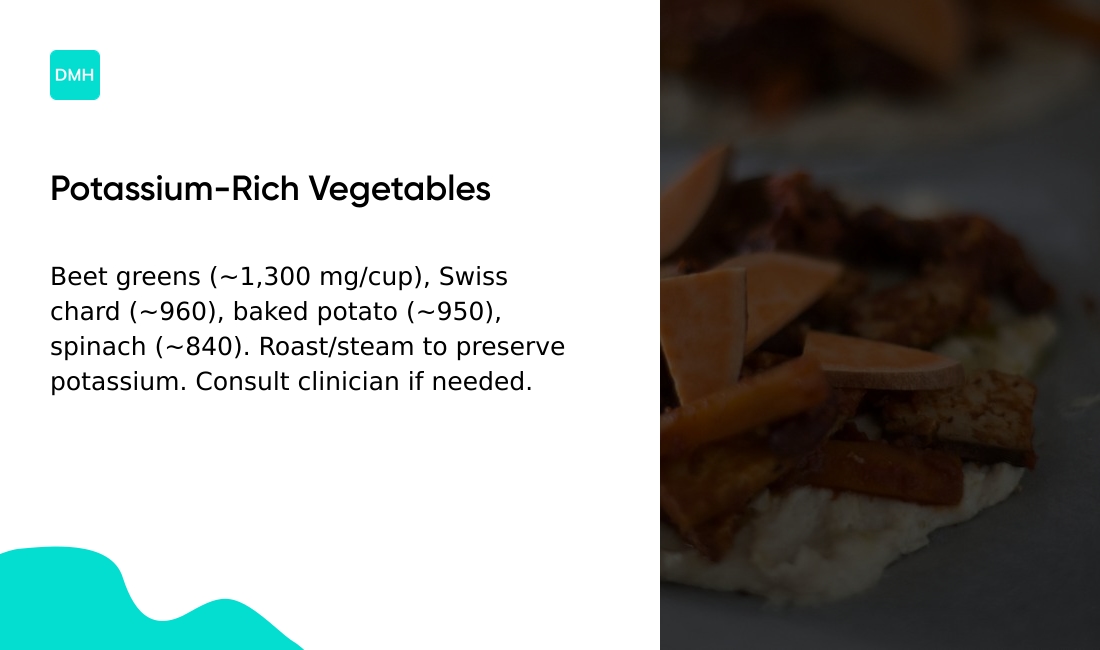
Potassium-rich vegetables deliver high potassium in compact servings. Beet greens top the list at about 1,300 mg per cup cooked. Swiss chard provides roughly 960 mg per cooked cup.
- Baked potato with skin: about 950 mg per medium potato
- Cooked spinach: about 840 mg per cup
- Sweet potato: ranges from 229 to 572 mg depending on size and preparation
- Squash varieties (acorn, butternut): roughly 332–450 mg per half-cup baked
- Portobello mushrooms: about 529 mg per cooked cup
The highest potassium vegetables pair well with legumes or dairy to boost daily intake. Serving sizes matter; roasting or steaming keeps more potassium than boiling. (Boiling can leach minerals into the cooking water.)
Dietary needs vary by health status and medications, and some people may need to limit potassium. Not a medical advice, content for educational purposes, consult a professional.
Protein sources high in potassium
Protein sources high in potassium include many options beyond plants. Meat, fish, poultry, and soy deliver potassium alongside protein, helping you meet daily targets while building muscle and staying satisfied.
| Protein Source | Serving Size | Potassium (mg) |
|---|---|---|
| Salmon | 3 oz cooked | 380–500 |
| Halibut | 3 oz cooked | ~450 |
| Pork loin | 3 oz | ~353 |
| Chicken breast | 3 oz | ~256 |
| Tuna (canned) | 3 oz | ~250 |
| Edamame | ½ cup | ~338 |
Pairing a 3-oz salmon fillet with a serving of edamame yields about 700–840 mg. That represents about 15–18% of a 4,700 mg daily goal—not bad for one meal.
If you have kidney disease or take medications that affect potassium, consult a qualified healthcare professional. Not a medical advice, content for educational purposes, consult a professional.
Legumes and beans with potassium
Legumes supply plant-based potassium for vegetarian diets and fit well into varied meals. White beans, mung beans, chickpeas, and peas all pack a punch.
One cup cooked white beans provides about 21% of the daily value, or roughly 800–1,000 mg. Mung beans contain about 938 mg per cooked cup. Chickpeas provide roughly 210 mg per half cup, while peas offer modest potassium per serving.
White beans and mung beans rank high among legumes for potassium density. Including legumes with low-sodium vegetables can help balance sodium and potassium intake, which may support healthier blood pressure levels.
For details on chickpeas and carbohydrate choices, see are chickpeas keto.
Not medical advice. Content for educational purposes. If you’re concerned, consult a qualified healthcare professional.
Dairy and other potassium sources
Dairy and some beverages supply notable amounts of potassium. Plain yogurt shows about 570 mg per cup, equaling roughly 12% of a 4,700 mg daily goal.
Milk provides about 377 mg per cup, helping round out meals and snacks. Coconut water gives near 13% of the daily value per cup and offers a hydrating option after exercise.
Potassium in chocolate and coffee varies by type and serving size. Reduced-salt packaged products sometimes use potassium-based salts, which raise potassium content.
People with kidney disease or those taking potassium-altering medications may need monitoring before increasing intake. Not a medical advice, content for educational purposes, consult a professional.
What are the highest potassium foods per serving
This ranked list helps people answer what foods have potassium by showing milligrams per standard serving. Values are approximate and may vary by size and preparation, but they give you a clear picture.
- Beet greens, cooked, 1 cup — about 1,300 mg
- Swiss chard, cooked, 1 cup — about 960 mg
- Mung beans, cooked, 1 cup — about 938 mg
- Baked potato with skin, medium — about 950 mg
- Spinach, cooked, 1 cup — about 840 mg
- White beans, cooked, 1 cup — about 800–1,000 mg
- Plain Greek yogurt, 1 cup — about 570 mg
- Banana, medium — about 430–520 mg
- Avocado, medium — about 480–700 mg
- Salmon, cooked, 3 oz — about 330–500 mg
Short serving metrics give a quick view of the highest potassium foods and help plan meals to meet the 4,700 mg daily target used by many guidelines. Vegetables and legumes often provide the highest amounts per cup, making them top picks for vegetarian diets.
Not medical advice. Content for educational purposes only. If you have kidney disease or take medicines that affect potassium, consult a qualified healthcare professional.
Read also: How To Avoid Hiccups When Eating Spicy Food
Foods low in sodium and high in potassium
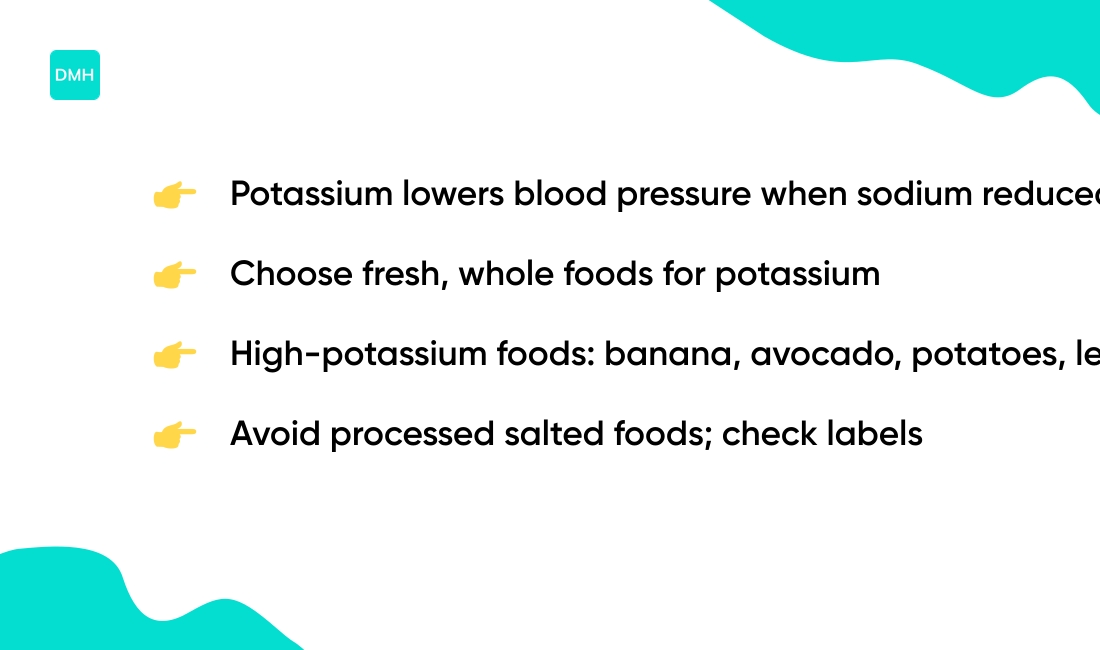
Potassium helps balance fluids and may help lower blood pressure when paired with less sodium. Studies suggest diets higher in potassium and lower in sodium are associated with lower blood pressure—the DASH diet emphasizes these food patterns.
Choose whole foods that naturally deliver potassium with very little salt. Fresh fruits, vegetables, and no-salt-added legumes work well. Here’s the thing: processed foods sneak in sodium fast, so sticking to whole options keeps things simple.
- Banana — about 430 mg potassium and typically under 5 mg sodium per medium fruit
- Avocado — about 700 mg potassium per fruit and usually under 10 mg sodium when fresh
- Baked potato with skin — about 950 mg potassium when medium and typically under 20 mg sodium if unsalted
- Sweet potato — roughly 400–500 mg potassium per medium tuber with very low natural sodium
- Leafy greens (raw spinach, Swiss chard) — high potassium with low sodium when fresh
- No-salt-added beans and lentils — offer high potassium; rinse canned beans to reduce sodium if they’re not labeled no-salt-added
Many packaged or canned options add salt. Check labels and choose no-salt-added versions to keep sodium low. Some choices overlap with lower blood sugar foods and may support overall metabolic health, though effects vary by person.
Not a medical advice, content for educational purposes, consult a professional. Always consult a qualified healthcare professional for medical advice specific to your situation.
You’ll also like: Foods To Avoid While Taking Cellcept
When to be cautious with high potassium foods
High potassium foods help many people meet daily needs. But some patients face risk when kidneys can’t clear potassium efficiently. Lab tests often flag serum potassium above 5.0 mEq/L as elevated. Levels above 6.0 mEq/L may need urgent care.
People taking potassium-sparing medicines can have higher levels. If you take spironolactone or similar drugs, potassium can rise. Review the foods to avoid while taking spironolactone for practical examples.
Salt substitutes often use potassium chloride. Some contain 50–70% potassium chloride by weight and can increase blood potassium. Patients with reduced kidney function, those on ACE inhibitors or ARBs, and people using potassium supplements may need dose review and lab monitoring.
When was your last potassium check? Clinicians may suggest periodic serum potassium checks when intake or medications change. Record foods high in potassium, note serving sizes, and share that list with a clinician before large diet shifts.
A single serving of baked potato can contain roughly 600–900 mg of potassium, which adds up fast when you’re eating multiple servings throughout the day.
Potassium-rich foods remain valuable for many people, but individual needs vary. Not a medical advice, content for educational purposes, consult a professional. Always consult a qualified healthcare professional for medical advice specific to your situation.
You might also like: Foods To Avoid When Taking Methenamine
Educational notice: This content is provided for informational and educational purposes only and is not intended as medical advice. Always consult a qualified healthcare professional for medical concerns.