That uneasy moment after a blood test that reads “high triglycerides” often leaves people searching for answers.
Asking what causes high triglycerides is the first step toward fixing the problem and protecting your heart and pancreas.
Elevated triglycerides raise the risk of heart disease and pancreatitis and can hide under common habits like excess sugar, refined carbs, alcohol, and inactivity.
This article breaks down the medical conditions, lifestyle drivers, and medications that raise triglycerides so it’s clear what’s affecting your numbers.
You’ll learn which foods and behaviors to change, when to see a doctor, and practical steps to lower triglycerides safely.
By the end you’ll be able to spot hidden triggers (yes, even certain prescriptions) and plan realistic next steps.
What are triglycerides and why do they matter
Triglycerides are a type of blood fat. They travel in the bloodstream bound to carrier particles.
Triglycerides differ from cholesterol in structure and role. Cholesterol helps form cell membranes and hormones, while triglycerides act as short-term energy storage.
When you eat, the body converts extra calories into triglycerides. The liver and fat cells release them for energy between meals.
Fasting triglycerides under 150 mg/dL are generally considered normal. 150–199 mg/dL is borderline, 200–499 mg/dL is high, and 500 mg/dL or more is very high, according to clinical guidelines.
High triglyceride levels may be associated with greater cardiovascular risk. Some studies suggest high triglycerides often occur with low HDL and insulin resistance.
Very high levels can raise the risk of acute pancreatitis sharply. Research indicates pancreatitis risk rises when triglycerides exceed about 1,000 mg/dL.
A practical chart of triglyceride levels explains ranges and test timing for fasting and nonfasting samples.
This is for informational purposes only and is not medical advice; always consult a qualified healthcare professional for care specific to your situation.
What are the three most common causes of high triglycerides
If you wonder what causes high triglycerides, three main drivers often appear. Each one affects how the liver makes and clears triglycerides.
- Sugar and triglycerides — Excess calories from added sugars and refined carbohydrates raise triglyceride production in the liver. Fructose in sugary drinks converts quickly to liver fat. Some studies suggest post-meal triglyceride spikes after high-sugar meals.
- Obesity and triglycerides — Excess body fat, especially around the abdomen, may be associated with higher triglyceride levels. Insulin resistance often coexists and can reduce triglyceride clearance. Physical inactivity lowers fat burning and supports persistent elevation.
- Alcohol and triglycerides — Alcohol prompts the liver to make more triglycerides. Binge drinking can produce dramatic short-term rises. Some people show large increases even with moderate intake, according to available research.
These causes can overlap. For example, weight gain plus a high-sugar diet and regular drinking multiply risk.
This is for informational purposes only and is not medical advice; always consult a qualified healthcare professional for care specific to your situation.
Dietary factors that raise triglyceride levels
Does sugar increase triglycerides
According to available research, added sugars stimulate liver fat production. That process raises blood triglyceride levels.
Sugary drinks, desserts, and processed foods deliver large fructose loads. One 12-ounce soda contains about 35 grams of sugar.
Some studies suggest high fructose intake can increase fasting triglycerides by 20–30% over several weeks. Sugar and triglycerides link involves increased hepatic fat and lipoprotein secretion.
Some people may see high triglycerides after eating a sugary meal. Fructose and triglycerides often show stronger effects than glucose in research.
Liver fat production drives much of the rise in circulating triglycerides. The liver converts excess fructose into triglycerides through de novo lipogenesis, which raises very-low-density lipoprotein (VLDL) that transports triglycerides in blood.
Some studies show reduced sugary beverage intake may be associated with lower triglycerides within weeks. Not medical advice — consult a healthcare professional for personalized guidance.
Do refined carbohydrates raise triglycerides
Refined grains like white bread, pasta, and pastries digest quickly to sugar. Rapid digestion raises blood glucose and prompts insulin release.
Refined carbs raise post-meal glucose levels. Insulin spikes trigger the liver to convert excess sugar into fat.
The liver converts sugar to triglycerides through de novo lipogenesis. Liver triglyceride synthesis increases when intake of refined carbs and added sugars is high.
Some feeding studies report fasting triglyceride rises of about 20–50% after high refined carbohydrate or fructose loads, according to available research. Swapping refined grains for whole grains and adding fiber or protein may blunt glucose surges and lower triglyceride responses.
Not medical advice — consult a healthcare professional for personalized guidance.
How does alcohol affect triglyceride levels
Alcohol changes how the liver handles fat and boosts triglyceride synthesis. When the liver metabolizes ethanol it raises the NADH/NAD+ ratio, which favors fatty acid creation and cuts fat oxidation.
Increased fat synthesis drives greater liver triglyceride production. The liver packages those fats into VLDL and sends them into circulation, resulting in higher blood triglyceride levels.
Alcohol can also slow clearance of triglyceride-rich particles from blood. People with obesity, diabetes, fatty liver, or genetic predisposition may see large rises after modest drinking.
Normal triglycerides are under 150 mg/dL. Levels of 200–499 mg/dL count as high, while levels above 500 mg/dL can reach very high levels and raise pancreatitis risk.
Some studies suggest these effects vary by person and by drinking pattern. This is for informational purposes only and is not medical advice; always consult a qualified healthcare professional for care specific to your situation.
Which foods raise triglycerides the most
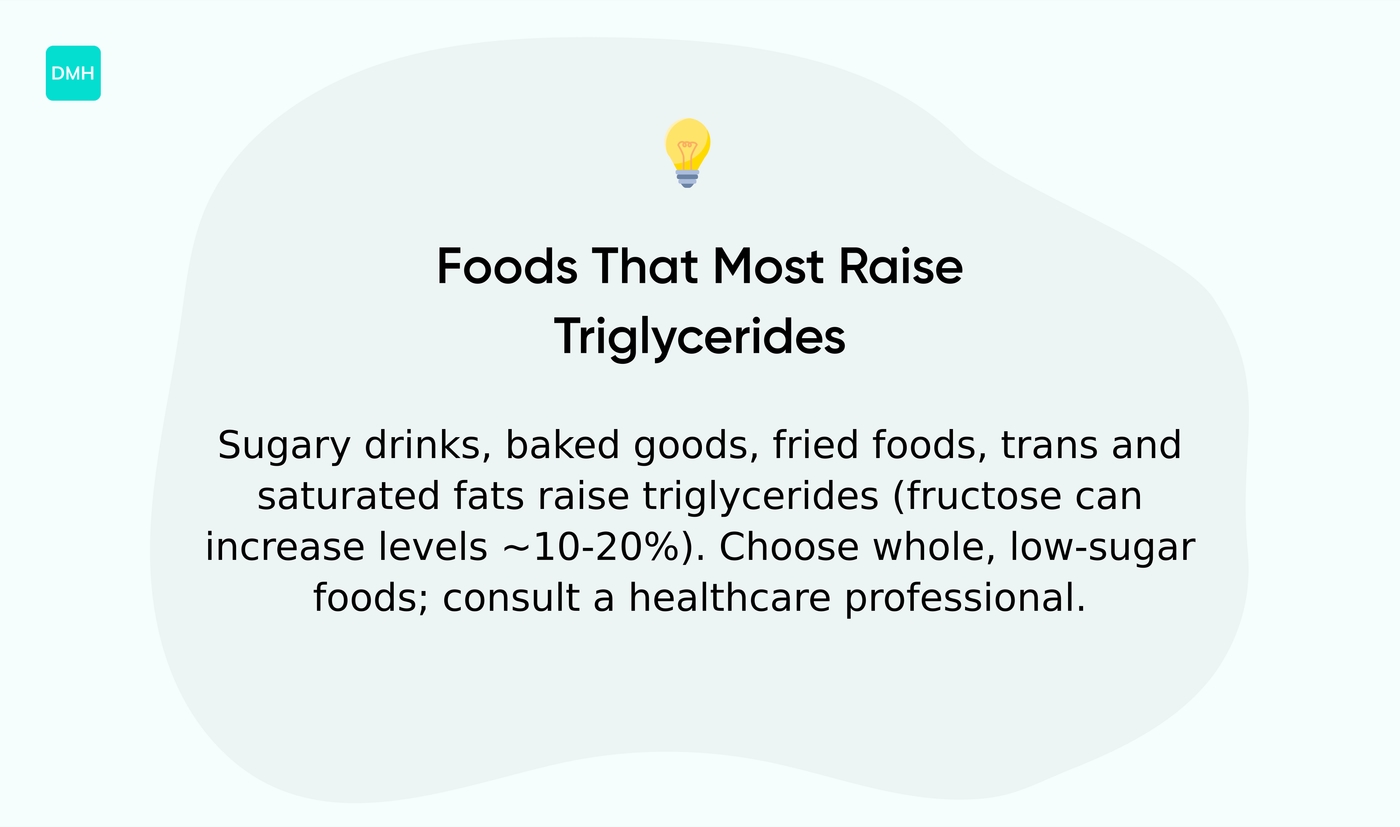
High triglycerides may be associated closely with certain foods and patterns. What causes high triglycerides often includes diets high in added sugar and unhealthy fats.
| Food Category | Examples | Impact on Triglycerides |
|---|---|---|
| Sugary drinks | Soda, fruit juice, sweetened tea | Rapid fructose delivery; may raise levels 10–20% |
| Baked goods | Pastries, cookies, cakes | Added sugar + refined carbs spike insulin |
| Fried foods | French fries, fried chicken, fast food | Excess calories and omega-6 fats |
| Trans fats | Some margarine, packaged snacks | Raise triglycerides and lower HDL |
| Saturated fats | Fatty meat, butter, full-fat dairy | May raise levels in some people |
Choosing whole foods and lower blood sugar foods can reduce spikes and support metabolic health. This is for informational purposes only and is not medical advice; always consult a qualified healthcare professional for care specific to your situation.
Medical conditions that cause high triglycerides
Can insulin resistance cause high triglycerides
Insulin resistance may be associated with elevated triglyceride levels. Cells respond less to insulin, so the liver then makes more triglycerides. The body clears triglyceride-rich particles more slowly.
Impaired insulin signaling reduces lipoprotein lipase activity. That enzyme helps remove triglycerides from blood. People with type 2 diabetes commonly show this pattern.
Some studies suggest a link between insulin problems and higher fasting triglyceride counts. Fasting triglyceride levels above 150 mg/dL count as elevated.
Lifestyle and medical factors can amplify the effect. Programs that aim to reverse insulin resistance may lower liver triglyceride output for some people. Research findings can vary from person to person.
Not medical advice — consult a healthcare professional for personalized guidance.
Can hypothyroidism raise triglycerides
Underactive thyroid slows metabolic rate and reduces the liver’s ability to process blood fats. Some studies suggest hypothyroidism may be associated with higher triglyceride and cholesterol levels.
The thyroid hormone helps regulate lipoprotein lipase and LDL receptor activity. Low hormone levels lower enzyme activity and receptor expression, which reduces the clearance of triglycerides from the bloodstream and can lead to elevated triglyceride levels.
The effect can vary from person to person. Overt hypothyroidism often causes clearer lipid changes than milder, subclinical forms.
Some studies report triglyceride reductions around 20% after thyroid function normalizes, though results vary across populations. Not medical advice — consult a healthcare professional for personalized guidance.
Chronic kidney and liver diseases
Kidney disease, cirrhosis, and fatty liver often alter how the body handles fats. These conditions can cause fat metabolism impairment and raise triglyceride production.
Chronic kidney disease reduces lipoprotein lipase and hepatic lipase activity. That lowers triglyceride breakdown and leads to higher blood levels. Some studies suggest elevated apolipoprotein C-III adds to clearance problems.
Fatty liver increases hepatic fat synthesis and VLDL secretion. Cirrhosis impairs liver clearance and alters protein synthesis needed for normal lipid transport, which can produce persistent hypertriglyceridemia.
Elevated triglycerides over 500 mg/dL may increase pancreatitis risk, while levels above 150 mg/dL count as high for cardiovascular risk assessment. Managing underlying kidney or liver disease may lower triglyceride levels, but responses can vary.
This is for informational purposes only and is not medical advice; always consult a qualified healthcare professional for care specific to your situation.
Do genetics cause high triglycerides
Genetic mutations can cause very high triglyceride levels. Some inherited conditions drive excess triglyceride production or impair fat breakdown.
Familial chylomicronemia syndrome results from defects in lipoprotein lipase or related genes. Mutations in LPL, APOC2, APOA5, LMF1, and GPIHBP1 impair triglyceride clearance.
Some studies suggest familial chylomicronemia syndrome affects about 1 in 1,000,000 people. Triglyceride values often exceed 1,000 mg/dL in these cases, raising pancreatitis risk.
More common genetic predispositions can raise baseline triglycerides. Those predispositions interact with diet, alcohol, obesity, insulin resistance, and certain medications to produce clinically high levels.
Genetic causes explain a portion of hypertriglyceridemia causes and may clarify why people have high triglycerides despite healthy habits. Not medical advice — consult a healthcare professional for personalized guidance.
Lifestyle and behavioral risk factors
Daily habits play a huge role in what causes high triglycerides. Physical inactivity lowers the body’s ability to burn circulating fats. Studies suggest each extra hour of sitting may be associated with higher triglyceride levels.
Obesity raises triglycerides. Body mass index above 30 and excess waist circumference may be associated with higher triglyceride readings.
Consuming more calories than burned drives liver fat production. A 500-calorie daily surplus equals about one pound of weight gain per week and can raise triglycerides over months.
Excess calories consumed often come from sugary drinks, refined carbs, and large portions. Sugar and fructose convert in the liver to triglycerides in measurable amounts.
Alcohol alters fat metabolism and can spike triglycerides after drinking. Some people show large increases with even moderate intake.
Smoking and triglycerides links appear in population studies. Smoking may reduce HDL cholesterol and coincide with higher triglyceride levels.
Medications, menopause, and underlying conditions like insulin resistance can amplify lifestyle effects. What raises triglycerides can vary from person to person and may involve multiple factors.
Have you considered how your daily routine might be affecting your numbers? Small changes can add up.
This is for informational purposes only and is not medical advice; always consult a qualified healthcare professional for care specific to your situation.
Read also: How To Lower Your A1C: What You Need To Know
Which medications can raise triglycerides
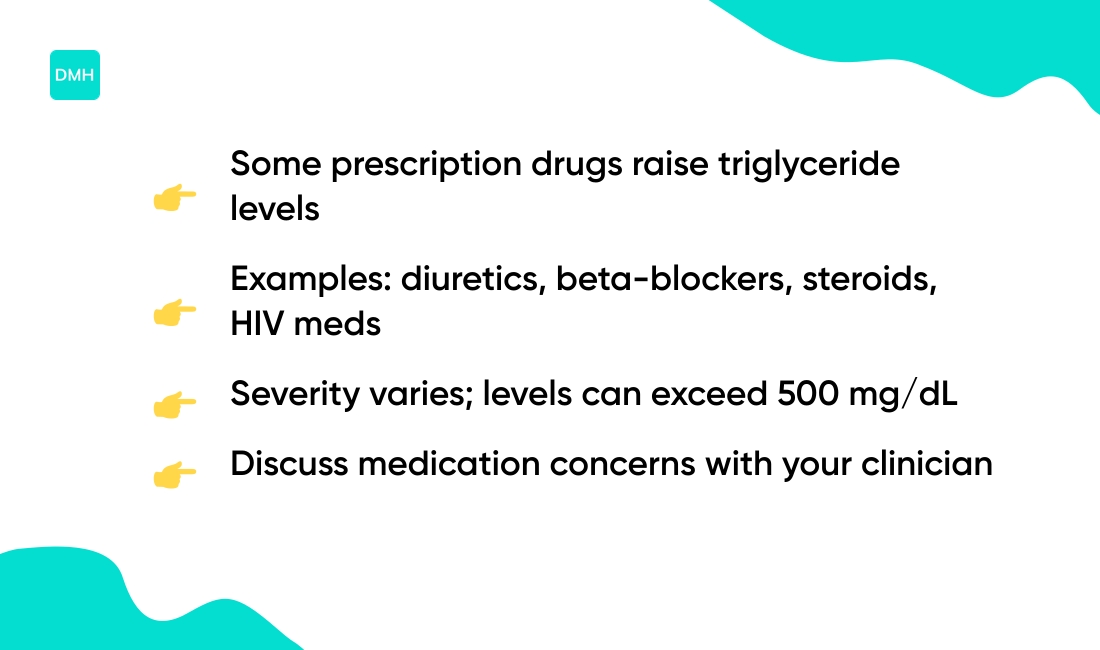
Certain prescription drugs can raise triglyceride levels. Triglycerides normally sit below 150 mg/dL fasting. Some medications may push levels higher, sometimes into ranges associated with pancreatitis risk.
Common drug classes linked to higher triglycerides include:
- Diuretics — thiazide diuretics can raise triglycerides modestly in some people.
- Beta-blockers — older agents like propranolol and atenolol have been associated with lipid changes.
- Steroids — oral glucocorticoids can increase hepatic fat production and plasma triglycerides.
- HIV medications — some protease inhibitors and older antiretroviral regimens may be associated with large triglyceride rises.
- Estrogen therapies — oral estrogens can raise triglycerides more than transdermal forms in some studies.
- Immunosuppressants — drugs such as cyclosporine and tacrolimus may alter lipid metabolism.
- Atypical antipsychotics — agents like olanzapine and quetiapine can increase triglycerides in susceptible individuals.
- Retinoids and some hormone treatments — reported to raise levels in case series.
Magnitude of change can vary by drug, dose, and individual factors like obesity or insulin resistance. According to available research, some people may see modest increases while others develop severe hypertriglyceridemia above 500 mg/dL.
If you take one of these drugs, your triglyceride levels may change and periodic testing may identify trends early. Discuss any concerns with a healthcare professional before making changes to medications.
This is for informational purposes only and is not medical advice; always consult a qualified healthcare professional for care specific to your situation.
Read also: What Vitamin Is Good For Weight Loss
Why are my triglycerides high despite a healthy diet
High triglycerides can appear even when your meals look balanced. This outcome may alarm you (and honestly, it’s frustrating when you’re doing everything “right”).
Underlying medical conditions can raise levels. Insulin resistance and type 2 diabetes can increase liver triglyceride production and lower clearance. Hypothyroidism slows metabolism and can raise fats in blood. Chronic kidney or liver disease can impair fat handling.
Genetic factors can cause very high triglycerides. Familial hypertriglyceridemia is an inherited disorder that may keep levels above 500 mg/dL. According to available research, genetics can vary from person to person.
Some medications raise triglycerides. Steroids, certain beta-blockers, diuretics, estrogen therapies, and some HIV antivirals have been associated with higher levels. Discuss medication effects with a clinician before making changes.
Hidden dietary triggers may hide in a healthy pattern. Fructose and added sugars, excess refined carbs, and regular alcohol use push liver fat synthesis. Large portions of even healthy foods can add calories and raise triglycerides after eating.
Some people have mixed causes at once. Insulin resistance, modest alcohol use, and a susceptible genotype can combine. Triglyceride categories help assess risk: normal
Small steps may lower levels. Learn about ways to lower triglycerides naturally. Not medical advice — consult a healthcare professional for personalized guidance.
You’ll also like: What Is Portion Control And Why It Matters
Educational notice: This content is provided for informational and educational purposes only and is not intended as medical advice. Always consult a qualified healthcare professional for medical concerns.