Seeing an unexpected result on a lab slip is unnerving.
Neutrophils high on your CBC often raises questions about infection, inflammation, or other causes.
This guide explains neutrophilia in plain terms, including what an absolute neutrophil count means and when levels are considered mild versus severe.
It also covers common causes—like infection, stress, smoking, pregnancy, and certain medications—and what tests doctors may order next.
You’ll learn how to interpret segmented and band neutrophil results, why lymphocytes can be low when neutrophils are up, and simple steps clinicians take to pinpoint the cause.
By the end, you’ll be better prepared to talk with your provider and know when monitoring is enough versus when further evaluation is needed.
What does it mean when neutrophils are high
Neutrophilia means a higher than normal number of neutrophils. Neutrophils are a type of white blood cell that defends the body against infection.
A high neutrophil count is often defined by an absolute neutrophil count (ANC) above 7,700 cells per microliter. Labs report this as the ANC, and elevated values show more neutrophils circulating in the blood.
Elevated neutrophil levels can signal an active immune response. Bacterial infections commonly raise neutrophils. Inflammation, physical or emotional stress, certain medications, smoking, and pregnancy can raise counts as well.
Some bone marrow disorders or cancers can cause persistent neutrophilia. An isolated, mild rise may be temporary and resolve on its own.
A sustained or very high ANC may be associated with more serious conditions and often prompts further testing. You may wish to discuss abnormal results and the clinical context with your clinician.
Find a clear overview of test values and common causes at neutrophils. Evidence varies by cause and by patient, and results can vary from person to person and must be interpreted alongside symptoms and other labs.
Not a medical advice, content for educational purposes, consult a professional. Always consult a qualified healthcare professional for medical advice specific to your situation.
What is considered a high neutrophil count
Neutrophilia is an elevated level of neutrophils, a type of white blood cell. Neutrophils help fight bacteria and acute injury.
The absolute neutrophil count (ANC) normally ranges roughly 1,500 to 8,000 cells per microliter. Labs vary by method and population.
An ANC above about 7,700 cells per microliter is often labeled as high. Values labeled as neutrophilia reflect an immune response or other causes.
Clinicians often describe degrees of elevation by ranges:
| Severity | ANC Range (cells/µL) | Common Context |
|---|---|---|
| Mild | 7,700–10,000 | Minor stress, smoking, mild infection |
| Moderate | 10,000–25,000 | Acute infection, inflammation, surgery |
| Severe | 25,000–50,000 | Severe infection, major trauma, marrow disorders |
| Leukemoid Reaction | Above 50,000 | Bone marrow disease, extreme stress |
Elevated neutrophils can signal infection, inflammation, medication effects, pregnancy, stress, smoking, or bone marrow disorders. Patterns on the differential help clarify cause.
Percentage shifts toward segmented or band neutrophils may point to an acute response. Patients may wish to discuss an ANC high result with their clinician.
For context on differential components, see CBC with differential values and meanings.
Not a medical advice, content for educational purposes, consult a professional. Always consult a qualified healthcare professional for medical advice specific to your situation.
Common causes of high neutrophils
Infections and high neutrophils
Neutrophils are white blood cells that fight microbes. You may see a high neutrophil count with bacterial infections like pneumonia and urinary tract infections.
Bacterial infections often trigger a rapid neutrophil rise and immature forms called bands. Ever wonder why your doctor orders a CBC when you have a fever? That’s why—they’re checking for this pattern.
Viral, fungal, or parasitic infections may cause mild to moderate neutrophilia. High neutrophils with low lymphocytes can suggest an acute infection or stress response.
Band neutrophils high and an absolute neutrophil count (ANC) rise support an active bacterial process. Read more about infection and high white blood cell count for details.
Not a medical advice, content for educational purposes, consult a professional. Always consult a qualified healthcare professional for medical advice specific to your situation.
Inflammation and chronic conditions
Neutrophilia means a sustained rise in neutrophils in the blood. Autoimmune disorders like rheumatoid arthritis can drive this pattern.
Other chronic inflammatory diseases include inflammatory bowel disease, vasculitis, and gout. Burns, major surgery, and heart attack trigger strong inflammatory signals.
Those signals may keep a high neutrophil count for days to weeks. Cytokines such as granulocyte colony-stimulating factor and interleukin-6 stimulate bone marrow, prompting the marrow to release more neutrophils and raising the absolute neutrophil count.
Some studies suggest cytokine levels may correlate with neutrophil counts. Elevated neutrophils vary widely—mild cases may reach 8,000–15,000 cells per microliter.
Lab context matters. You may wish to discuss persistent high results with your clinician.
Not a medical advice, content for educational purposes, consult a professional. Always consult a qualified healthcare professional for medical advice specific to your situation.
Medications and lifestyle factors
Neutrophilia means high neutrophils in blood tests. Neutrophils are white blood cells that fight infection.
Corticosteroids cause demargination and can raise counts within hours. Lithium can increase neutrophil production over days, while beta-agonists such as albuterol may cause a mild rise.
Smoking often links with elevated neutrophil levels. Intense exercise produces a quick surge in circulating neutrophils. (Yes, even that morning run can temporarily spike your numbers!) Physical or emotional stress triggers hormone release that can lead to a temporary neutrophil rise.
Changes on a high neutrophils blood test often last hours to days. ANC high values may reflect these noninfectious causes rather than an infection.
Lab context and recent medications, exercise, or stress help explain results. For informational purposes only—not a medical advice, content for educational purposes, consult a professional.
Always consult a qualified healthcare professional for medical advice specific to your situation.
Pregnancy and high neutrophils
Pregnancy can cause neutrophils high on routine blood tests. Neutrophils are white blood cells that fight bacteria.
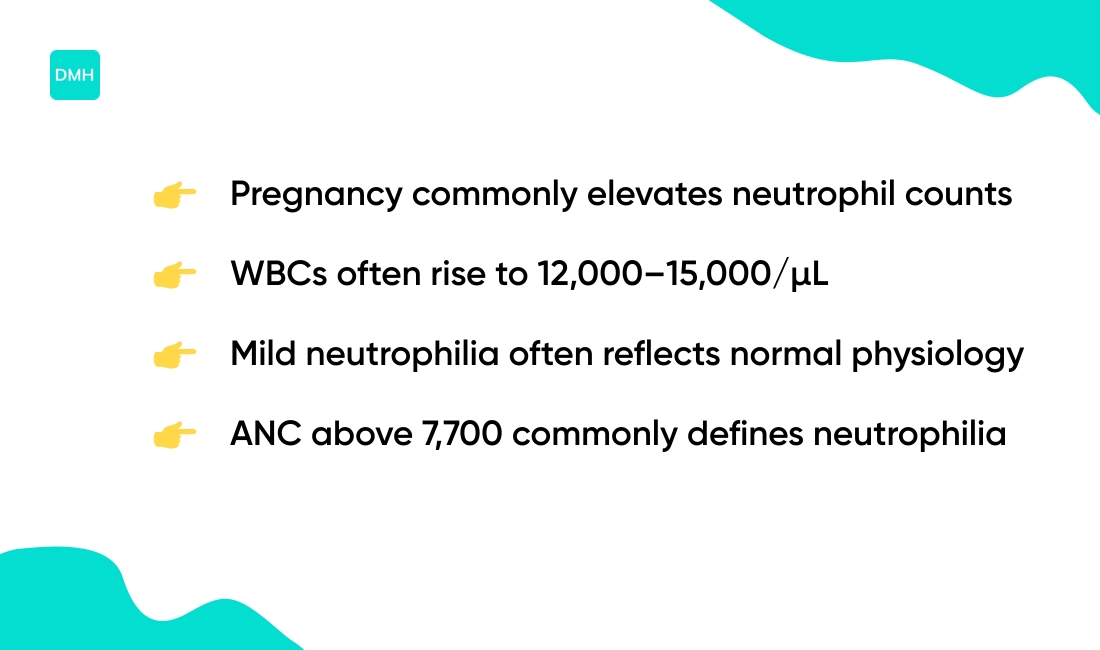
Neutrophilia often reflects hormonal shifts and increased bone marrow production. Total white blood cell counts can rise to 12,000–15,000 cells/µL, and neutrophils make up most of that rise. Labor may push counts higher than baseline.
Mild increases in the absolute neutrophil count or elevated neutrophils commonly reflect normal pregnancy physiology. These rises don’t always signal infection.
Hormones like estrogen and cortisol rise during pregnancy. These hormones can shift immune cell numbers and distribution. Some studies suggest mild neutrophilia occurs from the first trimester onward, with counts often peaking in the third trimester.
An ANC above 7,700 cells per microliter often defines neutrophilia. Pregnancy changes can raise ANC without infection signs.
You may see high neutrophils with low lymphocytes on a differential. You may wish to discuss results with your clinician for context. Fever or severe pain may warrant prompt evaluation.
Not a medical advice, content for educational purposes, consult a professional. Always consult a qualified healthcare professional for medical advice specific to your situation.
Cancer and bone marrow disorders
Certain cancers and bone marrow disorders can cause persistent neutrophilia. Neutrophilia means neutrophils high in the blood.
Leukemia and myeloproliferative neoplasms often increase immature cell production. The marrow releases more precursors that become white blood cells.
Excess marrow activity raises the high neutrophil count and can keep ANC high for weeks or months. Counts may vary by disease type and stage.
Blood tests may show elevated segmented or band neutrophils. Bone marrow biopsy, genetic tests, and full blood counts help clarify the cause. Evidence suggests some myeloproliferative disorders present with neutrophilia more often than solid tumors.
Findings can vary and don’t prove causation without further testing. Not a medical advice, content for educational purposes, consult a professional.
Always consult a qualified healthcare professional for medical advice specific to your situation.
Symptoms and health implications of neutrophilia
Neutrophilia means a higher than normal number of neutrophils. Neutrophils are white blood cells that fight infection.
Common symptoms point to underlying causes. Here’s what you might notice:
- Fever may be present and can reach 38°C or higher
- Persistent fatigue may follow acute infections or chronic inflammation
- Unintended weight loss and night sweats may be seen with long-standing inflammation or malignancy
- New or worsening joint pain can indicate inflammatory disease such as rheumatoid arthritis
- Some patients report localized pain, redness, or swelling if an infection is present
- Respiratory symptoms may appear with pneumonia
- Urinary symptoms may appear with a urinary tract infection
Very high counts can signal more serious problems. An absolute neutrophil count above 7,700 cells per microliter is often labeled high. Counts above 50,000 cells per microliter may reflect a leukemoid reaction or bone marrow disorder.
Complications may include organ dysfunction from severe infection and an increased blood clot risk in some conditions, especially in myeloproliferative neoplasms. Prolonged neutrophilia may be associated with cancers or myeloproliferative disorders.
Actually, very thick blood in severe cases can even increase stroke risk. Find a concise overview at high neutrophils causes and symptoms.
Not a medical advice, content for educational purposes, consult a professional. Always consult a qualified healthcare professional for medical advice specific to your situation.
Why are my neutrophils high but lymphocytes low
An inverse pattern on a differential shows elevated neutrophil count with low lymphocytes. Neutrophilia means more neutrophils in blood, while lymphopenia means fewer lymphocytes.
Neutrophils rise rapidly during acute inflammation. They respond to bacterial infection and tissue injury. Lymphocyte numbers can fall due to redistribution, immune signaling, or stress hormones.
Acute bacterial infections such as pneumonia or a urinary tract infection often produce this pattern. A strong stress response from surgery, trauma, or intense exercise can do the same.
Corticosteroid use and heavy smoking commonly increase neutrophils while lowering lymphocytes. Laboratory reports show percentages and absolute counts—an ANC high may exceed 7,700 cells/µL, while lymphopenia often appears below about 1,000 cells/µL.
A high neutrophil percentage can look more dramatic when lymphocytes drop. This pattern may point toward an acute infection or a physiologic stress response. Viral infections usually raise lymphocytes instead.
Persistent or extreme shifts may suggest bone marrow or immune disorders and merit evaluation. You may wish to discuss repeat testing, symptom review, and targeted tests with your clinician.
DailyMedicalHealth covers causes of a high white blood cell count for further context. Not a medical advice, content for educational purposes, consult a professional.
Always consult a qualified healthcare professional for medical advice specific to your situation.
What does high absolute neutrophil count indicate
Neutrophils are white blood cells that fight infection and clear debris. Absolute neutrophil count gives the true number of neutrophils per microliter, while relative neutrophil count reports the percent of neutrophils among white cells.
ANC equals total white blood cell count multiplied by the neutrophil percentage divided by 100. Sound confusing? Here’s a quick breakdown:
- Normal ANC often ranges from about 1,500 to 8,000 cells/µL
- An ANC above 7,700 cells/µL is usually considered high
- Very high counts above 50,000 cells/µL may indicate a leukemoid reaction or marrow disease
Elevated ANC values may point to bacterial infection, inflammation, physical or emotional stress, recent surgery, corticosteroid use, smoking, pregnancy, or a bone marrow disorder.
Values can vary by age, lab method, and recent events. Single readings may not reflect a chronic problem. Patients may wish to discuss abnormal results with their clinician for context and further testing.
For background on how labs report neutrophils, see neutrophils in blood tests.
Not a medical advice, content for educational purposes, consult a professional. Always consult a qualified healthcare professional for medical advice specific to your situation.
Understanding segmented and band neutrophils
Segmented neutrophils are mature white blood cells with multilobed nuclei. They patrol tissues and clear bacteria.
Band neutrophils are immature forms released from bone marrow. Labs report them as “bands” on a differential count. Both types fight infection—segmented cells act first, while bands increase when demand exceeds supply.
Bands often make up 0–5% of circulating neutrophils. A band percentage above 10% commonly indicates a left shift. That pattern often appears with acute bacterial infections like pneumonia or sepsis.
High band neutrophils usually accompany an overall rise in neutrophil count. An absolute neutrophil count high (ANC high) plus many bands suggests a strong bone marrow response. But bands alone don’t identify the cause.
Bands can also rise with severe stress, major surgery, or certain medications. Lab context matters—clinical signs such as fever, elevated C-reactive protein, or positive cultures help interpret the pattern.
For an overview of related white blood cells, consult the granulocytes page for clear definitions and ranges.
Not a medical advice, content for educational purposes, consult a professional. Always consult a qualified healthcare professional for medical advice specific to your situation.
Read also: What Is Basophils In Blood Test
How to lower high neutrophils and treatment options
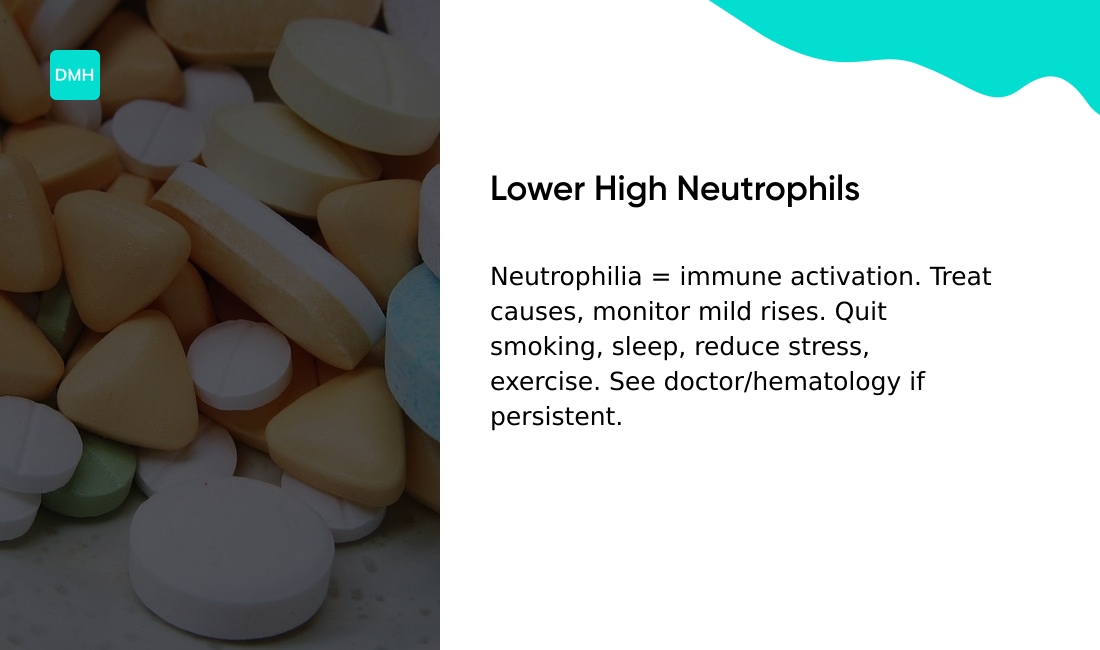
Neutrophilia means neutrophils high on a blood test. An elevated absolute neutrophil count (ANC) signals an active immune response.
Address the cause first. Treat the underlying cause when an infection, inflammation, medication effect, or bone marrow disorder explains neutrophilia. Clinicians may target that cause rather than the neutrophil number alone.
Mild, brief rises often need only repeat testing and observation. Monitor and follow-up with periodic CBCs may clarify whether neutrophils return to the normal range.
Lifestyle changes can help lower inflammation that may drive elevated neutrophils:
- Quit smoking—some studies suggest smoking raises neutrophil counts in measurable ways
- Improve sleep quality and duration
- Practice stress management techniques
- Engage in regular moderate exercise
Persistent or very high counts may prompt specific medical evaluation. Antibiotics may be used for bacterial infection. Anti-inflammatory or immunomodulatory therapies may be considered for autoimmune disease.
Hematology referral can diagnose marrow disorders when counts remain high or other blood abnormalities appear. Use targeted resources for causes and follow-up—see causes of high neutrophils for more detail: causes of high neutrophils.
Findings may vary from person to person and evidence is mixed for some interventions. Not a medical advice, content for educational purposes, consult a professional.
Always consult a qualified healthcare professional for medical advice specific to your situation.
Read also: Monocytes: low, high, absolute count and normal range, causes
When should I worry about high neutrophils
Neutrophilia means a rise in neutrophils, a white blood cell that fights infection. A common threshold labels an absolute neutrophil count above 7,700 cells per microliter as high.
Mild rises often reflect short-term stress, recent exercise, smoking, steroid use, or pregnancy. But red flags that often indicate a need for immediate medical attention include:
- Fever above 38.5°C (101.3°F)
- Breathing difficulty or shortness of breath
- Severe pain that won’t subside
- Sudden confusion or altered mental state
- Uncontrolled bleeding or easy bruising
- Very high counts above 50,000 cells/µL that mimic a leukemoid reaction
These signs may signal severe infection, bone marrow disorder, or other serious illness. Patients with any of these signs may wish to discuss urgent evaluation.
Chronic elevation differs from a temporary spike. Persistent high neutrophils can reflect ongoing infection, chronic inflammation, myeloproliferative neoplasm, or medication effects. Repeating the complete blood count and reviewing medications and symptoms helps clinicians interpret results.
Children may show different patterns. High neutrophils in children can rise with common infections. Concerning features in a child include poor feeding, lethargy, persistent high fever, bruising, or rapid breathing. Pediatric evaluation often requires faster follow-up than adult care.
For detailed thresholds and causes, see the dangerous white blood cell count guide and the Merck Manual on neutrophilic leukocytosis.
Not a medical advice, content for educational purposes, consult a professional. Always consult a qualified healthcare professional for medical advice specific to your situation.
You might also like: What Does High Lymphocytes Mean In A Blood Test?
Educational notice: This content is provided for informational and educational purposes only and is not intended as medical advice. Always consult a qualified healthcare professional for medical concerns.