Sudden temporary double vision can throw you off balance — literally.
One moment you’re reading or driving, the next you’re seeing two of everything.
Well, the good news? Many cases clear up on their own.
But some episodes signal serious trouble that needs immediate care.
Let’s walk through what causes these episodes, when to worry, and what to do right now if your vision just doubled.
What is sudden temporary double vision
Sudden temporary double vision is a brief episode when you see two images instead of one.
Transient diplopia describes double vision that clears on its own. Constant double vision stays present and points to a persistent problem.
You may notice two overlapping images. The images can sit side-by-side or stacked, and vision may blur or split as you move your eyes.
Episodes usually last minutes to hours. Short episodes that stop without treatment suggest a nonpermanent cause.
Episodes that persist beyond 24 hours deserve prompt evaluation.
The sources vary: eye muscle misalignment, corneal surface issues, brief nerve irritation, or short-lived brain processing changes. Migraine aura, mild dehydration, and low blood sugar can trigger temporary diplopia.
The sudden shift feels alarming (trust me, it’s unsettling). But here’s the thing — the pattern and timing often guide the diagnosis more than the intensity of the symptom.
Understanding what causes sudden temporary double vision helps you act quickly. Note whether one eye or both eyes are affected, and record any other symptoms like headache or weakness.
Call emergency services if double vision starts with weakness, trouble speaking, or a severe headache. If the double vision clears and no other symptoms occur, book an eye exam within a day or two.
What’s the difference between monocular and binocular double vision
Monocular diplopia affects one eye; the ghost image stays when the other eye is closed.
Monocular double vision causes usually lie inside the eye. Corneal scars, cataract, dry eye, or refractive errors distort light and split images.
A simple cover test helps you and clinicians separate causes fast. Just close one eye — if the double image disappears, you’re dealing with binocular diplopia.
Binocular diplopia appears only when both eyes are open. Misaligned eye muscles or brain control problems cause this pattern.
Common binocular double vision causes include sixth nerve palsy, thyroid eye disease, myasthenia gravis, and stroke-related nerve injury. Cranial nerve palsy often produces sudden double vision in both eyes and needs prompt evaluation.
The diagnostic difference matters because monocular issues point to the eye itself, while binocular issues suggest nerve, muscle, or brain involvement.
For example, if covering the left eye removes the doubled image, that eye usually has the problem.
Noticing which eye shows the double image speeds correct testing and treatment. We recommend urgent eye assessment and neurological evaluation for any sudden double vision, especially with weakness, numbness, speech changes, or sudden headache.
Common benign causes of sudden temporary double vision
Eye fatigue and prolonged screen time
Prolonged near work causes temporary eye misalignment — it’s one of the most common culprits in our screen-heavy world.
Holding gaze for long periods strains the extraocular muscles. This form of transient diplopia links to prolonged near tasks.
Micro imbalances build and eyes drift out of alignment by evening.
Surveys report about 60% of heavy screen users feel eye strain. Tired eye muscle coordination explains the misalignment, and this can trigger temporary double vision that clears with rest.
Short screen breaks can cut symptoms by half in some reports. Here’s what actually works:
- Take a 5-minute break every 30 minutes
- Practice pencil pushups for 2 minutes daily
- Use lubricating drops if eyes feel dry
- Adjust screen brightness to match room lighting
If sudden double vision appears, stop work and cover one eye for safety. An eye exam is recommended if episodes recur or last longer than a few minutes.
Dry eyes and corneal irregularities
Dry eye symptoms often cause transient double vision. Low tear volume and surface roughness scatter light and create overlapping images.
A thin, unstable tear film causes an uneven corneal surface. Tear film instability with tear breakup time under 10 seconds and blink rates that fall to 5–7 per minute during screen work raise symptom risk.
Light distortion produces diplopia that usually clears after a blink or after using drops. These irregularities are common temporary double vision causes and present as intermittent double vision.
Trying deliberate blinking and preservative-free artificial tears helps quickly. Use drops every 4 hours as needed and take short blink breaks every 20 minutes.
If symptoms persist, see an eye doctor for corneal evaluation.
Low blood sugar and dehydration
Low blood sugar and dehydration can cause sudden temporary double vision — your brain needs fuel and fluids to keep vision sharp.
Glucose under 70 mg/dL impairs retinal signaling and visual cortex processing. Hypoglycemia reduces neuronal ATP and weakens synaptic transmission in eye pathways.
Illness or poor intake leads to fluid volume loss, which lowers perfusion to cranial nerves. Dehydration raises blood viscosity and slows visual processing speed, producing transient diplopia and intermittent double vision.
People with diabetes face higher risk because neuropathy and rapid glucose swings affect eye muscle control.
Simple fixes work fast: a glucose snack or IV fluids often stop the diplopia within minutes to hours. Check blood sugar and replace fluids right away.
Seek urgent care if double vision persists or you develop weakness, slurred speech, drooping face, or severe headache.
Alcohol intoxication and medications
Alcohol and certain medications can cause sudden temporary double vision. They disrupt eye muscle control and slow visual processing.
Even one drink can alter coordination. Blood alcohol levels above 0.08% commonly impair eye movements and reaction time.
Sedatives, antihistamines, opioids, muscle relaxants, and some antidepressants lower muscle tone and blur nerve signals. The mismatch makes your eyes drift, creating overlapping images or temporary double vision.
The effect usually clears as the substance leaves your system.
You should treat any new double vision seriously. Stop driving and sit quietly if your vision doubles.
Tell your clinician about recent alcohol or medication use, and seek urgent care if symptoms persist more than an hour or appear with weakness, speech changes, or severe headache.
Serious neurological causes requiring immediate attention
Is sudden double vision a sign of a stroke
Sudden double vision can be a sign of stroke — and it’s not something to brush off.
Stroke interrupts blood flow to brain areas that control eye movement. That lack of blood can cause eye muscle misalignment or cranial nerve palsy.
Watch for weakness on one side, trouble speaking, facial droop, severe headache, or dizziness — these are stroke related symptoms that demand immediate action.
Call emergency services immediately. IV thrombolysis may be an option within 4.5 hours of symptom onset, so every minute counts.
Transient double vision that resolves can be a TIA symptom and still needs evaluation. If you had recent head trauma, read about headaches after a car accident and seek prompt care.
Can a TIA cause transient double vision
A TIA can cause transient double vision — and it’s a serious warning sign.
A TIA briefly cuts blood flow to eye-movement centers in the brain, causing transient double vision. Recognize TIA double vision symptoms: sudden onset, short duration, facial weakness, or speech change.
Roughly 10–15% of people with a TIA have a stroke within 90 days — half in the first 48 hours.
Rapid evaluation reduces that risk. When you research causes sudden temporary double vision, include vascular causes like TIA and stroke.
Seek emergency care for any sudden double vision, even if it clears. Bring a note on timing and other symptoms, and ask for vascular tests and brain imaging.
See All About Vision for symptom details.
Which cranial nerve palsy causes sudden double vision
Sixth nerve palsy most often causes sudden double vision. It weakens the lateral rectus muscle, so the eye can’t move outward and horizontal double images appear.
When these nerves fail, they can cause sudden temporary double vision or transient diplopia.
Third and fourth cranial nerve palsies also produce diplopia. Oculomotor (III) palsy gives mixed misalignment, droopy eyelid, and possible pupil changes.
Trochlear (IV) palsy causes vertical or tilted images, worse on downward gaze.
Microvascular damage from diabetes and hypertension commonly injures these nerves. Aneurysms and brain tumors can compress nerves and cause abrupt palsy with other neurologic signs.
Reports note microvascular palsies account for a large share of isolated cases in older adults.
Urgent evaluation is recommended for any new double vision. Seek care right away if you have headache, weakness, or pupil changes.
Cover one eye to ease vision and get prompt medical assessment.
Can ocular migraine cause temporary double vision
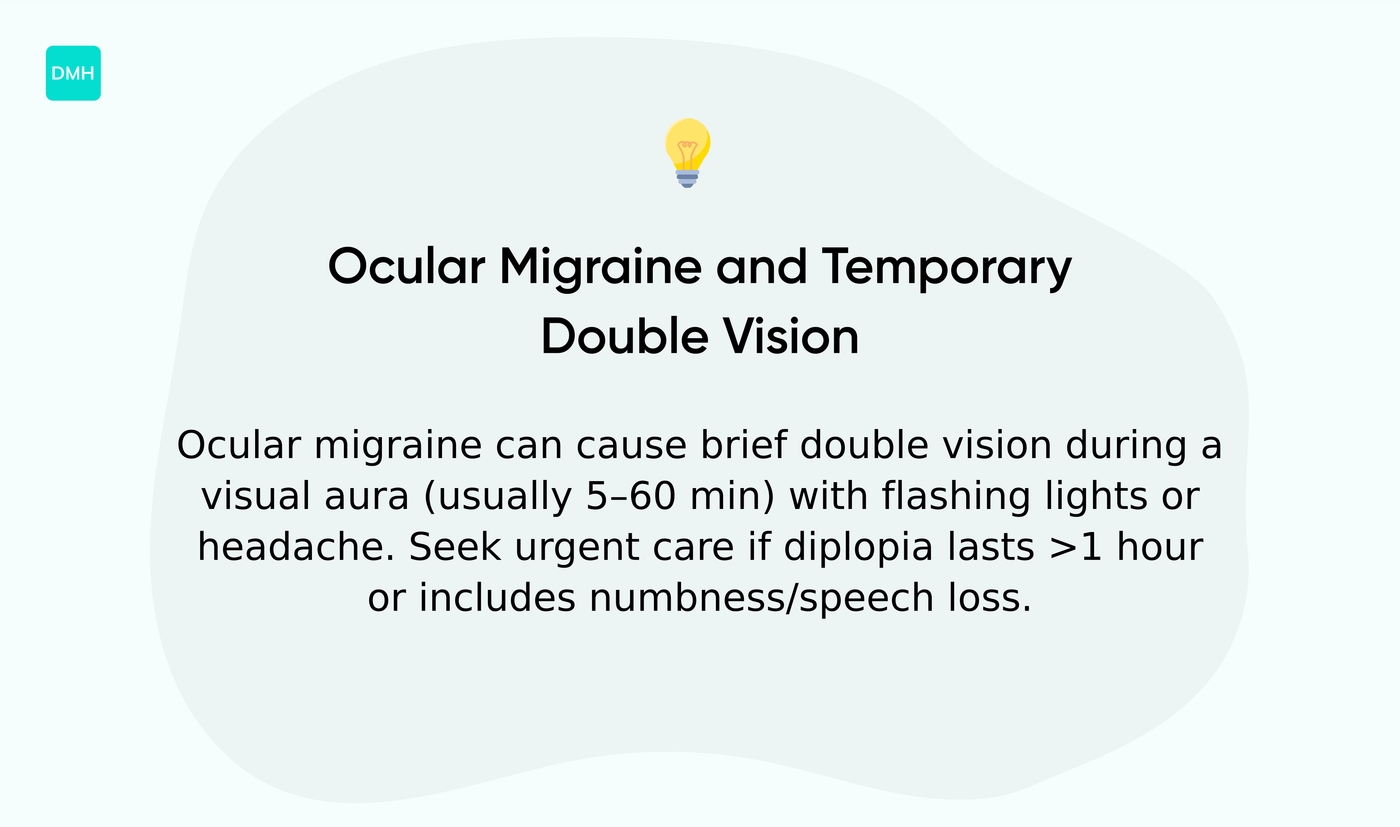
Ocular migraine can cause brief double vision — it’s one of those quirky neurological glitches.
A migraine aura disrupts cortical or brainstem visual pathways and produces visual disturbances. Roughly 20% of people with migraine report an aura; most aura symptoms last 5 to 60 minutes.
Diplopia tied to an aura typically clears as the aura ends, creating temporary double vision that resolves on its own.
Migraine-related diplopia often comes with flashing lights, blind spots, or a headache. If you notice isolated or persistent double vision, or new weakness and speech changes, suspect vascular or nerve causes instead of a migraine.
Urgent evaluation is advised for double vision that lasts longer than an hour or comes with numbness or slurred speech. Read our piece on headaches behind the eyes for related symptoms and context.
Tracking timing and nearby symptoms helps clinicians pinpoint the cause. Note onset, duration, one-eye versus both-eyes, and any dizziness or headache.
If you experience sudden changes, get medical attention promptly so providers can rule out stroke, TIA, or cranial nerve palsy and confirm a transient visual aura or sudden double vision related to migraine.
Medical conditions causing intermittent double vision
Does myasthenia gravis cause temporary or fluctuating double vision
Myasthenia gravis often causes fluctuating double vision — it’s a hallmark of the condition.
Myasthenia gravis produces intermittent weakness of eye muscles. This creates intermittent double vision that worsens with activity and improves with rest.
It can cause sudden temporary double vision when eye muscles fatigue.
Diplopia is usually binocular when both eyes misalign. Symptoms vary across the day and with fatigue.
You may notice brief transient diplopia episodes lasting minutes to hours. Classic myasthenia gravis symptoms include drooping eyelids and variable diplopia.
Blood tests for acetylcholine receptor antibodies help. Single-fiber EMG finds neuromuscular jitter, and treatments include pyridostigmine, steroids, and immune therapies.
Prompt evaluation shortens time to effective treatment. If you see sudden new double vision or other focal signs, seek emergency care.
A neurology or neuro-ophthalmology referral is recommended for testing and treatment.
Can diabetes lead to sudden double vision
Diabetes can cause sudden double vision — it’s a complication that catches many people off guard.
Diabetic neuropathy can damage cranial nerves that move the eyes. That damage often produces binocular misalignment and intermittent diplopia.
Blood sugar swings also reduce visual clarity and trigger temporary double vision. Among causes sudden temporary double vision, diabetes ranks as a vascular and metabolic contributor.
Small case series report microvascular cranial nerve palsies in roughly 8–15% of diabetic patients with acute ocular palsy. This often shows as a sixth nerve palsy double vision or other cranial nerve palsy double vision.
Strict blood sugar control lowers risk and helps recovery. Urgent evaluation is recommended when double vision comes on with weakness, slurred speech, or severe headache.
- Check glucose and hydrate immediately
- Cover one eye if you must move or drive
- See emergency care for neurological signs
- Ask for eye movement testing and vascular workup
Thyroid eye disease and orbital inflammation
Thyroid eye disease can cause eye muscle swelling that leads to sudden temporary double vision.
Autoimmune attack causes orbital tissue inflammation. This creates tight space that limits eye movement, and about 30–50% of people with active disease report intermittent double vision.
CT or MRI often shows enlarged muscles pressing on the globe.
Symptoms start with eye ache, redness, or a gritty feeling. Bulging eyes and restricted gaze can develop as muscles stiffen.
Early evaluation protects vision and lowers the chance of lasting misalignment. Urgent referral to an eye clinic is advised for new or changing double vision.
Seek prompt care if you add severe headache, weakness, or speech changes.
Can convergence insufficiency cause sudden diplopia
Convergence insufficiency causes intermittent double vision with near tasks — think reading, scrolling, or detailed work.
Eye muscles fail to turn inward enough for close focus. That mismatch creates intermittent double vision or transient diplopia during reading.
Symptoms often appear with fatigue and long screen use. Estimates place prevalence around one to five percent in adults, and simple tests measure eye alignment and convergence ability.
Office-based vision therapy improves symptoms in about seventy percent of cases. Early assessment speeds recovery and limits work disruption.
This is a binocular double vision cause, not a monocular eye problem. Children may close one eye or lose place when reading, and quick prism glasses or home exercises often help short term.
If diplopia begins with weakness or speech change, get emergency care.
Can dizziness and double vision occur together and why
Dizziness and double vision often appear together — and it’s not a coincidence.
The inner ear and vision centers share brain pathways that guide balance and eye position. This vestibular system connection means a problem in one area can alter the other.
Vestibular inflammation, ear fluid shifts, or sudden nerve irritation can distort visual input. Vertigo may create false motion signals while eyes try to refocus, causing transient diplopia.
If vertigo affects your sleep, read how to sleep with vertigo for practical tips.
Common causes include:
- Inner ear disorders like vestibular neuritis and Meniere’s disease
- Cranial nerve palsies, especially sixth nerve palsy
- Ocular migraine producing temporary visual aura
- Brainstem or cerebellar lesions from stroke or TIA
People report dizziness with double vision in about 20–40% of acute vestibular cases. Checking balance and eye alignment together speeds accurate diagnosis.
This explains many transient diplopia episodes tied to inner ear or brain problems. Keep a brief symptom log: onset time, duration, accompanying weakness, and headache.
Seek urgent care if double vision starts suddenly with weakness, slurred speech, or severe headache. Prompt evaluation means treatment can begin and risks can be reduced quickly.
What causes sudden double vision in one eye versus both eyes
Sudden double vision can come from either the eye itself or from how your eyes work together.
Monocular double vision occurs with one eye open. It usually traces to the cornea, lens, or refractive error.
Corneal scratches, scarring, dry spots and early cataract create overlapping images. A corneal abrasion often improves within 48–72 hours with basic care.
For a scratched cornea, see guidance to heal a scratched eye naturally and protect vision.
Binocular double vision requires both eyes open. It points to eye muscle misalignment or nerve signals in the brainstem.
Cranial nerve palsies, including sixth nerve palsy, cause sudden misalignment and horizontal double vision. Transient ischemic attacks and stroke can present with intermittent diplopia and other focal signs like slurred speech.
Noting whether double vision clears when you close one eye speeds diagnosis. Systemic conditions matter: myasthenia gravis causes fluctuating double vision, diabetes can injure cranial nerves, and ocular migraine produces brief visual distortions.
Assess symptoms: headache, dizziness, weakness, or pupil changes raise urgency. Timely imaging and eye movement testing identify neurological causes.
Urgent evaluation is advised for new double vision with any neurologic symptom. Seek emergency care if symptoms start suddenly or worsen.
How long does transient diplopia usually last
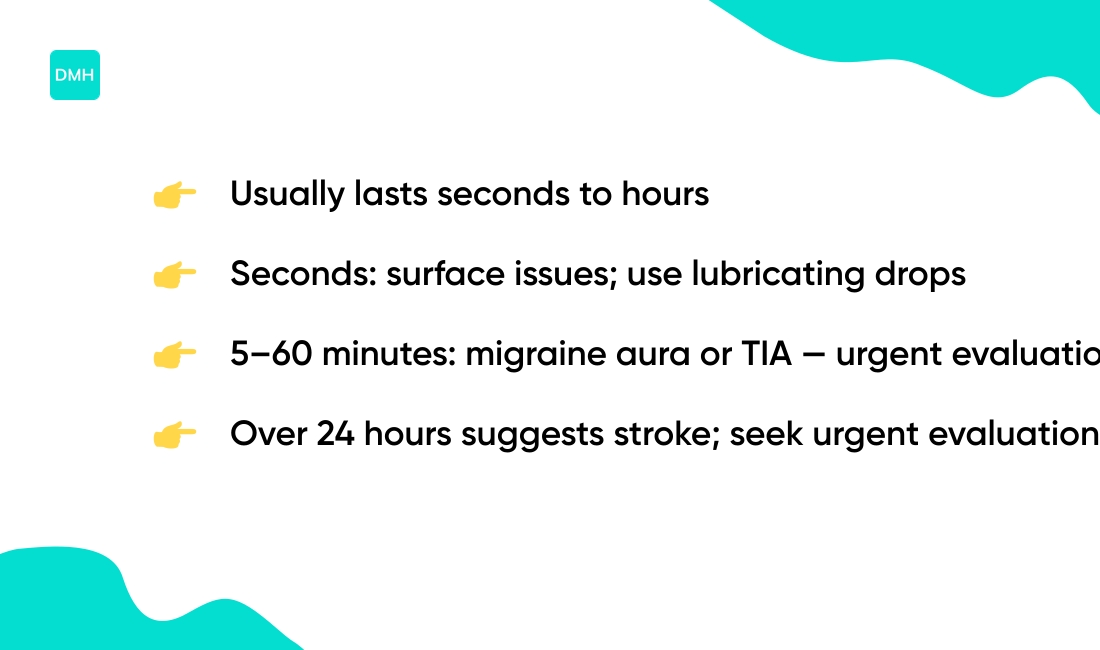
Transient diplopia most often lasts seconds to hours, and duration helps point to the cause.
Brief episodes under a minute often come from the eye surface or brief visual cortex disturbances. Blinking or a drop often clears these short flashes.
Ocular migraine auras with double vision usually run from five to sixty minutes. Vision often returns gradually as the aura ends.
TIA symptoms and other vascular events can cause double vision that lasts minutes to a few hours, rarely up to 24 hours. Persistent deficits beyond 24 hours raise concern for stroke or structural injury.
Alcohol, sedating medications, dehydration, and severe fatigue tend to cause diplopia that lasts several hours while the body clears the substance or recovers.
Neuromuscular conditions such as myasthenia gravis produce fluctuating double vision that worsens with activity and may change day to day. Cranial nerve palsies often persist for weeks to months; a sixth nerve palsy commonly improves over about three months.
| Duration | Common Causes | Action Needed |
|---|---|---|
| Seconds to 1 minute | Dry eye, blinking, fatigue | Monitor; use lubricating drops |
| 5–60 minutes | Migraine aura, TIA | Seek urgent evaluation |
| Hours | Alcohol, medication, dehydration | Rehydrate; seek care if persistent |
| Days to weeks | Cranial nerve palsy, myasthenia gravis | Urgent neurology referral |
Seek emergency care if double vision appears with weakness, slurred speech, severe headache, or sudden dizziness. If your double vision lasts more than 24 hours, recurs, or interferes with driving, get urgent evaluation.
Documenting how long each episode lasts and any accompanying signs is recommended. A clear timeline speeds diagnosis and gets you the right care quickly.
What tests are used to diagnose sudden double vision
Diagnosing sudden double vision needs focused tests to find eye, nerve, or brain causes.
Clinicians use eye movement testing to check alignment and tracking. A focused neurological exam looks for gaze palsy, facial weakness, or speech trouble.
Imaging like MRI or CT identifies stroke, tumor, or hemorrhage. Basic blood work screens for infection, inflammation, and glucose problems.
Specialized vision assessments include prism tests, diplopia charts, and auto-refraction. Electrophysiology tests, such as repetitive nerve stimulation or single-fiber EMG, help confirm myasthenia gravis.
CT scans provide fast answers in the emergency room and detect acute bleeding. MRI offers higher sensitivity for small ischemic lesions that cause transient diplopia or TIA double vision symptoms.
Orthoptic evaluation measures convergence and binocular function for intermittent double vision and convergence insufficiency.
If diabetes is present, check finger-stick glucose and HbA1c to link diabetes double vision causes to neuropathy. Rapid imaging within 24 hours improves diagnosis and guides treatment choices.
Neuro-ophthalmology referral is often needed if testing doesn’t show a clear cause. Urgent evaluation is recommended for sudden double vision.
Call emergency services if you have weakness, speech trouble, severe headache, or pupil changes.
You’ll also like: How Long After Pink Eye Can I Wear Contacts
When is double vision an emergency
Sudden double vision with focal neurologic signs is an emergency — no exceptions.
A sudden change in vision plus headache, weakness, or speech problems points to a vascular or intracranial cause. Seek urgent care without delay.
Look for these red flag symptoms:
- Sudden double vision with a severe or worsening headache
- Weakness or numbness on one side of the body
- Slurred speech or trouble understanding speech
- Unequal pupils or a pupil that doesn’t react
- Recent head trauma or a hard blow to the head
- Sudden imbalance, severe dizziness, or a fall
- Loss of consciousness or a new seizure
If your vision clears but you had any red flag, go to the emergency room to rule out stroke or TIA. If your headache is worse when lying down, read more about causes headache worse when lying down.
Rapid assessment can change outcomes; prompt imaging and neuro exam catch treatable causes. If the double vision came and went, review guidance on sudden double vision that goes away and seek care if any red flag appears.
Read also: Pansinusitis: Definition, Causes and Treatment
What should I do immediately if I suddenly see double
Sudden double vision is an emergency until proven safe. It can signal stroke, TIA, or cranial nerve palsy.
Call emergency services if you have weakness, slurred speech, severe headache, or confusion.
Here’s your action plan:
- Stop moving and sit down to avoid falls
- Cover one eye with a hand or patch to make vision single for safety
- Call emergency services if vision started suddenly with other red flags
- Note the exact time of onset and any other symptoms
- Take a quick photo of your eyes and gaze for clinician review
- Don’t drive; arrange safe transport to the ER or urgent care
- Contact your eye doctor for non-urgent cases that lack red flags
Check your blood sugar if you have diabetes. Low glucose can cause transient diplopia and dizziness.
Gather medications and medical history to tell clinicians. Note recent head injury or new medications, and emergency evaluation is recommended for any pupil change or sudden severe headache.
Documenting the exact time helps clinicians prioritize care. If symptoms resolve but recur, schedule an urgent clinic visit the same day.
If transport is delayed, stay seated and keep your head supported.
Act quickly; time matters for vascular causes.
You’ll also like: Sinus Infection Vs Allergies
Educational notice: This content is provided for informational and educational purposes only and is not intended as medical advice. Always consult a qualified healthcare professional for medical concerns.