Leg pain can strike anyone, anytime.
You might wonder if it’s just a cramp or something more serious.
Knowing when to worry about leg pain can save your life.
This guide walks you through warning signs, emergency symptoms, and when to call your doctor.
When should I worry about leg pain?
Watch for warning signs without delay. Persistent pain lasting more than seven days needs a doctor’s evaluation.
Sudden severe pain with swelling, warmth, or redness can signal a blood clot. Leg pain plus shortness of breath or chest pain demands emergency care — if you have those signs, call 911 immediately.
One-sided calf tenderness that doesn’t improve with rest often means deep vein thrombosis. About 1 in 1,000 people develop DVT each year, and rapid swelling with warmth over hours needs urgent imaging and treatment.
Inability to move the leg or bear weight after injury suggests fracture or tendon rupture. Persistent leg numbness and tingling point to nerve compression or neuropathy.
Does your leg hurt when you walk or climb stairs? Pain that limits walking or causes cramping during activity may indicate peripheral artery disease. Night pain or restless legs that wake you can signal circulation or mineral issues.
Risk factors raise concern: recent surgery, cancer, pregnancy, estrogen use, smoking, or long travel increase your risk. (Honestly, trusting your instincts matters here.) If pain feels off, get checked.
For sudden severe signs or suspected clot, seek immediate care. For ongoing symptoms, schedule a medical visit.
Emergency signs of leg pain requiring immediate care
Leg pain with shortness of breath or chest pain
Leg pain plus shortness of breath or chest pain may signal pulmonary embolism. A blood clot in the leg can travel to the lung — and that’s a life-threatening situation.
Common blood clot in leg symptoms include calf pain, swelling, warmth, and redness. If you develop breathlessness, fast pulse, fainting, or chest tightness, call 911 now.
Arrive at the emergency room for immediate assessment and imaging. Doctors use ultrasound and CT scans to confirm a clot.
Pulmonary embolism causes about 100,000 deaths in the U.S. each year. Risk rises after surgery, long travel, cancer, pregnancy, or hormone pills.
If you have leg pain with swelling, seek urgent care. Don’t drive yourself to the hospital. Stay seated and avoid massaging the leg — you don’t want to dislodge the clot.
Sudden severe leg pain with swelling
Treat sudden severe pain with swelling as a possible deep vein thrombosis (DVT). Get assessed right away.
Look for common blood clot symptoms: one-sided calf tenderness, rapid swelling, skin warmth, and redness. You may feel a constant ache rather than a cramp.
DVT occurs in about one per 1,000 people yearly. Risk rises after surgery, long travel, cancer, or hormone therapy.
Call emergency services or go to the nearest emergency room. Clinicians use ultrasound and blood tests to confirm a clot and start anticoagulation.
If you notice leg pain with shortness of breath or chest pain, get immediate help. Don’t wait — seek urgent care now.
Inability to move leg or bear weight
Complete loss of mobility or inability to bear weight suggests a fracture or major tendon injury. Visible bone or exposed tendon means immediate action.
A loud popping sound at injury time raises concern for rupture. You must not put weight on the limb.
Call emergency services or go to the nearest ER right away. Exposed bone needs a sterile cover and quick transport. Stop heavy bleeding with firm pressure.
Rapid imaging and orthopedic assessment prevent long-term damage and speed recovery. These are top leg pain emergency signs alongside sudden severe leg pain and leg pain after injury.
Keep the limb still, avoid unnecessary movement, and seek care without delay.
What are the symptoms of a blood clot in the leg?
How can I tell if calf pain is a blood clot?
Watch for a small set of clear signs that point to a blood clot in the calf. Look for persistent calf tenderness and check for unilateral leg swelling that doesn’t improve with rest.
A clot often shows warmth to touch and local redness. The pain feels deep and steady — it can worsen when you stand or walk.
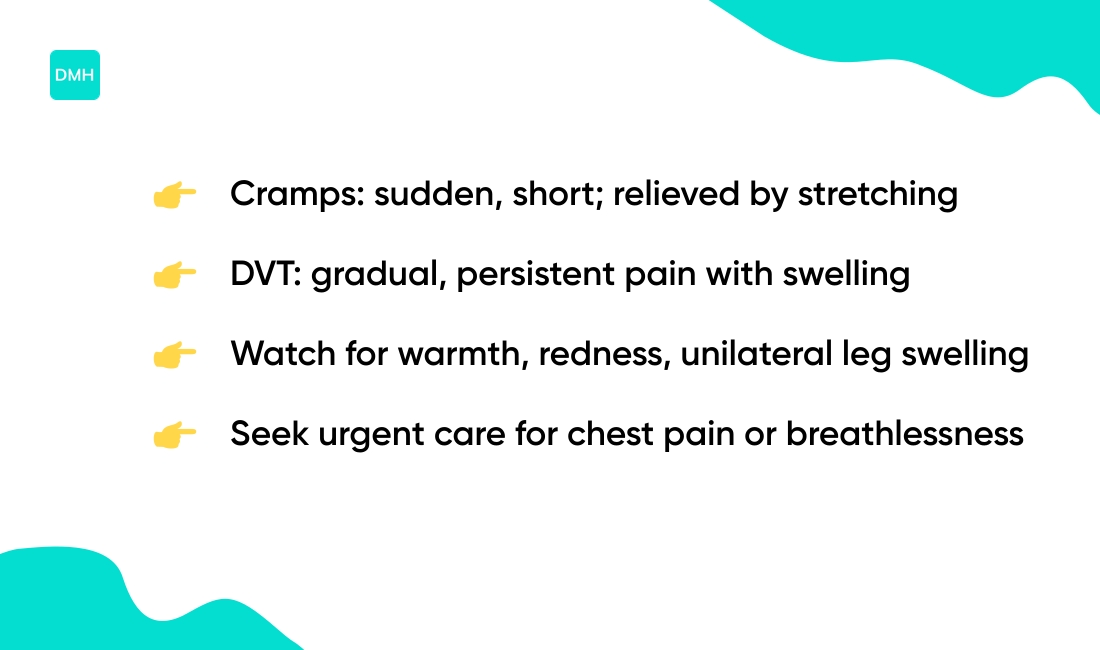
Muscle cramps are sudden and brief. Stretching or rest usually eases them. DVT affects about 1 to 2 people per 1,000 each year.
If swelling or warmth lasts more than 24 hours, seek testing. Get a duplex ultrasound to confirm diagnosis. Seek immediate care if you develop shortness of breath or chest pain.
Is leg pain with swelling a red flag?
Yes, unilateral swelling with leg pain is urgent. Pain plus swelling in one leg with redness or warmth often signals a serious problem.
That pattern suggests deep vein thrombosis or skin infection. Blood clot in leg symptoms include calf tenderness, swelling, and warmth.
Doctors use Doppler ultrasound to check veins and a D-dimer blood test. Red, hot, and swollen skin fits cellulitis leg pain symptoms and needs antibiotics.
Seek evaluation within hours for these signs. Treatment may include anticoagulants for clots or antibiotics for infection.
Early care reduces complications and speeds recovery. Call 911 if you get sudden breathlessness, chest pain, or fainting.
This helps you know when to worry about leg pain and act fast. See your doctor today if your leg is red, warm, and painful.
Muscle cramp vs blood clot: key differences
Muscle cramps start suddenly and ease within seconds to a few minutes. They often respond to stretching, massage, or hydration — these are short-lived cramps.
Cramps commonly follow exercise or night-time immobility. You’ll rarely see lasting swelling or skin changes in these cases.
| Feature | Muscle Cramp | Blood Clot (DVT) |
|---|---|---|
| Onset | Sudden, brief | Gradual, persistent |
| Duration | Seconds to minutes | Hours to days |
| Swelling | None or minimal | Visible, one-sided |
| Skin changes | None | Warmth, redness |
| Relief | Stretching, massage | No improvement with rest |
Blood clots cause persistent pain that worsens over hours or days. You may feel constant tenderness in the calf — plus unilateral leg swelling.
Clot symptoms include warmth, redness, and visible skin color changes. The leg may feel heavy and stay swollen despite rest.
Knowing when to worry about leg pain means noting persistent swelling, redness, or warmth. Seek prompt evaluation for constant, swollen, or warm calf pain.
If symptoms persist, get checked by a clinician. Sudden shortness of breath or chest pain warrants a 911 call.
Serious leg pain symptoms that need a doctor
Leg pain when walking or claudication
Cramping or fatigue that appears with activity and eases only with rest is a red flag. Leg pain when walking is often called claudication — it signals reduced blood flow to leg muscles.
Claudication warrants prompt attention because it can indicate peripheral artery disease. You may need a vascular evaluation.
Common tests include an ankle-brachial index and arterial ultrasound. Are you wondering when to see a doctor for leg pain? Seek care for activity-limited pain that recurs.
Risk factors raise concern: smoking, diabetes, high cholesterol, and age. If walking distance drops or pain wakes you, get checked quickly.
Leg numbness and tingling symptoms
Persistent leg numbness, pins-and-needles, or weakness often signals nerve compression. Watch for ongoing numbness and growing weakness.
Any numbness that lasts several days needs evaluation. Sciatica shows shooting pain down the leg and localized numbness — these are common nerve compression signs.
Peripheral neuropathy causes burning sensations, pins-and-needles, and balance trouble. Read how long you can live with neuropathy for prognosis and impact.
If numbness pairs with swelling, redness, or warmth, suspect a blood clot or infection. Calf pain blood clot often feels tender and hot.
Seek care if numbness follows trauma, worsens, or limits walking. Neurological assessment is essential when symptoms persist.
Red, hot, and swollen leg signs
Treat a red, hot, swollen leg as a warning sign. If you wonder when to worry about leg pain, watch for swelling, warmth, or redness.
Redness, heat, and swelling often mean cellulitis. Cellulitis leg pain symptoms include fever and spreading redness.
These signs may indicate venous insufficiency or a blood clot. A blood clot can cause sudden one-leg swelling and constant calf pain.
Early evaluation prevents complications. (Antibiotics can stop spreading infection in under a week.)
Watch for red, hot, swollen skin or fever. If you notice those signs, seek urgent care or see your doctor within 24 hours.
Leg pain at night or restless legs
Leg pain at night or restless legs wakes you and ruins sleep. You may feel cramps, crawling, or a deep ache.
Common causes include venous problems, low minerals, and poor circulation. Chronic venous insufficiency can cause throbbing that worsens when you lie down.
Peripheral artery disease causes cramping when walking and may later disturb rest. Low iron shows up in roughly 20 to 30 percent of restless legs cases.
We recommend checking iron, magnesium, and kidney function. Duplex ultrasound is helpful if you have swelling, redness, or persistent pain.
Persistent nighttime cramps deserve medical review within two weeks. If you wonder when to worry about leg pain, watch for swelling, redness, warmth, or breathlessness.
Calf pain with warmth and swelling raises concern for a blood clot. Try nightly stretching and hydration for mild cramps, but schedule an evaluation if symptoms persist.
Common causes of leg pain and when they’re serious
Peripheral artery disease leg pain
Peripheral artery disease (PAD) causes leg pain during walking. It affects about 900,000 people yearly.
Narrowed arteries reduce blood flow and cause cramping, heaviness, or tightness during activity. Risk factors include smoking and diabetes, high blood pressure, and high cholesterol.
We recommend ankle-brachial index testing for suspected PAD. Early diagnosis saves limbs by preventing ulcers and amputations.
An ankle-brachial index below 0.90 confirms PAD. Quit smoking and control blood sugar to slow disease progression.
Prompt treatment improves walking and quality of life. When should you see a doctor for leg pain? Seek care for cramping that limits walking or wounds that heal poorly.
Sciatica leg pain symptoms
Sciatica presents as radiating leg pain that starts in the lower back and tracks down the buttock and leg. Pain often follows a nerve path into the calf or foot.
This pattern helps you know when to worry about leg pain. Numbness or tingling appears in a specific dermatome — pins-and-needles in the outer foot points to S1, while numbness on the top of the foot suggests L5.
Sciatic nerve compression can cause sharp, burning pain or a dull ache. Severe weakness or loss of ankle reflex needs prompt imaging and specialist referral.
Persistent numbness beyond two weeks deserves an MRI and a neurologic exam. If you suspect nerve damage, read about how long damaged nerves take to heal for realistic timelines and recovery tips.
See a doctor if pain worsens, you lose strength, or bowel and bladder control changes. Act promptly for best recovery.
Leg pain after injury: muscle strain vs fracture
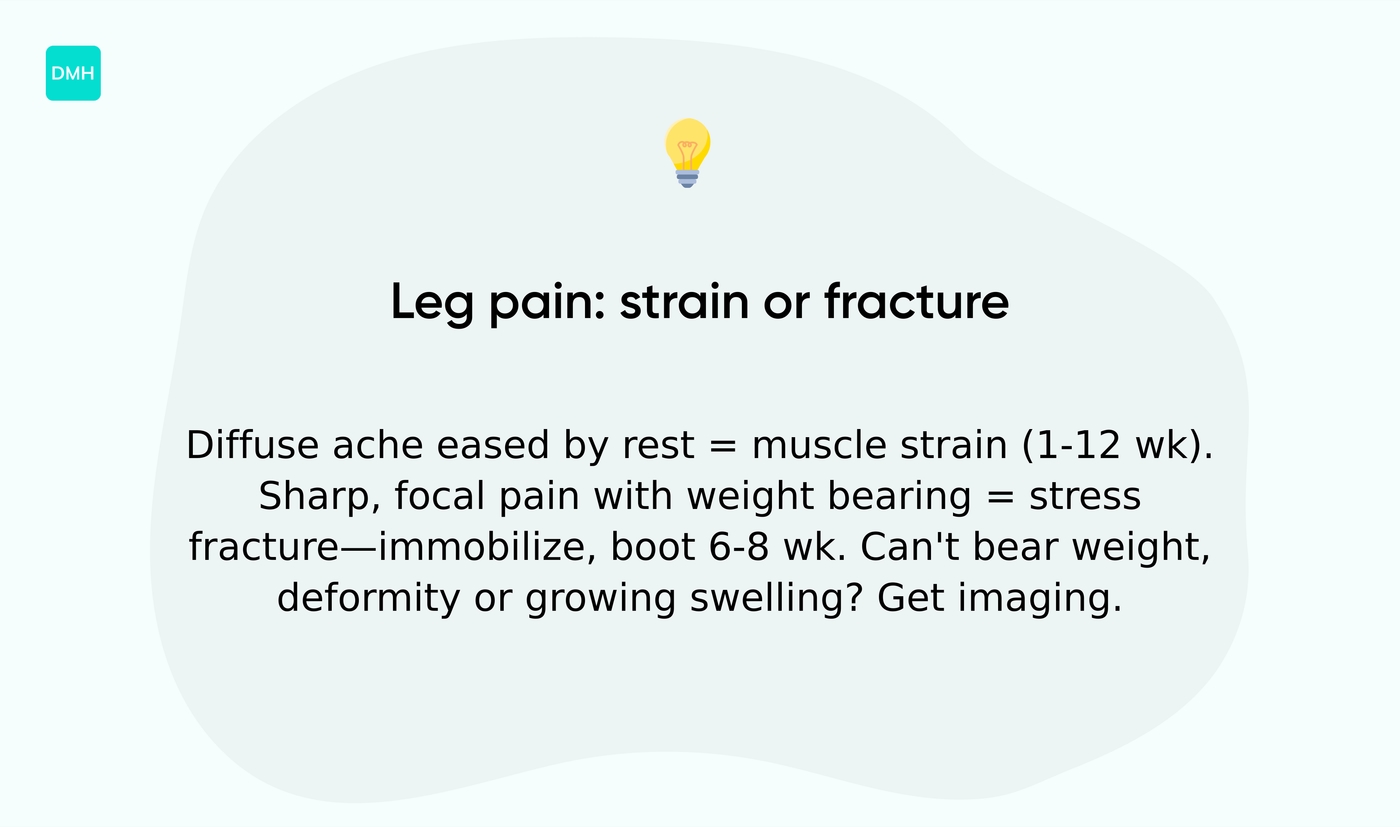
Look for clear signs that separate a pulled muscle from a fracture. A pulled muscle gives a diffuse ache that eases with rest and gentle movement.
A stress fracture creates sharp, focal pain that worsens with impact or weight bearing. Mild strains heal in 1–3 weeks, moderate strains in 4–6 weeks, and severe strains may take up to 12 weeks.
Read more about typical timelines at how long a pulled muscle takes to heal.
Stress fractures often need immobilization and rest. Most heal in 6–8 weeks with a boot and reduced activity.
If you can’t bear weight, notice visible deformity, or have growing swelling, pursue imaging right away. Early X-ray or MRI helps you recover faster when a fracture is likely.
For strains, use ice, short rest, progressive stretching, and pain control. If pain limits walking, see your clinician. Trust persistent focal pain or inability to bear weight — and act quickly.
You’ll also like: Things to Avoid with Degenerative Disc Disease
Pregnancy leg pain: when to worry
Leg cramps are common in pregnancy. Up to 50% of pregnant people report them. These cramps are brief and often happen at night — stretching and hydration often help.
But watch for red flags. Sudden severe swelling, persistent calf pain, or one-leg swelling suggest a problem.
Warmth, redness, or increasing pain can mean a clot. Persistent calf pain with swelling warrants same-day evaluation.
Preeclampsia shows high blood pressure and sudden weight gain. Watch for signs of preeclampsia such as severe headache or vision changes.
If you notice those, call your obstetrician or go to the emergency room. For mild cramps, try gentle calf stretches, hydrate, and walk a few minutes each hour.
If you’re unsure when to see a doctor for leg pain, contact your provider for peace of mind.
You might also like: How To Tell If Back Pain Is Muscle Or Disc
What to do for leg pain: home care vs medical treatment
We recommend home care for mild leg pain. Learn when to worry about leg pain so you can act quickly.
Use rest and ice for acute injuries and swelling during the first 48 hours. Apply heat for stiff muscles and chronic tension.
Gentle massage helps tight muscles — but avoid massage if you suspect a blood clot.
Here’s when to pursue testing and imaging:
- Get a duplex ultrasound for unilateral swelling, warmth, or persistent calf tenderness
- Order CT angiography when leg pain occurs with shortness of breath or chest pain
- Use X-ray for suspected fractures and MRI for nerve or soft tissue injury
Early ultrasound prevents serious delays in treatment. Watch for a red, hot, swollen leg or sudden inability to bear weight.
Call 911 for leg pain with shortness of breath or chest pain. Seek urgent care within hours for sudden severe pain with rapid swelling.
See your doctor within a week for persistent aching, numbness, or leg pain when walking.
Prevent problems by staying active with daily walking and calf stretches. Here’s what else you can do:
- Wear supportive shoes
- Change position hourly when seated
- Manage weight and stay hydrated
- Avoid smoking
- Control diabetes or high blood pressure
Basically, knowing when to worry about leg pain comes down to spotting warning signs early and acting fast. (Your legs carry you through life — treat them well!)
You might also like: How To Heal A Torn Meniscus Naturally
Educational notice: This content is provided for informational and educational purposes only and is not intended as medical advice. Always consult a qualified healthcare professional for medical concerns.