Low blood pressure in women means the heart pumps blood at levels below what the body needs.
Hypotension describes systolic and diastolic readings low enough to reduce organ perfusion.
Normal blood pressure sits near 120/80 mmHg for adults.
Many healthy women run lower, such as 100/60 mmHg, with no symptoms and no harm.
What is low blood pressure in women
Readings under 90/60 mmHg often count as low blood pressure and become concerning if symptoms appear. Readings near 70/40 mmHg can cause shock and need urgent care.
A sudden fall of 20 mmHg systolic from baseline can trigger fainting and organ stress.
Symptoms guide risk more than a single number. Dizziness, fainting, chest pain, confusion, or severe shortness of breath mean you need immediate evaluation. Tracking symptoms with repeated measurements gives the clearest signal.
We advise measuring blood pressure lying and standing, noting symptoms, and sharing trends with your clinician. If you feel faint or your systolic drops below 90 mmHg with symptoms, seek medical help right away.
Quick actions you can take include extra fluids, added dietary salt if advised by a clinician, compression stockings, and slow position changes. These steps often raise readings and reduce dizziness, but medical review is required for persistent or severe hypotension.
What blood pressure is considered dangerously low for a woman
A blood pressure reading is dangerously low for a woman at or below 90/60 mmHg when it causes symptoms. Readings near 70/40 mmHg often indicate poor organ perfusion and require urgent care.
A sudden systolic fall of 20 mmHg can trigger complications. Any abrupt 20 mmHg drop needs immediate assessment and monitoring.
Watch for strong warning signs: fainting, chest pain, severe breathlessness, confusion, or cold clammy skin. These are red flags for bad outcomes.
Here’s the thing — a healthy 30-year-old with 85/55 mmHg plus dizziness should get evaluated within hours. A pregnant woman with a sudden drop needs faster care.
Learn more about specific thresholds and expert guidance at Ubie Health’s dangerous low blood pressure guide. If you have alarming signs, call emergency services or go to the ER right away.
We recommend documenting your readings and symptoms. Bring those notes to your clinician for faster diagnosis and safer treatment.
What are the symptoms of low blood pressure in females
Dizziness and lightheadedness
Dizziness and lightheadedness occur when low blood pressure reduces blood flow to the brain. Orthostatic drops cause sudden vertigo in many women.
A systolic fall of 20 mmHg or readings below 90/60 mmHg commonly trigger these symptoms. Tracking symptoms beats fixating on one number, because patterns reveal causes.
You may get vertigo, unsteadiness, blurred vision, or a near-faint feeling when standing quickly. If vertigo disrupts sleep, read our guide on how to sleep with vertigo for practical tips.
Measure your blood pressure sitting and standing, note symptom timing, and share results with your clinician.
Fainting and syncope
Fainting can indicate a dangerous low blood pressure for a woman and needs urgent attention. We watch for systolic drops of 20 mmHg or readings under 90/60 mmHg when fainting happens.
A reading near 70/40 mmHg often causes loss of consciousness.
Vasovagal syncope causes roughly half of fainting episodes and often follows triggers like pain, fear, or standing too fast. POTS and orthostatic hypotension also cause recurrent syncope in women and link to BP drops when standing.
If you faint, lie flat and raise your legs to restore brain blood flow. Seek emergency care if fainting follows chest pain, severe breathlessness, confusion, pale cool skin, or prolonged unconsciousness.
Actually, a single fainting spell with low readings merits immediate evaluation by a clinician to rule out dangerous hypotension and organ underperfusion.
Fatigue and weakness
Chronic low blood pressure cuts oxygen delivery to muscles and organs. That causes low perfusion and reduced cellular oxygen, producing persistent tiredness, low energy, and physical weakness.
- Muscles need oxygen to make ATP for movement; low blood pressure limits that supply.
- Low hemoglobin or low red blood cell count can reduce oxygen transport by about 20–30% in moderate anemia.
This pattern is a clear form of hypotension that affects daily function and exercise tolerance. Treating underlying causes — dehydration, anemia, or medication effects — gives the fastest relief for most women.
If you notice sudden severe weakness or worsening fatigue, seek medical care right away.
Blurred vision and confusion
Blurred vision and confusion signal reduced brain blood flow from low blood pressure. Poor cerebral perfusion reduces oxygen to the retina and cortex.
You may have trouble concentrating, notice mental fog, and experience brief headaches. You may see temporary vision changes like blurring or dimming.
Even a systolic drop of 20 mmHg can produce these signs. Readings below 90/60 mmHg often bring symptoms.
Plus, quick recognition prevents harm. I once reviewed a case where a patient’s systolic fell 25 mmHg — she had fog and blurred vision for five minutes before fluids helped.
Low red blood cell counts can make symptoms worse. Read about anemia and headaches for more on overlap.
We advise urgent care for sudden confusion or vision loss. Seek care if symptoms last more than a few minutes or worsen.
Chest pain and rapid heartbeat
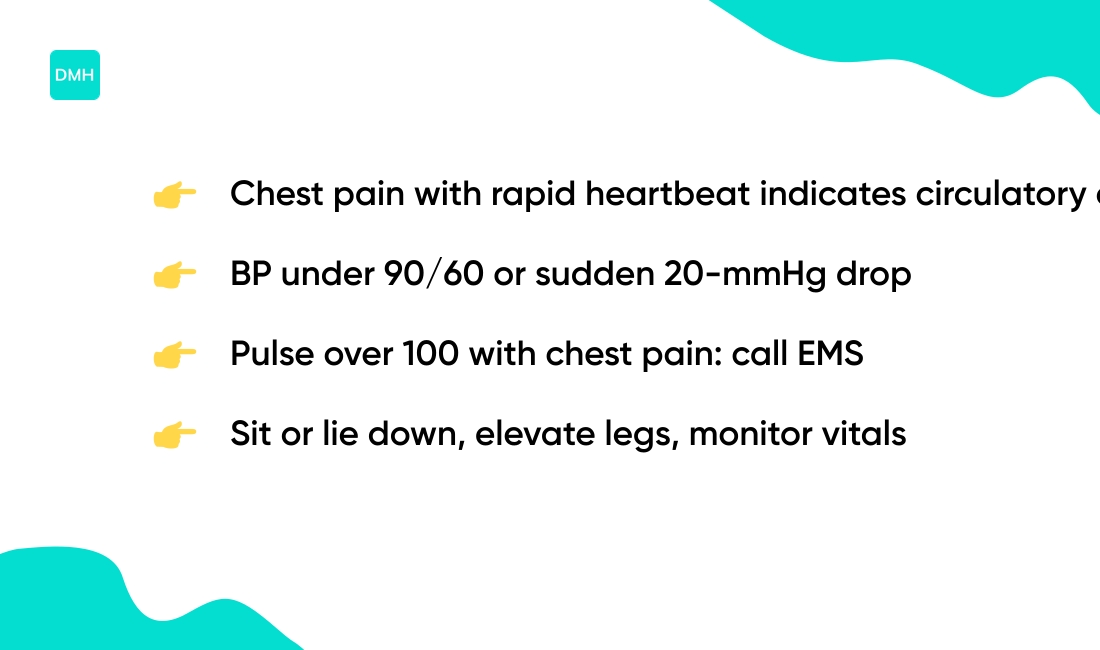
Chest pain with a rapid heartbeat often means your heart struggles to keep circulation steady. You feel palpitations, chest pressure, shallow breathing, and lightheadedness.
Blood pressure under 90/60 mmHg with these signs raises concern. Critical readings near 70/40 mmHg demand urgent care.
A sudden systolic drop of 20 mmHg can reduce organ perfusion.
What should you do if your pulse tops 100 bpm with chest pain? Call emergency services or go to the ER. Read guidance on when to go to the hospital for chest pain for specific red flags and actions.
Sit or lie down and raise your legs while help arrives. Measure blood pressure and pulse every 5 minutes if you can, and note worsening pain or fainting. A woman with BP 82/50 and pulse 120 bpm needs immediate transport.
We advise urgent evaluation for chest pain plus tachycardia. In my opinion, a quick ECG and blood tests save lives.
What causes low blood pressure in women
We see many clear causes of low blood pressure in women. Here’s a breakdown:
| Cause | Mechanism | Example |
|---|---|---|
| Hormonal shifts | Pregnancy and menstrual hormones can lower pressure | Progesterone relaxes blood vessels |
| Medications | BP drugs, antidepressants, diuretics lower BP | Double dose of diuretic drops BP fast |
| Heart problems | Bradycardia, valve disease reduce output | Heart attack lowers pump function |
| Dehydration | Low blood volume from fluid loss | Severe vomiting or diarrhea |
| Severe infection | Sepsis causes wide vessel dilation | Bloodstream infection triggers shock |
| Autonomic disorders | POTS and vasovagal syncope cause sudden drops | Standing triggers 30 bpm heart rate rise |
A quick medication review often reveals fixable causes. Stopping a double dose of a diuretic can bring a BP rise within days.
Check your readings lying and standing for orthostatic drops. Drink fluids and add moderate salt if your clinician approves.
See your doctor for a med audit and cardiac check if you have repeated fainting or chest pain.
Go to the ER if you have severe dizziness, confusion, pale skin, or a sudden BP under 90/60 with symptoms.
Low blood pressure conditions specific to women
Low blood pressure during pregnancy first trimester
Blood pressure often falls in early pregnancy due to hormonal vasodilation and expanding blood volume. Progesterone and relaxin relax blood vessels, which can lower systolic pressure by about 5–15 mmHg.
Normal adult BP centers near 120/80 mmHg. Readings around 90/60 can be benign if you feel fine.
Blood volume rises roughly 30–50% by mid-pregnancy, which helps placental flow but can worsen lightheadedness. Watch for these warning signs:
- Fainting, severe dizziness, chest pain, or confusion
- Rapid heart rate, cold clammy skin, or heavy bleeding
- Significant urine output drops
Critical thresholds include symptomatic readings near 70/40 or sudden 20 mmHg drops. You should track symptoms and check BP at home.
Contact your provider immediately if red flags appear.
Postpartum low blood pressure
Postpartum low blood pressure can follow delivery and often reflects normal fluid shifts, but it can also signal dangerous bleeding that needs urgent care. Readings under 90/60 mmHg with symptoms meet the medical definition of hypotension.
Critical values near 70/40 mmHg or a sudden systolic drop of 20 mmHg increase risk of organ underperfusion. Watch for dizziness, fainting, rapid pulse, cold clammy skin, heavy vaginal bleeding, and altered consciousness.
I’d say a postpartum hemorrhage can drop systolic pressure from 120 to 70 in minutes — emergency records show that pattern regularly. We advise immediate ER transfer for low BP plus heavy bleeding, fainting, chest pain, or severe breathlessness.
While waiting for help, lie flat with legs raised, apply firm pressure to visible bleeding, and have someone call emergency services. IV fluids and blood replacement may be required rapidly.
Orthostatic hypotension in women
We define orthostatic hypotension as a drop of 20 mmHg systolic or 10 mmHg diastolic within 3 minutes of standing. This measurable change explains many cases of sudden lightheadedness and fainting after standing.
Women show higher rates of this condition because of hormonal shifts, lower average blood volume, and autonomic differences. POTS and vasovagal responses affect women more often; POTS cases are roughly 80% female.
Small drops cause symptoms when cerebral blood flow falls fast.
Dizziness on standing links directly to reduced perfusion of the brain. You may feel blurred vision, unsteadiness, or near-fainting as blood pools in the legs.
Measuring BP lying down and after 1 and 3 minutes standing improves diagnosis. If you pass out, have chest pain, or feel confused, seek urgent care.
Simple steps help: sit, raise your legs, hydrate, and get a medical evaluation if symptoms recur.
POTS and vasovagal syncope in women
We find POTS and vasovagal syncope affect women far more than men. About 80% of POTS patients are female, usually aged 15–50.
POTS causes a heart rate rise of ≥30 bpm within 10 minutes of standing. That rise can pair with a rapid blood pressure fall and dizziness.
Vasovagal syncope triggers a reflex drop in heart rate and blood pressure. A systolic fall of ~20 mmHg often causes fainting.
Clinicians under-recognize these patterns. I’ve seen patients told their symptoms were anxiety before proper autonomic testing.
If you have repeated fainting or BP drops when standing, seek evaluation for orthostatic hypotension and tilt-table testing. Talk with your doctor about treatment options and safety steps you can use right away.
You might also like: What Vitamin Deficiency Causes You To Crave Salt
When should a woman go to the ER for low blood pressure
Go to the ER immediately if low blood pressure comes with red-flag symptoms or signs of failing organ perfusion. Readings under 70/40 mmHg or a sudden drop of 20 mmHg systolic with symptoms need urgent evaluation.
Which symptoms demand emergency care?
- Sudden fainting or loss of consciousness
- Chest pain with lightheadedness or an uneven pulse
- Severe breathlessness or trouble catching your breath
- Confusion, slurred speech, or sudden severe headache
- Organ perfusion failure signs: very low urine output, cold clammy skin, or very weak pulse
These signs point to dangerously low blood pressure for a woman and to possible shock or cardiac problems. Quick ER evaluation saves lives in these scenarios.
Low blood pressure dizziness in women can be benign, but the signs above are not.
We urge you to call 911 or go to the nearest emergency department for any of those symptoms. If you end up admitted, here’s a practical guide on how to get admitted to the hospital overnight that explains next steps and what to expect.
If you’re unsure, err on the side of prompt care.
You’ll also like: How Long Does A Vitamin B12 Shot Last
How can women raise low blood pressure naturally
We recommend simple, evidence-backed steps to raise low blood pressure naturally. Low blood pressure, or hypotension, often responds to lifestyle changes.
- Drink more water — Aim for 2–3 L fluids daily to boost blood volume. Fluids act as fuel for circulation.
- Increase salt safely — A small sodium increase can raise systolic pressure by 5–10 mmHg. Ask your clinician before changing intake.
- Compression stockings — Wear 20–30 mmHg knee-highs to reduce blood pooling in the legs.
- Change position slowly — Sit up for 30 seconds before standing. Do leg pumps first.
- Eat small, frequent meals — Prevent post-meal pressure drops. Favor protein and complex carbs.
- Review medicines with your doctor — Some antidepressants, diuretics, and BP drugs lower pressure.
- Use counter-maneuvers — Leg crossing or squatting can halt lightheadedness during a drop.
Hydration and gradual behavior changes help most women quickly. Dangerous low blood pressure for a woman often means systolic below 90.
Seek care if you faint or show confusion.
If you take sleep medications, check interactions. See what to take to sleep if you have high blood pressure for guidance.
Track readings and note drops of 20 mmHg systolic on standing. Talk to your clinician for tailored dosing or short-term medicines to raise pressure safely.
You might also like: Foods To Avoid With Svt
Educational notice: This content is provided for informational and educational purposes only and is not intended as medical advice. Always consult a qualified healthcare professional for medical concerns.