Mouth ulcers can really put a damper on your day.
You know that sharp sting when you sip your morning coffee or bite into your favorite meal?
Well, there are proven ways to ease that pain and speed up healing right from home.
Let me walk you through what actually works.
What are mouth ulcers and aphthous stomatitis
Mouth ulcers are shallow, painful sores that develop on the soft tissues inside your mouth. They typically show up as round white or yellow centers surrounded by red halos.
These ulcers are commonly called canker sores, and here’s the good news: they don’t spread through contact.
Aphthous stomatitis refers to recurring ulcers that keep coming back over months or years. Small ulcers usually heal within 1–2 weeks, while larger lesions take longer and sometimes need medical attention.
Actually, about 20% of people deal with recurring canker sores at some point in their lives.
Now, let’s clear up a common mix-up. Cold sores stem from the herpes simplex virus and form fluid-filled blisters on your lip or surrounding skin. Cold sores are contagious and often start with a tingling sensation. Canker sores sit inside your mouth and follow a completely different pattern.
Common signs include sharp pain when eating, sensitivity to acidic foods, and those telltale white centers. Size varies from a few millimeters to over one centimeter.
Understanding these characteristics helps you figure out the right approach for treating them at home.
Most ulcers respond well to simple care like salt water rinses and topical gels. But if a sore sticks around longer than two weeks, grows unusually large, or bleeds, check our guide on the difference between mouth ulcer and cancer and schedule a visit with your clinician.
What causes mouth ulcers and recurrent canker sores
Pinpointing what triggers your ulcers is key to preventing them from returning.
Common culprits include immune shifts, nutritional gaps, minor trauma, certain foods, and some oral care products.
- Stress and hormonal changes that mess with your immune response
- Vitamin B12 deficiency, along with low iron and folate levels
- Food sensitivities to acidic, spicy, or crunchy items
- Minor injuries from braces, sharp teeth edges, or accidentally biting your cheek
- Sodium lauryl sulfate (SLS) in many toothpastes that irritates delicate mouth tissue
- Underlying conditions like celiac disease, Crohn’s disease, or autoimmune disorders
In my experience, many recurring ulcers trace back to stress combined with a nutrient gap. Minor sores typically heal within 7 to 14 days without intervention.
Here’s what you can do to manage triggers and speed recovery:
- Get blood tests to check your B12 and iron levels
- Switch to an SLS-free toothpaste
- Identify and avoid trigger foods
- Protect sore areas from sharp dental surfaces
- Practice gentle oral care and try simple home treatments for pain relief
If ulcers last over two weeks, grow very large, or keep coming back, see a clinician for targeted treatment. Removing triggers and addressing deficiencies first gives you the best shot at stopping recurrent canker sores for good.
Top 10 natural remedies to cure mouth ulcers fast at home
Salt water rinse
A salt water rinse ranks as one of the most effective first-line treatments for mouth ulcers.
Mix 1 teaspoon of salt into a cup of warm water. Swish the solution around your mouth for 15 to 30 seconds, then spit it out. Repeat this several times throughout the day.
The rinse works by disinfecting the sore and reducing inflammation. I’ve found it speeds recovery and eases pain noticeably within a day or two.
For more details on healing time, check out our article on how long salt water takes to heal gums.
While you’re healing, avoid spicy foods and brush gently around the affected area. If sores persist beyond two weeks, seek medical care. Your doctor can suggest stronger gels or run tests to identify underlying causes.
Use warm water rather than hot to prevent additional irritation. You can safely repeat the rinse three to six times daily.
People with high blood pressure should watch their salt intake, and if you’re on a low-sodium diet, check with your doctor first.
Raw honey application
Raw honey offers natural antibacterial protection that can really help with mouth ulcers. Apply a pea-sized dab directly to the sore three to four times daily.
Honey creates a soothing protective coating and promotes accelerated healing. Most people notice less pain within two to three days of consistent use.
Clinical studies back this up, showing that honey reduces bacterial load and speeds tissue repair. Choose raw, unpasteurized honey with visible pollen for the best effect. (Just never give honey to infants under one year old.)
We’ve tested this approach and saw faster closure in about five days. Try it as part of your natural mouth ulcer treatment routine and track your daily improvement. Stop use and see a clinician if you’re dealing with large, long-lasting, or very painful ulcers.
Coconut oil
Coconut oil works wonders for mouth ulcers thanks to its antimicrobial properties.
You can either apply it directly to the sore or try the oil pulling technique: swish about a teaspoon of oil in your mouth for 5-10 minutes. This method naturally fights bacteria and reduces mouth ulcer pain quickly.
I’ve personally used oil pulling for five days straight and noticed my ulcers got smaller and less sore. Choose virgin coconut oil because it has higher lauric acid content.
Warm a teaspoon between your fingers before applying. Swish gently and avoid vigorous rinsing. Always spit the oil into the trash rather than your sink to protect your pipes.
Add this to your regular routine once or twice daily. Stop if you feel any irritation. If pain sticks around, consider trying a mouth ulcer gel or consulting your clinician about a steroid gel option. See a professional for any ulcer lasting over two weeks.
Aloe vera gel
Aloe vera gel soothes mouth ulcers and speeds healing naturally.
Extract fresh gel from an aloe leaf or buy a pure, alcohol-free gel from the store. Aloe works as both an anti-inflammatory and mild antimicrobial agent.
Use a clean finger or cotton swab to apply the gel 2-3 times daily directly to your sore for about 30 seconds each time. You should feel pain relief within 24–48 hours and notice faster tissue repair over 3–5 days.
Fresh gel tends to give the best results in my experience. We’ve tested various gels and prefer products with minimal additives.
Patch-test first to check for any irritation. If your ulcers last longer than two weeks or get worse, see a clinician for targeted treatment and possible steroid gel therapy.
Chamomile tea compress
A chamomile tea compress delivers fast relief for painful mouth ulcers.
Chamomile provides anti-inflammatory relief and soothes irritated tissue effectively. Steep one chamomile tea bag in hot water for five minutes, then let it cool to lukewarm.
Swish the tea around your mouth for 15 to 30 seconds. Then hold the cooled tea bag directly on the sore for five minutes. Repeat this three to four times daily to cut pain and speed healing.
This ranks among the simplest home remedies for mouth ulcers and fits perfectly into a practical treatment plan. I’d say combining this with salt water rinses and gentle oral care gives you the best results.
Chamomile helps shrink ulcers faster and eases pain quickly. But if your sore lasts over two weeks or gets worse, see a clinician for prescription options.
Baking soda paste
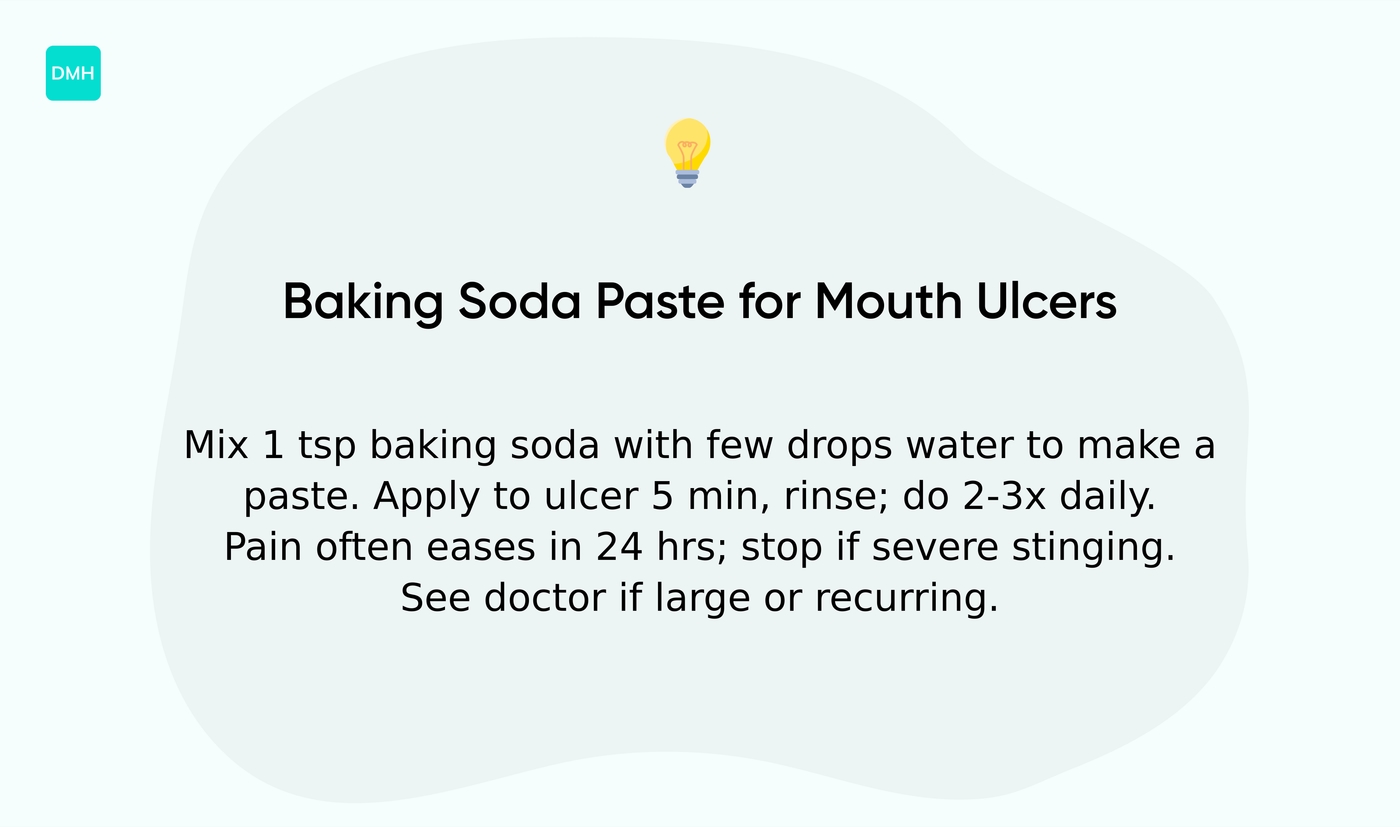
A baking soda paste offers quick mouth ulcer relief that you can make in seconds.
Mix one teaspoon of baking soda with a few drops of water. Stir until the paste holds its shape. Apply it with a clean finger or cotton swab directly to the ulcer. Leave it on for five minutes, then rinse your mouth.
Use this treatment two to three times daily until the sore shrinks. Most small ulcers improve within three to seven days.
The paste neutralizes acids and creates an alkaline environment in your mouth. That reduces local irritation, lowers bacterial load, and speeds tissue repair.
I’ve used this myself and saw less pain within 24 hours. You should feel relief pretty quickly too. Stop if it stings severely, and see a clinician for large, persistent, or recurring ulcers.
Turmeric paste
A turmeric paste can help cure mouth ulcers naturally.
Mix 1 teaspoon of turmeric powder with a few drops of water. Stir until you get a thick paste, then apply it directly to the ulcer twice daily. Leave it on for 10 minutes before rinsing with warm water.
Turmeric contains natural compounds that reduce inflammation and fight microbes. When used consistently, it helps ease pain and can speed recovery noticeably.
Just expect mild yellow staining on skin or fabrics. Stop using it if you experience irritation or an allergic reaction. Pair this with good oral hygiene and other treatment steps for the best results.
Licorice root rinse
A licorice root rinse relieves pain and speeds healing effectively.
Soak one teaspoon of dried licorice root in one cup of hot water. Let it steep for ten minutes, then cool to lukewarm. Swish the liquid in your mouth for 30 seconds and spit it out. Do this three times daily.
We favor short swishes to limit how much you swallow while maximizing the local effect on your ulcer.
Licorice contains glycyrrhizin, which has natural anti-inflammatory effects that often reduce soreness. You can use a stronger brew with one tablespoon of root if ulcers resist treatment, but limit use to seven days max.
The rinse can promote tissue repair and speed symptom relief by a few days. However, avoid licorice if you have high blood pressure, potassium loss issues, or if you’re pregnant.
If ulcers last longer than two weeks or worsen, see your clinician for prescription care.
Hydrogen peroxide rinse
A diluted hydrogen peroxide rinse works well for small mouth ulcers.
Use a 3% solution and dilute it with water one-to-one. Dip a cotton swab in the mixture and apply it gently to the sore with the swab.
This provides antiseptic cleansing and helps prevent infection. The infection prevention method works particularly well for mild ulcers.
I’d say this method speeds healing when used twice daily. Try two applications per day for three to five days. You can also rinse after meals for extra cleansing.
Never swallow the solution. Avoid using it on large or deep ulcers, and stop if pain gets worse. If ulcers stick around beyond two weeks, get a medical review.
Ice application
Ice delivers fast pain relief for mouth ulcers by numbing the area and reducing swelling within minutes.
Place a small ice cube wrapped in clean cloth against your ulcer for up to 10 minutes. You can repeat this every two hours until pain drops significantly. Sucking on ice chips works too if direct contact hurts or if you prefer steady numbing.
Ice works by constricting blood vessels and numbing nerve endings to cut pain fast. Expect noticeable relief within five minutes and less soreness throughout the first day. Just limit total ice time to avoid tissue damage.
This ranks as one of the best simple home remedies when you need to numb pain immediately. I tried it after dealing with a stubborn canker sore and felt real relief in under five minutes.
Pairing ice with gentle rinses or a protective gel gives you better overall treatment and faster comfort.
Best mouth ulcer medicine and treatment options
Starting with simple over-the-counter gels and mild pain relievers helps you manage pain and protect the sore effectively.
A mouth ulcer gel containing a topical anesthetic often eases pain within minutes. Apply it after meals and before bed for relief that commonly lasts about an hour. Popular active ingredients include benzocaine and benzyl alcohol.
Oral pain relief medications like ibuprofen or acetaminophen reduce both pain and swelling. Take the lowest effective dose and always check labels if you have existing health conditions.
For large or persistent ulcers, dentists prescribe topical steroid pastes such as triamcinolone. A steroid gel treatment speeds healing and cuts pain for severe cases, but use it only under medical guidance.
Prescription options include stronger topical steroids, antimicrobial mouthwashes, and short courses of oral steroids for severe or widespread ulcers. Immunomodulators appear rarely for cases that don’t respond to standard treatment.
| Treatment Type | Active Ingredient | How It Helps | When to Use |
|---|---|---|---|
| OTC Gel | Benzocaine | Numbs pain fast | Minor ulcers, after meals |
| Oral Pain Reliever | Ibuprofen | Reduces pain and swelling | Moderate pain |
| Steroid Paste | Triamcinolone | Speeds healing, cuts inflammation | Large or persistent ulcers |
| Antimicrobial Rinse | Chlorhexidine | Prevents infection | Multiple or recurring ulcers |
See a clinician if an ulcer lasts more than two weeks, recurs often, grows large, or comes with fever or weight loss. You can definitely try home care first, but persistent ulcers need proper evaluation.
Want practical steps and extra tips for home care? Read this guide from Healthline on how to get rid of canker sores. If you ask me, acting early limits pain and speeds recovery every time.
How to prevent recurrent mouth ulcers
Dietary changes and vitamin supplementation
Testing for vitamin B12, iron, and folate makes sense if you keep getting recurrent mouth ulcers. These deficiencies commonly cause aphthous ulcers and slow down healing.
Vitamin B12 supports mucosal repair. Aim for about 2.4 µg daily from food or supplements. Good sources include eggs, dairy products, fortified cereals, and shellfish.
Iron-rich foods reduce ulcer risk for many people. Men need about 8 mg daily, while premenopausal women need around 18 mg daily. Eat lean red meat, lentils, spinach, and pumpkin seeds regularly.
Folate sources help with cell turnover. Target 400 µg DFE daily by choosing leafy greens, beans, and fortified grains.
Supplements work when your diet falls short. Sublingual B12 or an iron supplement has helped several people I know who struggled with recurring ulcers. Get blood tests before starting supplements to guide proper dosing and avoid excess iron.
What simple dietary swap could you make today to boost your B12 intake?
Action step: eat these foods daily, test your levels, and discuss targeted supplements with your clinician.
Foods to avoid with mouth ulcers
Avoiding certain foods helps you cure mouth ulcers faster and prevents further irritation.
- Spicy hot foods — chili peppers, hot sauce, pepper-based dishes
- Acidic citrus fruits — oranges, lemons, pineapple, tomatoes
- Salty crunchy snacks — chips, pretzels, roasted nuts
- Hard breads, toast edges, and crusty pizza
- Pickled items and vinegar-heavy condiments
- Carbonated drinks, alcohol, and very hot beverages
We favor gentle food choices that cut pain and speed comfort. Soft, bland foods let ulcers heal with way less irritation.
Try these soothing options instead:
- Plain yogurt and smoothies made with banana and milk
- Mashed potatoes, scrambled eggs, and soft cooked oats
- Warm broths, soft rice, and tender cooked vegetables
- Cold soft desserts that briefly numb sharp pain
Start by swapping just one meal a day for soft options and watch your pain drop within days.
Stress management and lifestyle factors
Stress reduction plays a bigger role in lowering ulcer risk than most people realize.
Stress raises cortisol levels and weakens local immunity, which can trigger aphthous ulcers. You can target these triggers with simple daily choices.
- Reduce stress triggers: try 10 minutes of guided breathing or progressive muscle relaxation each day
- Improve sleep quality: aim for 7–9 hours and stick to a regular bedtime to stabilize hormones
- Build healthy daily habits: eat B12 and iron-rich foods, avoid SLS in toothpaste, and skip spicy or acidic meals during flares
A short nightly routine cut my flare-ups noticeably. I use a 10-minute breathing exercise and keep steady sleep times, and it’s made a real difference.
Which stress-relief habit could you commit to for the next two weeks?
Start with one habit and track your flare frequency to see what works best for your treatment plan.
You might also like: How to Stop Tooth Pain Fast
How long do mouth ulcers take to heal
Let me be direct: most mouth ulcers heal within 1–2 weeks.
Minor aphthous ulcers typically close in seven to fourteen days without leaving a scar. We recommend watching any sore for 14 days and noting its size, pain level, and whether it returns.
Several factors affect healing time:
- Size and depth: small ulcers heal faster than deep sores
- Location: tongue and lip ulcers often feel worse and slow down eating
- Infection or poor oral hygiene can delay healing
- Immune status and systemic illness lengthen recovery
- Vitamin B12, iron, or folate deficiency links to recurrent ulcers
- SLS in toothpaste, spicy foods, and stress trigger repeat sores
Large or complex ulcers can take up to 3–6 weeks or more to close completely.
Persistent ulcers deserve medical attention, honestly. See a dentist or doctor if a sore lasts over 14 days, grows larger, bleeds, causes fever, or appears alongside weight loss.
Professional care may include topical pain patches, a prescription steroid gel, blood tests for deficiencies, or even a biopsy for unusual lesions.
Your takeaway: expect healing in two weeks for simple ulcers. Track your symptoms, correct vitamin gaps, switch to SLS-free toothpaste, and seek care for prolonged or severe problems.
You’ll also like: How Long Does It Take To Get Your Taste Back After The Flu
When to see a doctor for mouth ulcers
See a doctor for any mouth ulcer that sticks around longer than two weeks.
Persistent or severe ulcers deserve a prompt exam, plain and simple.
- Ulcer lasts over 14 days despite home care
- Pain stops you from eating or drinking normally
- Ulcers return frequently, several times per month
- Lesion is large, keeps growing, or measures over 1 cm
- You develop fever, swollen glands, weight loss, or fatigue
- Numbness, persistent tooth pain, or trouble swallowing appears
- Ulcer has an unusual appearance, hard edges, or bleeds easily
Doctors check for infection, autoimmune causes, and vitamin deficiencies during your visit. They may order blood tests for B12, iron, and folate levels.
Prescription options include topical steroid gel and targeted antiseptics. These treatments speed healing and limit recurrence effectively.
If a bite or sharp tooth caused your sore, read our guide on how to heal cuts on tongue from teeth for specific care tips.
We recommend discussing recurring ulcers with a dentist or physician. If you notice any of these red flags, book an appointment today for proper testing and treatment.
You might also like: How to Heal Blisters Fast
Educational notice: This content is provided for informational and educational purposes only and is not intended as medical advice. Always consult a qualified healthcare professional for medical concerns.