Persistent exhaustion that doesn’t improve with rest is more than annoying—it’s disruptive.
Many people ask what causes chronic fatigue and why symptoms can vary so widely between patients.
Answers can be hard to find because multiple pathways—viruses, immune shifts, hormones, sleep problems, and nutrient gaps—can all produce similar tiredness.
This Daily Medical Health guide lays out current research on causes (from viral triggers and autoimmune links to mitochondrial dysfunction and hormonal imbalance) and how clinicians investigate them.
You’ll learn which tests are commonly used, when to consider specialist care, and why a personalized approach matters.
That knowledge can help you get clearer answers and more targeted treatment.
What is chronic fatigue syndrome (ME/CFS)
Myalgic encephalomyelitis/chronic fatigue syndrome (ME/CFS) is a long-lasting illness marked by extreme tiredness. The fatigue is severe and limits daily activities.
Clinicians often describe ME/CFS as a complex multi-system disorder. Immune, nervous, and energy systems commonly show dysfunction.
Core features include profound fatigue, cognitive problems, unrefreshing sleep, and worsening after exertion. Worsening after exertion often appears as delayed and prolonged symptom flare.
People with ME/CFS usually report intense physical exhaustion after small efforts. This differs from common tiredness in key ways.
Ordinary fatigue tends to ease with rest. ME/CFS fatigue often persists despite rest and can last months or years.
Diagnostic guidelines often require symptoms for six months or longer and a significant drop in activity. That threshold helps separate ME/CFS from temporary fatigue.
Understanding what causes chronic fatigue may clarify why ME/CFS varies so much. Multiple biological systems likely interact, so symptoms can differ between people.
Not medical advice, content for educational purposes, consult a professional.
What are the main causes of chronic fatigue syndrome
Viral infections that trigger chronic fatigue
Viral and bacterial infections may be associated with onset of ME/CFS. Epstein-Barr virus infection often precedes prolonged fatigue after mononucleosis.
Some cohort studies suggest 5–15% of people report persistent fatigue after EBV. Ross River virus and Coxiella burnetii (Q fever) appear linked to post-infectious fatigue.
SARS-CoV-2 infection can lead to long COVID fatigue that resembles ME/CFS. According to available research, about 1 in 10 people develop prolonged symptoms after a severe infection. Rates vary by pathogen, study size, and follow-up time.
Possible mechanisms include immune activation, sustained inflammation, and altered cellular energy use. Post-infectious ME/CFS often begins suddenly after illness and can last months or years.
Daily Medical Health summarizes related patterns and recovery risks on the fatigue after flu page.
Not medical advice. Content for educational purposes only. Consult a qualified healthcare professional.
Immune system changes and inflammation
Studies of what causes chronic fatigue note immune system changes in many people with ME/CFS. Some studies suggest people with ME/CFS show low-level increased inflammation and signs of immune dysfunction.
The pattern can mirror autoimmune diseases. It appears more common in women and lacks the tissue damage seen in autoimmune disease.
Researchers report altered cytokine profiles. They describe reduced natural killer cell function and occasional autoantibodies in subsets of patients. These findings vary by study and by person—they don’t prove a single cause.
Immune changes may help explain symptom flares after infections or stress. They remain an active research area.
If you have prolonged fatigue, discuss your symptoms with a qualified healthcare professional. Not medical advice, content for educational purposes, consult a professional.
Mitochondrial dysfunction and energy production
Mitochondria are tiny cell factories that turn food and oxygen into ATP. In ME/CFS, cells may use energy pathways less efficiently.
Some studies suggest mitochondrial ATP production may be 20–40% lower in muscle cells from affected people. Some studies measured about 30% lower ATP after mild exertion in patients compared with controls.
Less ATP causes reduced fuel availability for brain and muscle. Reduced cellular energy may relate to cognitive slowing and rapid muscle fatigue.
Cells may shift from efficient aerobic metabolism to less efficient glycolysis during exertion. Studies report lower oxygen consumption rates and impaired mitochondrial enzyme activity.
Researchers use blood tests, muscle biopsies, and metabolic scans to document these changes. Mitochondrial changes can vary by person and by tissue. Such mitochondrial issues are part of what causes chronic fatigue for some people.
Not medical advice, content for educational purposes, consult a professional.
Genetic factors and family links
Research shows genetic risk factors may influence susceptibility to ME/CFS. Some studies suggest first-degree relatives face two- to fourfold higher odds. Twin studies report higher concordance in identical twins than fraternal twins.
Researchers note X-linked immune genes on the X chromosome as possible contributors. Some X-linked immune genes may help explain higher rates in women. One family study found family clustering patterns among siblings.
Some analyses estimate heritability around 40%. Genetic markers don’t diagnose ME/CFS and findings vary across studies. A clear family history can guide clinicians toward targeted evaluation.
Clinicians may collect multigenerational family timelines. Referral to genetics or immunology specialists may follow when patterns emerge. Many genetic studies use small samples or varied diagnostic criteria, limiting generalizability.
Not medical advice, content for educational purposes, consult a professional. Always consult a qualified healthcare professional for medical advice specific to your situation.
Can autoimmune diseases cause chronic fatigue
Autoimmune disorders can produce persistent tiredness. Fatigue may be one of the most common symptoms.
Autoimmune causes of fatigue include sustained immune activation and ongoing inflammation. Cytokines released by the immune system can reduce energy and impair concentration.
Fatigue may affect 50% to 90% of people with different autoimmune conditions, according to available research and clinical summaries from agencies such as the NIH.
Several mechanisms link autoimmune disease and chronic fatigue. Autoimmune damage to the thyroid can produce hypothyroidism and low energy. Autoimmune hemolysis can cause anemia and breathless exhaustion.
Autonomic nervous system changes can lead to poor blood flow and marked tiredness. Shared features appear between autoimmune disorders and ME/CFS. Both show signs of immune dysfunction, greater prevalence in women, and fluctuating symptoms.
Some studies suggest immune markers differ in people with persistent post-infectious fatigue. Clinicians often order tests for thyroid function, full blood count, ferritin, and inflammatory markers when assessing prolonged fatigue.
Identifying an autoimmune process can change the diagnostic path and management plans. Evidence remains mixed on exact cause-and-effect links. Research continues to explore overlaps and distinct pathways.
Not medical advice, content for educational purposes, consult a professional. Always consult a qualified healthcare professional for medical advice specific to your situation.
Hormonal imbalances that cause chronic fatigue
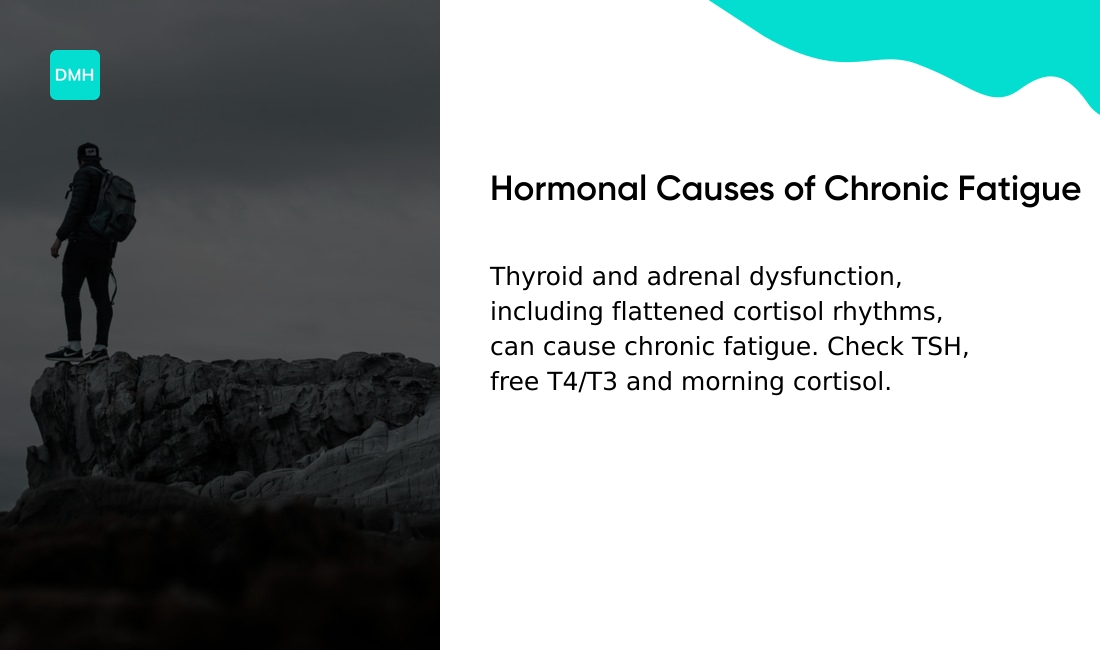
Thyroid problems and adrenal issues often appear in people with long-term tiredness. Thyroid dysfunction fatigue links to slow metabolism, low energy, weight gain, and brain fog.
Overt hypothyroidism affects about 0.5% of people, while milder forms may reach up to 10% in some groups, according to available research. Men and women may experience different symptoms and severity.
Adrenal insufficiency is rarer but may produce profound fatigue, low blood pressure, and poor stress tolerance. Adrenal insufficiency fatigue may also follow prolonged illness or steroid use.
Hormone rhythms matter. Dysregulation of the hypothalamic-pituitary-adrenal (HPA) axis can flatten daily cortisol patterns. Some studies suggest flattened cortisol links with persistent fatigue and with post-viral syndromes like long COVID.
Sudden hormonal shifts after pregnancy can trigger fatigue. Postpartum thyroiditis may affect roughly 5–10% of women in some reports and can cause rapid swings from high to low thyroid function.
Clinicians may check thyroid-stimulating hormone (TSH), free thyroid hormones, and morning cortisol when investigating causes of fatigue. People can learn how to test cortisol levels at home as part of a broader evaluation.
Addressing hormonal causes often helps clarify why energy remains low, but responses vary from person to person. Not medical advice, content for educational purposes, consult a professional.
Nutritional deficiencies linked to chronic fatigue
Nutritional gaps can explain what causes chronic fatigue for some people. Iron deficiency anemia may reduce oxygen delivery to tissues. That reduction causes persistent tiredness and poor stamina.
Iron deficiency causes roughly 50% of anemia cases worldwide, according to available research. A vitamin B12 deficiency limits red blood cell formation and nerve function.
Some studies suggest B12 shortages can cause deep exhaustion and cognitive fog. Older adults and people with absorption issues show higher deficiency rates.
Deficiencies in vitamin D, magnesium, and folate often occur alongside iron and B12 shortages. These gaps can cause low energy levels and impair muscle function. A single nutrient shortfall may not explain fatigue fully.
Gradual-onset ME/CFS cases may have mixed nutritional and metabolic drivers. Blood tests for anemia and specific vitamin levels can reveal treatable contributors. See the low red blood cell count page for details.
Addressing confirmed deficiencies can improve energy in some patients. Benefits vary by person and by how long the deficiency existed. Evidence supports testing before any supplementation.
Not medical advice, content for educational purposes, consult a professional.
Sleep disorders and chronic fatigue connection
Sleep disorders may be associated with persistent tiredness and low daytime energy. Obstructive sleep apnea causes repeated breathing pauses during sleep. Each pause fragments sleep and lowers oxygen levels briefly.
Fragmented sleep often produces unrefreshing sleep patterns and daytime exhaustion. Estimates suggest moderate to severe apnea affects about one in 15 adults.
Sleep problems appear as triggers in gradual-onset fatigue for some people. People report sleep fragmentation before fatigue develops in several studies. Poor sleep reduces daytime activity and mood.
Lower activity alters circadian cues and deepens sleep disruption. That poor sleep cycle sustains chronic tiredness over months or years.
Polysomnography and overnight oximetry may identify apnea or other disorders. Descriptions of snoring and breathing pauses appear on the page what does sleep apnea sound like.
Addressing underlying sleep problems may help reduce daytime fatigue in some patients. Available research shows variable responses and uncertainty about long-term benefits.
Not medical advice, content for educational purposes, consult a qualified healthcare professional for personal medical advice.
Can depression or anxiety cause chronic fatigue
Depression and anxiety often link with persistent low energy. Some studies suggest 60–80% of people with major depression report fatigue or low energy as a core symptom.
Mental health conditions can alter sleep, appetite, activity, and motivation. These changes reduce physical reserve and may deepen tiredness over weeks or months.
Psychological stress affects hormones and the immune system. Stress hormones and low-grade inflammation can alter energy metabolism and brain function.
The relationship can run both ways. Persistent fatigue raises risk of mood symptoms. Mood symptoms can increase perception of fatigue and limit recovery.
Distinguishing fatigue from mood disorders and chronic fatigue syndrome matters for care. Fatigue tied to depression often improves with sleep or mood changes. Fatigue from post-exertional malaise shows a delayed, prolonged worsening after activity.
That feature often points toward ME/CFS rather than pure mood-related tiredness. Clinicians often rule out thyroid problems, iron or B12 deficiency, sleep apnea, and other medical causes.
Objective signs such as autonomic dysfunction or specific metabolic patterns may suggest ME/CFS causes rather than mood-related fatigue. A careful history, symptom timing, and simple tests help clarify likely drivers.
Not medical advice, content for educational purposes, consult a professional.
You might also like: What Happens at Your First Hematology Appointment
Other medical conditions that cause chronic fatigue
Fibromyalgia often causes widespread pain and persistent tiredness. Some estimates suggest it affects about 2–4% of adults and is more common in women.
Fibromyalgia features sleep disruption and cognitive fog that overlap with ME/CFS. Clinicians may use symptom patterns to separate disorders. Learn more about rare fibromyalgia symptoms for diagnostic clues.
Lyme disease can produce long-lasting fatigue after infection. The CDC notes a subset of patients report symptoms months after treatment. Joint swelling, rashes, or documented tick exposure often point toward Lyme rather than ME/CFS.
Autoimmune diseases such as lupus and rheumatoid arthritis commonly include chronic tiredness. Endocrine problems like hypothyroidism and adrenal insufficiency may lower energy through hormonal disruption.
Nutritional gaps such as iron deficiency or low vitamin B12 can mimic chronic fatigue. Mitochondrial or metabolic disorders may reduce cellular energy and worsen exertion intolerance.
Overlap exists across these conditions. ME/CFS often shows marked post-exertional symptom worsening and distinct patterns of cognitive dysfunction. Careful history, targeted blood tests, and specialist input help clarify causes.
Not medical advice, content for educational purposes, consult a professional. Always consult a qualified healthcare professional for medical advice specific to an individual situation.
You might also like: When Should You Worry About Abnormal Blood Test Results
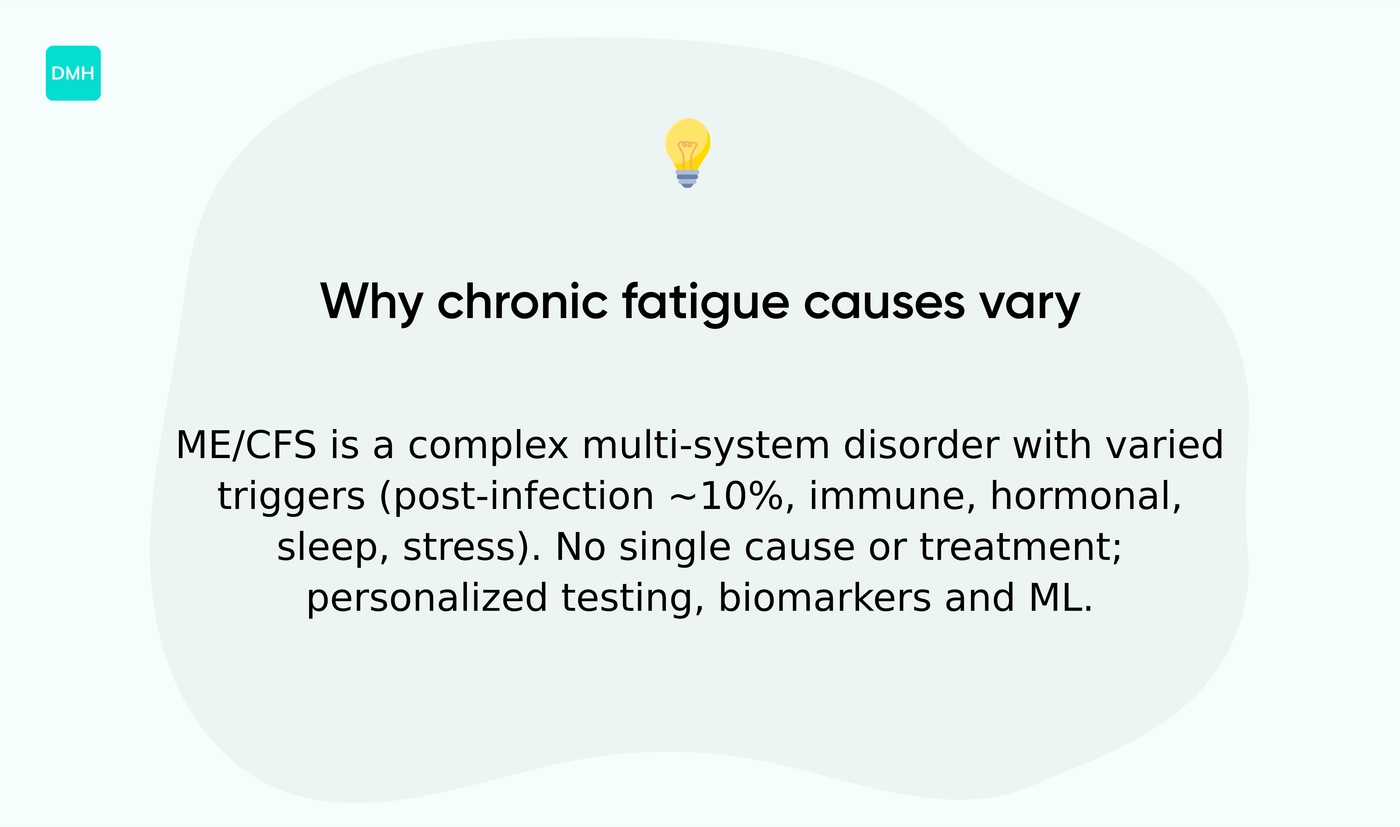
Why chronic fatigue causes vary from person to person
What causes chronic fatigue can vary from person to person. ME/CFS is a complex, multi-system disorder that often looks like one condition on the surface.
The illness can start after infections, immune changes, mitochondrial dysfunction, hormonal shifts, sleep disorders, or mental-health stressors. Some studies suggest about 10% of people develop prolonged fatigue after severe infections.
Different biological systems may fail to recover. The nervous system, immune system, and cellular energy pathways can each lead to similar symptoms. That overlap explains shared signs despite distinct root causes.
Research shows genetic factors may make some people more vulnerable. Women appear more often affected in many studies, though reasons remain uncertain. Small study sizes and variable methods limit firm conclusions, according to available research.
Because there’s no single trigger, a single treatment rarely helps everyone. Treatments aimed at one pathway may help only a subgroup. Clinicians and researchers call for personalized diagnostic approaches that map symptoms, lab results, and possible triggers.
New tools include biomarker panels and machine-learning methods that search for biological fingerprints. Local coverage highlights how ME/CFS remains a misunderstood illness and why tailored care matters.
Not medical advice, content for educational purposes; always consult a qualified healthcare professional for medical advice specific to your situation.
Read also: How Long Does A Vitamin B12 Shot Last
What tests check for causes of chronic fatigue
Clinicians order basic blood work to rule out common, treatable causes of chronic fatigue. Have you wondered which tests can reveal hidden problems?
| Test | Purpose |
|---|---|
| Complete blood count (CBC) | Checks anemia and signs of infection |
| Thyroid function tests (TSH, free T4) | Detects hypothyroidism |
| Autoimmune panel tests (ANA, ESR/CRP) | Screens for inflammation |
| Ferritin and vitamin B12 | Assesses nutrient-related fatigue |
| Metabolic panels | Evaluates liver, kidney, and electrolyte status |
Specialized testing may follow based on symptoms. Sleep studies can identify sleep apnea. Tilt-table testing can reveal postural orthostatic tachycardia syndrome (POTS).
Two-day cardiopulmonary exercise testing (CPET) can show reduced VO2 peak on day two. Some studies report a 10–25% drop in oxygen use on the second day.
Infectious and autoimmune serologies help explore triggers. Epstein-Barr virus and Lyme tests appear in many workups. Positive serology doesn’t confirm causation—interpretation requires clinical context.
Experimental approaches use machine learning to detect biological fingerprints. Some studies suggest algorithms classify cases and controls with about 70–85% accuracy in small cohorts. These results require larger replication and external validation before clinical use.
No single laboratory test confirms ME/CFS. Diagnostic criteria and testing practices vary between clinics and research centers. Heterogeneity of causes makes standardization difficult.
According to available research, a stepwise, individualized workup remains common. Not medical advice, content for educational purposes, consult a professional. Consult a qualified healthcare professional for medical advice specific to your situation.
You’ll also like: When To See A Doctor For Mold Exposure
Educational notice: This content is provided for informational and educational purposes only and is not intended as medical advice. Always consult a qualified healthcare professional for medical concerns.