That sinking feeling when sleep won’t come and tension hangs around your shoulders often traces back to a simple nutrient gap.
Magnesium glycinate is a highly absorbable form of magnesium many people turn to when supplements or diet alone aren’t enough.
Bound to glycine, it supports relaxation, muscle function, and nervous balance without the laxative effects of other forms.
You’ll learn how it works, appropriate dosages, timing, side effects, and how it compares to citrate and threonate.
Whether you’re after better sleep, fewer cramps, or calmer days, this guide shows what to look for on labels (elemental magnesium included).
Not medical advice—content for educational purposes only. Always consult a qualified healthcare professional before starting any supplement.
What is magnesium glycinate
Magnesium glycinate is a form of magnesium bound to the amino acid glycine. The supplement most often appears as magnesium bisglycinate, where a single magnesium ion binds two glycine molecules.
This highly bioavailable form stabilizes the mineral and may aid transport across the intestinal lining. Glycine acts as a small, neutral carrier that can improve uptake and may lower interaction with dietary inhibitors like phytates.
Evidence indicates magnesium glycinate often shows better absorption and gentler digestive tolerance than magnesium oxide. The elemental magnesium content typically sits near 14% of the compound’s weight.
A 200 mg glycinate capsule may supply about 28 mg elemental magnesium. Chelated magnesium glycinate describes this bonded form, and chelation may reduce the laxative effect seen with other salts for many people.
Some studies suggest higher bioavailability, but findings can vary from person to person. More research would clarify differences across forms.
For informational purposes only. Always consult a qualified healthcare professional for medical advice specific to your situation.
Magnesium glycinate benefits
Does magnesium glycinate help with sleep
Magnesium glycinate may help improve sleep quality for some people. It promotes relaxation via glycine, an amino acid that acts as an inhibitory neurotransmitter.
Magnesium can boost GABA activity and lower neuronal excitability. It supports melatonin production by helping enzymes involved in melatonin synthesis function well.
Some studies suggest modest gains in sleep efficiency and shorter time to fall asleep among people with low magnesium. It regulates neurotransmitters by balancing glutamate and GABA.
Small randomized trials report sleep efficiency gains near 8–10% and sleep latency reductions around 15–20 minutes in older adults with deficiency. Effects can vary from person to person and depend on dose, baseline magnesium status, and sleep disorder type.
Taking magnesium glycinate 30–60 minutes before bed is commonly used to target sleep. For informational purposes only—always consult a qualified healthcare professional for advice specific to your situation.
Is magnesium glycinate good for anxiety
Magnesium glycinate may reduce anxiety by supporting nervous system regulation. Glycine-bound magnesium has high absorption and low gastrointestinal effects, which reflects common magnesium glycinate benefits.
Magnesium affects GABA and glutamate, neurotransmitters that influence neuronal excitability. It supports neurotransmitter balance and can promote calmer neural signaling.
Plus, it may modulate stress hormones such as cortisol and support the HPA axis. See how to lower cortisol levels for related strategies.
Some studies suggest lower anxiety scores in people with low magnesium who supplement. Benefits can vary from person to person, so check labels for elemental magnesium content when comparing supplements.
Side effects are uncommon at typical doses but can vary. People with kidney disease or on certain medications may require monitoring. Benefits for anxiety often emerge over weeks of consistent use.
For informational purposes only. Always consult a qualified healthcare professional for advice specific to your situation.
Does magnesium glycinate help with muscle cramps
Magnesium aids muscle and nerve function by helping regulate ion flow across cell membranes. Some studies suggest magnesium supplementation can reduce cramp frequency and intensity, especially in people with low magnesium levels.
It supports muscle relaxation by modulating calcium and sodium channels that trigger contraction. Glycinate is a chelated form with higher absorption and lower laxative effect compared to oxide or citrate.
It reduces muscle cramping through improved electrolyte balance. Magnesium helps maintain potassium and calcium handling during and after exercise.
Typical supplemental doses range from 200 to 400 mg elemental magnesium, but needs can vary from person to person. It maintains electrolyte balance and may speed recovery by lowering markers of muscle fatigue in some trials.
Evidence varies and benefits appear greater when deficiency exists. For informational purposes only—always consult a qualified healthcare professional for medical advice specific to your situation.
Heart health and blood pressure support
Magnesium glycinate benefits may include support for healthy heart rhythms and electrical stability in cardiac cells. Some studies suggest oral magnesium reduces systolic blood pressure by about 2–4 mmHg and diastolic by 1–2 mmHg in adults with low intake.
Observational analyses report modest reductions in stroke risk—for example, near an 8% lower risk in pooled cohorts with higher magnesium intake. Mechanisms may include regulation of vascular tone.
Magnesium can influence calcium channels, endothelial function, and low-level inflammation. Magnesium glycinate offers high absorption and gentle digestion when compared with some other forms.
For practical guidance on managing blood pressure, see how to lower blood pressure.
For informational purposes only. Always consult a qualified healthcare professional for medical advice specific to your situation.
Does magnesium glycinate help migraines
Some studies suggest low magnesium levels may be associated with migraine. A randomized trial using 600 mg daily reported a 41% drop in attack frequency, while placebo participants saw about a 16% drop.
Magnesium can affect neuronal excitability and vascular tone. It may modulate neurotransmitter release and reduce cortical spreading depression, a migraine-related process.
-
Stabilizes nerve membranes
-
Modulates glutamate and GABA signaling
-
Influences blood vessel reactivity
Chelated forms like magnesium glycinate show higher absorption and gentler digestive effects than some other salts. This form may reduce frequency of attacks in people with documented deficiency.
Most trials used 300–600 mg of elemental magnesium daily or equivalent. Evidence varies across studies and populations, and benefits appear larger when deficiency exists.
For informational purposes only. If symptoms occur or before starting supplements, consult a qualified healthcare professional.
Magnesium glycinate dosage
How much elemental magnesium is in magnesium glycinate
Elemental magnesium content refers to the mass of magnesium metal within a compound. Labels often list total compound weight and not the elemental amount.
Magnesium glycinate is a chelate of magnesium and two glycine molecules. The chemical ratio gives about 14% elemental magnesium by weight.
To calculate elemental magnesium, multiply the listed compound weight by 0.14. Example: 200 mg magnesium glycinate × 0.14 = 28 mg elemental magnesium.
|
Compound Weight |
Elemental Magnesium (~14%) |
|---|---|
|
200 mg |
28 mg |
|
400 mg |
56 mg |
|
600 mg |
84 mg |
Manufacturing and formulation can cause small variations in that percentage. Some products list elemental magnesium directly on the label.
For informational purposes only. Always consult a qualified healthcare professional for medical advice specific to your situation.
Is 400 mg of magnesium glycinate too much
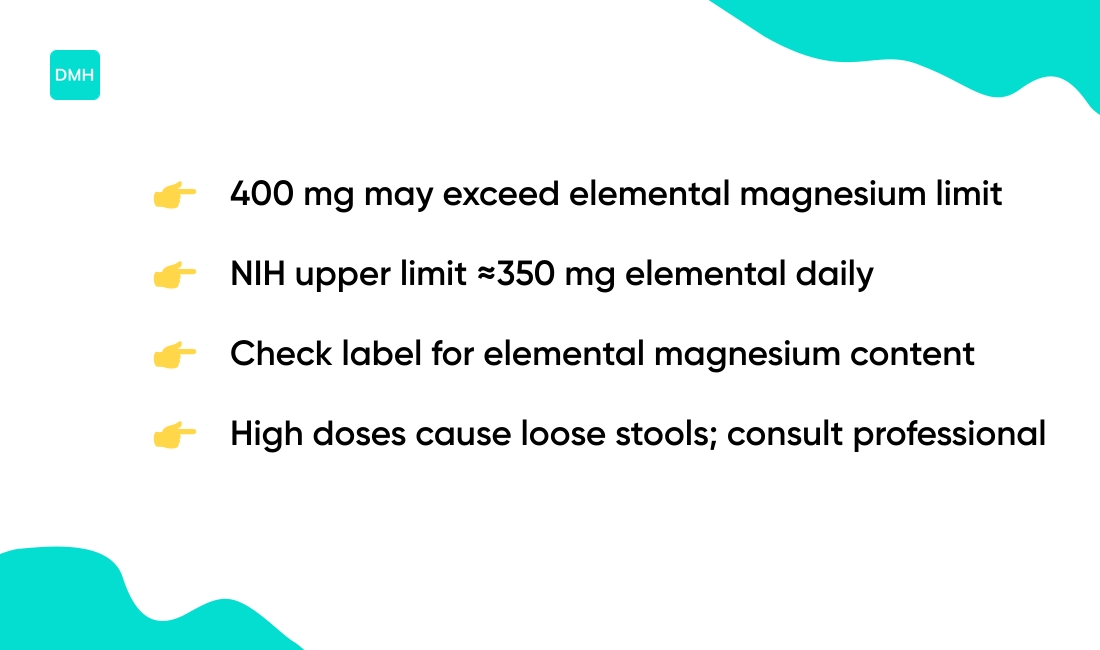
A 400 mg dose may exceed recommended supplemental amounts if that value refers to elemental magnesium. The upper tolerable limits for supplemental magnesium sit near 350 mg per day for most adults, according to NIH guidance.
Many supplements list the total chelated compound rather than elemental magnesium. Elemental content in glycinate varies by product, so check the label for the elemental magnesium dose.
Some clinical protocols use higher doses under close medical supervision for diagnosed deficiency or specific conditions. Evidence indicates effects vary and tolerance can differ from person to person.
Common side effects at higher supplemental doses include loose stools and lightheadedness. If adverse symptoms occur, consult a professional.
For informational purposes only. Always consult a qualified healthcare professional for medical advice specific to your situation.
Can I take magnesium glycinate every day
Magnesium glycinate is commonly taken daily and is often well tolerated. Typical ranges provide about magnesium glycinate dosage of 200–400 mg elemental magnesium per day.
The glycinate form binds magnesium to glycine for high absorption and lower laxative effect. People with reduced kidney function may need monitoring because serum magnesium can rise.
Long-term use may be associated with steady benefits for sleep and muscle function. Some studies suggest improvement in sleep within nights and reductions in anxiety-like symptoms over several weeks.
High doses near 400 mg can cause mild digestive symptoms in some people. Periodic lab checks and a review of medications that interact with magnesium often help guide adjustments. Cycling or dose reduction may suit individuals on high doses for months.
For informational purposes only. Always consult a qualified healthcare professional for medical advice specific to your situation.
Best time to take magnesium glycinate
Timing affects effects and comfort. Magnesium glycinate may suit different goals depending on when you take it.
Magnesium glycinate for sleep works well before bedtime. Taking 30 to 60 minutes before sleep may support relaxation. Typical elemental ranges of 200–400 mg often appear on product labels.
Morning dosing can support daily muscle function and steady magnesium levels. Some people report mild calmness after daytime doses. Adjust timing if daytime drowsiness occurs.
Splitting the total daily amount can reduce stomach upset. For example, two doses of 100–200 mg spread across the day may improve tolerance and maintain blood levels.
Chelated magnesium glycinate has high absorption and low laxative effect. Absorption can vary from person to person, and taking with a small meal often reduces digestive symptoms.
For muscle cramps or exercise recovery, taking a dose about an hour before activity may help muscle relaxation. For migraine prevention, evidence indicates regular daily intake matters more than single-dose timing, and benefits can take weeks to appear.
Elemental magnesium content differs by product. Check labels to confirm actual magnesium amount per serving. Some supplements label total compound weight rather than elemental magnesium.
Not medical advice—content for informational purposes only. For personalized guidance, consult a qualified healthcare professional.
Magnesium glycinate side effects
Magnesium glycinate side effects are generally mild and infrequent. Mild digestive symptoms such as nausea, cramping, or loose stools may occur at higher doses.
Glycine-bound magnesium often causes less laxation than citrate or oxide. Typical supplemental doses range from 200 to 400 mg elemental magnesium per day.
The tolerable upper intake level for supplemental magnesium is often cited as about 350 mg daily for adults. Exceeding that amount can increase the chance of adverse effects.
Very high magnesium levels can produce low blood pressure, slowed heart rate, confusion, and severe muscle weakness in rare cases. People with impaired kidney function face higher risk of accumulation.
Magnesium may interact with certain antibiotics, bisphosphonates, and some blood pressure medications by reducing absorption or altering effects. Spacing supplements and medications by a few hours can lower interaction risk.
Pregnant or breastfeeding individuals and people with heart block or kidney disease need tailored safety checks before supplementing. We note that evidence can vary and individual response may differ.
Compare supplement overload effects with other nutrients at too much vitamin C symptoms and risks.
Elemental magnesium content on product labels can vary, so check amounts carefully. For informational purposes only—always consult a qualified healthcare professional for medical advice specific to your situation.
Magnesium glycinate vs other forms
Magnesium glycinate vs citrate
Magnesium glycinate often shows higher absorption than magnesium citrate. The glycinate form binds magnesium to glycine, which may aid uptake into cells.
Some studies suggest chelated forms yield greater fractional absorption, but results vary. Magnesium citrate dissolves in water and absorbs well.
Citrate frequently causes loose stools at moderate doses. Many people report laxative effects from citrate around 200–400 mg elemental magnesium.
Glycinate tends to be gentler on the gut and causes fewer bowel changes. If you have gut sensitivity, glycinate may be better tolerated. High absorption magnesium describes glycinate on many product labels.
Citrate commonly costs less per dose. Glycinate supplements often cost more, sometimes 20–50% higher depending on brand.
Glycinate suits sleep support, anxiety reduction, muscle relaxation, and sensitive digestion. Citrate may suit occasional constipation relief or tighter budgets. Look at the label for elemental magnesium per serving.
For informational purposes only. Consult a qualified healthcare professional for advice specific to your situation.
Magnesium threonate vs glycinate
Magnesium threonate may cross the blood-brain barrier more readily than glycinate. Some studies suggest threonate can improve memory measures in small trials and animal work, though clinical evidence remains limited and results can vary from person to person.
Magnesium glycinate is chelated to glycine, which often improves absorption and gut tolerance. Glycinate is commonly used for sleep support, nervous-system calm, and muscle relaxation.
Glycinate tends to cause fewer laxative effects than oxide or citrate forms. Labels differ in magnesium content—many glycinate supplements list elemental magnesium near 100–200 mg per serving.
Threonate formulas usually cost more per month than glycinate preparations. Choose based on specific goals: threonate targets brain penetration, while glycinate supports sleep and muscle function.
For informational purposes only. Always consult a qualified healthcare professional for medical advice specific to your situation.
Is magnesium bisglycinate the same as magnesium glycinate
Magnesium bisglycinate and magnesium glycinate often label the same compound. The term bisglycinate notes one magnesium ion bound to two glycine molecules.
That chelated form tends to improve absorption and reduce laxative effects compared with non-chelated salts. Elemental magnesium in glycinate supplements often ranges near 14% of the compound weight.
Exact numbers vary by manufacturer and formulation. Product labels list elemental magnesium, which guides dosing more than the trade name.
Many clinicians and manufacturers use the names interchangeably. Some formulas add carriers or create buffered forms that change absorption or dosage per capsule. Read labels and compare elemental magnesium per serving for accurate comparison.
We note limited variability across reputable preparations. For informational purposes only—always consult a qualified healthcare professional for medical advice specific to your situation.
Who should take magnesium glycinate
Magnesium glycinate may suit people with low magnesium levels. People with digestive sensitivity may prefer this form because it tends to cause less loose stool than laxative forms.
If sleep trouble occurs, this form may support relaxation. Many take it before bed for sleep support. Research highlights various magnesium glycinate benefits.
Some studies suggest it helps nervous system balance, which may reduce anxiety symptoms for some people. Muscle cramps often respond to improved magnesium status—magnesium for muscle cramps appears beneficial in multiple reports.
People with migraine history may see fewer headaches with correction. Common ranges reported include 200 to 400 mg elemental magnesium daily. Check product labels for elemental amount and magnesium glycinate dosage.
People with kidney impairment need medical supervision. Watch for rare magnesium glycinate side effects like nausea at high doses. Chelated forms may offer higher absorption in some studies.
Checking blood levels can guide need. See supplements and blood test results for interpretation.
Older adults may have lower absorption and higher needs. People using diuretics or proton-pump inhibitors may lose magnesium. Blood tests may not reflect total body magnesium—results can vary from person to person.
More research helps clarify which groups benefit most. Elemental magnesium amounts vary by product.
Not medical advice—content for educational purposes only. If symptoms occur, consult a qualified healthcare professional.
You’ll also like: How To Test Cortisol Levels At Home

How long does magnesium glycinate take to work
Response to magnesium glycinate can vary from person to person. Results depend on dose, baseline magnesium status, and other medicines.
Sleep effects often appear quickly. Many people report better relaxation and faster sleep onset within 30–60 minutes when taken before bed. Glycine in the compound may support calmness and sleep quality.
Muscle cramp relief can occur within 24–72 hours with regular dosing. Improved exercise recovery and fewer cramps may be reported within 1–2 weeks of consistent use. This finding aligns with how magnesium supports muscle and nerve function.
Mood and anxiety-related benefits usually take longer to show. Some studies suggest reductions in anxiety scores after about 4 weeks. Noticeable change often appears between 2–6 weeks of steady use.
Chronic conditions tend to require months to change. Blood pressure, migraine frequency, and bone markers in studies often shift over 6–12 weeks or more. Evidence indicates outcomes can vary widely.
Dose matters. Many trials use 200–400 mg of elemental magnesium. Higher doses may affect timing but can raise risk of side effects. Check product labels for the amount of elemental magnesium in the supplement.
For informational purposes only. Always consult a qualified healthcare professional for medical advice specific to your situation.
You’ll also like: Can Dehydration Affect Blood Test Results?
Frequently asked questions about magnesium glycinate
Magnesium glycinate dosage: Oral magnesium glycinate supplies elemental magnesium bound to glycine. Typical supplement labels list 100–400 mg of elemental magnesium per day. Individual needs can vary from person to person based on diet, age, and health.
Is magnesium glycinate safe during pregnancy? Evidence is limited and mixed. Intravenous magnesium sulfate is used in specific obstetric care and differs from oral supplements. If pregnancy is a factor, consult a qualified healthcare professional for personalized guidance.
Interactions with melatonin or medications: Magnesium may be taken near melatonin by some people to support sleep. Magnesium can interact with antibiotics, diuretics, bisphosphonates, and some heart medicines. Check timing to avoid reduced absorption and consult a pharmacist or clinician.
Chelated forms: Chelated magnesium glycinate binds magnesium to the amino acid glycine. This form often appears to have higher absorption and lower laxative effect than oxide or citrate.
Powder versus capsules: Powder gives dose flexibility and mixes into drinks. Capsules offer convenience and consistent dosing. Powder may taste bitter and may include fillers—read labels for elemental magnesium amounts.
Practical use tips: Take with food if mild stomach upset occurs. For sleep support, people commonly take it before bed. Monitor for loose stool at higher doses and adjust as needed.
For informational purposes only. Always consult a qualified healthcare professional for advice specific to your situation.
You might also like: Foods to Avoid While Taking Spironolactone
Educational notice: This content is provided for informational and educational purposes only and is not intended as medical advice. Always consult a qualified healthcare professional for medical concerns.