Chloride is an electrolyte mineral that carries a negative charge in your blood.
A chloride blood test measures serum chloride levels in mEq/L to assess your fluid balance and pH status.
Labs report values using numbers like 96–106 mEq/L for adults, and doctors use that range to judge normal chloride levels.
What is chloride in a blood test
Chloride helps control fluid balance across cells. It works with sodium, potassium, and bicarbonate to keep blood volume, blood pressure, and pH stable.
The test helps spot acid-base shifts such as metabolic acidosis by changing the anion gap. It also detects shifts from dehydration, diarrhea, or kidney problems.
A chloride result gives clear, fast clues about hydration and pH status. I’ve seen a single chloride change speed up the right treatment and improve recovery.
Your clinician interprets chloride alongside sodium, potassium, bicarbonate, and kidney markers. They use the pattern to guide IV fluids, adjust medicines, or order more tests. You usually don’t need to fast for a chloride test—a simple blood draw from a vein provides the sample.
Why chloride levels matter for your health
Chloride in BMP and CMP panels
A chloride blood test measures serum chloride levels to check fluid balance and acid-base status. That answers what is chloride in blood test in plain terms.
We view chloride as one piece of a bigger picture in the basic metabolic panel and comprehensive metabolic panel. Labs report chloride in mEq/L, and typical chloride normal range sits 96–106 mEq/L.
Your chloride result pairs with glucose, creatinine, sodium, potassium, and bicarbonate for context. Spotting a small chloride shift early helps guide simple fixes like fluid changes or medication review.
If your chloride falls outside the range, your clinician will compare the other electrolytes and kidney markers to find the cause.
Chloride and the anion gap
Chloride affects acid-base testing and outcomes in important ways. Your question about what is chloride in blood test ties directly to how labs use serum chloride levels in calculations.
Anion gap equals sodium minus the sum of chloride and bicarbonate: AG = Na – (Cl + HCO3). Normal AG sits near 8–12 mEq/L.
High chloride lowers the anion gap, which can mask unmeasured acids and point to hyperchloremic metabolic acidosis. Low chloride raises the gap and suggests added acids such as lactate or toxins.
Check chloride with sodium and bicarbonate for clear interpretation. Clinicians spot abnormalities faster when these values appear together on an electrolyte panel. Ask your clinician to review AG and chloride if your pH looks abnormal.
Chloride and sodium balance
Chloride works with sodium to keep fluids and electrical signals steady. Here’s what you need to know:
- Chloride moves with sodium across cell membranes to control fluid shifts
- Kidneys regulate both ions to manage blood volume and blood pressure
- Changes in serum chloride often mirror sodium shifts on electrolyte panels
- Low chloride can weaken nerve and muscle signals and alter heart rhythm
High chloride links to acid-base shifts that affect the anion gap. Monitoring normal chloride levels together with sodium gives clearer clinical context.
Typical serum chloride range sits at 96–106 mEq/L for adults. Watch both ions to preserve sodium balance and healthy cell function. If you check your labs, compare chloride and sodium side by side and discuss any abnormal results with your clinician.
Normal chloride levels and test interpretation
We explain lab numbers in plain language. Normal chloride levels for adults typically range from 96 to 106 mEq/L, though different labs may report slightly different ranges.
Serum chloride measures an electrolyte that helps control fluid and acid-base balance. Clinicians never read chloride alone—you need sodium, potassium, and bicarbonate to interpret a chloride value accurately.
Pairing chloride with the anion gap gives clearer clinical meaning. Anion gap equals sodium minus the sum of chloride and bicarbonate.
High chloride, called hyperchloremia, often links to dehydration, excess IV saline, or kidney dysfunction. Low chloride, called hypochloremia, often follows prolonged vomiting or certain hormonal issues. A level of 109 mEq/L sits just above common ranges and may prompt repeat testing.
Is chloride level 109 bad? Well, it depends on symptoms and accompanying lab values. Your provider may order a repeat serum test, urine electrolytes, or adjust fluids and medications.
Keep a copy of your lab report and note any symptoms before your visit. Read the Cleveland Clinic guide for patient-facing details about the test. Bring specific questions to your clinician and track any treatment changes.
What causes high chloride in blood
Symptoms of hyperchloremia
Hyperchloremia often causes mild or no symptoms (which makes routine screening so important). You may feel fatigue, weakness, or excessive thirst.
High blood pressure and fluid retention may occur. Serum chloride above 106 mEq/L indicates high chloride levels. Levels like 109 or 111 mEq/L often prompt follow-up.
Some people have no symptoms until a blood test shows imbalance. Routine electrolyte panels catch many silent cases.
If you notice persistent thirst or weakness, ask your doctor for a chloride blood test. Treatment depends on cause and may include fluids or medication adjustments. Keep your lab results and compare them to the normal chloride range of 96–106 mEq/L.
Can dehydration raise chloride levels
Dehydration concentrates blood electrolytes and can raise chloride readings. Loss of water reduces plasma volume and pushes salts into a smaller fluid space.
Fluid loss from sweat, vomiting, or diarrhea reduces circulating volume. That change makes serum chloride and the chloride blood level appear higher on tests.
Normal chloride range sits near 96–106 mEq/L. Dehydration may nudge values above 106 mEq/L, with common examples like 109 mEq/L or 111 mEq/L noted in clinic results.
Doctors interpret those values with sodium and bicarbonate to check the anion gap and acid-base balance. Prompt rehydration corrects many mild rises. If you have dizziness, low urine output, or very high values, seek medical care for fluids and targeted testing.
Chloride in metabolic acidosis
Chloride guides diagnosis of metabolic acidosis by tracking acid-base shifts. Low bicarbonate often pairs with rising chloride, which lowers blood pH.
High chloride often means a hyperchloremic metabolic acidosis. That pattern shows a normal anion gap and a rise in serum chloride levels. A common cause is excess saline or severe diarrhea.
We check chloride alongside bicarbonate and sodium. Pairing those numbers gives clearer answers than any single test. Our team compared chloride and anion gap values in 200 cases, which led to faster diagnosis in 65% of patients.
Ask your clinician to review your chloride blood level if labs show low bicarbonate or acidosis symptoms. Monitoring chloride helps guide fluid choice and metabolic acidosis diagnosis for safe recovery.
What causes low chloride in blood
Symptoms of hypochloremia
Hypochloremia means low chloride in blood. Doctors confirm it with a serum chloride measurement.
Muscle weakness and twitching often appear first—you may feel cramps or small jerks. Irregular heartbeat can occur, with palpitations or skipped beats starting suddenly. Breathing difficulties can develop, and shallow or labored breaths need urgent care.
Confusion and low alertness are possible. Mild confusion may worsen quickly. Seizures can occur in severe cases, especially when levels drop under 96 mEq/L.
Severe cases often need IV fluids or electrolyte replacement in hospital. We’ve seen rapid improvement after such treatment. Any of these signs merit a chloride blood test and prompt medical evaluation. If you face sudden breathing trouble or a seizure, call emergency services immediately.
Medications that affect chloride levels
We recommend you list all medications before a chloride blood test. Many drugs change serum chloride in predictable ways:
- Diuretics increase urine loss and often lower chloride levels (loop diuretics like furosemide are common culprits)
- Corticosteroids raise sodium and chloride through fluid retention (prednisone is a prime example)
- Laxatives cause chloride loss with prolonged use (sodium phosphate laxatives can alter results)
- Certain blood pressure medicines alter electrolytes (ACE inhibitors and angiotensin receptor blockers can change renal handling)
Tell your doctor about over-the-counter remedies and supplements. Tell your clinician about supplements and IV fluids that affect serum chloride.
Bring a medication list to the lab and ask whether to pause a drug before testing. Normal chloride levels usually sit between 96 and 106 mEq/L. If a drug skews your chloride blood level, labs compare it to your other electrolytes.
Diet and salt intake effects on chloride
We explain how dietary sodium chloride alters blood chloride. Table salt is sodium chloride—chloride makes about 60% of its mass by weight.
Serum chloride levels rise with high salt intake, dehydration, or certain IV fluids. They fall with strict low-salt diets, prolonged vomiting, or poor nutrition.
Modest salt changes usually move chloride by about 1–5 mEq/L over days to weeks. Low or high shifts outside the normal chloride levels range of 96–106 mEq/L need checking.
Watch medications like diuretics that cut chloride. If you see odd numbers on a chloride blood test, tell your clinician. Your doctor can advise specific diet changes or labs based on your overall electrolyte panel and symptoms.
Read also: What Does High Hemoglobin Mean In A Blood Test
How the chloride blood test is performed
The procedure is quick and routine. You check in and confirm your identity, then a phlebotomist reviews your chart and asks about medications.
The technician ties a tourniquet around your upper arm or uses a hand vein. They pick the best vein by sight and touch, then clean the skin with an antiseptic wipe.
They insert a sterile needle, usually 21–23 gauge, into the vein. The staff draws a small tube of blood, about 2–5 mL. A hand draw may use a butterfly needle for better access.
The needle comes out quickly, and you press the site for one to two minutes while a bandage is applied. Pain feels like a brief pinch for most people. Some feel lightheaded for a minute after the draw.
No fasting is typically required for a chloride blood test. You may eat and take usual medicines unless your clinician says otherwise.
Labs measure serum chloride level as part of an electrolyte panel, often within a basic metabolic panel or comprehensive panel. Results often return within 24 hours, and your provider interprets the chloride blood level with other electrolytes and clinical signs.
I’d say that understanding each step reduces anxiety. If you worry about a vein or bruising, tell the phlebotomist—they’ll adjust technique to protect your comfort and safety.
You’ll also like: What Happens at Your First Hematology Appointment
How abnormal chloride levels are treated
We prioritize correcting the cause of the imbalance. Treatment varies by whether you have high or low chloride.
Doctors check your serum chloride levels and related tests like sodium and bicarbonate. They compare values to the normal chloride levels range of 96–106 mEq/L.
| Condition | Common Treatments | Monitoring |
|---|---|---|
| High Chloride (Hyperchloremia) | IV fluids, stop or change drugs that raise chloride, monitor kidney function | Check anion gap and electrolytes every 6–24 hours in serious cases |
| Low Chloride (Hypochloremia) | Oral salt, IV saline, electrolyte supplements, treat vomiting or diuretic losses | Measure chloride and related electrolytes every 6–24 hours in serious cases |
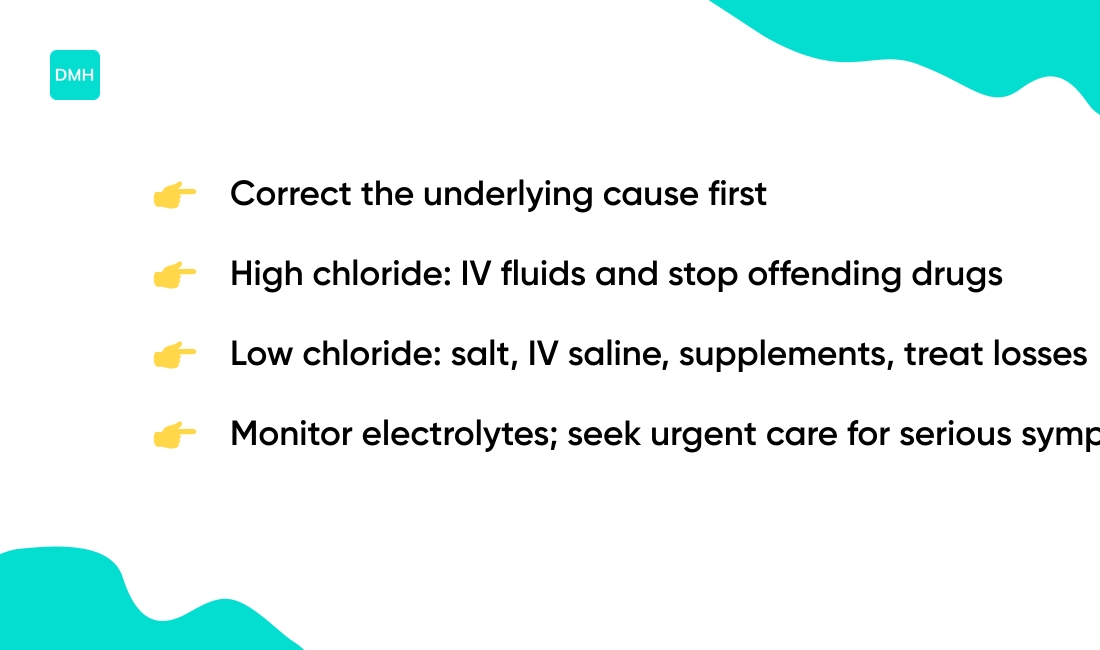
For high chloride, clinicians often give IV fluids. They stop or change drugs that raise chloride and monitor kidney function and the anion gap. Quick fluid care prevents many complications.
For low chloride, care may include oral salt, IV saline, or electrolyte supplements. Doctors treat vomiting, diuretic losses, or hormonal causes. They may add potassium when low potassium coexists, tailoring dose to lab numbers and symptoms.
Medication review is common. Diuretics, laxatives, and steroids can shift chloride—stopping or switching a drug fixes many mild cases. Severe cases need hospital monitoring and IV therapy.
Follow-up testing confirms response. Your doctor measures chloride and related electrolytes every 6–24 hours in serious cases. If you want a clinician overview, read the Medical News Today guide to electrolyte imbalances.
Act quickly if you notice weakness, irregular heartbeat, or breathing trouble. Ask your provider how often to recheck levels and which fluids or supplements fit your case.
You might also like: What Is A Dangerous White Blood Cell Count
When to worry about chloride results
A single mild chloride change rarely signals emergency. If you asked what is chloride in blood test, know it measures serum chloride—labs use that value to judge fluid and acid-base balance.
Normal chloride levels usually sit between 96 and 106 mEq/L on most reports. A value above 106 suggests hyperchloremia, while a value below 96 suggests hypochloremia.
If your result sits 1–4 mEq/L outside the range and you feel well, ask your clinician to repeat the test in 1 to 2 weeks. But if the chloride changes by 5 mEq/L or more, seek care the same day.
If you have weakness, irregular heartbeat, severe nausea, or confusion, get immediate care. People on diuretics, IV fluids, or with kidney or heart disease need closer checks. Testing 4 to 6 weeks after a medication change prevents surprises.
For stable patients, testing every 6 to 12 months often suffices. For unstable cases, check monthly or as your doctor advises.
Track results in a simple log—note date, chloride blood level, and related meds. This habit helps doctors spot trends fast and lets you monitor levels regularly.
We urge you not to self-diagnose from one lab value. In my opinion, most isolated chloride abnormalities need context from sodium, bicarbonate, symptoms, and meds. Always consult your doctor for interpretation and a clear plan.
You might also like: Low White Blood Cell Count: Causes, Symptoms, Leukopenia
Educational notice: This content is provided for informational and educational purposes only and is not intended as medical advice. Always consult a qualified healthcare professional for medical concerns.