Psoriasis can turn small patches of skin into persistent, scaly plaques that interfere with daily life.
Many people struggle with unpredictable flares, discomfort, and the frustration of finding effective psoriasis treatment.
This guide explains what causes psoriasis, how to recognize common psoriasis symptoms and types, and which treatments doctors recommend.
Expect clear information on topical creams, phototherapy, biologics, scalp and nail care, diet options, and safe home remedies.
You’ll get practical steps to manage flares, when to see a specialist, and what to expect from modern therapies.
By the end, you’ll understand treatment choices and how to work with clinicians to reduce symptoms and protect joints.
What is psoriasis
Psoriasis is considered a chronic autoimmune skin condition affecting about 125 million people worldwide, including roughly 3 million Americans each year. The immune system drives faster-than-normal skin cell growth, leading to raised areas that replace normal skin more quickly than usual.
Immune dysregulation involving dendritic cells, T cells, and cytokines such as IL-23 creates persistent inflammation. That inflammation produces inflamed scaly plaques on the skin. Affected areas often appear red and shiny under silvery scale.
Lesions can itch, burn, or feel sore. Plaque psoriasis represents about 80 to 90 out of 100 cases. Other forms include guttate, inverse, pustular, and nail psoriasis.
Severity can range from a few localized patches to widespread skin involvement. Some people develop joint inflammation; psoriatic arthritis affects up to 30 out of 100 people with skin disease.
Management options include topical therapies, phototherapy, systemic drugs, and biologics for psoriasis. Response can vary from person to person and over time. Research continues into underlying causes, new medications, and long-term disease control.
Not medical advice, content for educational purposes. Consult a qualified healthcare professional for personal medical guidance.
What causes psoriasis to develop
Psoriasis is an immune-mediated skin condition driven by both inherited risk and environmental triggers. Genetic variation and outside factors together shape why plaques form on the skin.
Genetic studies identify more than 60 susceptibility loci linked to psoriasis. The HLA-C*06:02 allele shows a strong association with earlier onset. Family history raises the likelihood of developing the disease, and twin research shows higher concordance among identical twins.
Common environmental triggers include infections, skin injury, certain medications, smoking, obesity, and severe stress. Some infections can precipitate sudden flare patterns such as guttate lesions.
Immune activity drives the visible changes in skin. Dendritic cells in the skin sense danger signals and release cytokines. Those cytokines include IL-23 proteins, which activate effector cells. Activated CD4 and CD8 T cells release IL-17, interferon-gamma, and other mediators that sustain inflammation.
The immune signals make keratinocytes divide faster. Epidermal turnover can shorten from about 28 days to near 3–5 days in plaques. Rapid cell growth plus persistent inflammation creates the thick, scaly lesions that characterize psoriasis.
Available research links genetic variants, environmental exposures, and immune pathways but doesn’t assign a single cause for every person. Not medical advice, content for educational purposes; consult a qualified healthcare professional for personal concerns.
What triggers psoriasis flare-ups
Psoriasis flare-ups can start without warning. Various environmental and lifestyle factors may activate or worsen symptoms.
- Stress – Emotional strain often links to more frequent flares. Some studies suggest stress alters immune signals.
- Infections – Streptococcal throat infections commonly precede guttate psoriasis in children and young adults.
- Medications – Lithium, beta-blockers, and antimalarial drugs are associated with new or worse lesions.
- Skin injuries – Cuts, sunburns, tattoos, and friction can produce new plaques via the Koebner phenomenon.
- Weather changes – Cold, dry climates often increase scaling and itching. Hot, humid conditions can irritate skin folds.
- Alcohol and tobacco use – Heavy alcohol intake and smoking correlate with higher flare frequency and poorer response to some therapies.
- Weight and metabolic factors – Obesity links to more severe disease and can affect response to treatment.
- Hormonal shifts – Pregnancy and menopause may change disease activity for some people.
Recognizing common psoriasis flare-up triggers helps guide self-care and clinical discussions. Precise effects vary between individuals. Evidence often comes from observational studies, so causation remains uncertain.
Not medical advice, content for educational purposes. Always consult a qualified healthcare professional for medical advice specific to your situation.
What are the common symptoms of psoriasis
Psoriasis commonly produces raised, inflamed skin patches. These red inflamed patches often appear on elbows, knees, scalp, hands, feet, and lower back.
Plaque psoriasis produces thick plaques covered with silvery white scales. Scales can flake off and leave skin raw, which may cause soreness and bleeding.
Skin can crack and split. This leads to dry cracked skin and pain in many people. Itching and a burning sensation occur in most cases, with intensity varying from mild to severe.
Lesions may form in skin folds, palms, soles, and around nails. Scalp psoriasis causes greasy or scaly patches under hair. Nail psoriasis can cause pitting, thickening, discoloration, and separation of the nail plate.
Guttate psoriasis shows small, drop-shaped spots across the trunk and limbs. It can follow throat infections. Inverse psoriasis appears as smooth red patches in warm, moist folds such as armpits and groin.
Pustular psoriasis produces white pus-filled blisters on red skin and can signal more severe disease. Epidemiologists estimate psoriasis affects 125 million people worldwide, roughly 2% of the population.
Not medical advice. Content for educational purposes. Always consult a qualified healthcare professional for medical advice specific to your situation.
Types of psoriasis
What does plaque psoriasis look like
Plaque psoriasis is the most common form of psoriasis, affecting about 80–90% of people with the condition. Lesions appear as raised red patches with clear edges.
A layer of silvery white scales often covers each patch. The scale can flake and shed. Scraping a scale may cause tiny pinpoint bleeding in some people.
Common sites include the scalp, elbows, knees, and lower back. Scalp involvement may show as thick flakes that cling to hair. Nail changes such as pitting or separation can occur with plaque disease.
Pruritus, burning, and varying thickness of plaques can affect daily comfort. Severity ranges from a few small plaques to widespread coverage over large body areas. Symptoms and appearance can vary between individuals and over time.
Not medical advice. Content for educational purposes. Always consult a qualified healthcare professional for medical advice specific to your situation.
What are the signs of guttate psoriasis
Guttate psoriasis signs usually start with sudden, small, drop-shaped spots on the trunk and limbs. Lesions typically measure about 2–10 mm across.
This variant commonly affects children and young adults. Many cases follow a recent sore throat linked to streptococcal throat infections. Spots appear quickly, over days to weeks.
They often show fine scaling and mild to deeply itchy sensations. Lesions differ from plaque psoriasis by being smaller and more scattered. Dozens to hundreds of lesions may appear on the chest, back, arms, and legs.
Clinicians may look for recent infection history and examine the skin pattern to guide diagnosis. Not medical advice. Content for educational purposes. Always consult a qualified healthcare professional for medical advice specific to individual situations.
How is inverse psoriasis treated
Inverse psoriasis shows as smooth red patches in skin folds such as armpits and groin. Friction and sweating often make symptoms worse in these thin, moist areas.
Clinicians may prioritize gentle topical measures for sensitive skin folds. Low-potency topical corticosteroid creams can reduce inflammation when used for brief courses. Higher absorption in folds raises side-effect risk, so treatment durations vary.
Topical calcineurin inhibitor creams may offer an alternative that avoids skin thinning. Keeping skin dry and wearing loose clothing can lower irritation. Secondary yeast (Candida) can coexist and may prompt antifungal therapy.
If lesions persist or other psoriasis types appear, systemic therapies may be discussed by clinicians. Evidence suggests response varies between individuals, and monitoring matters.
Not medical advice. Content for educational purposes only. Always consult a qualified healthcare professional for medical advice specific to an individual situation.
What is pustular psoriasis and how is it managed
Pustular psoriasis is a rare, severe variant of psoriasis showing white pus-filled blisters on red skin. Lesions can cluster on hands and feet or become widespread.
Pustular forms affect a tiny fraction of people with psoriasis. Generalized cases occur in fewer than one in 100,000 people. Generalized pustular psoriasis (GPP) can cause fever, chills, and low blood pressure.
Such cases may require immediate medical attention. Hospitalization can provide fluid support and close monitoring. Localized forms often affect palms and soles and can limit function.
Management involves rapid medical assessment and targeted therapies. Guidelines describe systemic retinoids, methotrexate, cyclosporine, and biologics. Choice of therapy varies by severity, comorbidities, and response.
Early specialist care may reduce complications like infection or electrolyte imbalance. Patients may need lab monitoring and supportive care. Not medical advice. Content for educational purposes. Consult a qualified healthcare professional for advice specific to individual situations.
What is psoriatic arthritis and how is it managed
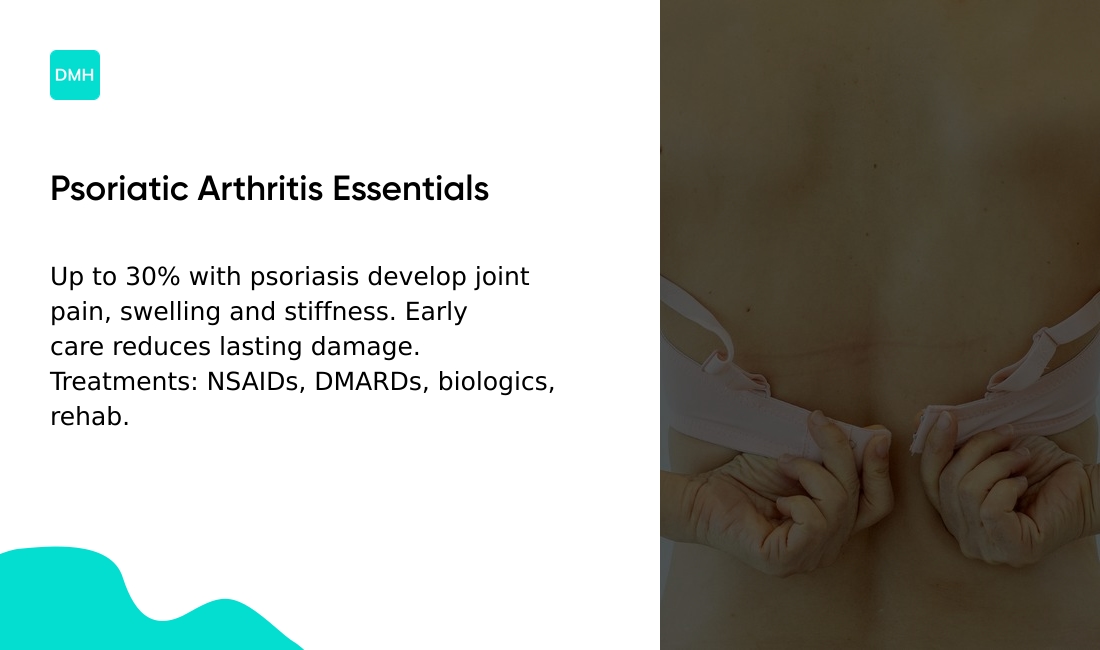
Psoriatic arthritis is an inflammatory joint condition that may affect up to 30% of people with psoriasis. It causes joint pain, stiffness, swelling, and reduced range of motion. Skin plaques and nail changes often coexist with joint signs.
Early diagnosis matters. Rheumatology referral and prompt assessment can reduce the chance of lasting joint damage. Plain X-rays, ultrasound, or MRI help detect inflammation and erosions. Blood tests check markers of inflammation and rule out other causes.
Management uses a mix of therapies to control symptoms and preserve function. Short courses of anti-inflammatory medicines can ease pain. Conventional disease-modifying drugs and biologics may lower joint inflammation. Choice of medication varies by disease pattern and patient factors.
Non-drug measures include tailored exercise, physical therapy, weight management, and joint protection strategies. Smoking cessation links to better outcomes in some studies. Regular monitoring helps track response and adjust care.
People may experience flares that vary in intensity over time. Some follow-up studies show earlier treatment associates with lower rates of joint erosion over years. Evidence quality varies, and individual responses can differ.
Not medical advice. Content for educational purposes. Always consult a qualified healthcare professional for medical advice specific to an individual’s situation.
How is psoriasis treated
Which cream works best for psoriasis
Mild-to-moderate psoriasis often improves with topical therapies applied to plaques. Topical corticosteroids reduce inflammation and scaling. Potency varies by lesion thickness and site.
Topical corticosteroid creams, vitamin D analogs, retinoids, and calcineurin inhibitor creams form the usual topical options. Topical retinoids such as tretinoin can reduce scaling; see tretinoin vs retinol for differences.
Scalp psoriasis often needs medicated shampoos or solutions rather than creams. Nail psoriasis may respond slower and can need systemic approaches alongside topical care.
Topical metformin is under clinical study as an emerging option. Selection may balance benefit and side effects. Not medical advice; content for educational purposes. Consult a qualified healthcare professional for medical advice specific to your situation.
How effective is phototherapy for psoriasis
Phototherapy for psoriasis uses ultraviolet light to slow skin cell growth and lower inflammation. Narrowband UVB often requires 2–3 sessions per week for 6–12 weeks. Some studies report 50–60% of patients reach PASI75 after a full course.
PUVA treatment can produce higher clearance in some series, with 60–80% reaching PASI75. PUVA carries greater long-term risks and often needs medical monitoring.
Short-term effects include redness, itching, or mild burning. Phototherapy suits moderate psoriasis that covers large body areas. You may notice improvement after six weeks.
Clinics tailor dose by skin type and prior sun exposure. Home units exist but require medical oversight. Not medical advice. Always consult a qualified healthcare professional for advice specific to your situation.
Are biologics safe and effective for psoriasis
Biologics for psoriasis are targeted injectable drugs that block immune proteins like TNF-alpha, IL-17, and IL-23. Clinical trials show benefit for many patients. Many reach at least 75% skin clearance (PASI75) within months.
Newer IL-23 inhibitors yield PASI90 rates around 50–80% in trials. Safety profiles improved compared with older systemic drugs. Common side effects include mild infections and injection-site reactions.
Some studies report serious infection rates near 1–3 per 100 patient-years. Tuberculosis screening and routine monitoring remain standard before starting therapy. Targeted injectable medications fit moderate-to-severe psoriasis and cases with psoriatic arthritis features.
Patients may wish to discuss options and monitoring with a clinician. Research on immune targets explains mechanisms and emerging data. Improved safety profiles and strong efficacy make biologics an important option for many people.
Not medical advice, content for educational purposes. Consult a qualified healthcare professional for medical advice specific to your situation.
Emerging oral therapies and new treatments
New oral options may expand psoriasis treatment choices. Clinical research shows several promising agents with different immune targets.
| Drug Name | Class | Key Data | Expected Timeline |
|---|---|---|---|
| Icotrokinra | IL-23 inhibitor | Nearly 75% clear or almost clear skin at 24 weeks | FDA application July 2025 |
| ESK-001 | TYK2 inhibitor | Significant skin improvement in phase 2 | Phase 3 results early 2026 |
| Deucravacitinib | TYK2 inhibitor | Approved oral option, expanding indications | FDA decision March 2026 |
| Ebdarokimab | Injectable | 80% achieved 75% symptom reduction at one year | Chinese approval April 2025 |
IL-23 inhibitors like icotrokinra have shown up to 75% skin clearance in early trials. Those results reflect relative skin improvement measures such as PASI scores. New treatments for psoriasis describe these developments in detail.
TYK2 inhibitors including deucravacitinib and ESK-001 have produced PASI75 responses in the range of about 50–60% in some trials. Response rates can vary by study design and patient group. Other TYK2 agents like D-2570 and ICP-488 are in trials, potentially suiting palmoplantar or guttate subtypes.
Phase 3 results for novel injectables such as ebdarokimab are expected through 2026–2028. Those readouts will clarify longer-term efficacy and safety profiles. Additional candidates include picankibart (IBI112) and imsidolimab (ANB019) for plaque psoriasis, with piclidenoson phase 3 starting mid-2025.
Well, emerging areas include epigenetic reprogramming to reset immune memory, microbiome modulation via probiotics, and topical metformin in trials. Available evidence may guide future psoriasis treatment pathways. Not medical advice, content for educational purposes. Consult a qualified healthcare professional for medical advice specific to your situation.
How do you treat scalp psoriasis
Scalp involvement affects up to 80% of people with psoriasis. Hair makes access harder and can hide scales. Management focuses on reducing scale, calming inflammation, and improving comfort.
Medicated shampoos with coal tar or salicylic acid can soften scales and reduce build-up. Antifungal shampoos with ketoconazole may help when yeast contributes to flaking. Use formulas made for scalps rather than body soaps.
Topical corticosteroids and vitamin D analogs often come as foams, lotions, or gels. Those forms reach the skin through hair more easily than creams. Some clinicians combine short steroid courses with a vitamin D product to limit steroid exposure.
Oils and keratolytic agents loosen thick scales. Mineral oil, coconut oil, and salicylic acid scalp oils can help. Some people apply oil for 15–30 minutes, comb out loose scale, then shampoo.
Phototherapy via UV combs or targeted excimer devices can focus light on the scalp. Availability varies by clinic. Evidence shows benefit for localized lesions in many patients.
Systemic medications such as biologics or oral agents may be considered for severe or widespread disease that affects quality of life. Treatment choice depends on overall disease, other health issues, and physician assessment.
Practical tips include choosing scalp-specific formulations, using short steroid courses when advised, and reporting new symptoms to a clinician. Not medical advice; content for educational purposes. Always consult a qualified healthcare professional for advice specific to your situation.
How do you treat nail psoriasis
Nail psoriasis causes pitting, discoloration, thickening, and separation of the nail plate (onycholysis). These changes can affect fingernails or toenails and may occur with skin or joint disease linked to psoriasis.
Topical approaches sit on the mild end of the spectrum. High-potency steroid creams or vitamin D analogs apply to the nail fold or under the nail plate after softening. Topical corticosteroid creams may improve signs but often penetrate slowly through the nail.
Targeted injections into the nail matrix use corticosteroids to reduce local inflammation. Many clinics report benefit after 2–4 injections spaced several weeks apart. Expect pain at the injection site and a risk of skin thinning. Intralesional corticosteroid injections have shown improvement in about 40 to 60 out of 100 patients in clinical series, though responses vary.
Systemic options help when nails link with moderate or severe disease. Oral agents such as methotrexate, ciclosporin, or acitretin may help. Biologic agents that target IL-17 or IL-23 can yield larger nail responses in trials.
Some studies report marked nail improvement in roughly 50 to 70 out of 100 patients by week 24. Systemic biologic medications often take weeks to months to show effects. Simple nail care may reduce damage: keep nails short, avoid trauma, treat concurrent fungal infection, and use emollients for the fold.
Not medical advice. Consult a qualified healthcare professional for guidance specific to your situation.
What diet is best for psoriasis
Diet can influence inflammation that links to psoriasis symptoms. Evidence suggests dietary patterns may change symptom severity for some people.
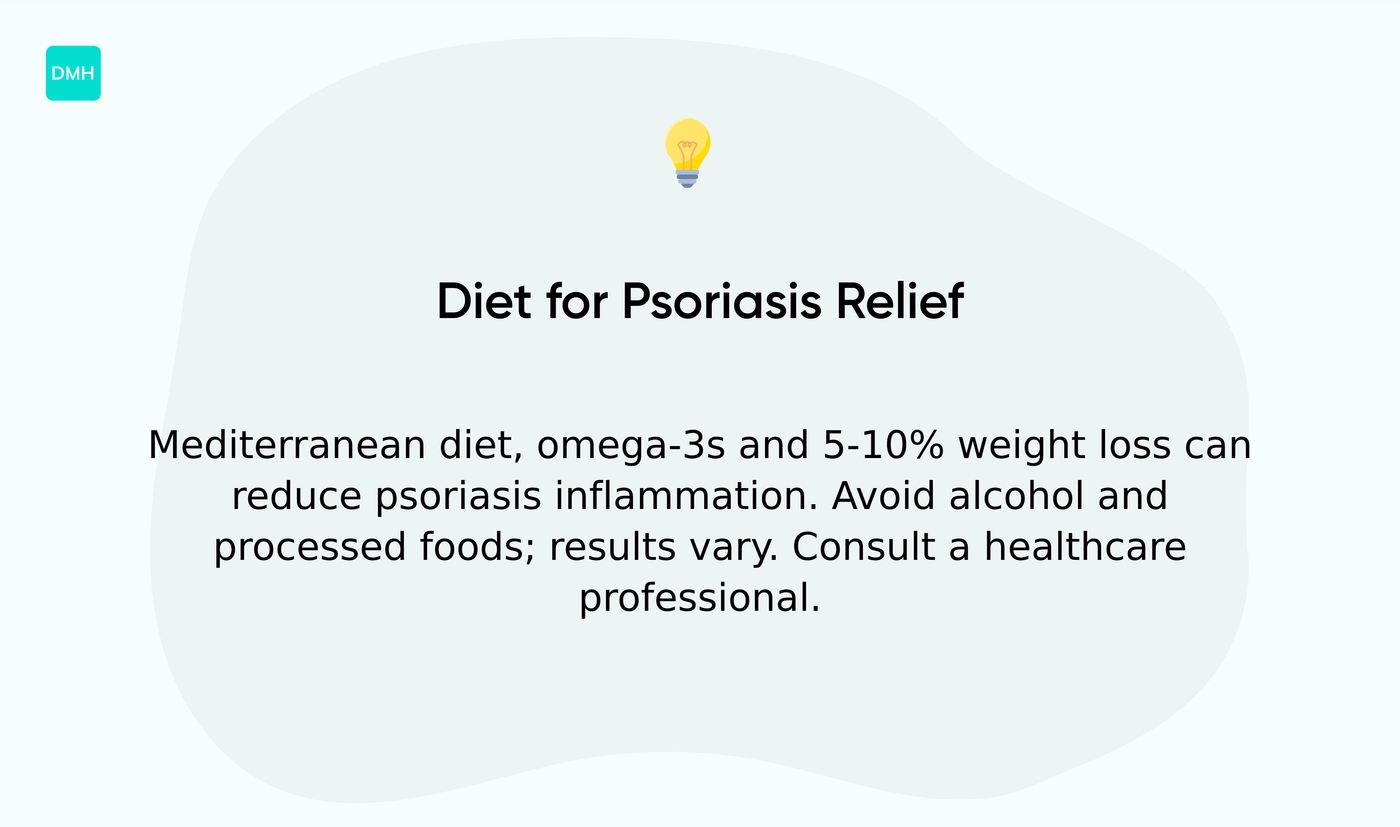
Mediterranean-style diet shows the most consistent association with lower inflammatory markers. This diet emphasizes vegetables, fruits, whole grains, legumes, nuts, olive oil, and lean protein sources.
Omega-3 fatty acids from fatty fish, flaxseed, and walnuts may reduce skin inflammation in some trials. Some randomized studies report modest drops in psoriasis severity scores, near 15–30% in small samples.
Alcohol and highly processed foods often associate with worse outcomes. Observational data link heavy alcohol use and diets high in refined sugars to higher flare frequency.
Body weight relates to symptom control. Obesity increases systemic inflammation and links with higher psoriasis severity. Weight loss of about 5–10% has been associated with measurable symptom improvement in several studies.
Practical steps people may consider include eating more whole foods, choosing fatty fish twice weekly per guideline summaries, cutting back on processed snacks, and limiting alcohol intake. Individual responses can vary widely.
Not medical advice. Content for educational purposes. Always consult a qualified healthcare professional for medical advice specific to an individual situation.
Do home remedies help with psoriasis
Home remedies include simple self-care steps that may support psoriasis treatment. About 125 million people have psoriasis worldwide. Self-care aims to reduce dryness, itching, and visible scaling.
- Moisturize skin daily — Emollients reduce water loss and ease flaking for many people.
- Oatmeal baths soothe — Colloidal oatmeal can calm irritation and lower itch sensations.
- Aloe vera gel — Topical aloe may reduce redness for some individuals.
- Stress reduction techniques — Can relate to fewer flare-ups, according to some studies.
- Weight loss and limiting alcohol — May lower inflammation in some people.
- Gentle cleansing and sun protection — Help avoid skin injury and new plaques.
- Wound care — Scratch-related wounds need focused care; see how to heal skin picking wounds overnight for wound-care tips.
Evidence varies across remedies. Some small trials show symptom improvement for certain measures. Effects can vary from person to person. Home remedies rarely replace prescribed therapies for moderate or severe psoriasis.
People may wish to discuss complementary options with their clinician before use. Not medical advice. Content for educational purposes only. Consult a qualified healthcare professional for medical advice specific to your situation.
What’s the difference between psoriasis and eczema
Psoriasis and eczema are common inflammatory skin conditions. Psoriasis affects about 125 million people worldwide. Psoriasis often appears as a chronic autoimmune condition that speeds skin cell growth.
Psoriasis shows well-defined, raised patches. These patches appear as red scaly plaques with silvery-white scales. Plaque psoriasis often affects elbows, knees, scalp, and lower back. Scalp psoriasis and nail psoriasis cause unique care needs.
Eczema, commonly called atopic dermatitis, shows poorly defined red patches. Skin becomes dry, cracked, or weepy. Intense itching drives scratching and secondary infections. Eczema often appears on face, neck, inner elbows, and behind knees.
Causes differ. Psoriasis links to immune cells, IL-23 pathways, and genetic risk. Eczema links to skin barrier defects, filaggrin gene variants, and allergic sensitization. Both conditions flare after stress, infections, or certain medications.
Management varies by diagnosis and severity. Psoriasis management includes topical agents, phototherapy, and systemic biologic therapies. Eczema management emphasizes emollients, topical anti-inflammatory creams, and targeted biologic options for severe cases.
Psoriatic arthritis affects up to 30 out of 100 people with psoriasis and may need joint-focused care. A correct diagnosis guides appropriate management and monitoring. Skin biopsy or specialist assessment may clarify unclear cases.
Not medical advice; content for educational purposes. Consult a qualified healthcare professional for guidance.
Is there a cure for psoriasis
Psoriasis is a chronic immune-mediated skin condition that affects about 125 million people worldwide. Rapid skin cell growth and immune dysregulation cause red, scaly plaques and varied psoriasis symptoms.
No known cure exists at present. Treatments aim to control symptoms and reduce flares. Topical therapies, phototherapy, systemic medications, and biologics form the backbone of current psoriasis treatment.
Some people achieve long symptom-free periods with modern biologics. Up to 30 out of 100 people with moderate-to-severe disease reach 75% skin clearance in trials of selective IL-23 inhibitors. Results vary by drug and by individual.
Active research targets the root causes of immune memory in skin. Scientists explore long-term remission by changing immune cell behavior. Labs study immune system memory to reduce relapse risk.
Teams test microbiome modulation strategies to shift skin and gut bacteria toward less inflammatory profiles. For example, NPF-funded studies focus on CD5+ dendritic cells in psoriatic skin to rewire inflammation at its source, potentially aiding patients unresponsive to current treatments.
Early trials show promise but leave uncertainty about durability and safety over years. Larger, longer studies must confirm whether these approaches can produce sustained remission without ongoing therapy.
Not medical advice, content for educational purposes. Always consult a qualified healthcare professional for medical advice specific to an individual situation.
Educational notice: This content is provided for informational and educational purposes only and is not intended as medical advice. Always consult a qualified healthcare professional for medical concerns.