Preventing osteoporosis at any age focuses on four main pillars: proper nutrition with calcium and vitamin D, weight-bearing and resistance exercises, fall prevention strategies, and medications if needed.
Over 54 million Americans live with low bone mass, and the numbers keep climbing.
Here’s the thing — you can take action now to protect your skeleton and cut fracture risk.
This guide walks you through science-backed steps to build stronger bones, from nutrition and exercise to screening and treatment.
What is osteoporosis and how does it occur
Osteoporosis is a bone disease that reduces bone density and raises fracture risk. Understanding this process is the first step in prevention.
Bone strength depends on both bone mass and structure. Your body constantly cycles bone through the bone remodeling process. Osteoclasts remove old bone, while osteoblasts build new bone to replace it.
When resorption outpaces formation, bones thin. Microarchitecture breaks down and fractures become more likely. (Think of it like withdrawing from a bank account faster than you deposit.)
Age and hormones speed bone loss. After menopause, women can lose 2–3% of bone density per year for several years. One in three women and one in five men over 50 will break a bone because of low bone density.
Well, knowing the process helps you act early. You can prevent bone loss with diet, exercise, and screening. Low calcium intake, low vitamin D, inactivity, smoking, and heavy alcohol use increase risk. Some medicines and medical conditions do too.
Begin with a bone density test if you have risk factors. Treatment and lifestyle change can raise bone strength and drive bone density improvement. Prevention starts with understanding and simple action — ask your clinician about testing and a plan for long-term bone health.
What are the risk factors for osteoporosis and how can I reduce them
Non-modifiable risks include age, genetics, and menopause. Women can lose up to 20% of spinal bone density in the first 5–7 years after menopause. Low peak bone mass from youth raises lifetime fracture risk.
Modifiable risks include tobacco use, heavy alcohol use, low body weight, physical inactivity, and poor diet. Long-term steroid use and some medical conditions like hyperthyroidism raise risk too.
So how do you reduce these risks? Do weight-bearing exercise and resistance training to stimulate bone growth. Strength training and consistent activity prevent bone loss more effectively than diet changes alone.
Improve diet to support bones. Aim for adequate calcium intake and maintain vitamin D levels for absorption. Eat dairy, leafy greens, and fortified foods.
Quit smoking and limit alcohol. Review your medications with a clinician and ask about DXA scanning if you have multiple risks.
Make your home safer to reduce falls. Add rails, remove tripping hazards, and practice balance work. Small steps add up fast. Talk with your doctor about a personalized plan — start with a strength routine and check your vitamin D level this month.
Essential nutrients for bone health
How much calcium do I need for bone health
Clear daily calcium targets help you prevent bone loss and keep bones strong. Here’s what you need by age:
| Age Group | Daily Calcium (mg) |
|---|---|
| 0–6 months | 200 |
| 7–12 months | 260 |
| 1–3 years | 700 |
| 4–8 years | 1,000 |
| 9–18 years | 1,300 |
| 19–50 years | 1,000 |
| Men 51–70 years | 1,000 |
| Women 51+ years | 1,200 |
| 71+ years | 1,200 |
| Pregnant/breastfeeding teens | 1,300 |
| Pregnant/breastfeeding adults | 1,000 |
Calcium intake daily fuels the bone matrix and supports mineral density. Bone density gains occur when you pair calcium with adequate vitamin D and weight-bearing exercise.
Tracking your intake beats guessing. Meet these targets and add resistance training and safe sun exposure — small changes make a lasting difference.
What foods help prevent osteoporosis
Foods that supply calcium, vitamin D, protein, and magnesium support strong bones. Actually, you’ll find plenty of options beyond milk:
- Dairy sources: Milk (1 cup ≈ 300 mg), yogurt (1 cup ≈ 300–400 mg), hard cheese (1.5 oz ≈ 300 mg)
- Leafy green vegetables: Cooked collards or kale (1 cup ≈ 150–250 mg) — choose low-oxalate greens for better absorption
- Fortified options: Plant milks and cereals often provide ~300 mg per serving
- Other sources: Tofu set with calcium (½ cup ≈ 200–350 mg), canned salmon with bones (3 oz ≈ 180 mg)
- Nuts and seeds: Almonds and sesame seeds offer modest calcium and healthy fats (1 oz ≈ 75–90 mg)
Pairing these foods with adequate vitamin D and weight-bearing exercises gives you the best chance to prevent bone loss. Try adding one high-calcium item to two meals daily and watch your intake climb.
How much vitamin D do I need to prevent bone loss
Vitamin D lets your gut absorb calcium and keeps bones strong. Most adults need about 600 IU daily, while people over 70 should aim for 800 IU. Target a 25‑hydroxyvitamin D level of 20–30 ng/mL.
Use fortified milk, fatty fish, and eggs for steady intake. Short midday exposure of 10–30 minutes on arms and legs two times weekly raises levels for many people. (Skin tone, latitude, and season change how much sun you need.)
If you lack sun or dietary sources, consider 800–1,000 IU daily from a supplement. The USPSTF finds limited evidence that routine low-dose supplements (400 IU vitamin D or 1,000 mg calcium or less) prevent fractures in postmenopausal women without deficiency, and insufficient evidence for higher doses or use in men and premenopausal women. Testing a 25(OH)D blood level guides safe dosing.
This approach supports bone loss prevention and fits into a broader plan for sunlight and supplements. Read common supplement dosage warnings before you start.
Which supplements support bone health
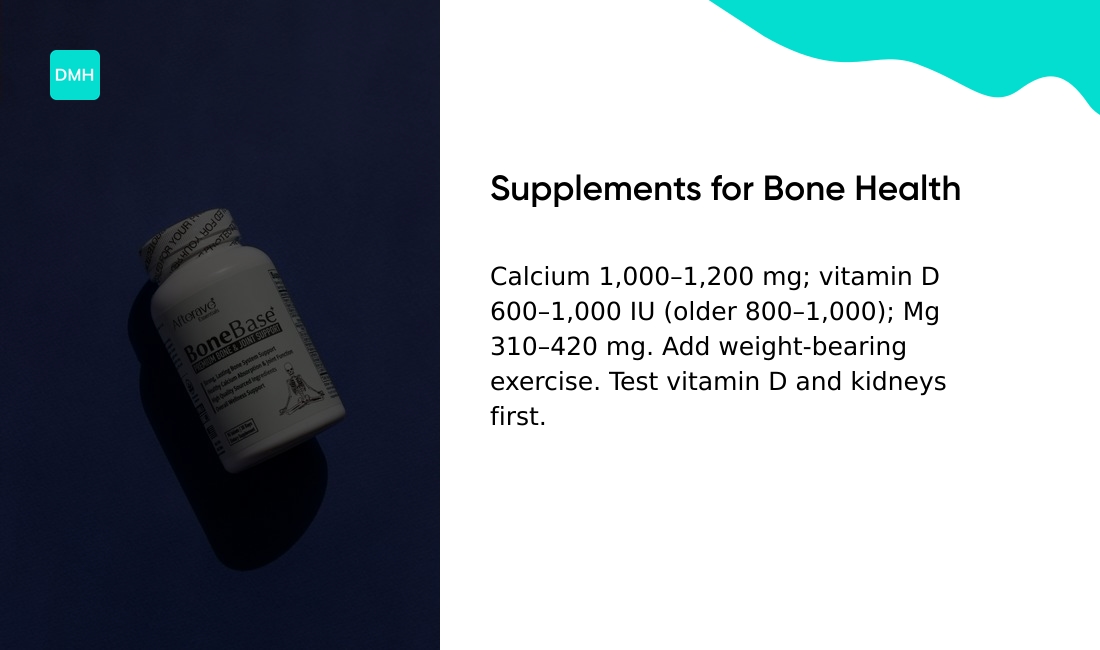
Take adequate calcium and vitamin D to prevent bone loss. Most adults need 1,000 mg calcium daily; women over 50 and adults over 70 need 1,200 mg. Adults generally need 600–800 IU vitamin D daily.
Older adults often benefit from 800–1,000 IU and a serum 25‑OH level of 20–50 ng/mL. Magnesium helps vitamin D work — target 310–420 mg daily.
Vitamin K2 (MK‑7) 90–200 mcg, omega‑3s 1 g, and collagen peptides 5–10 g show modest support for bone quality. Combining supplements with weight-bearing exercise and protein supports bone density improvement.
We recommend testing vitamin D and kidney function before starting supplements. Check your results on the guide to supplements and blood test results and talk with your clinician about dose and interactions.
Best exercises to prevent osteoporosis
What are the best weight-bearing exercises for osteoporosis
Weight-bearing activities that use impact and gravity build bone and help prevent fractures. Impact and gravity stress bones and stimulate new bone formation.
Brisk walking and stair climbing are excellent starting points. Add running, dancing, tennis, and hiking for higher impact. Aim for 30 minutes most days and three high-impact sessions per week.
Pair with resistance training two times per week to build density. Trials like LIFTMOR show measurable gains from high-intensity loading, though these programs require supervision by a physiotherapist for safety, especially in older adults or those with fractures.
Plus, mixing these movements with strength work gives the best results. Use the weight-bearing exercises above to prevent bone loss and pair them with calcium and vitamin D intake. Learn more about stair training on our stair climbing benefits page.
Talk to your doctor before a new program. Begin slow and increase intensity safely.
Does strength training increase bone density
Yes — strength training increases bone density and helps prevent bone loss. These strength training benefits help reduce fracture risk.
High‑intensity resistance with weights, bands, and bodyweight stresses bone and triggers growth. LIFTMOR trial evidence showed lumbar spine BMD gains near 2–3% after eight months. Subjects improved hip strength and balance, aiding bone density improvement.
Use compound moves: squats, deadlifts, presses, and step‑ups. Aim for 70–85% of your one‑rep max to stimulate bone. Bands and bodyweight work when you push near failure and use a slow tempo.
We recommend supervised, progressive loading two times per week. Screen for prior fractures, use slow progression, and avoid heavy spinal flexion if you have vertebral fractures. Talk with your clinician before you start.
Balance exercises to prevent falls
Balance work cuts fall risk and protects bones from fractures. Balance training is a key part of preventing osteoporosis.
Yoga, tai chi, single‑leg stands, and lunges all improve stability. Studies show tai chi reduces falls by about 20%. Practice single‑leg stands for 30 seconds per leg — repeat three sets daily.
Add lunges and heel-to-toe walks to challenge balance. Hold a chair if needed. Combining balance drills with weight-bearing exercises helps you prevent bone loss.
Add strength training for bone density twice weekly. Pair balance work with calcium and vitamin D. Aim for three 20-minute balance sessions per week. These simple fall prevention strategies build confidence and reduce fracture risk.
Lifestyle changes to prevent osteoporosis
Learning how to prevent osteoporosis starts with daily habits that protect your bones and reduce falls. Quit smoking — it harms bone repair and raises fracture risk. Try a program or nicotine replacement to succeed.
Limit alcohol. Heavy drinking weakens bone and harms balance. Aim for moderate use and track your intake.
What other changes can you make? Walking 30 minutes most days and adding strength sessions twice a week is a solid start. Use balance moves to reduce falls: do single-leg stands, heel-to-toe walks, or tai chi three times weekly.
Improve home safety to prevent slips. Remove loose rugs, add grab bars, fix poor lighting, and keep floors clear. Check your meds with a clinician — some drugs raise fall risk or lower bone density. Ask about safer alternatives.
Support bones with diet and sun exposure. Get calcium for bone health and vitamin D for absorption. Consider supplements if you lack dietary sources.
Track progress by measuring activity minutes, noting alcohol units, and scheduling a bone density test if you have risk factors. Simple fixes work best, and you’ll see results when you stick with them.
How can women reduce their risk of osteoporosis
We outline clear, age-specific steps women can take to prevent bone loss and reduce fracture risk. Menopause accelerates bone loss — women can lose up to 10–20% of bone density within 5–7 years after menopause.
Proactive management matters. Talk with your clinician about menopausal hormone therapy if your fracture risk is high. Pregnancy raises calcium needs: aim for 1,000 mg daily for most adult women and 1,300 mg for teens. Use diet first and add supplements when needed.
Vitamin D helps the body absorb calcium. Typical guidance recommends 600–800 IU daily for most adults. Check levels with a blood test when possible — vitamin D intake matters for bone density and muscle function.
Exercise builds and preserves bone. Include weight-bearing walks, jogging, dancing, and stair climbing. Add progressive resistance sessions two to three times weekly. Strength training gains show up in bone scans and in better balance.
Change daily habits that harm bone: stop smoking, limit alcohol to low amounts, and make your home fall-safe with good lighting and secure rugs. Get screened if you have risk factors — a DXA scan and FRAX score guide treatment decisions.
Here’s what to do next: review your diet, add strength work, check vitamin D, and book a bone density test with your provider.
How can men prevent osteoporosis
Bone loss speeds up as testosterone and activity fall with age. Low testosterone, long-term steroid use, and tobacco raise fracture risk. You can act on many of those risks.
Focus on calcium for bone health. Men 50–70 need about 1,000 mg of calcium daily, while men over 70 need about 1,200 mg. Get calcium from dairy, fortified plant milk, canned salmon, and leafy greens.
Prioritize vitamin D for absorption — aim for roughly 800–1,000 IU daily or follow your clinician’s test results. Supplements cut fracture risk when levels are low.
Adopt regular exercise. Do weight-bearing exercises like brisk walking 30 minutes most days. Add strength training two to three times weekly to stimulate bone formation. Consistent lifting delivers the biggest gains for bone density.
Ask your clinician about a DXA scan if you have risk factors or past fractures. Discuss testosterone testing if you have low energy or muscle loss. Prescription options exist for high-risk men.
Stop smoking, limit alcohol, and improve home safety to prevent falls. Track progress with repeat scans or strength goals. Start with one habit this week and talk with your doctor about testing and a tailored plan.
Read also: How To Sleep After Shoulder Surgery
Osteoporosis prevention by age group
Peak bone mass forms by about age 30. Build a strong foundation early.
- Youth (teens to 20s): Eat calcium-rich foods and vitamin D sources. Play impact sports and jump regularly to stimulate bone growth. Aim for 1,000 mg calcium daily.
- 30s to 40s: Prioritize progressive resistance training twice weekly. Keep protein intake steady. Gains made here pay off for decades.
- 50s (perimenopause and menopause): Monitor bone density if you have risk factors. Maintain strength work and balance training. Aim for about 1,200 mg calcium and 600–800 IU vitamin D daily.
- 60s and beyond: Focus on balance exercises and home safety to cut fall risk. Keep resistance sessions at least twice a week. Discuss DXA screening and medication options with your clinician when fracture risk rises.
Simple daily habits move the needle. Walk briskly for 20–30 minutes most days and do two short strength sessions weekly. Stop smoking and limit high alcohol intake.
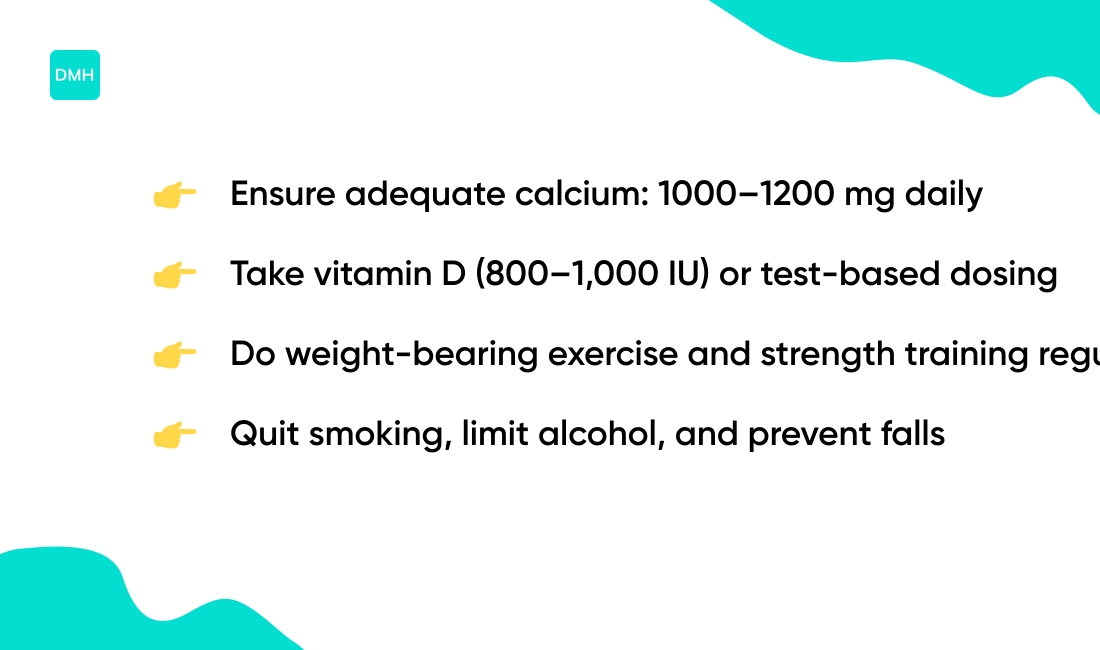
Preventing bone loss comes from steady action. Mix weight-bearing exercises with targeted strength work. Support intake with calcium for bone and adequate vitamin D. We tailor plans by age and risk — modest, consistent changes cut fracture risk.
Read also: How To Heal A Sprained Ankle Overnight
Screening and medical interventions
We recommend bone density testing with DXA for women 65 and older, men 70 and older, and anyone with fracture risk factors. Use the FRAX risk tool to estimate 10-year fracture probability.
Treat when major fracture risk is ≥20% or hip fracture risk is ≥3%. Screening with tools like FRAX and DXA followed by interventions reduces hip fractures by 17% and major osteoporotic fractures by 6%, per pooled RCT analyses from JAMA.
Repeat DXA every 1–2 years if you start therapy or if your risk profile changes. Get vertebral imaging if you have height loss or back pain.
Consult an endocrinologist for secondary causes, complex cases, or suspected parathyroid issues. Learn which specialist to see for parathyroid problems.
Medication options include oral bisphosphonates (alendronate, risedronate) and IV zoledronic acid. Trials show bisphosphonates cut vertebral fractures by roughly half and lower hip fractures too. Bisphosphonates suit many high-risk patients.
Hormone options such as hormone replacement therapy reduce bone loss after menopause but carry vascular and breast risks. Estrogen therapy is FDA-approved for postmenopausal osteoporosis prevention. SERMs like raloxifene reduce spine fractures, while calcitonin and denosumab offer additional choices.
If you have a FRAX score above thresholds or a prior fracture, talk with your provider about DXA and medication. Acting early prevents loss and fractures — start the conversation today.
Read also: How long does it take for a torn rotator cuff to heal without surgery
Educational notice: This content is provided for informational and educational purposes only and is not intended as medical advice. Always consult a qualified healthcare professional for medical concerns.