Kidney stones form when urine holds too much dissolved mineral and too little liquid.
Crystals appear when urine becomes supersaturated with calcium, oxalate, or uric acid.
These crystals stick to kidney tissue and grow into stones over days or weeks.
What causes kidney stones?
Dehydration concentrates urine and raises crystal formation. To reduce risk, drink more water every day.
High sodium intake pushes calcium into urine and raises stone risk. Diets high in animal protein increase uric acid and lower urine citrate levels.
Foods rich in oxalate can bind with calcium and form stones. Pairing calcium with meals lowers that risk.
Most stones are calcium oxalate stones. Uric acid stones form when urine stays acidic.
Genetics and past stones raise your likelihood of a new stone. Conditions like gout or hyperparathyroidism alter urine chemistry.
Some medicines and high-dose vitamin C change urine minerals and raise risk. Low urine output under one liter daily concentrates minerals and increases stone formation.
Obesity and rapid weight loss change urine chemistry and raise risk for some people. Sugary sodas and excess fructose can raise urine calcium and oxalate.
Well, many cases are actually preventable. Focus on steady fluids, lower sodium, and moderate animal protein.
Early evaluation after a first stone helps tailor prevention with urine testing and targeted treatment. For practical kidney stone prevention, check your urine volume and diet with your provider.
How much water should I drink to prevent kidney stones?
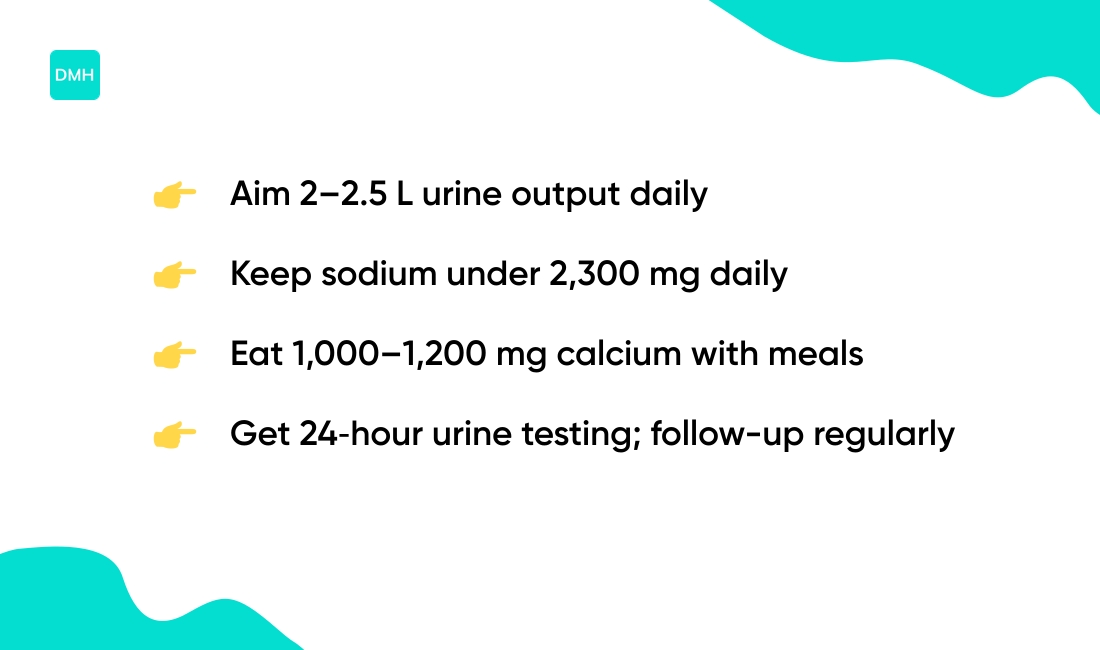
We recommend a urine output of 2-2.5 liters daily. This lowers your risk of concentrated urine and stone formation.
Aim to drink 8-12 cups of water each day to reach that output. Athletes and people who sweat heavily should target the higher end and add more fluids.
Good hydration supports kidney stone prevention. Aim for steady intake rather than large boluses.
Check your urine color each morning and aim for pale straw color. Use a urine color check and simple tracking to stay honest.
Weigh yourself before and after long workouts to estimate fluid loss. Use a 2-liter bottle to visualize daily urine volume.
Carrying a refillable bottle helps you meet fluid goals. Add lemon or orange juice to raise urinary citrate and lower stone risk.
If you notice dark urine, check labs and read dehydration blood test results for guidance. If you’ve had stones before, talk to your clinician for tailored targets.
Keep sodium moderate to lower urinary calcium. Limit high-oxalate foods if you form calcium oxalate stones.
Your doctor may prescribe thiazide diuretics or potassium citrate when needed. Start by tracking intake for one week and adjust to hit goals.
What is the best diet to prevent kidney stones?
How much calcium should I consume to prevent kidney stones?
We recommend 1,000 to 1,200 mg of calcium daily. That lowers kidney stone risk.
Aim to get that calcium from food. Have dairy with meals to bind oxalate in the gut.
Food sources beat supplements for most people. Avoid calcium pills unless your doctor prescribes them.
Choose calcium-rich dairy choices like milk, yogurt, and cheese. Fortified plant milks and canned salmon add calcium too.
Aim for about 300 mg per meal across three to four meals. If you have prior calcium oxalate stones, talk to your clinician for a tailored plan.
Some studies link calcium supplements to higher stone risk. If supplements are needed, take them with food only under medical advice.
Proper calcium intake lowers urinary oxalate and supports how to prevent kidney stones.
How does salt (sodium) intake affect kidney stone risk?
High sodium intake increases urinary calcium excretion and raises risk for calcium oxalate stones.
Sodium and calcium share transport pathways in the kidney. When you eat more sodium, your kidneys release more calcium into urine.
Higher urine calcium creates more material that can crystallize into stones. Research shows diets high in sodium link to higher stone recurrence.
Aim for under 2,300 mg sodium per day. If you’ve had stones before, aim under 1,500 mg daily.
Read Nutrition Facts and pick items with less than 140 mg sodium per serving. Cut processed foods like canned soup, deli meats, frozen meals, and chips.
Skip added table salt. Use herbs, lemon juice, vinegar, garlic, and spices for flavor.
Lowering salt is one of the simplest, high-impact steps you can take to prevent kidney stones. This step helps you learn how to prevent kidney stones.
Talk with your doctor or dietitian to set a sodium goal based on your history.
Does high protein intake increase the risk of kidney stones?
Eating large amounts of animal protein raises uric acid and calcium in urine. That shift makes stone formation more likely.
Animal protein lowers urinary citrate, a natural inhibitor. We recommend limiting red meat and poultry to moderate portions daily.
Aim for 3–4 oz (85–113 g) per meal and about 0.8 g/kg body weight of total protein. Shifting some servings to plants cuts risk.
Animal protein increases uric acid and urinary calcium. Beans, lentils and tofu supply protein with less impact.
Choose calcium with meals to bind oxalate. Drink enough water to dilute urine.
If you want a simple swap, replace one meat meal per day with legumes. That step helps your diet to prevent kidney stones and supports kidney health.
Benefits of fruits and vegetables for kidney stone prevention
We recommend five or more daily servings of fruits and vegetables. If you search how to prevent kidney stones, diet makes a clear difference.
Fruits and vegetables deliver protective potassium, magnesium, citrate, phytic acid, and fiber. Potassium lowers urinary calcium loss.
Magnesium and citrate help stop crystal growth. Fiber and phytic acid bind oxalate and slow absorption, which reduces calcium oxalate stone risk.
Aim for five servings daily. One serving equals one cup raw or half cup cooked.
Adding citrus fruits twice weekly raises urinary citrate. For more on foods that affect kidneys, read our note on ginger and kidney health.
This diet tip pairs well with hydration and adequate calcium intake. It strengthens your kidney stone prevention plan.
Which foods should I avoid for kidney stone prevention?
We focus on clear, practical advice to prevent kidney stones. Learning how to prevent kidney stones starts with diet changes.
Avoid high oxalate foods if you form calcium oxalate stones. Common offenders include spinach, rhubarb, nuts, chocolate, beets, and tea.
Eat those foods with calcium-rich meals to reduce oxalate absorption. For uric acid kidney stones, limit purine-rich items.
Limit animal protein like red meat, organ meats, anchovies, sardines, and beer. Hydration lowers risk.
Drink more water and aim for 8–12 cups of fluids daily to keep urine pale. Limit sodium to under 2,300 mg per day to cut urinary calcium loss.
Keep dietary calcium near 1,000 mg daily from food. Supplements can raise oxalate risk unless your clinician prescribes them.
Consider a low oxalate diet for kidney stones when your clinician recommends it. Modest portion control and steady hydration prevent most new stones.
Follow these steps and track results. If stones recur, get metabolic testing and tailored advice for kidney stone prevention.
What is the best drink to prevent kidney stones?
Plain water is the single best choice for how to prevent kidney stones. Aim to drink enough to produce about 2 to 2.5 liters of urine daily, roughly 8–12 cups of fluid for most people.
Drinking water daily keeps urine dilute and lowers mineral concentration. Citrus adds benefit.
Fresh lemon juice raises urinary citrate, which binds stone-forming calcium. A small glass of lemon water with citrate each morning helps reduce risk.
Orange juice provides citrate too, but watch sugar. Limit sweetened beverages and avoid high-sugar sodas.
Read guidance on vitamin waters before making them a habit. Caffeinated drinks in moderation pose mixed effects.
Excessive tea can raise oxalate for some people. High-dose vitamin C may increase oxalate in urine and raise stone risk.
My recommendation: prioritize plain water, add modest citrus for citrate, and avoid sugary sodas to cut your stone risk.
How to prevent calcium oxalate kidney stones
Calcium oxalate stones form when oxalate and calcium concentrate in urine with low citrate or low fluid. You can lower that risk with clear, practical habits.
We recommend three targeted steps that work together:
- Pair calcium with oxalate foods. Eat calcium-rich foods with oxalate-rich meals. Aim for about 300–400 mg of calcium per meal. The calcium binds oxalate in the gut and cuts absorption.
- Moderate oxalate restriction. Limit high-oxalate items like spinach, rhubarb, beets, nuts, chocolate, and black tea. Choose lower-oxalate greens such as kale or lettuce most days.
- Increase citrate intake. Citrate blocks stone formation. Mix 2 tablespoons of lemon juice in water daily or drink 4–8 oz of orange juice to raise urinary citrate. Talk to your clinician before starting supplements like potassium citrate.
Pairing calcium with oxalate foods is the simplest, highest-impact change. Keep your urine dilute by staying hydrated and watch sodium and excess animal protein.
That lowers urinary calcium and helps these measures work. Use these steps with regular urine checks if you had stones before.
Small, consistent changes cut recurrence and fit into everyday meals.
How can I prevent uric acid kidney stones?
Uric acid stones form when urine contains excess uric acid. How to prevent kidney stones often involves diet, hydration, and urine pH.
We recommend cutting high-purine foods. Reduce high-purine foods such as organ meats, sardines, anchovies, and shellfish.
Reduce animal protein portions to 3–4 ounces per meal. Favor beans, lentils, and tofu for most meals.
Raise urine pH above 6.0 to help dissolve uric acid. Ask your clinician about potassium citrate and use it as directed to alkalize your urine.
Drink enough to make 2 to 2.5 liters of urine each day. Track fluid intake and use plain water or lemon water for added citrate.
Maintain a healthy weight and aim for 30 minutes of moderate exercise three times weekly. Lose 5 to 10 percent body weight if you’re overweight.
Limit sodium and processed foods to reduce uric acid spikes. Discuss thiazide diuretics with your doctor only if they recommend medication.
Tracking your meals and checking urine pH with strips gives fast feedback. You’ll notice fewer flare-ups when you follow these steps.
Do supplements help prevent kidney stones?
Some supplements and medications lower stone risk. You can use them with medical guidance.
Potassium citrate raises urinary citrate and urine pH. Trials show it reduces calcium oxalate recurrence and pain episodes.
Typical doses run 20–40 mEq daily. Your provider will monitor blood potassium.
Magnesium supplementation can bind oxalate in the gut and lower urinary oxalate slightly. Studies show modest benefit for people with low dietary magnesium. Typical oral doses range 200–400 mg daily.
Thiazide diuretics cut urinary calcium excretion. Clinical trials report about a 30–50% drop in stone recurrence with low-dose thiazides.
Common options include hydrochlorothiazide 25 mg and chlorthalidone 12.5–25 mg. High-dose vitamin C can raise urinary oxalate.
Doses above 1,000 mg daily increase oxalate excretion and may raise stone risk. Read more on vitamin C risks and dosing.
Testing guides treatment. A 24-hour urine helps target citrate, calcium, sodium, and oxalate levels. Your doctor will match supplements or drugs to your profile.
We advise starting with diet and hydration before drugs. Fix sodium, keep calcium from food, and aim for 2–2.5 liters urine daily.
Testing prevents unnecessary pills and side effects. Ask your clinician about dosing and lab follow-up.
Use supplements only under care to improve your kidney stone prevention plan.
How do I prevent kidney stone recurrence?
We recommend aiming for 2–2.5 liters of urine output each day. If you had stones, here’s how to prevent kidney stones from returning.
Drink water steadily so urine stays dilute. That equals about 8–12 cups daily.
| Prevention Strategy | Daily Target | Key Benefit |
|---|---|---|
| Water intake | 8–12 cups | Dilutes urine minerals |
| Sodium | Under 2,300 mg | Lowers urinary calcium |
| Dietary calcium | 1,000–1,200 mg | Binds gut oxalate |
| Citrus juice | 4–8 oz | Raises urine citrate |
Follow a tailored kidney stone diet. Pair dietary calcium with oxalate foods at meals.
Limit sodium to under 2,300 mg daily. Cut processed foods and added table salt.
Moderate animal protein. Favor plant proteins and portion control for kidney stone prevention.
Adopt a low oxalate diet when needed. Limit spinach, nuts, chocolate, beets, and tea.
Add citrus like lemon or orange juice to raise urine citrate. Try lemon water once daily.
A 24-hour urine test gives the best direction for diet and meds. Medications help if diet and fluids fail.
Potassium citrate raises urine citrate. Thiazide diuretics lower urine calcium for many patients.
Get regular follow-up. Repeat urine testing or imaging every six to twelve months.
Act on findings. Track your fluids, follow the dietary plan, and contact your urologist for medication options.
Lifestyle changes to reduce kidney stone risk
We recommend simple habits that lower your chance of stones and guide how to prevent kidney stones. Small, steady changes beat drastic fixes.
Aim for 30 minutes of moderate exercise three times weekly. Brisk walking, cycling, or swimming help you burn calories and improve metabolic health.
This helps you maintain healthy weight. Manage stress with short daily practices.
Try 10 minutes of mindfulness or focused breathing each morning. Sleep seven to eight hours nightly for recovery and balance.
Good stress management reduces poor eating and inactivity that raise stone risk. Prioritize food sources and avoid excess supplements.
Don’t take vitamin C above 1,000 mg daily unless a clinician prescribes it. Check vitamin D and calcium levels before you start pills.
Keep fluid habits steady through the day to support urine dilution. Limit high-sodium processed foods and large portions of animal protein.
We recommend small goals you can keep for months, not weeks. Start with one habit this week: walk 30 minutes three times or swap a supplement for a food source.
Follow up with your provider if you have recurrent stones or medical concerns.
You’ll also like: How to Get Rid of Heartburn Easily
Simple meal plan for kidney stone prevention
We help you learn how to prevent kidney stones. Here’s a simple daily meal plan:
- Breakfast: low-fat yogurt, berries, whole-grain toast, 250 ml lemon water
- Mid-morning: 250 ml water, banana, small handful of cucumber sticks
- Lunch: grilled chicken salad, 1/2 cup quinoa, orange segments, 300 ml water
- Afternoon snack: 1/2 cup cottage cheese and an apple, 200 ml water
- Dinner: baked salmon 3 ounces, steamed broccoli, 1/2 cup brown rice, 250 ml lemon water
Aim for 8 to 12 cups fluid daily. Expect about 2 to 2.5 liters urine output.
Target 1,000 to 1,200 mg calcium from foods daily and keep sodium under 2,300 mg. Moderate protein to roughly 0.8 grams per kilogram body weight to reduce excess urinary acid.
Pairing calcium with oxalate foods limits stone formation. Add one tablespoon fresh lemon juice to 250 ml water to boost citrate.
Pair dairy with high-oxalate foods to bind oxalate in the gut. Swap spinach for kale or lettuce to lower oxalate load.
Choose fresh foods and limit processed items to cut sodium. Sip water with snacks and meals to reach daily fluid goals.
Sip fluids steadily. Drink 500 ml on waking, small amounts with meals, and avoid heavy drinking before bed.
Follow this plan for consistent results: low sodium meals, adequate calcium intake, proper hydration timing.
You might also like: Foods to Avoid While Taking Miralax
Educational notice: This content is provided for informational and educational purposes only and is not intended as medical advice. Always consult a qualified healthcare professional for medical concerns.