We take a clear stance: most healthy adults begin to recover within a 12 to 48-hour window after symptoms start, with full recovery often by day three.
Knowing the food poisoning timeline helps you act sooner and avoid complications.
If you ask “how long does food poisoning last”, expect common cases to peak quickly and ease over 24 to 72 hours.
Severity shifts with pathogen type, the amount you ate, and your immune strength.
Here’s the thing: typical variations include short-onset toxins that hit within hours and clear in a day, viruses like norovirus with 12–48 hour onset and 1–3 day duration, and bacteria such as Salmonella with 6 hours to 6 days incubation and 4–7 day symptoms. Listeria can incubate for weeks to months in rare cases.
Watch for dehydration risk if vomiting or diarrhea limit fluid intake. Seek care for high fever, bloody stools, fainting, or symptoms lasting beyond 48 hours.
Most adults recover in about two days. But if symptoms persist or worsen, get medical help promptly.
Rest, sip clear fluids, and avoid solid food until vomiting slows. If you belong to a high-risk group, contact a clinician without delay.
Food poisoning timeline by pathogen type
How long does norovirus food poisoning last?
Norovirus hits fast and usually clears within days, though dehydration can pose real danger for infants and older adults.
Symptoms usually start 12 to 48 hours after exposure. Most people feel better within 24 to 72 hours.
This highly contagious pathogen spreads easily. You can pass it while sick and for about 48 hours after symptoms stop.
Simple care speeds recovery. Sip small amounts of clear fluids or an oral rehydration solution. Rest and delay solid food until vomiting stops.
Expect the typical norovirus symptoms duration to be one to three days. Watch for dizziness, low urine output, or bloody diarrhea.
Treat dehydration first and monitor symptoms closely. Seek medical care if severe signs appear or symptoms last beyond three days.
How long do salmonella symptoms last?
The salmonella incubation period runs 6 hours to 6 days and most people recover within 4 to 7 days.
We stress hydration and rest for mild cases. About 95% recover at home; roughly 5% need hospital care for dehydration or bloodstream spread.
The symptom duration range covers diarrhea, fever, abdominal cramps, and sometimes vomiting.
Antibiotics rarely help unless symptoms are severe or you’re high risk. Older adults, infants, pregnant people, and immunocompromised patients often have longer illness and higher complication risk.
You should see a clinician if symptoms last more than seven days, include bloody stools, or cause fainting or very low urine output. Keep clear fluids or oral rehydration solution handy and seek IV fluids if you can’t keep liquids down.
How long do campylobacter symptoms last?
Symptoms start 2 to 5 days after exposure and can last days to weeks. This fits the food poisoning timeline.
Campylobacter often causes longer illness than many other foodborne germs. Incubation runs 2 to 5 days. Symptoms commonly last about seven days.
Some people keep loose stools and fatigue for 2 to 6 weeks, a clear prolonged symptoms risk. Early hydration and timely medical review speed recovery.
Gut inflammation and deeper tissue invasion explain the slow return to normal. This campylobacter symptoms duration can require antibiotics in severe cases.
If poultry caused the illness, read how to tell if chicken is bad for prevention.
Expect a slower recovery and watch for dehydration or bloody stool. Seek care if symptoms last beyond two weeks or worsen.
How long do listeria symptoms last?
Listeria infections last longer than most food poisoning cases.
If you ask “how long does food poisoning last”, know listeria may incubate up to 70 days. Early gut symptoms can appear within days and often last several days.
Invasive disease commonly lasts weeks and needs antibiotics and hospital care. Pregnant people face higher risks of miscarriage and severe newborn illness.
People with weak immunity may develop prolonged fever, blood infections, or meningitis. Watch listeria symptoms duration closely and seek care for fever or neurological signs.
Expect a longer recovery and plan medical follow-up. Early treatment lowers complications for high-risk groups and shortens recovery time.
Staphylococcus aureus and Clostridium perfringens duration
We give clear timelines. Use them to judge severity and plan care.
Rapid onset symptoms occur with Staphylococcus aureus. Onset is 30 minutes to 8 hours.
Symptoms often include vomiting and stomach cramps. Most cases resolve within 24 to 48 hours as a short, intense illness.
Clostridium perfringens usually starts later. The incubation period is 6 to 24 hours. Diarrhea and abdominal cramping are common.
Illness typically clears within 24 to 48 hours. Knowing these windows helps you estimate how long does food poisoning last.
Watch for dehydration, high fever, or symptoms lasting beyond two days and seek medical care if those signs appear.
How long do specific food poisoning symptoms last?
How long does diarrhea from food poisoning last?
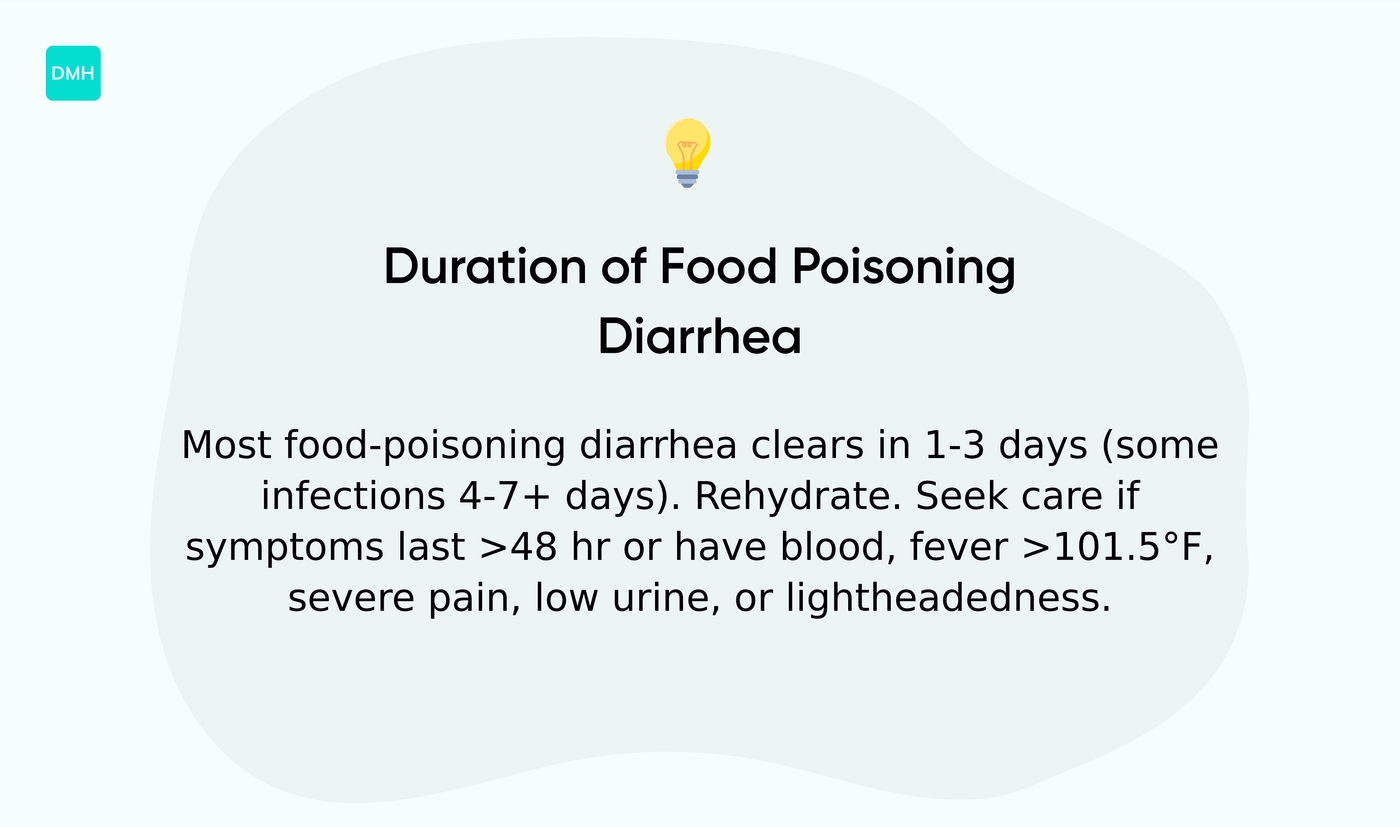
Most diarrhea from food poisoning clears in 1 to 3 days.
We track stool frequency, fever, and fluid loss to guide care. Typical diarrhea duration runs one to three days after symptoms start.
Some bacteria and viruses stretch the timeline. Salmonella and campylobacter often last four to seven days. Listeria can appear late and persist longer.
High exposure dose, weak immunity, recent antibiotics, and underlying bowel disease raise the risk of prolonged symptoms. If stools burn or sting, check why diarrhea burns.
Watch for blood in stool, fever above 101.5°F, severe belly pain, low urine output, or lightheadedness. Seek care for these signs or if diarrhea lasts more than 48 hours.
Quick rehydration and early medical review cut complications. Most cases end in three days. Replace fluids, watch red flags, and get medical help when signs persist.
How long does vomiting last with food poisoning?
Vomiting from food poisoning usually lasts 6 to 24 hours.
Vomiting can start as soon as 1 hour after eating or up to 8 hours later, depending on the germ and the amount eaten. Vomiting duration typically peaks in the first day.
Some viruses like norovirus can make vomiting last 1 to 3 days. Bacterial toxins often cause very fast but short bouts.
Dehydration is the main danger to watch for. Signs include very little urine, dry mouth, lightheadedness, or rapid heartbeat.
Seek medical care if you can’t keep water down for 24 hours, vomit blood, have a high fever, severe belly pain, or belong to a high-risk group such as infants, older adults, pregnant people, or immunocompromised patients.
Dehydration risk matters more than the hour count. Sip small amounts of clear fluid often and rest. If symptoms worsen, contact a clinician.
How long does nausea from food poisoning last?
Nausea from food poisoning usually lasts one to two days for most people and often eases as fluids return.
Nausea often comes with vomiting and diarrhea. Expect relief within 24 to 48 hours in typical cases.
Different germs change the timeline. Norovirus may run one to three days. Salmonella or campylobacter can extend nausea for several days.
We recommend small, frequent sips of clear fluids and resting. Ginger or peppermint can calm your stomach and speed comfort.
- Sip water or oral rehydration solution slowly
- Try ginger tea or peppermint lozenges for queasiness
- Wait on solid foods, then choose bland items like toast and rice
Food poisoning recovery: most people improve within two days. See a clinician if nausea lasts beyond 48 hours, you can’t keep fluids down, or you show dehydration, high fever, severe pain, or bloody stools.
How long does a stomach bug last compared to food poisoning?
A stomach bug usually lasts 1 to 3 days, while food poisoning can start within hours and extend for days or longer depending on the germ.
We focus on three clear differences: onset, cause, and duration. Viral gastroenteritis, the typical stomach bug, brings abrupt nausea, vomiting, and diarrhea.
Stomach bug duration for norovirus is often 1 to 3 days. Symptoms can appear 12 to 48 hours after exposure.
Food poisoning stems from contaminated food or toxins. Onset can be very fast or delayed.
| Pathogen | Incubation Period | Symptom Duration |
|---|---|---|
| Staphylococcus aureus | 30 minutes to 8 hours | 24 to 48 hours |
| Clostridium perfringens | 6 to 24 hours | 24 to 48 hours |
| Salmonella | 6 hours to 6 days | 4 to 7 days |
| Campylobacter | 2 to 5 days | Up to several weeks |
| Listeria | Up to 70 days | Weeks (especially in high-risk groups) |
Distinguish them by timing and signs. Quick vomiting after food points to a toxin. Longer fever and bloody stools point to invasive bacteria.
Noting the exact time you ate and when symptoms began helps doctors and speeds recovery. Food poisoning timeline matters for treatment.
Track onset and severity and seek care for dehydration, high fever, bloody stool, or symptoms that persist beyond 48 hours.
You’ll also like: What to Eat After Colonoscopy
When should I see a doctor for food poisoning?
See a clinician for warning signs, severe symptoms, or if illness lasts over 48 hours.
We advise contacting medical care when clear red flags appear:
- Severe dehydration signs: little or no urine for eight hours, very dry mouth, lightheadedness, low blood pressure, fast heart rate
- Persistent vomiting that stops you from keeping fluids for 24 hours
- Diarrhea lasting more than 48 hours or producing bloody stools or pus
- High fever over 101.5°F (38.6°C) or a fever that lasts more than two days
- Severe abdominal pain, worsening weakness, fainting, or confusion
- Seek urgent care if you’re pregnant, under age two, over 65, or immunocompromised
If you want deeper guidance on timelines and when to act, the Cleveland Clinic offers clear steps and signs to watch.
You shouldn’t wait when bleeding or severe pain appears. Early care cuts risk of complications and shortens recovery time.
Timely care prevents dehydration and rare complications. According to recent CDC data, food poisoning leads to about 128,000 U.S. hospitalizations and 3,000 deaths yearly. If symptoms match the red flags, contact your clinician or urgent care right away.
You might also like: How Long Does It Take To Get Your Taste Back After The Flu
How can I speed up recovery from food poisoning?
Rehydrate, rest, and reintroduce food slowly to shorten recovery time. I’m speaking from clinical reading and hands-on patient advice.
We recommend starting with ice chips and sips of clear fluids. Try clear liquids only for the first few hours if you keep vomiting.
Aim for about 30–60 mL every 10–15 minutes when tolerated. Move to oral rehydration solution if you have lightheadedness or signs of dehydration.
Electrolyte drinks help replace sodium and potassium lost with diarrhea. Steady, small volumes beat large gulping.
After 24 hours without vomiting, introduce small bland meals. Choose plain toast, rice, bananas, applesauce, and plain crackers. Eat tiny portions and wait two hours before more.
What foods should you avoid during recovery? Here’s the list:
- Avoid fatty foods: fried items and heavy sauces
- Dairy products while nausea persists
- Caffeine, alcohol, and spicy foods
- High-fiber or gas-producing foods until stool firms
Rest often and cut physical activity for 24–48 hours. Sleep helps immune response and gut repair.
If diarrhea or vomiting exceed 48 hours, or you see fever, bloody stools, or fainting, seek medical care. Quick action lowers dehydration risk and shortens food poisoning recovery time.
You might also like: How To Get Rid Of Stomach Ache When Trying To Sleep
Educational notice: This content is provided for informational and educational purposes only and is not intended as medical advice. Always consult a qualified healthcare professional for medical concerns.