Feeling constantly tired and lightheaded shouldn’t be brushed off.
Anemia could be the reason — it’s when blood lacks enough healthy red blood cells or hemoglobin to carry oxygen.
That reduced oxygen delivery can leave you breathless, dizzy, pale, and unable to get through daily tasks.
This guide explains common causes (from iron or B12 deficiencies to inherited forms), practical tests, and treatments.
You’ll learn how anemia is diagnosed, which iron-rich foods and supplements may help, and realistic timelines for recovery.
You’ll also discover signs to watch for in pregnancy and children and when to seek urgent care.
Armed with clear steps and treatment options, it’s possible to work toward raising hemoglobin and restoring energy.
Read on to understand what tests to ask for and practical changes that may make a real difference.
What is anemia?
Anemia is a condition where blood has too few healthy red blood cells or insufficient hemoglobin. Hemoglobin is the protein that carries oxygen.
Low hemoglobin reduces oxygen transport to tissues and organs.
According to the World Health Organization, anemia is commonly defined as hemoglobin below about 13 g/dL in men and below 12 g/dL in non-pregnant women. Normal red blood cell counts and hemoglobin can vary by age and sex.
Causes often include blood loss, reduced red blood cell production, or increased red blood cell destruction. Low red cell counts may be due to nutritional gaps, chronic disease, inherited conditions, or acute bleeding.
Learn more about specific causes at the low red blood cell count page.
Symptoms can vary from person to person and may include fatigue, shortness of breath, dizziness, and pale skin. These signs reflect less oxygen reaching muscles and the brain.
Some people have mild anemia with few symptoms.
Diagnosis usually relies on a complete blood count and hemoglobin measurement. Additional tests can assess iron stores, vitamin B12, folate, or look for blood loss.
Available evidence suggests timely identification and targeted evaluation may help clarify the cause and guide care. For informational purposes only. Always consult a qualified healthcare professional for medical advice specific to your situation.
What are the symptoms of anemia?
Can anemia cause fatigue and dizziness?
Low hemoglobin levels reduce the blood’s capacity to carry oxygen. Decreased oxygen delivery leaves muscles and the brain with less fuel.
Fatigue and dizziness occur as common symptoms. You may feel weak, lightheaded, or short of breath during mild activity.
Normal hemoglobin ranges sit near 13.8–17.2 g/dL for men and 12.1–15.1 g/dL for women. Symptoms can vary from person to person and may become more noticeable below about 10 g/dL.
Some people with low hemoglobin report headaches; read more about anemia and headaches for related symptoms and causes.
Available research links low hemoglobin to reduced exercise tolerance and cognitive symptoms, though individual effects can vary. For informational purposes only. Always consult a qualified healthcare professional for medical advice specific to your situation.
Signs of anemia in pregnancy
Anemia is a condition where blood has too few healthy red blood cells or insufficient hemoglobin. In pregnancy, hemoglobin below 11 g/dL is commonly used to describe anemia.
You may notice extreme tiredness and persistent weakness. Shortness of breath with light activity can appear.
A fast or irregular pulse may happen and some people report rapid heartbeat.
Pale skin, dizziness, and feeling faint can occur. Low hemoglobin limits oxygen delivery and may contribute to fatigue and dizziness.
Anemia in pregnancy may be associated with higher risk of preterm birth and low birth weight. Some studies suggest poorer infant iron stores and slower developmental milestones when maternal iron deficiency anemia is present.
According to WHO, about 40% of pregnant women worldwide have anemia. For informational purposes only. Always consult a qualified healthcare professional for medical advice specific to your situation.
Common symptoms of anemia in children
Anemia is a condition where blood has too few healthy red blood cells or insufficient hemoglobin.
Low hemoglobin reduces oxygen delivery to tissues. Children may show different signs by age and severity.
-
Iron deficiency anemia: poor weight gain or slowed height growth in infants and toddlers.
-
Frequent infections: more colds, ear infections, or respiratory infections may occur with low iron stores.
-
Impaired cognitive function: school-age children may struggle with attention, memory, and school performance.
-
Behavioral changes such as irritability, low energy, or reduced interest in play.
-
Fatigue, pale skin, shortness of breath during activity, and a fast heartbeat.
Hemoglobin below age-specific cutoffs (for example, under 11 g/dL in toddlers) often prompts further testing. Some studies suggest iron deficiency may be associated with lower academic scores and impairment of cognitive function.
For informational purposes only. Always consult a qualified healthcare professional for medical advice specific to your situation.
What causes anemia?
What causes iron deficiency anemia?
Iron deficiency anemia occurs when the body lacks enough iron to make healthy red blood cells. Low iron reduces hemoglobin, which lowers oxygen delivery to tissues.
Common causes include:
-
Inadequate dietary iron — Adult men need about 8 mg daily, women of reproductive age about 18 mg, and pregnant people around 27 mg on average.
-
Blood loss — Heavy menstrual bleeding and gastrointestinal bleeding can deplete iron stores over time.
-
Pregnancy demands — Fetal growth and increased blood volume raise iron needs and can exhaust stores.
-
Poor absorption — Conditions like celiac disease, chronic gastritis, Helicobacter pylori infection, and some acid-reducing medicines can reduce iron uptake.
Low ferritin levels often signal depleted iron stores before hemoglobin falls. You may notice fatigue, dizziness, or breathlessness as hemoglobin drops.
Iron deficiency remains a leading cause globally, and the American Society of Hematology anticipates publication of an iron deficiency anemia guideline in early 2026. For informational purposes only. Always consult a qualified healthcare professional for medical advice specific to your situation.
What does low ferritin mean?
Ferritin is the iron storage protein that holds iron for later use.
Low ferritin indicates depleted iron stores and can precede anemia.
Many labs report ferritin under 30 ng/mL as low. Ferritin below 12 ng/mL may signal iron deficiency.
Low stores can reduce hemoglobin production and raise risk of iron deficiency anemia. You may notice fatigue, weakness, dizziness, or poor exercise tolerance as stores fall.
Measuring ferritin helps detect iron depletion before low hemoglobin appears. Ferritin rises with inflammation as an acute-phase reactant.
That rise may mask low iron despite normal ferritin levels.
Testing may include a complete blood count and iron studies to clarify status. For informational purposes only. Always consult a qualified healthcare professional for medical advice.
B12 deficiency anemia vs folate deficiency anemia
B12 deficiency anemia and folate deficiency anemia are megaloblastic anemias caused by impaired DNA synthesis. Low vitamin B12 often results from poor absorption, autoimmune gastritis, gastric surgery, or a diet low in animal foods.
Folate levels fall with low dietary intake, increased demand in pregnancy, heavy alcohol use, or some medications.
B12 deficiency can cause numbness, tingling, balance problems, and cognitive changes. Neurological signs may be long lasting if diagnosis delays.
Folate deficiency usually causes mainly blood-related signs such as low hemoglobin and large red blood cells, with few neurological features.
Dietary sources differ. B12 appears in meat, fish, eggs, dairy, and fortified foods. Folate exists in leafy greens, beans, citrus fruits, and fortified grains.
Lab tests help tell them apart before treatment starts.
For informational purposes only. Always consult a qualified healthcare professional for medical advice specific to your situation.
Types of inherited anemia
Inherited anemias are genetic disorders that affect red blood cells. They may lead to chronic low hemoglobin and reduced oxygen delivery.
Some defects change red cell shape. Other defects impair hemoglobin production or speed up red cell destruction.
Sickle cell anemia alters red cell shape and causes periodic pain and chronic anemia. According to the CDC, about 100,000 people in the United States live with sickle cell disease.
Clinical trials at UCSF are testing new therapies, including gene-edited stem cell transplants and BCL11A gene therapy approaches for sickle cell disease.
Beta thalassemia and other thalassemias reduce hemoglobin synthesis. The World Health Organization estimates about 5% of people worldwide carry a thalassemia gene.
Hemolytic anemia variants, such as hereditary spherocytosis and G6PD deficiency, raise red cell breakdown. G6PD deficiency may affect hundreds of millions globally.
Diagnosis often uses a complete blood count, hemoglobin measures, and targeted genetic tests. For informational purposes only. Always consult a qualified healthcare professional for medical advice specific to your situation.
How is anemia diagnosed?
Medical groups often define anemia by low hemoglobin or too few red blood cells.
Clinicians order a complete blood count to measure hemoglobin, hematocrit, red cell count, and cell size. Hemoglobin below about 13 g/dL in men and below 12 g/dL in women often signals anemia.
Hematocrit values below about 40% in men and 36% in women may support that finding.
Mean red blood cell size appears as mean corpuscular volume. Normal MCV ranges from 80 to 100 fL. Your clinician may order a mean corpuscular volume (MCV) blood test to classify anemia as microcytic, normocytic, or macrocytic.
Additional tests aim to find the cause. Reticulocyte count checks marrow response.
Iron studies include serum ferritin, serum iron, and TIBC to assess iron stores and diagnose iron deficiency anemia. B12 and folate levels clarify megaloblastic causes.
Peripheral smear reveals abnormal cell shapes.
Hemolysis panels measure LDH, bilirubin, and haptoglobin for red cell breakdown. Stool occult blood tests and imaging search for hidden bleeding when appropriate.
Bone marrow biopsy proves helpful when blood tests remain inconclusive. We summarize available evidence and note that findings can vary from person to person.
For informational purposes only. Always consult a qualified healthcare professional for medical advice specific to your situation.
How is anemia treated?
Treatment for anemia depends on the underlying cause and severity. Well, the goal is to restore healthy red blood cell counts and hemoglobin levels.
What treatment options are available for different types of anemia? Here’s a quick overview:
|
Type of Anemia |
Common Treatments |
Typical Timeline |
|---|---|---|
|
Iron deficiency |
Oral iron supplements, IV iron, dietary changes |
2–3 months for hemoglobin; 6 months for stores |
|
B12 deficiency |
B12 injections or oral supplements |
Varies; neurological symptoms may improve slowly |
|
Folate deficiency |
Folic acid supplements, dietary folate |
Several weeks to months |
|
Chronic kidney disease |
ESAs, HIF-PHIs, iron therapy |
Ongoing management per KDIGO 2026 guideline |
|
Inherited (sickle cell, thalassemia) |
Transfusions, gene therapy trials, fetal globin drugs |
Lifelong care; emerging therapies under study |
The KDIGO 2026 guideline updated the management of anemia in chronic kidney disease in light of new evidence and emerging therapies. This guideline provides evidence-based recommendations on diagnosis and treatment, including iron therapy, erythropoiesis-stimulating agents (ESAs), hypoxia-inducible factor-prolyl hydroxylase inhibitors (HIF-PHIs), and transfusion practices.
HIF-PHIs represent an alternative to ESAs for anemia correction in people with CKD, though uncertainties remain about their long-term risks and benefits compared with ESAs. Plus, researchers are exploring the use of oral drugs that increase fetal globin protein levels to address anemia complications in inherited disorders.
For informational purposes only. Always consult a qualified healthcare professional for medical advice specific to your situation.
You’ll also like: Is It Serious To Be Referred To A Hematologist
What foods are high in iron for anemia?
Iron helps form hemoglobin, the oxygen-carrying protein in red blood cells. Low iron often links to iron deficiency anemia and fatigue.
-
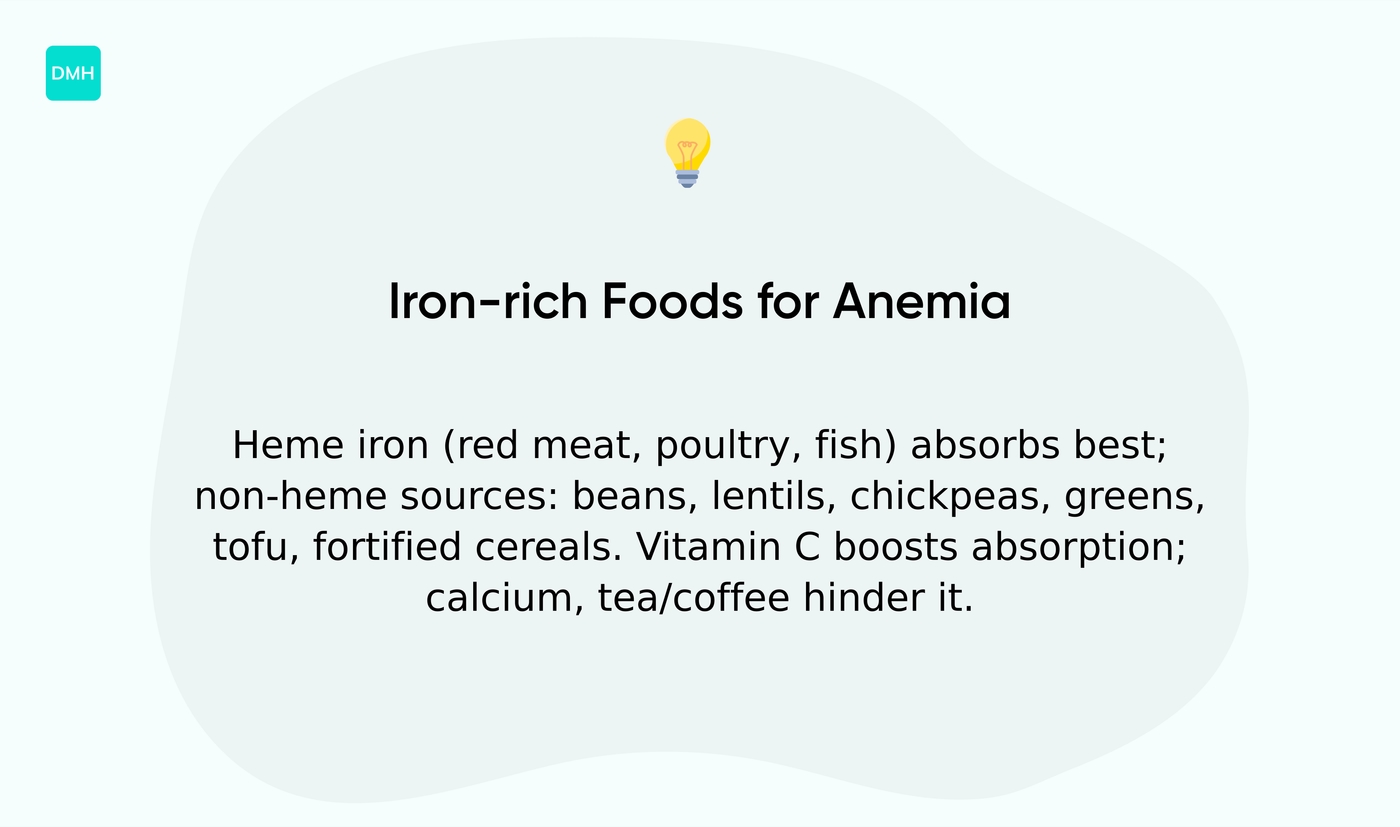
Iron-rich foods: red meat like beef and lamb contain heme iron with higher absorption.
-
Poultry and fish provide heme iron and protein for repair.
-
Beans, lentils, and chickpeas supply non-heme iron with fiber and folate.
-
Dark leafy greens such as spinach and kale offer plant-based iron and vitamin K.
-
Tofu and tempeh act as concentrated plant iron sources for vegetarians.
-
Fortified breakfast cereals add iron and often include folic acid and B12.
Pairing non-heme iron with vitamin C may improve absorption. For example, adding bell peppers to a lentil salad or squeezing lemon juice over spinach can boost uptake.
Calcium and polyphenols in tea or coffee can reduce absorption when consumed with meals.
Some studies suggest spacing supplements away from calcium-containing foods improves uptake. Actually, timing your iron supplement between meals (rather than with dairy) may help maximize absorption.
For informational purposes only. Always consult a qualified healthcare professional for medical advice specific to your situation.
You might also like: What Happens at Your First Hematology Appointment
How can I increase hemoglobin levels quickly?
Hemoglobin is the oxygen-carrying protein in red blood cells. Low hemoglobin often causes fatigue and dizziness.
Speed of recovery can vary from person to person and depends on the cause.
-
Iron supplements may raise levels when iron deficiency causes anemia. Absorption can vary by formulation and timing.
-
Vitamin C helps iron absorption from food and supplements. Pair a vitamin C source with iron for better uptake.
-
B12 and folate support red blood cell production when deficiencies exist. Tests can identify which nutrient is low.
-
Some people see a hemoglobin rise in one to two weeks. Meaningful increases often take six to eight weeks. Full iron store repletion can take three to six months.
-
See guidance on how to raise hematocrit for related steps and testing.
In Asia, national food fortification programs and AI-powered screening tools are being deployed to address anemia rates. These public health initiatives aim to improve early detection and treatment access.
For informational purposes only. Always consult a qualified healthcare professional for medical advice specific to your situation.
You’ll also like: RDW Blood Test: What It Means for Your Health
How long does it take to correct iron deficiency anemia?
Correction time for iron deficiency anemia varies with cause, severity, and treatment choice.
With oral iron supplements, low hemoglobin levels often improve within 2 to 3 months. Full iron store replenishment, measured by ferritin, commonly takes about six months.
Intravenous iron can raise ferritin and hemoglobin faster for some people. You may notice improved energy as hemoglobin increases, which may reduce fatigue and dizziness.
Slow or no response can follow ongoing blood loss, poor absorption, or incorrect dosing. Healthcare teams monitor hemoglobin, hematocrit, and ferritin to track progress.
Clinicians may repeat blood tests every four to eight weeks to check progress. According to available research and guidelines from NIH and WHO, these timelines are commonly observed.
For informational purposes only. Always consult a qualified healthcare professional for medical advice specific to your situation.
You might also like: What Is MCHC in Blood Test: Complete Guide
Educational notice: This content is provided for informational and educational purposes only and is not intended as medical advice. Always consult a qualified healthcare professional for medical concerns.