White blood cells protect your body from infections.
They patrol tissues, remove microbes, and help heal damage.
But here’s the thing — stress can actually mess with these critical defenders.
Understanding white blood cells and their role in immunity
White blood cells act as your body’s frontline defense against disease. They constantly patrol your tissues, hunt down harmful microbes, and repair damage after injury or infection.
Neutrophils and lymphocytes are the main types you’ll hear about. Neutrophils respond rapidly to bacterial threats, while lymphocytes target viruses and build long‑term immunity through antibodies and memory cells.
A normal WBC count ranges from 4,000 to 11,000 cells per microliter. Labs vary slightly by testing method and patient age. Check a CBC with differential values and meanings for detailed breakdowns of each cell type.
Low counts raise your infection risk significantly. High counts often indicate inflammation, active infection, or sometimes bone marrow disorders.
Stress and anxiety can change specific cell lines in surprising ways. Acute stress usually raises neutrophils within minutes. Chronic stress, on the other hand, can lower lymphocytes over weeks and months.
We recommend tracking trends rather than fixating on single readings. Small shifts over several weeks give far more insight than one isolated test result.
Have you noticed your WBC counts fluctuating during stressful periods? If your WBC falls outside the normal range, talk with your clinician. They’ll review medications, recent infections, and other potential causes. Ask for a differential count and follow‑up testing when needed.
Can stress cause a low white blood cell count?
Yes, but the picture is more nuanced than you might think. Chronic stress can lower specific white blood cell types, while acute stress usually raises total WBC.
Acute stress triggers adrenaline and spleen release. You’ll see higher neutrophil counts and a temporary rise in total WBC. Normal WBC ranges run about 4,000–11,000 cells/µL.
Acute stress increases overall counts. The rise lasts hours to a day, then resolves as your body calms down.
Prolonged stress keeps cortisol high. Cortisol suppresses lymphocyte production and function, leading to fewer lymphocytes and a lower absolute lymphocyte count. Lymphopenia is often defined as under 1,000 cells/µL.
Chronic stress lowers lymphocyte numbers. This change raises infection risk and slows healing after injury or surgery.
The clear takeaway? Monitor symptoms and repeat blood tests if stress is ongoing. Tracking trends matters more than a single result, especially if you’re dealing with persistent work pressure or personal challenges.
Learn more about causes and testing for a low white blood cell count and share results with your clinician. Lymphocyte count drops offer a measurable signal that stress affects immunity. Talk to your doctor about stress reduction, sleep hygiene, nutrition, and timing follow-up CBCs to confirm recovery.
How acute vs chronic stress affect white blood cell count differently
Acute stress response and elevated WBC levels
Acute stress raises white blood cell levels quickly. Catecholamine release mobilizes neutrophils from vessel walls, and the spleen contracts to eject stored leukocytes.
That causes an increased neutrophil count and higher total WBC within minutes. Counts can rise up to 50% during intense physical or emotional stress (think public speaking, a car accident, or a major argument).
These changes reflect the fight-or-flight response. The neutrophil-to-lymphocyte ratio shifts toward neutrophils during the episode.
We advise noting recent physical or emotional stress before testing. Clinicians should consider stress history when interpreting a high WBC result.
Catecholamines include adrenaline and noradrenaline. They trigger rapid cell redistribution into blood, and this effect is temporary and reversible within hours.
Chronic stress reduces lymphocyte numbers over weeks. Monitor the neutrophil-to-lymphocyte ratio for stress signals. If you have repeated abnormal counts, see your clinician and review this MedlinePlus resource for additional context.
Chronic stress and immune suppression
Chronic stress suppresses your immune defenses. It raises cortisol and weakens lymphocyte function, leaving you more vulnerable to infections.
Cortisol causes stress-induced immune suppression. It lowers T and B cell activity and leads to reduced lymphocyte counts. You face increased infection susceptibility and slower wound healing after cuts or surgery.
Can stress or anxiety lower white blood cell count? Yes. Chronic stress lowers lymphocytes, while short bursts of stress can raise total WBC briefly.
We advise tracking chronic stress, improving sleep quality, and talking to your clinician about abnormal bloodwork. Read more from Cleveland Clinic for a clear summary on immune stress effects.
The role of cortisol in white blood cell regulation
Cortisol suppresses lymphocyte numbers and impairs their function during chronic stress. Cortisol and white blood cells interact through glucocorticoid receptors on immune cells.
Cortisol shifts lymphocytes out of blood and triggers apoptosis. That lowers circulating lymphocyte counts and weakens antibody responses. It raises neutrophil numbers short term and shifts the neutrophil-to-lymphocyte ratio upward.
We monitor stress markers and recommend CBC testing when counts drop. Stress reduction helps restore immune balance over time.
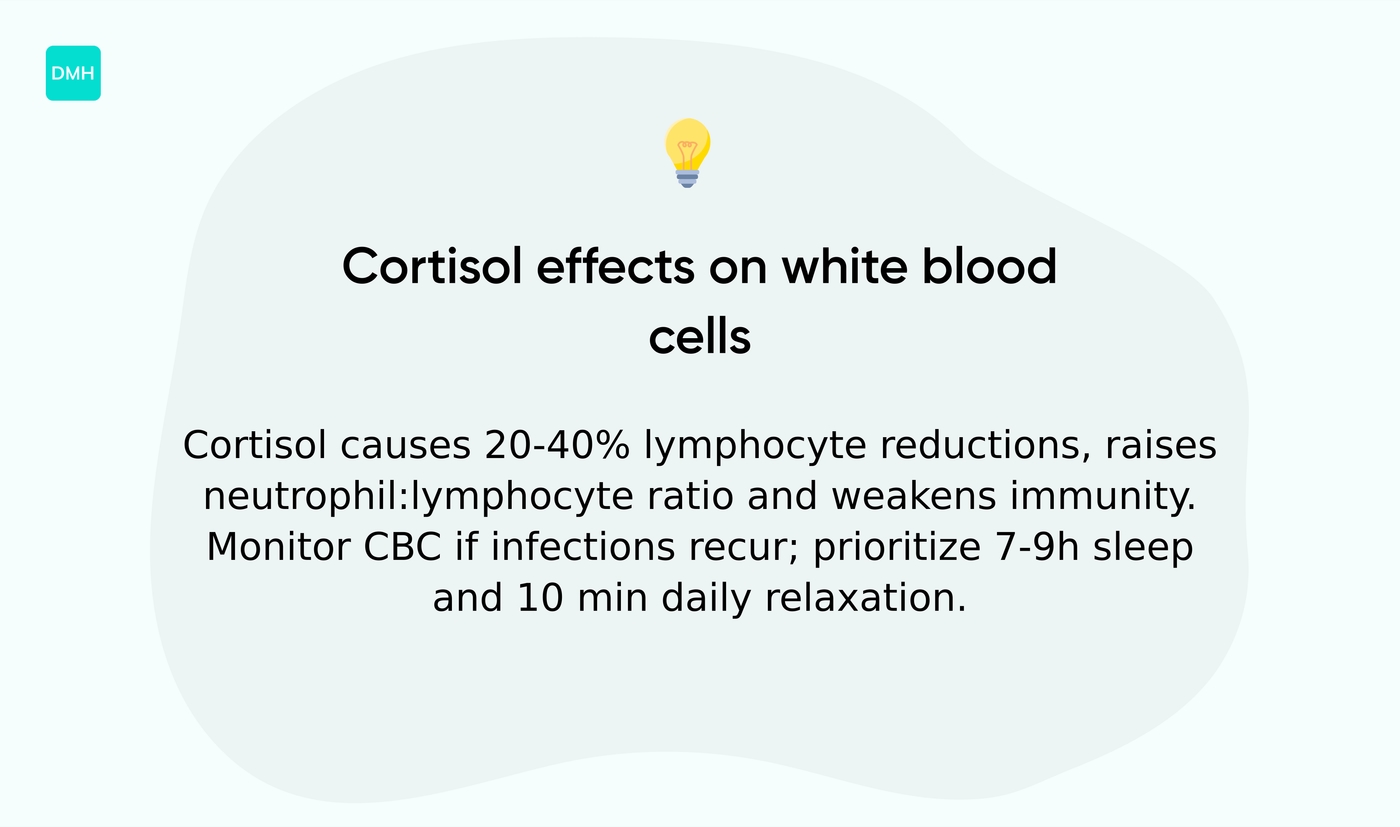
Clinical studies report lymphocyte reductions around 20–40% with sustained cortisol elevation. This creates a stress-induced lymphopenia risk and measurable neutrophil lymphocyte ratio changes. Lab follow-up rules out other causes like medication side effects or bone marrow issues.
- Prioritize 7–9 hours sleep nightly
- Practice 10 minutes relaxation daily (deep breathing, meditation, or yoga)
- See your clinician for a CBC test if infections recur frequently
Does anxiety lower white blood cell levels?
Clear answer: anxiety and depression usually link to higher white blood cell levels and inflammatory markers, not lower totals.
Normal WBC range sits around 4,000–11,000/µL. Acute stress triggers adrenaline that raises neutrophils. Chronic stress raises cortisol and shifts immune patterns.
That shift can reduce lymphocyte counts while raising neutrophils and the neutrophil-to-lymphocyte ratio. Actually, we review psychoneuroendocrinology studies showing modest rises in total WBC and C‑reactive protein in anxiety and depression.
The CBC differential tells you more than the total WBC number. Some people do show low lymphocytes after prolonged stress, which can mimic leukopenia. Read about lymphopenia if tests show low lymphocyte values.
Clinicians should check both total WBC and the differential when you report stress or anxiety. Ask for a CBC with differential if you have frequent infections, fevers, or unexplained fatigue.
Manage stress, sleep, and nutrition to support immune balance. See your provider for abnormal counts or persistent symptoms that don’t improve with lifestyle changes.
How stress affects specific white blood cell types
Stress effects on neutrophil count
Acute stress raises neutrophil numbers quickly. The body floods blood with neutrophils within minutes as catecholamine release mobilizes cells from marrow and spleen.
Acute stress often produces a leftward shift with visible immature neutrophils on a blood smear. You may see bands and metamyelocytes on smear within hours.
These changes often reflect rapid redistribution rather than new production. An elevated neutrophil-to-lymphocyte ratio can signal stress-driven inflammation and altered immune balance.
Chronic stress changes neutrophil function. Prolonged cortisol exposure blunts killing activity and alters circulation patterns, making neutrophils less effective at fighting bacteria.
Tracking neutrophil trends helps you distinguish stress effects from infection. Learn more about neutrophils for context on normal ranges and function.
If counts worry you, request a CBC with differential, keep lab trends over several months, and discuss stress management with your clinician.
Impact on lymphocyte levels
Chronic psychological stress reduces lymphocyte numbers and weakens antibody responses. This raises vulnerability to viral infections like colds, flu, and even herpes reactivation.
Sustained cortisol elevation drives this effect. Cortisol limits lymphocyte proliferation and trafficking, causing stress-induced immunosuppression.
Clinical studies report reduced lymphocyte counts often 10–30% lower with prolonged stress. These shifts can produce impaired antibody responses and poorer vaccine effectiveness.
A single low lymphocyte result should prompt a review of context. Look for persistent stress, sleep loss, or medication effects before assuming a serious disorder.
We recommend checking a CBC with differential if you have ongoing stress and infection risk. Reduce stress, improve sleep, and see your clinician for follow-up testing in two to four weeks.
T cells, especially helper subsets, show reduced activity under prolonged stress. Vaccine antibody titers and B-cell responses can lag after exposure.
If lymphocyte counts stay low for weeks, pursue medical evaluation and address stress sources. Simple steps lower cortisol and support immune recovery over time.
Neutrophil-to-lymphocyte ratio as a stress marker
NLR gives a quick snapshot of inflammation and stress. Neutrophil and lymphocyte counts divide to create a neutrophil lymphocyte ratio.
Normal NLR sits around 1–3. Values above 3 often signal higher inflammation seen in anxiety and depression.
Neutrophils rise with short-term stress. Lymphocytes drop with prolonged stress. The combined shift raises the ratio and points to systemic inflammation.
Studies show mean NLR higher by about 0.5–1 point in anxiety and depressive groups compared with controls. NLR adds practical context to symptoms and other labs.
You can get NLR from a CBC with differential. Track the ratio across visits to see trends. Reduce sleep loss, increase activity, and seek therapy to lower stress and inflammation.
We advise sharing elevated NLR results with your clinician so they can rule out infections, medication effects, or hematologic causes and plan next steps.
Read also: Why Is My Anxiety Worse in the Morning?
We recommend confirming any low white blood cell count with a repeat CBC and a differential. Check symptoms and current drugs before assuming stress is the cause.
| Cause | Typical WBC Pattern | Key Clues |
|---|---|---|
| Chronic stress | Mild lymphocyte drop | Ongoing stress, fatigue, no fever |
| Acute stress | Neutrophil rise, higher total WBC | Recent event, resolves in hours |
| Infection | High WBC, left shift on smear | Fever, elevated CRP |
| Bone marrow disorder | Persistent leukopenia or pancytopenia | Multiple cell lines affected |
| Autoimmune disease | Fluctuating counts | Positive antibody tests |
| Medications | Variable, often low WBC | Chemo, antipsychotics, some antibiotics |
Use numbers to guide decisions. Normal WBC range runs about 4,000–11,000 cells/µL. ANC below 1,500 defines neutropenia. ANC under 500 raises urgent risk.
Repeat testing in 1–2 weeks gives clarity. Order a differential, CRP, viral serologies, thyroid and autoimmune panels. Consider bone marrow biopsy if cytopenias persist or other lines drop.
Mild lymphopenia with no symptoms often points to stress after these checks. Read more on the common reasons for low WBC.
If counts fall to dangerous levels or you have fever, seek urgent evaluation right away.
You’ll also like: How Long Does Ashwagandha Take for Anxiety Relief?
How to increase white blood cell count if stress is a factor
Lower stress to support your white blood cell count. Chronic psychological stress raises cortisol and lowers lymphocyte counts, which weakens immune response and raises infection risk.
We recommend simple, testable habits that help restore healthy WBC levels and reduce stress-induced immunosuppression:
- Stress management techniques: 10 minutes daily of breathing exercises or guided meditation
- Improved sleep hygiene: aim for 7–9 hours nightly with fixed sleep and wake times
- Move regularly: 150 minutes moderate exercise weekly improves immune markers
- Eat protein at each meal and include vitamin C (75–90 mg daily from citrus, peppers, or supplements)
- Include zinc (8–11 mg daily) and probiotic foods like yogurt for gut-immune support
- Limit alcohol and stop smoking to protect white blood cell function
- Review medications with your clinician if you suspect leukopenia from stress or drugs
Steady small changes raise lymphocyte counts over weeks to months and lower the neutrophil-to-lymphocyte ratio linked to inflammation.
Track symptoms, get a CBC if you have frequent infections, and consult your clinician for persistent low WBC results or sudden drops.
Read also: Can Anxiety Cause Chest Pain? Find Out Now
When to see a doctor for low white blood cell count
See a doctor urgently if you have fever or new infections with a low white blood cell count.
We recommend urgent evaluation for fever, deep mouth sores, or fast-spreading infections. Normal WBC ranges run about 4,000 to 11,000 per microliter. Dangerous WBC levels often sit below 1,000/µL with ANC under 500/µL.
Seek care for fever over 100.4°F, persistent sore throat, unexplained bruising, heavy bleeding, or repeated infections. Note severe fatigue and slow wound healing as warning signs.
Ask for a CBC with differential as the first test. Your clinician may repeat the CBC in 48 to 72 hours. They may order a peripheral smear, infection screen, medication review, or bone marrow biopsy if counts stay low.
See details on dangerous low white blood cell count for thresholds and next steps.
Mild drops linked to chronic stress can recover with sleep, balanced diet, and reduced workload. Stress-related changes that persist beyond two to four weeks need a medical check.
Are you experiencing fever along with low counts? If you have fever and low WBC, go to urgent care or the emergency room without delay. Seek medical care when symptoms match the warning signs above — don’t wait for things to get worse.
You’ll also like: How Long Does Stress Diarrhea Last