That split-second decision to scoop another helping often decides whether a meal helps or hinders health.
What is portion control, and why do portion sizes so often derail even thoughtful meal plans?
Portion control is the practice of choosing appropriate amounts for meals and snacks—focused on mindful eating and moderation so nothing’s completely off-limits.
You’ll learn practical portion control tips like the hand portion method, the balanced plate approach, and easy visual tricks that don’t require a scale.
Those tools may help lower calorie intake, steady energy, and improve digestion while keeping meals satisfying.
Keep reading to get a portion size guide and simple strategies for snacks, meals, and eating out.
What is portion control
Portion control is the practice of eating appropriate amounts of food during meals and snacks. It emphasizes mindful consumption and moderation without complete restriction, allowing you to enjoy favorite foods while practicing balance rather than deprivation.
A portion size is the amount a person chooses to eat. A serving size is a standardized amount listed on nutrition labels. Understanding this distinction can help you manage overall caloric intake while ensuring your body receives the right balance of nutrients.
Have you ever noticed how your chosen portion differs from the label’s serving? Mindful eating portions help people notice hunger and fullness cues. Tools include a hand portion method, visual guides, and a portion control plate.
Tracking calorie control portions can increase awareness of daily intake. Some studies suggest smaller portions may be associated with reduced calorie intake. Research shows portion-controlled diets may produce greater weight loss than self-selected diets in some trials—studies report about 1–3 kg more loss over 12 weeks in groups using pre-portioned meals.
Here’s a practical example: a medium apple counts as one portion of fruit. A single serving of cooked rice is about half a cup. You can use cups, scales, or labeled containers to estimate amounts.
Balance proteins, carbohydrates, and vegetables on the plate. A simple plate method divides the plate into sections for vegetables, protein, and starch.
Large restaurant servings can normalize oversized portions. Being aware of portion distortion helps people choose realistic amounts. Portion control applies to snacks as well as meals—pre-portioning snacks into containers can prevent accidental overeating.
Appropriate portion sizes can vary by age, sex, activity level, and goals. Small, consistent changes often work best for many people. Plus, modest adjustments to portion size can feel empowering over time.
Results can vary from person to person. Always consult a qualified healthcare professional for medical advice specific to your situation.
What is the difference between serving size and portion size
Serving size is the standardized amount listed on nutrition labels. Manufacturers and regulators set it so people can compare foods and estimate calories. But here’s the thing—serving sizes may not match what people actually eat.
A label serving might be smaller than common household portions. Portion size is the amount you choose to eat. Portions vary by appetite, plate size, and setting.
Knowing both helps with portion control and calorie awareness. For example, a label serving of cooked pasta is about 1 cup, roughly 200 calories. Eating 2 cups delivers about 400 calories. (That’s double the label estimate!)
Checking serving sizes can change meal choices for many people. Tracking portions for a few days can reveal portion distortion and hidden calories.
Use simple strategies like a portion size guide or the portion control plate to estimate amounts. The hand portion method and plate method may help when you lack measuring tools.
The American Heart Association explains the difference in more detail on their page about portion size versus serving size. Evidence suggests clearer labeling and mindful eating portions can support calorie control and healthier portion habits.
Results can vary from person to person. Always consult a qualified healthcare professional for medical advice specific to your situation.
Why is portion control important
How does portion control help with weight loss
Controlling portion size may reduce the calories you eat each meal. A sustained calorie deficit can be associated with weight loss over time.
Some randomized trials and meta-analyses show portion-controlled diets yield greater weight loss than self-selected diets. Studies report about 1–3 kg more loss over 12 weeks in groups using pre-portioned meals or guided plates. The National Weight Control Registry found that people who successfully maintained long-term weight loss were more likely to practice portion control.
Portion control meals using smaller plates and measured servings can lower daily intake without extreme restriction. How your body loses fat varies by individual. See Daily Medical Health on what parts of the body lose fat first for context.
Simple habits, like the plate method or a portion size chart, may help people stay consistent. Results can vary from person to person. Always consult a qualified healthcare professional for medical advice specific to your situation.
Benefits beyond weight management
Portion control can improve more than weight. Smaller, measured meals may ease digestion and promote more regular bowel movements for many people. Actually, eating moderate portion sizes across the day can support steady blood sugar.
Spacing meals every three to four hours may help sustain energy. You may notice fewer mid-afternoon energy dips. Many people report feeling better and having more energy when eating moderate portions compared to overly large ones.
Reducing portion size can lower calorie spikes from drinks or snacks. For example, swapping a 16-ounce soda for an 8-ounce saves about 100 calories. That change can be associated with reduced rapid blood sugar rises after a meal.
Over weeks, the body can adapt to feeling full with smaller quantities. People often report less frequent hunger and easier meal planning as a result. (It’s a gradual shift, not an overnight fix!)
Simple tools, like a portion control plate or the hand portion method, may help make mindful eating portions practical. Try tracking portions for two to four weeks to observe changes. Results can vary from person to person. Always consult a qualified healthcare professional for medical advice specific to your situation.
Portion control vs restrictive dieting
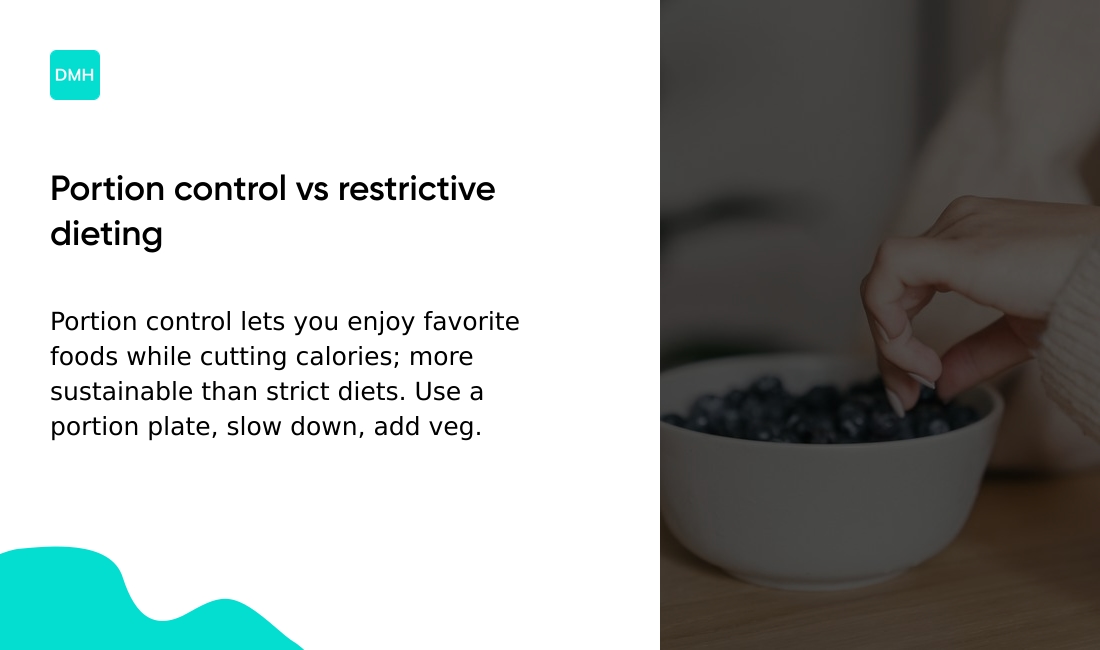
Portion control is a flexible method that lets you include favorite foods while managing calories. When people ask what is portion control, it focuses on eating appropriate amounts at meals and snacks. This approach may feel more sustainable for many people than cutting whole food groups.
Restrictive dieting often bans foods and can increase cravings. Some studies suggest portion-controlled plans may be associated with greater weight loss than self-selected diets. Plus, portion control lets you use simple tools.
Try a portion size guide or a portion control plate for balanced meals. Pair that with portion control tips like slowing your pace and adding vegetables. If you want to learn more about nutrients that can support weight goals, see vitamins for weight loss.
This emphasis on balance and awareness rather than deprivation makes portion control a practical strategy for maintaining overall wellness. Results can vary from person to person. Always consult a qualified healthcare professional for medical advice specific to your situation.
How to control portion sizes effectively
What is the hand portion method
The hand portion method uses parts of your hand as a ruler for macronutrient portions. Ever wished you had a measuring tool everywhere you go? Well, you do—your hand!
Your palm roughly equals 3–4 ounces of cooked protein portion. A cupped hand holds about 1/2 to 1 cup of carbohydrates such as rice. A closed fist equals about 1 cup of vegetables or salad, useful for vegetable portion estimates. Your thumb equals about 1 teaspoon to 1 tablespoon of fats such as oils or nut butter.
This method may make portion control practical when scales aren’t available. It can help with mindful eating portions and calorie control portions. Use the hand method as a quick guide for portion control tips during meals and snacks.
Results can vary from person to person. Always consult a qualified healthcare professional for medical advice specific to your situation.
What is the plate method for portion control
The balanced plate method divides a plate into sections for vegetables, protein, and carbohydrates. Aim for half the plate as non-starchy vegetables, one quarter lean protein, and one quarter whole grains or starchy vegetables.
This 50/25/25 split can help manage calorie intake and boost fiber and micronutrient balance, according to available research. The approach is simple to teach and easy to follow for many people.
You can use it for meals and snacks to maintain healthy portion sizes without strict dieting. Tools such as divided plates and visual guides illustrate a portion control plate and may support consistent portions.
For people managing blood sugar, pair this method with lower blood sugar foods to support steadier glucose levels. Results can vary from person to person. Always consult a qualified healthcare professional for medical advice specific to your situation.
How to measure portion sizes without a scale
There are simple, everyday ways to estimate portions without a scale. Use common items as visual cues. A closed fist equals about one cup. A deck of cards equals roughly three ounces of protein. A tennis ball approximates one cup of cooked pasta or a medium fruit.
Try measuring once with real cups to learn the sizes. Then rely on those visual cues for meals and snacks. The portion size guide helps with consistency.
Apply the hand portion method for portability. Palm size for protein. Cupped hand for carbs. Thumb for fats. A portion control plate can make balancing vegetables and grains easier. (No fancy equipment needed!)
Practicing these techniques may build lasting portion awareness. Results can vary from person to person. Always consult a qualified healthcare professional for medical advice specific to your situation.
Using portion control plates and tools
Portion control tools can be practical for beginners. They may simplify meal planning and reduce calorie guesswork. A simple plate with sections helps people gauge portions—use a plate divided into halves and quarters. Half for vegetables, quarter for protein, quarter for starch. This mirrors the balanced plate method used in many guidelines.
Portion control plates, divided containers, calibrated bowls, and measuring cups make portions visible. They help you plan meals and pack single servings for the week. These tools may help people who struggle with portion distortion. The hand portion method can remain useful on the go.
Expect an initial adjustment for about two to four weeks. Results can vary from person to person. Always consult a qualified healthcare professional for medical advice specific to your situation.
Recommended portion sizes for different food groups
Here are concise targets to help estimate meal sizes. These amounts are commonly discussed in relation to balanced nutrition:
|
Food Group |
Typical Portion |
Visual Guide |
|---|---|---|
|
Proteins |
3–4 oz cooked (85–115 g) |
Deck of cards |
|
Carbohydrates |
1/2 cup cooked (75–100 g) |
Cupped hand |
|
Fats |
1 tablespoon or 1 oz nuts |
Thumb |
|
Vegetables |
1–2 cups non-starchy |
Fist |
|
Fruit |
1 medium piece or 1/2 cup |
Tennis ball |
|
Dairy |
1 cup milk/yogurt or 1.5 oz cheese |
Baseball |
Balance macronutrients with a simple visual rule. Use a portion control plate. Fill half your plate with vegetables. Give one quarter to protein and one quarter to carbohydrates.
Aim for roughly 45–65% of calories from carbs, 20–35% from fat, and 10–35% from protein, though needs can vary by person. Clear numeric targets may reduce portion distortion and meal-time guessing.
When estimating protein portions, compare recipes or labels with examples such as calories in meatloaf. Use the hand portion method for portable checks.
Use this portion size guide to plan meals and snacks. Adjust portions based on activity level, age, and medical needs. Small, consistent changes may support energy control and weight goals. Healthy portion sizes help with mindful eating portions and portion control for weight loss.
Results can vary from person to person. Always consult a qualified healthcare professional for medical advice specific to your situation.
What is portion distortion and how to avoid it
Portion distortion describes when oversized servings become the normal size. Restaurants, package design, and home habits can shift what people view as a normal portion size. Some studies suggest many restaurant entrees are twice the size of portions served decades ago. (Talk about supersizing!)
Signs you face portion distortion include plates that spill over, packages that encourage eating straight from the bag, and multiple scoops served as one portion. These cues can raise daily calorie intake without awareness.
Here are simple strategies that may make a real difference:
-
Use smaller plates and bowls to reduce visual temptation.
-
Portion snacks into single servings instead of eating from the package.
-
Measure once with a scale or cups until you learn typical serving size volumes.
-
Try a portion control plate or the plate method to balance vegetables, proteins, and carbs.
-
Pause mid-meal and assess hunger. Mindful eating portions may lower overeating.
-
Split large restaurant meals or request a to-go container up front.
Small, repeatable habits often work better than strict rules. These tactics may help you regain a realistic sense of healthy portion sizes and support calorie control portions over time.
Results can vary from person to person. Always consult a qualified healthcare professional for medical advice specific to your situation.
Read also: How To Stop Diarrhea On Optavia
Practical portion control tips for everyday life
Here are simple, usable steps to help manage portion size without strict rules. Small shifts in routine may lead to steady results for many people.
-
Portion control tips: Use the plate method. Fill half your plate with nonstarchy vegetables. Reserve one quarter for protein. Use the last quarter for whole grains or starchy vegetables.
-
Mindful eating portions: Eat slowly. Put your fork down between bites. Notice fullness signals and stop when you feel comfortably satisfied.
-
Portion size guide: Apply the hand portion method. One palm of protein, one cupped hand of carbs, one thumb of fat, one fist of vegetables per meal.
-
Read nutrition labels to compare serving size and calories per serving. Serving size and portion size may differ on packaged foods.
-
At restaurants, split entrees, ask for a to-go box on arrival, or share an appetizer to reduce oversized portions.
-
When money’s tight, buy staples in bulk and portion into single-meal containers. Frozen vegetables stretch meals while keeping nutrients.
-
Pair portion control meals with short activity bursts. A quick stair climb can raise energy and appetite awareness; see stairmaster benefits for more on short workouts.
Results can vary from person to person. Always consult a qualified healthcare professional for medical advice specific to your situation.
You might also like: Does Peanut Butter Cause Constipation
Special considerations for portion control
People with diabetes often need steady carbohydrate portions to manage blood sugar. Some guidelines suggest about 45–60 grams of carbohydrate per meal for many adults with diabetes and 15–30 grams for snacks, though needs can vary by medication and activity.
Mindful eating portions help people sense true hunger and satiety. Eat slowly, pause between bites, notice fullness, and limit distractions to avoid overeating. When’s the last time you ate a meal without checking your phone?
Activity level changes daily energy needs. On high-activity days, larger portions of carbohydrate and protein may support performance and recovery, while lower activity days may call for smaller portions. Tracking energy use can help; see how exercises compare by checking how many calories a plank burns.
Macronutrient balance matters for nutrient needs and appetite control. Aim for a plate with vegetables filling half, protein a quarter, and whole grains or starchy vegetables the remaining quarter. Tools like a portion control plate can simplify this approach for busy routines.
Small, consistent adjustments often work better than big swings for many people. Try tracking portions for two weeks to identify patterns, then tweak meal timing or snacks to match hunger and goals.
We present flexible strategies for adapting portions to health conditions, activity, and personal preferences. Results can vary from person to person. Always consult a qualified healthcare professional for medical advice specific to your situation.
You’ll also like: Are Chickpeas Keto Friendly? Carbs Analysis
Educational notice: This content is provided for informational and educational purposes only and is not intended as medical advice. Always consult a qualified healthcare professional for medical concerns.