TL;DR: Stopping creatine causes a 2–6 week washout and about 2–5 pounds of water loss.
Here’s what happens when you stop taking creatine: muscle creatine stores fall and intramuscular water drops.
Expect most water weight to leave in the first one to two weeks. This water weight loss reduces muscle fullness but not actual contractile tissue.
During the creatine washout period phosphocreatine returns to baseline over two to six weeks.
You may notice small dips in short sprint power, heavy lifts, and repeated high‑intensity efforts.
Do you lose muscle after stopping creatine? You keep most true muscle mass if you keep training and meet protein targets. Strength loss is usually modest and stabilizes as stores normalize.
If you ask how long does creatine stay in your system, expect effects to fade across 2–6 weeks. There are no withdrawal symptoms or health dangers from stopping suddenly.
Practical steps: keep resistance work, eat 0.7–1.0 g protein per pound to preserve gains, and drink enough fluids.
Track weight and performance for two to six weeks to see stabilization.
Takeaway: quitting creatine changes appearance and short‑duration power briefly. Keep training and nutrition to preserve muscle and performance.
Timeline of changes after stopping creatine
First few days to weeks after stopping
Expect a water weight drop of 2–5 pounds and less muscle fullness.
Creatine pulls water into muscle cells. Stopping lowers cellular hydration and reduces visible muscle volume.
If you’re wondering what happens when you stop taking creatine, this is the immediate effect.
Intramuscular water leaves over several days to weeks. Losing water weight after creatine typically equals about 1–2% of bodyweight.
You won’t have withdrawal symptoms. Strength and power don’t crash right away.
Performance stays near baseline for normal training sessions.
Actually, the visual change worries people more than actual strength loss. At our team, we recommend steady protein and hydration to preserve size and strength.
Track bodyweight for a week and keep training consistent to maintain gains.
2-6 weeks: creatine washout period
Phosphocreatine returns to baseline in about 2–6 weeks, causing modest power declines.
If you wonder what happens when you stop taking creatine, muscle energy falls gradually. The creatine washout period sees intramuscular stores drop.
The phosphocreatine stores normalize phase reduces sprint and lift output.
You’ll tire quicker during short sprints, heavy sets, or HIIT sessions. Most people notice a subtle loss.
Research and experience show peak power drops by a few percent. Muscle size from training stays largely intact once hydration returns to baseline.
Losing water weight after creatine occurs in the first week.
We recommend keeping training volume steady. Maintain protein intake and hydration to preserve gains. Track your sets and raise intensity if peak power falls.
Long-term effects and adaptation
Your body restores baseline creatine levels and most training gains last if you keep lifting and eat enough protein.
We note a 2–6 week creatine washout period as stores normalize to baseline. The liver and kidneys increase natural creatine synthesis to meet demand.
Muscle water returns to normal and visible fullness drops.
Strength and power may dip briefly during high‑intensity bursts. Most hypertrophy gains remain with consistent resistance training and adequate calories.
Water loss explains most size changes, not actual muscle loss. A randomized review links stable long‑term performance to continued training and nutrition.
Keep progressive overload, maintain protein at about 1.6–2.2 g/kg, and track lifts for four weeks to confirm recovery.
Will I lose muscle after stopping creatine
You keep the actual muscle you built if you keep training and eating well.
Stopping creatine lowers intramuscular creatine over 2–6 weeks. Muscles lose some cellular water.
Expect a visible drop and a 2–5 pound water weight loss.
Strength may dip in short, intense efforts. Your raw muscle fibers stay intact with regular resistance work.
Energy for quick sprints can fall as phosphocreatine normalizes. That causes more fatigue during heavy singles and HIIT.
Strength numbers can fall a few percent, then stabilize. Brief water loss often causes unnecessary worry for lifters.
We recommend keeping protein around 0.7–1.0 grams per pound and keeping progressive overload in your workouts. Maintain hydration and sleep.
Those steps preserve size and performance while creatine levels return to baseline. See how specific muscles adapt by reading about the muscles used in arm wrestling.
Muscle mass gains come from repeated tension, not supplement water. Keep training, track lifts for two weeks, and adjust protein if numbers fall.
If you want a simple plan to hold gains, start with a 4-week strength block and daily protein targets.
How much strength and performance will I lose
You lose modest, short-lived strength and power after you stop taking creatine.
Muscle creatine stores fall back to baseline over about 2–6 weeks. Expect a 2–5 pound drop in water weight and less visible muscle fullness.
Research shows bursts of high-intensity work reduce more than steady strength.
Sprint and power outputs can fall roughly 3–8%. Single-rep maxes often change by only 1–3%. Studies report no accelerated muscle loss when training continues.
We recommend keeping training volume steady and protein intake consistent. Keep workouts focused on heavy lifts and short sprints to protect neuromuscular adaptations.
In my opinion, most lifters won’t notice functional losses during normal training. I’ve seen athletes feel a bit less “pumped” while keeping the same weights and progress.
| Performance Type | Expected Drop | Recovery Timeline |
|---|---|---|
| Sprint Power | 3–8% | 2–6 weeks |
| Single-Rep Max | 1–3% | 2–4 weeks |
| HIIT Capacity | Moderate fatigue | 3–6 weeks |
| Muscle Mass | None (with training) | Immediate |
Simple steps cut the impact:
- Keep resistance sessions three times weekly
- Keep protein at 1.6–2.2 g/kg bodyweight daily
- Add short conditioning to keep work capacity high, for example the StairMaster benefits
Temporary performance dips are common but reversible. Maintain training and nutrition and performance will stabilize within weeks.
How quickly do you lose water weight after creatine
You lose most creatine-related water weight within one to two weeks after you stop creatine.
Creatine pulls water into muscle cells. Stopping reduces that cellular hydration fast.
If you’re asking what happens when you stop taking creatine, expect a quick drop in body weight tied to fluid, not muscle.
The shift reflects reduced intramuscular water retention in the first 1–2 weeks.
Expect a water weight loss of about 2–5 pounds. You’ll notice a less pumped appearance in your muscles.
Strength rarely collapses overnight. Power for sprints and heavy sets can feel slightly lower while phosphocreatine stores normalize over 2–6 weeks.
I really think most people worry too much about losing gains. I’ve seen athletes keep size and strength by keeping protein and training steady.
We recommend tracking weight and hydration during the first fortnight off creatine. If you feel dizzy or notice abnormal thirst, check your dehydration blood test results and adjust fluids.
Simple actions work best: keep workouts focused, eat adequate protein, and weigh yourself twice weekly. That’ll show whether changes are fluid or true tissue loss.
Are there side effects or withdrawal symptoms when stopping creatine
Stopping creatine causes no withdrawal symptoms or health crashes; effects are cosmetic and reversible.
At Daily Medical Health, we say stopping creatine simply reverses the supplement’s water and storage effects. Muscle creatine stores fall back to baseline in about 2–6 weeks.
You may lose water weight loss of roughly 2–5 pounds and see less muscle fullness. No biochemical withdrawal occurs.
Phosphocreatine levels normalize and your liver and kidneys resume baseline creatine production.
Strength and power for short, intense efforts may dip slightly for a few weeks. Overall performance stabilizes once stores refill naturally.
Most people worry more than they need to. I’ve seen clients stop creatine and keep gains by keeping protein intake, proper training, and hydration.
Muscle tissue built through resistance work tends to stay if you maintain workouts.
If you want a clinical reference, see the Cleveland Clinic guidance on creatine. Keep training, eat protein, and expect reversible, short-term changes.
Takeaway: quit creatine cold turkey without fear, monitor your workouts, and adjust nutrition to preserve gains.
Is it bad to stop creatine suddenly or should I taper
You can stop creatine suddenly with no health risk and no taper is necessary.
We advise that quitting creatine cold turkey is safe. Stopping creatine lowers intramuscular creatine and causes a rapid drop in water weight.
Most people lose about 2–5 pounds in the first 1–2 weeks when losing water weight after creatine.
Phosphocreatine stores return to baseline across a creatine washout period of roughly 2–6 weeks. Performance after stopping creatine can dip for short, high‑intensity efforts.
Expect slightly quicker fatigue during sprints, heavy lifts, or HIIT. Strength loss after stopping creatine is usually small and stabilizes as your body normalizes creatine production.
No withdrawal symptoms appear after you quit creatine. The body increases natural synthesis and your muscle tissue gains remain if you keep training and eating enough protein.
Research shows no lasting harms from a sudden stop.
People worry more about appearance than real muscle loss. If you ask me, maintain consistent training, hydration, and protein intake to minimize change.
Action step: keep your workouts structured and your nutrition steady for 2–6 weeks to ride out the adjustment and preserve gains.
Should you cycle creatine on and off
Cycling creatine is unnecessary for most people.
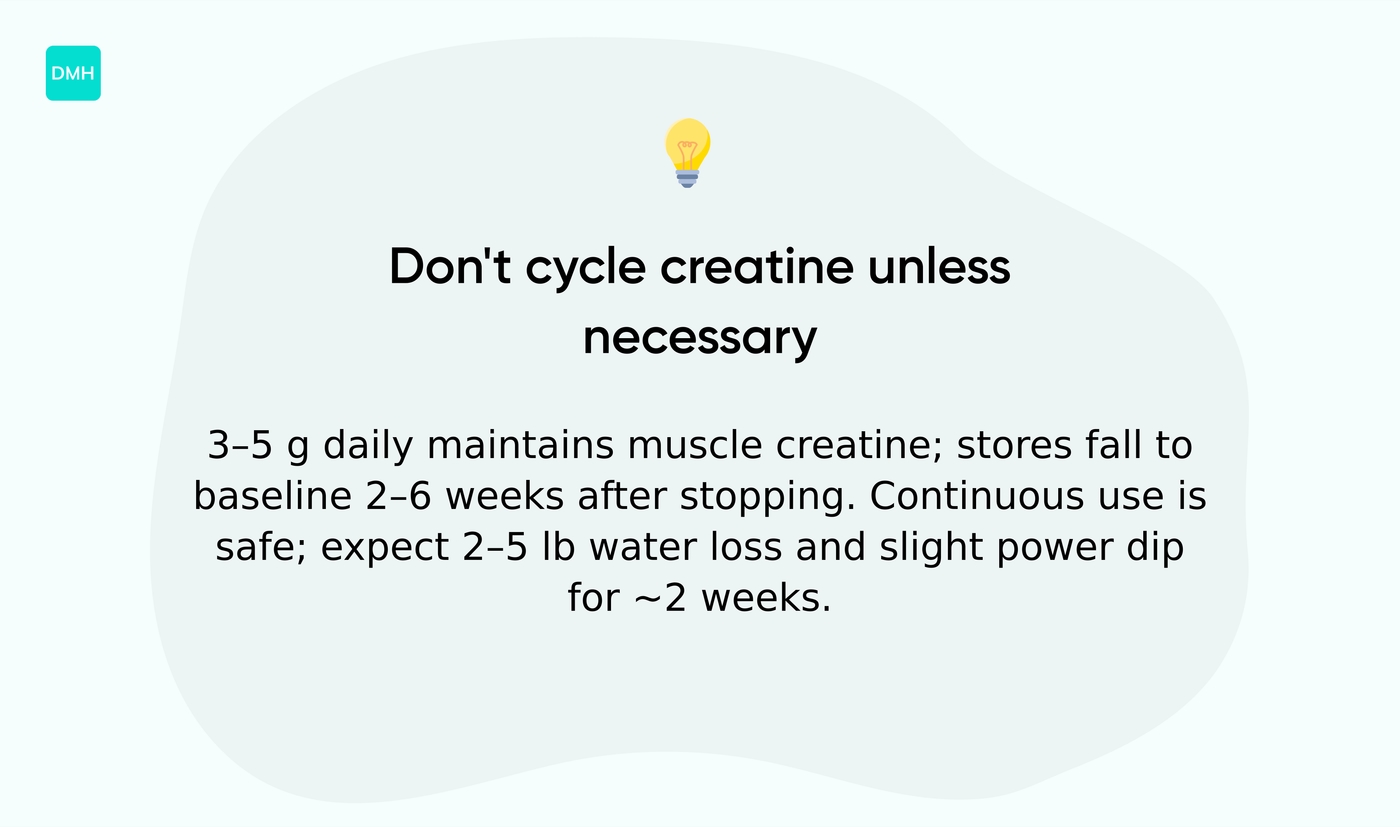
Daily creatine at 3–5 g daily keeps muscle stores topped. Muscle stores fall to baseline in the creatine washout period of 2–6 weeks after stopping.
Clinical trials support continuous use for months and years with no clear harm in healthy adults.
Some athletes pause to test effects, manage costs, or reduce mild stomach upset. I’d say cycling adds little benefit unless you have clear side effects or strict budget limits.
We recommend staying consistent for steady gains and predictable recovery. If you plan a break, treat it like an experiment.
- Keep training volume and protein intake steady
- Monitor strength and sprint times weekly
- Resume 3–5 g daily or a short loading day if you want quick refill
Expect a 2–5 pound water weight drop and a small power dip during the first two weeks. Coming off creatine rarely causes withdrawal symptoms.
Taking a break can help if you suspect side effects or want to test natural baselines. Stop creatine only for a reason and track results for 2–6 weeks.
Want a tailored plan? Share your routine and we’ll advise clear next steps.
Read also: What Parts Of The Body Lose Fat First
How to stop taking creatine safely and maintain gains
Stop creatine safely by keeping protein, hydration, training, sleep, and calories steady. We recommend a 4-week plan to preserve muscle and power.
- Maintain protein intake: Aim for 1.6–2.2 g/kg daily (or 0.7–1.0 g per pound) to support muscle
- Proper hydration habits: Drink 3–4 L water daily to offset water redistribution; electrolytes help during heavy sweat sessions
- Structured training program: Keep progressive overload and maintain intensity for compound lifts like squats, deadlifts, presses and rows
- Rest: Target 7–9 hours sleep and schedule weekly deloads; naps help recovery when sleep is short
- Calories: Stay at maintenance or a small surplus for two weeks; track intake with a food app
Expect 2–5 lb water loss during the 2–6 week creatine washout period. Performance stabilizes after stores normalize.
Minor strength loss can appear during sprints and heavy lifts. No withdrawal symptoms occur after stopping creatine.
Stopping creatine rarely causes real muscle loss. Monitor sodium and carbs around workouts.
Review vitamins for diet support: what vitamin is good for weight loss.
For an 80 kg lifter aim for 128–176 g protein daily. If you restart, normal dosing resumes benefits within two weeks.
Log sets, reps and RPE to detect subtle dips. Start this plan today and keep logging lifts for four weeks.
You’ll also like: Can You Take Too Much Vitamin C? Symptoms And Risks
Educational notice: This content is provided for informational and educational purposes only and is not intended as medical advice. Always consult a qualified healthcare professional for medical concerns.