OCD shows two main onset peaks and needs age-aware care.
The pattern is a bimodal onset pattern with two clear windows.
One window centers on late childhood. The other centers on late teens and early adulthood.
Typical ages cluster at 8–12 and 19–23. About 40% of cases begin before age 10. Roughly two-thirds start before the age of 18. The average age of first diagnosis sits near 19 years.
Different factors drive each window. Genetic risk and early neurodevelopment often link to childhood onset OCD. Hormonal shifts, social pressure, and new stressors relate to late onset OCD. Each window shows distinct symptoms and gender trends.
Spotting these windows makes a real difference. Early detection allows short, focused treatment that reduces long-term impact.
We recommend routine screening at school entry and again in late adolescence. Watch for rigid routines, repetitive rituals, and sudden worry that interferes with life.
If you observe signs in yourself or someone you care for, seek an evaluation from a clinician or mental health specialist. Quick steps save time and can improve outcomes.
At what age does OCD peak?
First peak: childhood-onset OCD (ages 8-12)
Early recognition of childhood-onset OCD improves outcomes. Symptoms typically appear between ages 8 and 12. About 1–3% of school-age children show diagnosable symptoms.
Boys develop symptoms more often than girls. Childhood-onset OCD demands family support and clear treatment plans. Look for rigid routines, repeated checking, and washing behaviors that cause distress.
When people ask what age does OCD peak, note a peak occurs at ages 8–12. If you notice these signs, talk with your pediatrician or a child mental health professional today.
Second peak: late teens to early adulthood (ages 19-23)
Late-onset OCD often appears as young adults face major life changes. Clinical data show an average age 19. Onset commonly clusters between 19 and 23.
You may see intrusive thoughts, ritualized checking, or avoidance that limits study or work. Symptom intensity often rises with sleep disruption, new stress, and substance use.
Late-onset OCD tends to disrupt transitions like college entry or a first job. Symptom severity often peaks in the late teen years and into the twenties.
We recommend early assessment and evidence-based therapy such as exposure and response prevention. Track symptoms and triggers and review practical coping steps in our guide on OCD flare-ups.
Timely care shortens suffering and preserves education or career progress. If you notice persistent symptoms, contact your campus clinic or primary care provider for referral.
Gender differences in OCD onset timing
Gender influences when OCD appears and that timing should shape screening. Males tend to develop OCD earlier. Mean age for males is mean age 21 and for females is mean age 24.
These gaps shift the OCD age of onset and affect what age does OCD peak by gender. We advise watching for rigid routines and intense fears in boys aged eight to twelve.
Boys more often show childhood-onset OCD and higher overlap with tic disorders, which raises early risk. Catching signs early reduces years of untreated distress and helps you access effective care sooner.
You should ask a clinician about cognitive behavioral therapy and a thorough evaluation if symptoms disrupt daily life.
What age does OCD usually start?
We recommend screening for OCD early to improve outcomes and reduce distress. At Daily Medical Health, we map onset trends so you know when to watch for signs.
About 40% of cases begin before age 10. Roughly two-thirds of people show symptoms before adulthood. The average age 19 marks common first symptoms for many people.
There are two main onset periods:
-
A childhood peak appears around ages 8 to 12
-
A later peak occurs between 19 and 23
Childhood-onset OCD often shows rigid routines, repeated washing, and checking behaviors. Boys tend to develop symptoms earlier than girls.
Late-onset cases appear during college or early work life. New stress, sleep loss, and life transitions can reveal hidden symptoms.
I’d say spotting patterns early helps you get effective treatment sooner. Adult onset after age 40 can happen, but it’s less common.
Watch for intrusive thoughts, ritualized actions, and time spent on compulsions. If you notice these signs, seek a mental health evaluation and ask about cognitive behavioral therapy and medication options.
Start by noting frequency and age of first symptoms, then bring those notes to a clinician.
OCD prevalence and severity by age group
OCD in children and preschoolers
Parents should watch for rigid routines and ritualized behaviors in very young children. We often see early signs before formal diagnosis. Preschool estimates reach about 3%.
School-age children show different patterns, with 1–2% showing washing and checking compulsions. These early cases shape the OCD onset timeline and influence later peak patterns.
Childhood-onset OCD accounts for a sizable share of cases. About 40% of people with OCD report symptoms before age ten. Rigid schedules, repeated questions, and intense distress when routines change are red flags.
Well, early behavioral therapy helps reduce symptom severity. Understanding early signs helps answer what age does OCD peak later. If you notice persistent rituals, talk to your pediatrician or a child psychiatrist.
OCD in adolescents and teens
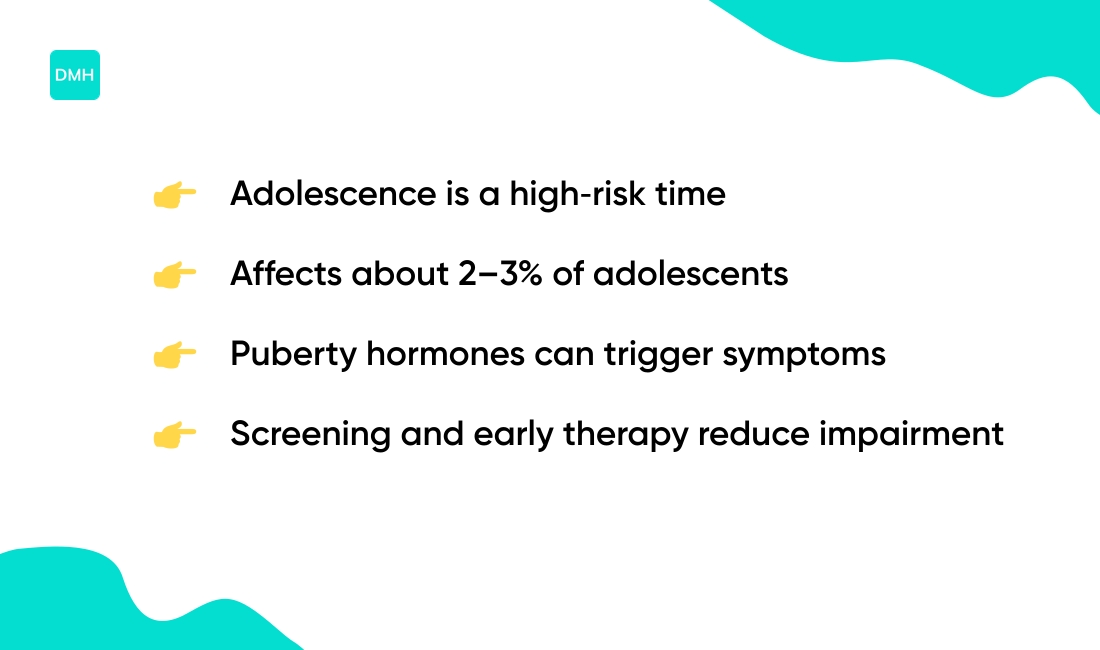
Adolescence is a high-risk time for OCD and needs prompt attention. We often see delays in diagnosis among teenagers. OCD in teens affects about 2–3% of adolescents.
Hormonal shifts during puberty can trigger new obsessions or worsen rituals. Read about the hormone responsible for OCD.
OCD and puberty link with rising anxiety and changing self-image. Perfectionism patterns show up as strict routines, relentless checking, or rigid studying habits.
Searches for what age does OCD peak identify a late-teen-onset surge that overlaps college entry. Screening and early therapy will reduce long-term impairment.
If you notice persistent OCD signs, contact your pediatrician or a mental health clinician today.
OCD in young and middle-aged adults
Adults with OCD often see steady improvement through middle age when they access consistent care. We analyze trends and note that adult prevalence stabilizes at about 2.3%.
Symptom severity peaks in the late teens through late 20s. Average first diagnosis sits near age 19. This pattern explains why young adults entering college or the workforce face heightened risk.
Early intervention shortens intense years and boosts long-term functioning. If you notice recurring obsessions or rituals, start with a clinical assessment and simple exposure exercises under guidance.
For a practical pathway, read our guide to stop OCD spiral and pick one step you can try this week.
OCD in older adults and seniors
Late-onset OCD after 40 deserves focused attention. We see late-onset OCD emerge after age 40. Senior rates are lower at about 1.5%, but symptoms can worsen after 65.
Symptoms often shift toward late-onset OCD patterns like increased hoarding and health anxiety. These shifts stem from more medical worries and shrinking social support.
After 65, cognitive decline can reduce insight and coping, which may worsen compulsions and make treatment harder. If you notice memory changes with new symptoms, read our guide on OCD and memory loss for practical signs and next steps.
Therapies like CBT and medication remain effective for older adults. Early care improves daily function. If you or someone you care for develops new OCD signs after 40, seek evaluation from a clinician experienced with older adults.
Can adults develop OCD for the first time?
Adults can develop obsessive-compulsive disorder even if they had no symptoms as a child. Adult onset OCD shows up in roughly one-third of cases.
Some people notice symptoms in their 20s. A smaller group reports new symptoms after age 40. Late onset often looks different than early onset.
Early cases tend to begin with rigid routines, checking and contamination fears. Late cases often include hoarding, health worry and slower cognitive changes. Men more often have childhood onset. Women more often report onset in early adulthood.
Triggers for new adult symptoms include major stress, medical illness, head injury and hormonal shifts such as postpartum changes. Social isolation can worsen or reveal symptoms; read about isolation and OCD for more on that link. Certain medications and infections can also spark symptoms in some people.
We recommend prompt evaluation when new rituals or intrusive thoughts start interfering with work or relationships. Early treatment improves long-term outcomes. Seek a mental health professional who assesses symptom type, severity and any medical triggers.
If you notice new compulsions or anxiety that takes time each day, book an assessment now. Getting help changes the course of symptoms and life quality.
What factors influence the age of OCD onset?
Timing of OCD reflects a mix of genes, hormones, perinatal risks and life stress. We review family history, birth complications and major life stressors. This helps explain what age does OCD peak across groups.
Genetics play a strong role. A positive family history often predicts earlier childhood-onset. OCD statistics show about 40% of cases begin before age ten and two-thirds start by adulthood.
|
Risk Factor |
Impact on Onset Age |
Key Details |
|---|---|---|
|
Family History |
Earlier onset |
Genetic link predicts childhood symptoms |
|
Perinatal Issues |
Earlier onset |
Low birth weight, neonatal complications |
|
Puberty Hormones |
Teen onset |
Brain circuit changes trigger symptoms |
|
Life Stress |
Variable onset |
Trauma, school pressure, family dynamics |
Perinatal issues like low birth weight or neonatal complications increase OCD onset risk. Early infections and immune responses can alter neurodevelopment and raise vulnerability.
Puberty-related hormonal shifts reshape brain circuits and may trigger symptoms in teens. Stressful life transitions amplify symptom emergence.
Early detection reduces harm and speeds access to effective care. Psychosocial factors such as trauma, intense school pressure and family dynamics often change the timing of symptoms.
Some people develop adult onset OCD in their twenties or later. Those with late-onset OCD often show different triggers and need tailored care.
Average initial symptoms tend to appear near age nineteen. Boys often show symptoms earlier, while females tend to present later. Early CBT reduces symptom severity by roughly 30 to 50 percent in trials.
Track changing rituals, note timing, and share details with your clinician. If you notice persistent intrusive thoughts or rituals, seek professional assessment promptly.
Read also: Can Isolation Cause Agoraphobia? 100% Answered
When are OCD symptoms most severe by age?
OCD symptoms are most severe from the late teens through the late 20s, then tend to ease through middle age with a possible return in senior years. Peak burden often maps to major life transitions like leaving home, starting college, or early work.
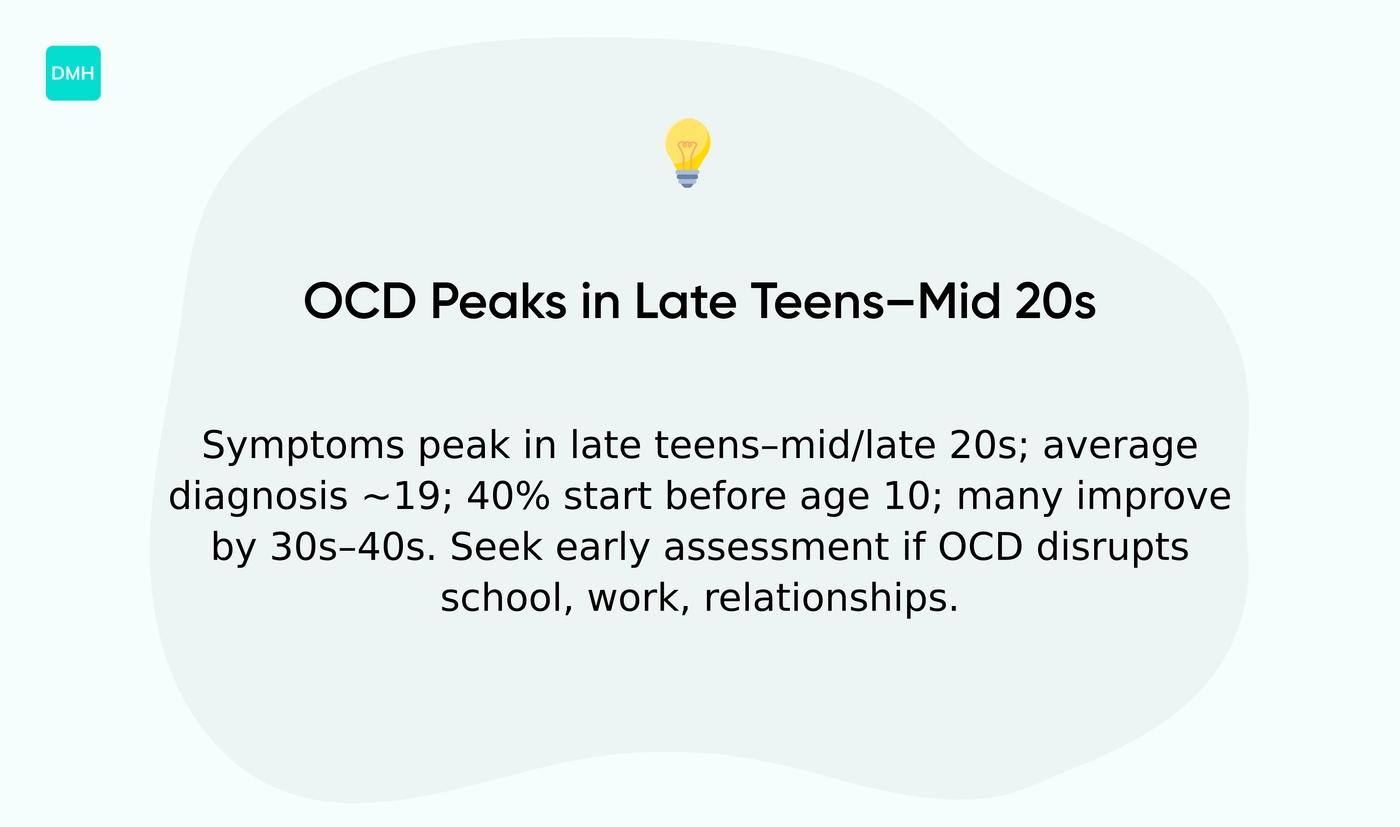
These demands expose intrusive thoughts and rigid rituals. If you search for what age does OCD peak, note this timeline: average first diagnosis sits near 19 years. About 40% of cases begin before age 10. Roughly two-thirds start before adulthood.
OCD peak age usually covers the late teens into the mid-to-late 20s. Symptom intensity and functional impact often top out during that span. Many people see steady improvement through their 30s and 40s.
Treatment response and coping skills explain part of that change. Late-onset and adult onset OCD occur after 40. Senior rates fall to about 1.5%, yet hoarding and health anxiety can increase symptom visibility.
OCD in children shows up as rigid routines and repetitive checking. Boys more often show early onset, while adolescence brings a second common rise.
Spotting peak years helps you act sooner. Early evaluation and therapy cut years of unnecessary struggle. We recommend you seek assessment if symptoms interfere with school, work, or relationships.
Start by talking with your primary care clinician or a licensed therapist.
Read also: Is Agoraphobia a Disability? Everything You Need to Know
Does OCD get worse as you grow up?
OCD severity usually eases with age after a peak in early adulthood. We encourage early evaluation because early care changes long-term outcomes. The peak often lands in the late teens to late 20s.
Does your OCD feel worse during major life transitions? Research shows many people improve over time. About one-third reach full remission in long-term studies and another group shows partial gains. Persistent symptoms remain for others.
Childhood-onset cases can remain stable into adulthood. Adult onset OCD and late-onset OCD after age 40 appear less common but often follow different patterns.
Getting therapy early shifts the course. Evidence favors exposure and response prevention and selective serotonin reuptake inhibitors for symptom reduction.
Watch for stressors that raise symptoms, such as puberty, major life change, or illness. Track symptom frequency and severity so you can show clear patterns to your clinician.
Expect a gradual improvement for many people through middle age. Some seniors face renewed symptoms tied to health declines or cognitive changes.
If you or someone you know struggles, talk with a mental health professional and start an evidence-based plan. We can help you find the right next step.
You’ll also like: How to Deal with Turbulence Anxiety: Top Tips