That recurring muscle cramp or sudden flutter might be trying to tell you something.
Magnesium deficiency symptoms are often subtle and get blamed on stress, sleep loss, or overwork.
Because signs don’t usually show up until levels fall a lot, many people don’t get tested until problems worsen.
Recognizing these signs early lets clinicians treat low magnesium before serious complications develop.
This guide on magnesium deficiency symptoms explains common and severe warning signs, how testing works, and practical steps to correct low magnesium.
You’ll learn how to spot muscle cramps, heart palpitations, sleep and mood changes, and when to see a doctor.
It’s wise to check with a healthcare provider before starting supplements or making big dietary shifts.
What is magnesium deficiency
Magnesium deficiency refers to low magnesium in the blood. Clinicians call this hypomagnesemia, which describes serum magnesium below commonly accepted ranges.
Most magnesium sits inside cells and bone. Blood tests measure only a small fraction of total body magnesium—about 1% of your stores. The serum range often used is about 0.75–0.95 mmol/L (roughly 1.8–2.3 mg/dL). Values below about 0.75 mmol/L may indicate deficiency.
Low magnesium develops through reduced intake, poor absorption, or excess loss. Common causes include chronic diarrhea, vomiting, certain diuretics, proton pump inhibitors, alcohol use disorder, uncontrolled diabetes, and some kidney disorders. Malabsorption disorders such as celiac disease and inflammatory bowel disease can lower levels.
People often lack clear signs until levels fall well below the lower limit. The body keeps blood magnesium steady by pulling it from bone and cells. This buffering delays visible symptoms.
Nerve and muscle cells may fail only after intracellular stores drop. That’s why low magnesium symptoms and magnesium deficiency symptoms sometimes appear late.
Lab tests can miss early depletion if they measure only serum magnesium. Doctors may consider clinical signs, risk factors, and repeat tests. Some studies suggest intracellular measures or ionized magnesium can add detail, though availability varies.
Not medical advice; content for educational purposes. Always consult a qualified healthcare professional for medical advice specific to your situation.
Common signs of magnesium deficiency
Muscle cramps and spasms
Low magnesium can make muscles hyperexcitable. Magnesium helps control calcium and potassium movement inside muscle cells.
When serum magnesium falls below about 1.7 mg/dL, this is considered hypomagnesemia and can cause magnesium deficiency symptoms. Regulation of ion channels and neurotransmitter release weakens. Cells admit extra calcium and neurons fire more often.
Muscles contract too often. People report nighttime muscle cramps, post-exercise spasms, and ongoing twitching. (Ever wake up at 2 a.m. with a calf cramp that makes you yelp? Yeah, that’s often low magnesium at work.)
Low magnesium often coexists with low potassium and worsens cramps. Some studies suggest correcting magnesium can reduce twitching, but responses vary by individual.
Have you noticed frequent leg cramps disrupting your sleep? If so, it may help to bring magnesium up with your clinician.
Not medical advice; content for educational purposes. Always consult a qualified healthcare professional for medical advice specific to your situation.
Fatigue and weakness
Persistent tiredness and general weakness rank among common but vague low magnesium symptoms. These signs can feel truly fuzzy and easy to miss.
Magnesium serves as a cofactor for over 300 enzymes. It helps enzymes that make ATP, the cell’s main energy molecule. Some studies suggest low magnesium can reduce ATP availability and impair muscle function.
That may lower stamina and slow recovery after exercise. People report daytime sleepiness, reduced exercise tolerance, slower walking speed, and weakness with routine tasks. Such changes often appear before more specific hypomagnesemia symptoms.
Simple lab tests can miss low intracellular magnesium, so clinical context matters when assessing magnesium deficiency fatigue. Tracking symptom patterns and risk factors helps guide testing decisions.
Not medical advice; content for educational purposes. Always consult a qualified healthcare professional for medical advice specific to your situation.
Numbness and tingling sensations
Low magnesium can affect nerve function and cause pins-and-needles feelings. Magnesium helps regulate ion channels for calcium and potassium.
Low levels raise nerve excitability and trigger spontaneous firing. People often report numbness in hands or numbness in legs. Symptoms can include brief tingling or longer numb patches.
Serum magnesium below about 0.7 mmol/L (≈1.7 mg/dL) commonly defines hypomagnesemia. Greater drops often link to more noticeable neurological signs. Coexisting low potassium or calcium may make symptoms worse.
Symptoms may mimic trapped nerve conditions, so clinical evaluation matters. For instance, an individual with a mildly low magnesium level may feel intermittent hand tingling after exercise.
Not medical advice; content for educational purposes. Always consult a qualified healthcare professional for medical advice specific to your situation.
Eye twitching and abnormal eye movements
Low magnesium can affect the nerves and muscles that control the eyelid and eye position. You may notice brief eyelid twitching or repeated eyelid spasms.
Mild eyelid twitching often lasts seconds to minutes and can recur over days. Such twitching ranks among common magnesium deficiency symptoms.
Severe hypomagnesemia may produce nystagmus, a rhythmic side-to-side or up-and-down eye movement. Nystagmus can blur vision and appear with other neurologic signs. Nerve hyperexcitability from low magnesium disrupts calcium and potassium handling in muscle cells.
Eye twitching magnesium deficiency can appear before other low magnesium symptoms such as muscle cramps or numbness. People with new or worsening eye movements may need clinical evaluation.
Not medical advice; content for educational purposes. Always consult a qualified healthcare professional for medical advice specific to your situation.
Severe magnesium deficiency symptoms
Severe magnesium deficiency, medically called hypomagnesemia, can lead to life-threatening signs. People with very low magnesium levels may show intense neurological and cardiac problems.
Seizures and convulsions can occur when nerve cells fire uncontrollably. Severe tremors may grow intense enough to impair coordination. Cardiac effects can include palpitations and dangerous arrhythmias.
Low magnesium can trigger torsades de pointes, an abnormal heart rhythm linked to sudden collapse. Behavior and mood may shift sharply. Marked personality changes, confusion, agitation, or delirium can signal critical deficiency.
| Symptom | Severity Indicator |
|---|---|
| Seizures or convulsions | Critical—requires emergency care |
| Severe tremors | High—limits coordination |
| Dangerous arrhythmias | Critical—risk of collapse |
| Personality changes | High—confusion or delirium |
| Respiratory muscle weakness | Critical—breathing trouble |
Blood tests guide diagnosis. Some labs define severe hypomagnesemia as serum magnesium below 1.2 mg/dL, with levels under 1.0 mg/dL often linked to the worst outcomes. For example, a person who has a seizure plus a serum magnesium of 0.9 mg/dL usually prompts urgent evaluation in a hospital setting.
Symptoms vary between people. Low magnesium symptoms may follow untreated muscle cramps, numbness, and fatigue. Certain conditions increase risk, including prolonged diarrhea, heavy alcohol use, diuretics, and malabsorption.
According to available research, very low magnesium can disrupt heart conduction and trigger palpitations. Heart palpitations from magnesium deficiency can feel like fluttering or skipped beats.
Watch for breathing trouble, fainting, or prolonged chest pain. Emergency care can assess for dangerous arrhythmias and other complications.
Not medical advice; content for educational purposes. Always consult a qualified healthcare professional for medical advice specific to your situation.
Can magnesium deficiency cause heart palpitations
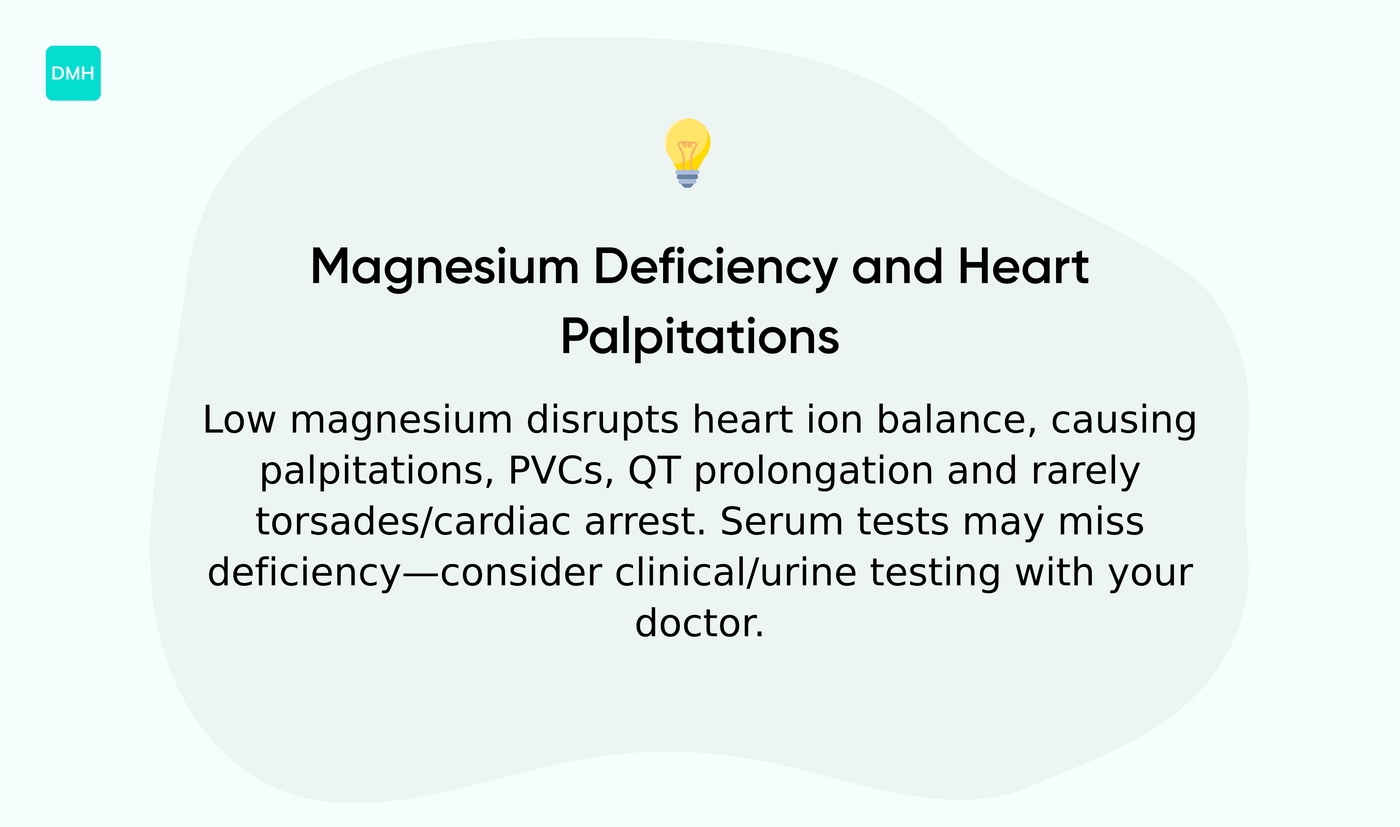
Low magnesium can affect your heart rhythm. Many people link magnesium deficiency symptoms to palpitations and skipped beats.
Magnesium helps control ion flow in heart cells. It regulates potassium and calcium—minerals that keep the heart’s electrical signals stable.
Clinically, hypomagnesemia often means serum magnesium below 1.7 mg/dL. Such low levels can lead to ECG changes. Prolonged QT interval and extrasystoles appear in some patients.
People with low magnesium symptoms may notice fluttering, rapid beats, or irregular pulses. Reports often list premature ventricular contractions and atrial arrhythmias. Some studies suggest magnesium loss raises the risk of dangerous ventricular rhythms.
Severe deficiency can link to torsades de pointes and cardiac arrest in vulnerable patients. Those events remain uncommon but serious. Risk rises if low magnesium occurs with low potassium or certain medications.
Serum magnesium tests can miss total body shortage. Doctors sometimes order 24-hour urine or clinical assessments for clarity. If you have persistent palpitations, have you considered discussing magnesium testing with your clinician?
Heart palpitations from low magnesium may respond to correction under medical care. Not medical advice; content for educational purposes. Always consult a qualified healthcare professional for medical advice specific to your situation.
Magnesium deficiency and mental health symptoms
Anxiety and stress
Magnesium deficiency symptoms often include increased anxiety and heightened stress responses. Magnesium helps regulate neurotransmitters such as GABA and glutamate.
Low magnesium can lead to nervous system hyperactivity. This hyperactivity may produce restlessness, trembling, sweaty palms, and a racing heart. Low levels may amplify the stress response driven by the HPA axis.
That amplification can raise cortisol and make anxious feelings harder to settle. Surveys estimate 10 to 30 percent of adults have low magnesium intake. Some studies link low magnesium with higher anxiety scores and disrupted sleep.
Watch for overlap with other hypomagnesemia symptoms, such as muscle cramps or numbness. Not medical advice; content for educational purposes. Always consult a qualified healthcare professional for medical advice specific to your situation.
Depression and mood changes
Low magnesium can affect mood and emotional regulation. Some studies suggest magnesium deficiency symptoms may include depressive symptoms.
People often report mood swings, irritability, and reduced interest in daily activities. Personality changes such as apathy or heightened anger may occur. Hypomagnesemia symptoms can appear before clear physical signs.
Serum magnesium below 0.75 mmol/L commonly defines low levels in clinical settings. Magnesium helps regulate neurotransmitters such as serotonin and GABA. Low levels can disrupt sleep and amplify stress responses.
Observational research links low magnesium symptoms with higher odds of depressive symptoms in some populations. Some trials report small mood improvements after supplementation in people with low levels.
Symptom patterns can vary from person to person and often overlap with anxiety or sleep problems. If symptoms are severe or include suicidal thoughts, seek immediate medical help.
Not medical advice; content for educational purposes. Always consult a qualified healthcare professional for medical advice specific to your situation.
Sleep problems and insomnia
Magnesium deficiency symptoms often include sleep problems and insomnia. Magnesium helps regulate GABA, a calming neurotransmitter, and melatonin production.
Low magnesium levels may reduce GABA activity and lower melatonin output. Reduced GABA can cause difficulty falling asleep and more awakenings at night.
Magnesium also aids muscle relaxation by balancing calcium and potassium across cell membranes. When magnesium falls, muscle tension can increase, causing nighttime leg cramps and restless sleep.
Some studies suggest low magnesium links to worse sleep quality, though findings vary. Serum magnesium below 1.7 mg/dL commonly defines hypomagnesemia, which may relate to sleep issues.
Not medical advice; content for educational purposes. Always consult a qualified healthcare professional for medical advice specific to your situation.
Can low magnesium trigger headaches or migraines
Magnesium deficiency symptoms may be associated with higher headache and migraine frequency. Some research links low magnesium to more frequent attacks.
Magnesium helps control nerve firing and blood vessel tone. Low levels can increase neuronal excitability and promote cortical spreading depression, a mechanism tied to migraine aura.
Patterns to recognize include recurrent unilateral throbbing headaches. Sensitivity to light, nausea, and visual aura often occur before or during attacks. Some studies suggest people with migraine show lower serum magnesium than others.
Small trials report attack reductions in the range of 30–40% for some participants taking oral magnesium, with variation between studies. Blood tests may miss intracellular deficits that underlie low magnesium symptoms.
For other nutritional causes of headaches, see can low iron cause headaches. People with attacks that cluster around menstruation, poor sleep, or alcohol use may have contributing magnesium shortfalls.
Specialized testing and clinical evaluation can help clarify the cause. If you have frequent or severe headaches, have you discussed magnesium testing with your doctor?
Not medical advice; content for educational purposes. Always consult a qualified healthcare professional for medical advice specific to your situation.
Magnesium deficiency symptoms in women vs men
Magnesium deficiency symptoms can vary by sex. Body stores differ by muscle mass and hormones, which alters how symptoms appear.
Women may report stronger menstrual and reproductive symptoms. Low magnesium symptoms in women often include worsened menstrual cramps, heightened premenstrual anxiety, and increased sleep problems. Pregnancy raises magnesium demand, which can lead to more frequent leg cramps and fatigue during gestation.
Men may report more muscle and cardiac signs. Magnesium deficiency symptoms in men often include persistent muscle cramps, exercise-related spasms, and notable heart palpitations. Lifestyle factors like higher alcohol use and certain medications can raise risk in men.
Nerve symptoms appear in both sexes. Pins-and-needles, numbness, and eye twitching magnesium deficiency links can present similarly. Fatigue and cognitive changes such as mood swings or mild depressive symptoms may affect anyone.
Severity and pattern can vary from person to person. Serum magnesium can read normal until deficiency becomes significant because most magnesium sits inside cells and bone. About 50–60% of body magnesium is in bone, with muscle holding much of the rest.
Recognize warning signs that suggest urgent care. Severe tremors, seizures, or sudden irregular heart rhythms require immediate evaluation.
Not medical advice; content for educational purposes. Always consult a qualified healthcare professional for medical advice specific to your situation.
What causes magnesium deficiency
Magnesium deficiency, or hypomagnesemia, develops when intake, absorption, or retention falls short of needs. Here’s the thing—poor dietary intake can contribute, but it’s rarely the only factor.
People who eat few magnesium-rich foods may show low levels over months. Some gastrointestinal problems reduce absorption. Celiac disease and inflammatory bowel disease impair nutrient uptake.
Chronic diarrhea or repeated vomiting causes large mineral losses. Persistent fluid loss can drop serum magnesium. Kidney disorders change how the body handles magnesium—damaged kidneys may waste magnesium into the urine.
Certain medicines lower magnesium. Loop diuretics, some antibiotics, and long-term proton pump inhibitors link to lower levels. Heavy alcohol use changes absorption and increases urinary excretion. Alcohol-related malnutrition often coexists with low magnesium.
Uncontrolled diabetes can raise urinary magnesium loss. People with high blood sugar may lose more magnesium through urine. Some medical situations shift magnesium into cells. Refeeding after starvation and certain critical illnesses can cause sudden drops.
Hospital studies report low magnesium in about 10–20% of patients. Rates vary by setting and underlying illness. Low magnesium symptoms may overlap with other conditions. Muscle cramps, fatigue, numbness, and heart palpitations can all appear.
Not medical advice; content for educational purposes. Always consult a qualified healthcare professional for medical advice specific to your situation.
How is magnesium deficiency diagnosed or tested
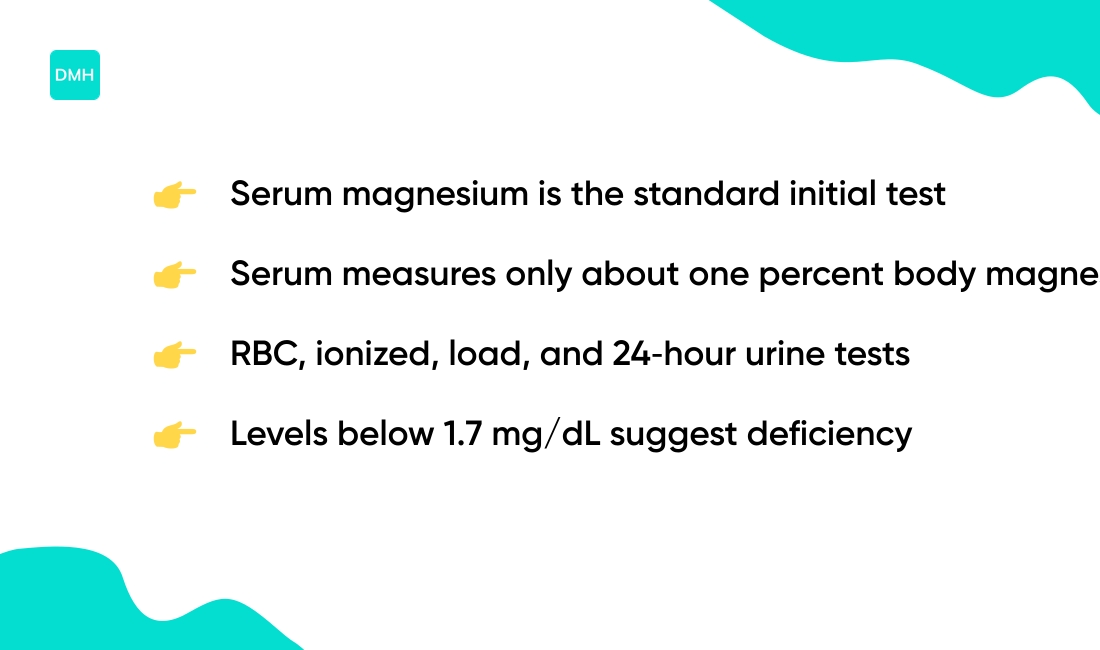
Doctors commonly start with a serum magnesium blood test. Serum magnesium below about 1.7 mg/dL often indicates hypomagnesemia symptoms. Serum tests remain the standard lab panel.
Blood magnesium measures only about 1% of total body magnesium. Normal serum levels can mask low tissue stores. More specific tests can help:
- Red blood cell (RBC) magnesium. Offers a window into intracellular levels.
- Ionized magnesium. Measures the biologically active fraction of magnesium.
- Magnesium load (retention) test. A measured dose is given and urine is collected. Retention greater than about 20% may suggest low body stores.
- 24-hour urinary magnesium. Helps detect excessive renal losses.
Doctors may order testing for people with persistent low magnesium symptoms, chronic diarrhea, heavy alcohol use, certain diuretics, proton pump inhibitors, uncontrolled diabetes, kidney disease, or malabsorption. Muscle cramps rank among common signs.
Interpretation can vary by lab and method. Serum
For related lab value context, review supplements blood test results at supplements blood test results.
Not medical advice; content for educational purposes. Always consult a qualified healthcare professional for medical advice specific to your situation.
Read also: Understanding CO2 In Blood Test Results
When should I see a doctor for possible magnesium deficiency symptoms
If you notice persistent or worsening magnesium deficiency symptoms, consider medical evaluation. Early testing helps distinguish low serum magnesium from other causes.
Seek care if you experience:
- Severe muscle weakness or loss of coordination that limits daily tasks.
- New or worsening heart palpitations, fainting, or chest discomfort.
- Seizures, severe tremors, or sudden changes in mental state.
- Breathing difficulty or signs of respiratory muscle weakness.
- Prolonged vomiting or diarrhea with inability to keep fluids down.
A serum magnesium below 1.2 mg/dL may indicate severe hypomagnesemia and need urgent care. Untreated severe deficiency can lead to abnormal heart rhythms, seizures, and respiratory failure.
Reports link very low magnesium with cardiac or respiratory arrest in extreme cases. Getting a lab-based diagnosis matters before starting supplements. Professional diagnosis helps direct safe treatment and appropriate dosing.
Self-supplementation may mask an underlying condition or interact with prescription medicines. If you’re concerned about low magnesium symptoms, have you considered consulting a clinician for testing?
Not medical advice; content for educational purposes. Always consult a qualified healthcare professional for medical advice specific to your situation.
Read also: Chloride Blood Test: What It Is And Why It Matters
Treatment and prevention of magnesium deficiency
Root causes of low magnesium include poor absorption, chronic diarrhea, certain medications, heavy alcohol use, diabetes, and kidney disorders. Low levels may not show until hypomagnesemia symptoms become pronounced.
Treatment targets the cause and the deficit. Mild cases often respond to dietary change and oral magnesium supplements. Severe hypomagnesemia with abnormal heart rhythms or seizures may require IV magnesium therapy in a hospital.
Focus on food first. Choose magnesium-rich foods like pumpkin seeds (about 150 mg per ounce), almonds (about 80 mg per ounce), and cooked spinach (about 78 mg per half cup). These add measurable magnesium without supplements.
Supplement forms include magnesium oxide, citrate, and glycinate. Some studies suggest citrate and glycinate cause less diarrhea than oxide. The NIH sets a supplemental upper limit near 350 mg daily for adults. Exceeding that raises side-effect risk.
Common side effects include diarrhea, abdominal cramping, nausea, and low blood pressure. Magnesium can interact with some antibiotics, diuretics, and bisphosphonates. People with kidney disease face higher risk from supplements.
If you notice worsening magnesium deficiency symptoms such as muscle cramps, palpitations, or severe fatigue, seek medical evaluation. Not medical advice; content for educational purposes. Always consult a qualified healthcare professional for medical advice specific to your situation.
You might also like: How to Understand Albumin in Blood Test Results
Educational notice: This content is provided for informational and educational purposes only and is not intended as medical advice. Always consult a qualified healthcare professional for medical concerns.