
That sudden blood test spike can change how you eat and move.
If you’re wondering how to lower triglycerides naturally and fast, there are proven diet and activity steps that help.
High triglyceride levels are associated with cardiovascular and pancreatitis risk and often come from excess calories, sugar, alcohol, or weight gain.
This guide focuses on realistic changes—foods to lower triglycerides, exercise tips, weight-loss strategies, and when supplements or meds may be needed.
You’ll learn practical meal choices (including omega-3 sources), precise exercise targets, a sample 7-day plan, and how long results typically take.
By the end, you’ll be able to start a plan that may help reduce your triglyceride levels safely and quickly.
What are triglycerides and why do they matter
Triglycerides are a type of blood fats that circulate in the bloodstream. The body stores triglycerides as energy storage in fat cells for later use.
The liver makes triglycerides from excess calories, sugars, and alcohol. Muscle and other tissues break them down for fuel between meals.
A fasting blood test reports triglycerides in mg/dL. According to available research, levels under 150 mg/dL are commonly considered within normal range.
Levels above 150 mg/dL may be associated with higher cardiovascular disease risk. Levels above 500 mg/dL can be linked with increased pancreatitis risk.
Elevated triglycerides often occur with low HDL and insulin resistance. This clustering may be associated with a higher risk of artery plaque and heart events.
Some studies suggest lifestyle factors such as diet, weight, and alcohol intake influence levels. (Honestly, tracking these numbers gives helpful context for heart health.)
Information here is for general understanding and may not cover all cases. Always consult a qualified healthcare professional for medical advice specific to your situation.
What is the main cause of high triglycerides
High triglycerides are often described as elevated blood fats that reflect excess fuel intake or impaired fat processing.
Excess calories convert to triglycerides in the liver and can raise blood levels. High intake of refined carbohydrates and added sugars drives rapid triglyceride production.
Regular alcohol consumption may raise levels even when total calories don’t seem high. Obesity and insulin resistance linked to type 2 diabetes often coincide with elevated triglycerides.
Certain medications may increase triglyceride levels. Examples include some beta blockers, steroids, and antipsychotics.
Some people inherit lipid disorders that predispose them to very high triglycerides. These genetic factors can require specialized care.
What’s driving your numbers? Well, limiting sugary drinks and refined grains often makes a measurable difference within weeks for many people.
For informational purposes only: available research and guideline documents link excess calories, sugars, alcohol, obesity, diabetes, medications, and genetics to higher triglyceride levels. Always consult a qualified healthcare professional for medical advice specific to your situation.
What is a normal triglyceride level for adults
Triglyceride levels refer to the concentration of triglycerides in blood measured in mg/dL. Triglycerides are blood fats used for energy storage and transport.
The triglyceride levels chart below shows standard ranges and associated health risks.
| Range (mg/dL) | Category | Associated health risks |
|---|---|---|
| Under 150 | Normal | Lower average cardiovascular risk; overall risk depends on other lipids and factors. |
| 150–199 | Borderline high | May be associated with increased cardiovascular risk and metabolic syndrome. |
| 200–499 | High | Linked with greater heart disease risk and fatty liver in some people. |
| 500+ | Very high | Associated with a higher risk of pancreatitis and urgent clinical evaluation. |
Most labs report fasting triglycerides, though nonfasting tests are used in some settings. Values can vary from person to person and with recent meals.
Seeing a clear chart makes it easier to discuss test results and next steps with a clinician. Knowing your level may inform choices about how to lower triglycerides or adjust lifestyle factors.
For informational purposes only. Always consult a qualified healthcare professional for medical advice specific to your situation.
What is the difference between triglycerides and cholesterol
Triglycerides and cholesterol are both fats carried in the blood. They’re measured separately on a lipid panel.
Triglycerides serve as the body’s main fuel reserve. The liver makes triglycerides from excess calories, especially from sugars and refined carbs.
Cholesterol helps build cell membranes and steroid hormones. The body circulates cholesterol in different particles, some linked to higher heart disease risk.
Blood lipid tests report triglycerides in mg/dL with values under 150 often shown as normal. Levels above 150 may be noted as borderline or high and are associated with greater cardiovascular risk.
Management differs by lipid type. Lowering triglycerides often involves reducing sugar, refined carbs, alcohol, and excess calories, plus weight loss and aerobic exercise.
Some studies suggest omega‑3s can lower triglyceride levels. For cholesterol, dietary saturated fat matters and some people use cholesterol‑lowering medications under clinical care.
Actually, focusing on carb quality and alcohol reduction can have faster effects on triglyceride numbers than changes aimed only at cholesterol. For informational purposes only. Always consult a qualified healthcare professional for medical advice specific to your situation.
What foods help lower triglycerides
Omega-3 rich foods
Omega-3 fatty acids are associated with lower blood triglyceride levels in research. These fats include EPA and DHA from marine sources and ALA from plants.
Key fatty fish include salmon, sardines, mackerel, trout, and herring. A 100 g serving often supplies about 0.5–2 g of EPA+DHA depending on species. Aim for at least two servings of oily fish per week.
Plant sources include flaxseeds, walnuts, and chia seeds. Plant ALA converts partially to EPA and may support lipid changes, though less effectively than direct EPA/DHA sources.
Marine and plant omega-3s may help lipid health. Combining these foods with other dietary changes may speed results for some people.
These foods fit into approaches for how to lower triglycerides. For informational purposes only. Always consult a qualified healthcare professional for medical advice specific to your situation.
High-fiber whole foods
High-fiber whole foods contain soluble and insoluble fiber. Soluble fiber slows fat absorption and may lower blood triglyceride levels.
Choose quinoa, brown rice, oats, barley, lentils, chickpeas, vegetables, and fruits. Many guidelines target 25–30 g fiber daily.
Here’s what that looks like:
- One cup cooked oats provides about 4 g fiber
- Half cup cooked lentils offers about 8 g
- One medium pear contains about 5 g
- One cup cooked quinoa delivers about 5 g
Plus, whole grains and legumes are practical, everyday options. Adding an oat bowl or lentil salad several times per week can help support healthier triglyceride levels.
This approach is part of strategies to lower triglycerides naturally. Always consult a qualified healthcare professional for medical advice specific to your situation.
Healthy fats to include
Unsaturated fats may support healthy triglyceride levels when they replace saturated fats in the diet.
Good sources include avocados, olive oil, canola oil, nuts, and seeds. Fatty nuts and seeds provide plant omega‑3s and fiber.
Oily fish supply EPA and DHA, which may be associated with lower triglycerides. As part of foods to lower triglycerides, these options often replace butter, lard, and fatty cuts.
Small, consistent changes work best. A daily handful of nuts or a splash of olive oil on vegetables feels practical. (And honestly, it tastes better too.)
Some studies suggest diets higher in monounsaturated and polyunsaturated fats associate with modest triglyceride reductions, though results can vary. Always consult a qualified healthcare professional for medical advice specific to your situation.
Foods to avoid
Certain foods can raise triglycerides by supplying excess sugar or saturated fat.
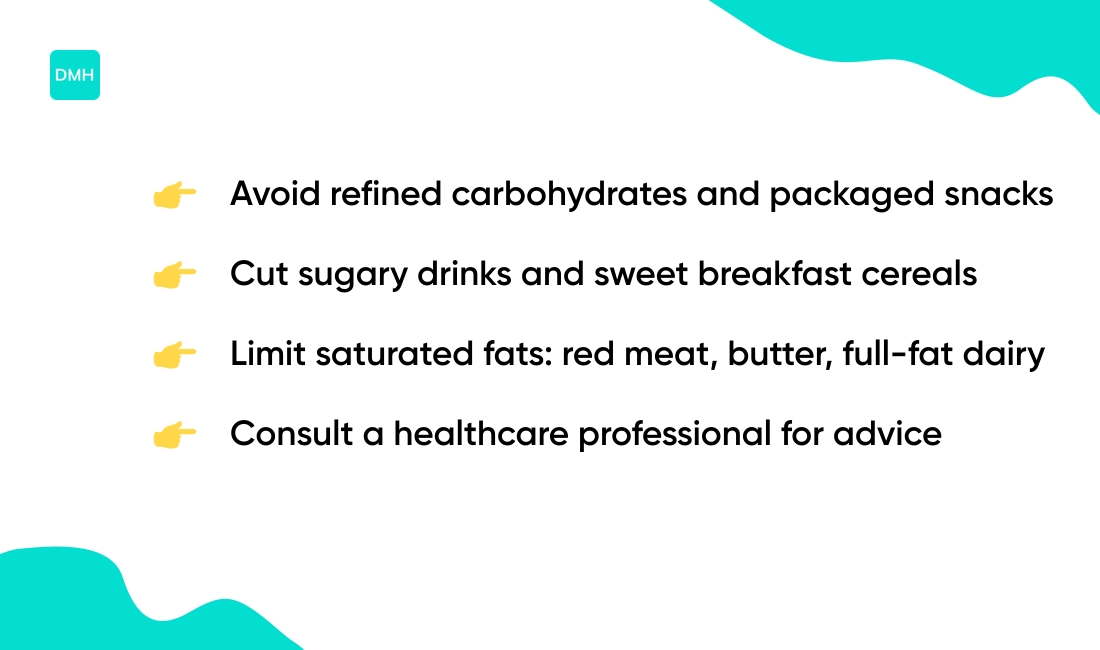
Refined carbohydrates and added sugars can be converted to triglycerides in the liver. Avoid refined carbohydrate foods like pastries, white bread, and many packaged snacks.
Sugary drinks and sweet breakfast items add fast calories. Cut sodas, sugar‑sweetened beverages, and sugary breakfast cereals.
Saturated fats from fatty red meat, butter, and full‑fat dairy may raise levels. Limit processed fried items and white flour products.
This guidance relates to how to lower triglycerides fast through diet and reduce related risk factors. Removing these items often makes dietary changes easier and more effective for many people.
For informational purposes only. Always consult a qualified healthcare professional for medical advice specific to your situation.
What is the best diet to lower high triglycerides
The best diet to lower high triglycerides is commonly described as a pattern that cuts refined carbs, boosts fiber, and adds omega-3 fats.
How to lower triglycerides often starts with carb control. Some guidelines suggest keeping carbs under 225 g daily. A low carb intake that favors whole foods may lower levels more quickly for some people.
Fiber helps. Aim for about 25–30 g fiber daily from oats, beans, vegetables, and fruit. High fiber slows fat formation in the liver and can lower fasting triglycerides.
Omega-3 sources matter. Fatty fish twice weekly or plant sources like flax and chia may be associated with lower triglyceride levels.
A Mediterranean style eating pattern with olive oil, nuts, legumes, whole grains, and vegetables is practical and sustainable. Alcohol and sugary drinks raise triglycerides and often increase liver fat.
Sample plans help with adherence. See a helpful 7-day meal plan and adapt it to calorie needs.
For swaps that lower carbs and blood glucose, review the lower blood sugar foods guide.
What’s the winning combo? Combining moderate carb limits, 25–30 g fiber, regular oily fish, and less alcohol gives the best chance to reduce triglycerides naturally. Always consult a qualified healthcare professional for medical advice specific to your situation.
How much exercise is needed to lower triglycerides
Aerobic exercise can lower blood triglycerides, the fats the body stores for energy.
A common target is at least 30 minutes of moderate aerobic activity on most days. Many guidelines note five days per week as a practical goal.
Single exercise sessions may reduce fasting and postmeal triglycerides for up to 24 hours, according to available research. Some studies suggest a single 30–60 minute bout of brisk walking or cycling lowers postprandial levels in healthy adults.
Best activities focus on steady, rhythmic movement and raise heart rate without sprinting. Options include:
- Brisk walking (about 3–4 mph)
- Cycling at a moderate pace
- Swimming laps at steady effort
- Jogging or light running
- Stair climbing, including using a stairmaster routine
Combining aerobic work with two weekly sessions of light resistance training may add benefit for triglyceride control and body composition. Mixing movement types keeps routines sustainable and supports steady progress.
People with very high triglyceride levels or other medical conditions may need tailored guidance. Always consult a qualified healthcare professional for medical advice specific to your situation.
How does weight loss reduce triglycerides
Losing 5–10% of body weight commonly lowers blood triglyceride levels. Studies suggest such loss can cut triglycerides by about 15–30% in some people. This effect matters for how to lower triglycerides.
Weight loss reduces liver fat and improves insulin sensitivity. This can lower very low density lipoprotein production. Lower VLDL means fewer triglycerides circulating.
Central fat links closely to high triglycerides. Reducing waist circumference often shows stronger triglyceride drops than weight loss alone.
Guidance on where to measure waist for body fat helps track central fat.
Gradual weight loss yields steady improvements. Pairing weight loss with exercise to lower triglycerides can speed change for some people. Some studies report faster drops when dietary sugar and alcohol intake falls.
Obesity often associates with higher triglyceride levels and metabolic syndrome signs. A 5–10% reduction can improve several cardiovascular risk markers in many adults.
Combining weight change with dietary shifts and regular activity can reduce triglycerides naturally. Monitor lab values over weeks to months to see trends. Always consult a qualified healthcare professional for medical advice specific to your situation.
How does alcohol affect triglyceride levels
Alcohol influences triglyceride levels through its effects on liver metabolism.
Triglycerides are blood fats that store energy. Alcohol is metabolized into acetyl‑CoA. That substrate can increase triglyceride synthesis.
The liver often packages those fats into very‑low‑density lipoprotein (VLDL) and releases them into blood.
Studies show a link between alcohol and triglycerides. Some research suggests even light to moderate drinking can raise fasting triglyceride levels in susceptible people.
Alcohol adds empty calories that the liver may convert to triglycerides. Sugary mixers and sweet drinks can amplify the rise.
Heavier intake commonly produces larger increases and may move levels into the high range (200–499 mg/dL) or very high range (500+ mg/dL), which is associated with higher pancreatitis risk.
For people with elevated triglycerides, complete elimination or strict limitation of alcohol is often discussed as a strategy to speed reductions and lower immediate risk.
Cutting alcohol provides a clear metabolic change that often helps lower levels faster than diet changes alone. (And honestly, your liver will thank you.)
Effects vary from person to person because of genetics, weight, diet, and medications. Always consult a qualified healthcare professional for medical advice specific to your situation.
Does sugar increase triglycerides
Sugars can raise blood triglyceride levels. Triglycerides are fats the body stores for energy.
Refined sugars and sugary drinks feed the liver with excess simple carbohydrates. The liver converts surplus sugar into fat through a process called de novo lipogenesis. That process makes triglycerides.
High intake of high-fructose corn syrup and other added sugars accelerates this pathway. Sugary beverages deliver large sugar doses quickly. That can cause a rapid triglyceride spike after meals and raise fasting levels over time.
Some observational studies suggest higher added sugar intake associates with increased triglyceride levels. Controlled feeding trials show that diets very high in sugar increase triglycerides in weeks in some adults. Evidence can vary between studies and between people.
How much sugar are you actually eating? Tracking added sugars gives a clear signal for many people trying to reduce triglycerides. Sugar-rich snacks and drinks often coincide with higher lab values.
For informational purposes only: limiting added sugars may be part of strategies to lower triglycerides naturally. Always consult a qualified healthcare professional for medical advice specific to your situation.
Do omega-3 supplements lower triglycerides
Fish oil supplements high in EPA and DHA can lower triglyceride levels.
Randomized trials and meta-analyses report triglyceride reductions near 20–30% at doses of about 2–4 grams daily of combined EPA+DHA. Those numbers vary by baseline triglyceride level and study design.
A large randomized trial using 4 g/day of purified EPA (icosapent ethyl) found fewer cardiovascular events in selected patients. That result applies to that prescription formulation and dose, not to all over‑the‑counter products.
Quality matters. Look for products that state EPA and DHA milligrams per serving. Seek third‑party testing for oxidation and contaminants.
Low-dose capsules often supply under 300 mg combined EPA+DHA and may not match study doses. High‑EPA formulas tend to work better for triglyceride lowering than low‑dose mixes.
People with very high triglycerides, fish allergy, pregnancy, or those taking blood thinners may wish to consult a clinician before starting supplements.
For informational purposes only: evidence supports benefit in many studies, but effects can vary from person to person. Omega-3 supplements may help reduce triglycerides naturally and can fit into broader plans like diet and exercise. Always consult a qualified healthcare professional for medical advice specific to your situation.
You’ll also like: How To Tighten Skin On Stomach Fast
What medications are used to lower triglycerides
Prescription medicines may be used when lifestyle measures don’t lower very high triglycerides. Hypertriglyceridemia treatment targets lowering blood triglyceride levels to reduce pancreatitis risk and long‑term heart risk.
Here’s the main drug classes seen in practice:
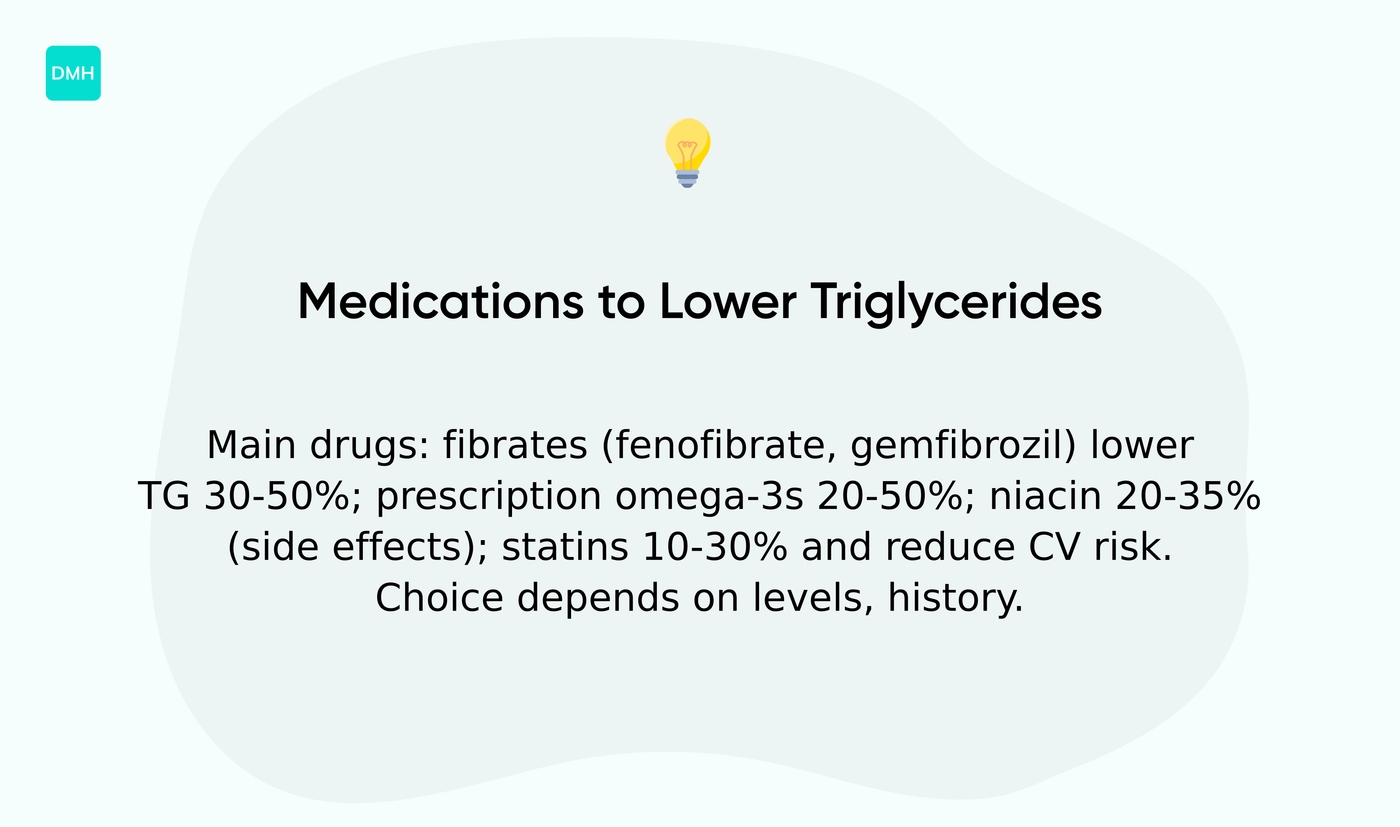
- Fibrate medications such as fenofibrate and gemfibrozil can reduce triglycerides by roughly 30–50% in many studies. These drugs act on lipid metabolism and suit patients with marked elevations.
- Niacin for triglycerides may lower triglycerides by about 20–35%. Side effects and mixed evidence for heart outcomes limit its routine use.
- Statin therapy primarily targets LDL cholesterol yet often lowers triglycerides by about 10–30%. Statins have the strongest evidence for reducing cardiovascular events.
- Prescription omega-3s (ethyl esters or EPA formulations) can reduce triglycerides by 20–50% at higher doses reported in trials. Over‑the‑counter fish oil has variable EPA/DHA content and effects.
Drug choice depends on triglyceride level, other lipids, medical history, and possible drug interactions. Some people need combination therapy for optimal results.
Clinicians weigh benefits and risks carefully before adding medication. For informational purposes only: available research and guideline summaries informed this overview. Always consult a qualified healthcare professional for medical advice specific to your situation.
You might also like: How to Get Rid of Heartburn Easily
How long does it take to lower triglycerides
Lowering triglycerides often shows measurable change within weeks. Small dietary shifts and added exercise can reduce levels in about 4 to 12 weeks.
People with mildly high triglycerides (150–199 mg/dL) may see a 10–30% drop in 4 to 8 weeks after cutting refined carbs and alcohol. Some studies suggest higher starting levels take longer to fall.
Weight loss of 5–10% body weight is often associated with meaningful declines. One trial found about a 20% reduction after modest weight loss, though results can vary from person to person.
Exercise and omega-3 supplements can speed changes. Some trials report an additional 10–30% fall with consistent aerobic activity or high‑dose EPA/DHA, according to available research.
Genetics, diabetes control, medications, and alcohol use affect speed. People with very high levels (500+ mg/dL) may need medical treatment for rapid lowering.
What’s the real timeline? Well, steady habits matter more than quick fixes. Small, consistent changes usually keep levels lower over months.
Monitor levels with repeat blood tests every 8 to 12 weeks while adjusting lifestyle. This shows whether interventions are working and helps guide care.
Always consult a qualified healthcare professional for medical advice specific to your situation.
Read also: How Much CRP Level Is Dangerous: Complete Guide
Are high triglycerides dangerous
Triglycerides are blood fats measured in milligrams per deciliter (mg/dL). Elevated levels may be associated with higher risk of heart disease, stroke, and pancreatitis risk.
Clinically, under 150 mg/dL is considered normal. A level of 150–199 mg/dL is borderline high.
Levels of high triglycerides at 200–499 mg/dL often link to increased cardiovascular risk. Levels of 500 mg/dL or more are very high and commonly prompt urgent clinical evaluation.
High triglycerides often travel with low HDL, high blood pressure, and insulin resistance. That cluster is called metabolic syndrome and is associated with greater heart and stroke risk.
Routine testing makes it easier to track progress when studying how to lower triglycerides. Understanding causes such as excess calories, sugar intake, and alcohol helps guide lifestyle changes like diet, exercise, and weight loss.
Available research suggests a graded association between triglyceride levels and cardiovascular events. Observational studies report a roughly 10–20% higher relative risk per 1 mmol/L rise in triglycerides, though results vary and don’t prove causation.
Some trials show modest benefit from triglyceride-lowering therapies for people with persistent high levels despite lifestyle changes.
If someone has severe belly pain, nausea, or persistent vomiting, they may have pancreatitis. For a concise checklist of warning signs, see pancreatitis warning signs.
Always consult a qualified healthcare professional for medical advice specific to your situation.
You might also like: Are Chickpeas Keto Friendly? Carbs Analysis
Educational notice: This content is provided for informational and educational purposes only and is not intended as medical advice. Always consult a qualified healthcare professional for medical concerns.