How long does ovulation last?
Uncertainty about the ovulation window, egg lifespan, and sperm survival can make timing sex or contraception feel confusing.
(And let’s be honest — the stress doesn’t help either!)
This guide explains how long ovulation lasts, clarifies that ovulation itself is brief — typically 12–36 hours — and shows how to use LH tests, cervical mucus, and timing to improve accuracy.
You’ll learn how long the egg survives after ovulation, how long sperm can live in the reproductive tract, and when intercourse is most likely to result in conception.
By the end, you’ll be able to estimate your fertile window and make clearer decisions about timing.
What is ovulation
Ovulation describes the release of an egg from the ovary. An ovary releases a mature egg from a follicle during this event.
A follicle grows under hormonal signals, and luteinizing hormone often triggers the final release. The event usually happens around midcycle for many people, but timing can vary from person to person.
Ovulation marks the fertile phase of the menstrual cycle and links directly to conception potential. An egg’s lifespan after ovulation commonly spans about 12 to 24 hours.
Sperm can survive up to five days in fertile cervical mucus, so the fertile window length often covers several days before ovulation and the day of ovulation itself. Watching signs such as cervical mucus, ovulation test results, and cycle patterns can help identify likely ovulation days.
This description is for informational purposes only. Always consult a qualified healthcare professional for medical advice specific to your situation.
How long does ovulation last
Ovulation is a brief biological event. Ovulation itself usually lasts about 12 to 36 hours after the luteinizing hormone surge begins.
The egg release is the moment of ovulation. The released egg typically survives 12 to 24 hours, and fertilization must occur while the egg is viable.
Sperm can survive up to five days in fertile cervical mucus. That survival extends the chance of conception beyond the single-day egg life.
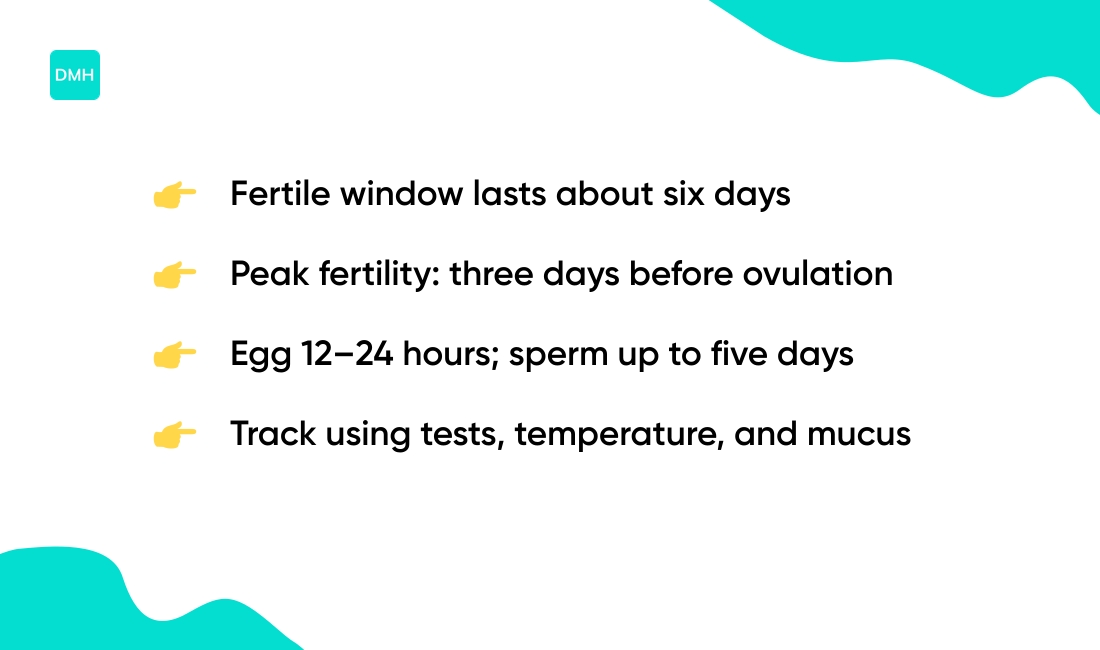
The term fertile window refers to the full period of likely conception. The fertile window commonly spans about six days. The most fertile days are the three days before ovulation and the day of ovulation.
The luteinizing hormone rise often precedes egg release by about 24 to 36 hours. A positive ovulation test often shows this rise but doesn’t prove the egg has already released. LH surge tests may stay positive for 1 to 2 days.
Clear timing helps reduce confusion for people trying to conceive or avoid pregnancy. You may find cycle tracking, symptom observation, and ovulation tests useful together.
For a reliable clinical overview, see the Cleveland Clinic overview of ovulation.
This information is for general education only. Always consult a qualified healthcare professional for medical advice specific to your situation.
Understanding your fertile window
How long does the egg live after ovulation
The released egg commonly survives only 12 to 24 hours after ovulation. Fertilization needs to happen during that short window for conception to begin.
Sperm can survive up to five days in fertile cervical mucus, so the fertile window length often spans about six days. The egg’s biology explains the limit — once released, the egg loses viability without fertilization and begins to break down.
The three days before ovulation and the day of ovulation are often the most fertile. For example, if ovulation occurs on day 14 of a 28‑day cycle, the fertile window is roughly days 10 to 15.
Tracking signs such as the LH surge and cervical mucus can help people narrow timing and make better informed choices. Always consult a qualified healthcare professional for advice specific to your situation.
How long do sperm live in the reproductive tract
Sperm may survive up to 5 days in fertile cervical mucus. That survival explains why the fertile window starts days before ovulation.
Sperm find nutrients and shelter in mucus. The mucus forms channels that help sperm move toward the uterus. The released egg lives about 12 to 24 hours after ovulation, and this gap in lifespans widens the time when conception can occur.
Knowing how long sperm live helps people plan intercourse around ovulation. When asking how long ovulation lasts, remember ovulation itself is brief while the fertile window can span several days. Sperm survival varies with mucus quality and individual factors.
Always consult a qualified healthcare professional for medical advice specific to your situation.
How many days are you fertile each cycle
Evidence suggests that the fertile window length spans about six days. An egg’s lifespan after ovulation is about 12 to 24 hours.
Sperm can live up to five days in fertile cervical mucus — that period is called sperm survival time. The three days before ovulation and the ovulation day are the most fertile.
Individual variation can occur, and cycle length and hormone timing can vary widely. You may use ovulation tests, basal body temperature, and mucus tracking to narrow your window.
| Cycle Length | Likely Ovulation Day | Fertile Window (Approximate) |
|---|---|---|
| 21 days | Day 7 | Days 2–7 |
| 28 days | Day 14 | Days 9–14 |
| 35 days | Day 21 | Days 16–21 |
In 28-day cycles, ovulation often occurs near day 14. Tracking mucus and test results helps you target fertile days more reliably.
Remember that ovulation itself is brief, about 12 to 36 hours. Always consult a qualified healthcare professional for advice specific to your situation.
Ovulation timing in different cycle lengths
Ovulation commonly occurs about 14 days before the next period. This rule may not fit everyone, and cycle length mainly shifts the ovulation day.
- 21-day cycle: ovulation near day 7. Fertile days may span day 2 to day 7.
- 24-day cycle: ovulation near day 10. Fertile days may span day 5 to day 10.
- 28-day cycle: ovulation near day 14. Fertile days may span day 9 to day 14.
- 32-day cycle: ovulation near day 18. Fertile days may span day 13 to day 18.
- 35-day cycle: ovulation near day 21. Fertile days may span day 16 to day 21.
The egg survives about 12–24 hours after release. Sperm can survive up to five days in fertile cervical mucus. Combine those facts to estimate the fertile window length and the ovulation time frame.
Stress, illness, and irregular cycles can shift timing by several days. Tracking period dates, cervical mucus, and ovulation tests may narrow your window.
Simple charting has helped many people understand personal patterns. Use that insight with care and expect variation from cycle to cycle.
This information is for general education only. Always consult a qualified healthcare professional for medical advice specific to your situation.
LH surge and ovulation timeline
How long after an LH surge do you ovulate
Ovulation usually occurs 24–36 hours after the LH surge. The LH surge triggers egg release, and ovulation itself defines the ovulation time frame of 12 to 36 hours.
The egg survives roughly 12 to 24 hours after release. Sperm can survive up to five days in fertile cervical mucus, which sets the fertile window length at about six days.
This timeline helps answer how long ovulation lasts versus the broader fertile window. Aiming intercourse within 24 to 36 hours after the surge may improve conception odds. Ovulation tests often turn positive 24 to 48 hours before egg release.
Always consult a qualified healthcare professional for medical advice specific to your situation.
How long does the LH surge last
The LH surge typically lasts about 12 to 48 hours. That interval is called the LH surge duration.
An ovulation predictor kit detects the surge hormone. Ovulation usually follows within 24 to 36 hours after the surge begins. A positive ovulation test can remain positive across much of the surge.
Testing twice daily catches shorter surges better. The released egg survives about 12 to 24 hours, and sperm can live up to five days in fertile cervical mucus. That makes the fertile window length about six days.
Timings can vary from person to person. This content is for informational purposes only. Always consult a qualified healthcare professional for advice specific to your situation.
How long does a positive ovulation test stay positive
A positive ovulation test mainly signals a rise in luteinizing hormone. An ovulation predictor kit (OPK) detects the LH surge, which can last about 12 to 48 hours.
A test may stay positive for roughly 12–48 hours. Some people see positives for up to 72 hours, and results can vary from person to person.
A positive OPK predicts upcoming ovulation, not the exact moment of egg release. Ovulation often follows the start of the LH rise by about 24–36 hours.
This helps explain how long ovulation lasts. Ovulation itself is brief, while the fertile window length extends because sperm can survive for days and the egg lives about 12–24 hours after release.
Using OPKs with mucus tracking improves timing for conception efforts. Always consult a qualified healthcare professional for advice specific to your situation.
How long do ovulation symptoms last
Symptoms around ovulation can vary a lot and aren’t the same as the ovulation event itself. How long ovulation lasts refers to the egg release window, not every symptom.
Have you noticed changes in your body around midcycle? Common symptom timings can help you better understand your cycles.
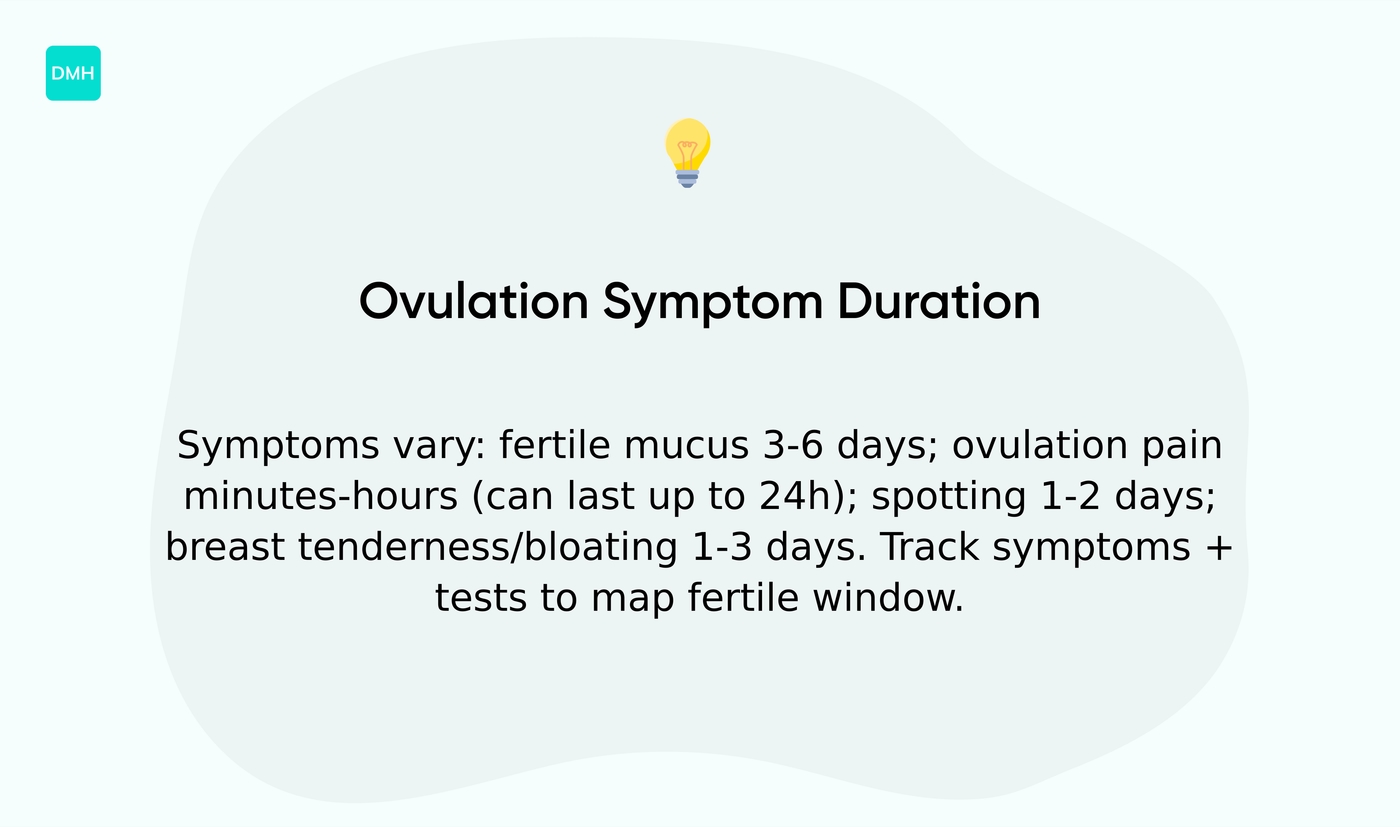
Cervical mucus changes often start a few days before ovulation. This wetter, stretchy mucus can last 3 to 6 days in many people.
Ovulation pain duration usually ranges from a few minutes to a few hours. Some individuals report pain or twinges that last up to 24 hours.
Light spotting or brown discharge can appear near ovulation. That spotting typically lasts 1 to 2 days. Breast tenderness and mild bloating may appear and persist for 1 to 3 days.
Heightened libido or smell sensitivity often lasts a short time. These symptom lengths can differ from cycle to cycle and person to person.
Symptom tracking plus ovulation tests gives a clearer fertile window length. Noticing regular patterns over several cycles helps most people estimate fertile days more accurately.
This content is for informational purposes only. Always consult a qualified healthcare professional for advice specific to your situation.
You might also like: Ginger Benefits for Sexual Health: Exploring the Facts
How to tell if you’re ovulating
Simple signs may indicate ovulation. Cervical mucus changes are a reliable, low-cost clue. It may become clear, stretchy, and slippery for one to three days around ovulation. Check daily and note texture.
Basal body temperature rises by about 0.3–0.5°C (0.5–1.0°F) after ovulation. Measure each morning before getting out of bed. A sustained rise usually confirms that ovulation occurred.
Ovulation tests detect the LH surge. A positive result often appears 24–36 hours before the egg is released. Use tests on the same time window each day for best consistency.
Physical signs include mild one-sided pelvic pain, light spotting, breast tenderness, and increased libido. These symptoms can last a few hours to a day and vary from person to person.
Combine symptom tracking with cycle charts or apps to estimate your fertile window length. Fertile window length often spans about six days, which helps time intercourse for conception or avoidance.
Using two methods at once, such as mucus checks plus an OPK, gives a clearer picture than any single sign. Always consult a qualified healthcare professional for medical advice specific to your situation.
You might also like: Tamarind Benefits for Sexual Health: Exploring the Facts
How long after ovulation can you conceive
Conception must occur while the egg is viable. The released egg lives about 12 to 24 hours — that’s the egg lifespan after ovulation.
Sperm can survive in fertile cervical mucus for up to five days. That extends the fertile window length beyond the moment of ovulation.
For practical timing, intercourse in the two days before ovulation and on the day of ovulation gives the highest chance of fertilization. This covers the most fertile days of the ovulation time frame.
If you track ovulation with LH tests or cervical mucus, a positive LH test often precedes ovulation by 24 to 36 hours. That helps narrow the window for conception.
Knowing the 12–24 hour egg lifespan after ovulation makes timing less mysterious. Tracking simple signs can be useful for many people.
Remember cycles vary from person to person. Fertility signs and sperm survival can change with age and health. Always consult a qualified healthcare professional for advice specific to your situation.
You’ll also like: Feeling Rejected By Husband During Pregnancy
Educational notice: This content is provided for informational and educational purposes only and is not intended as medical advice. Always consult a qualified healthcare professional for medical concerns.