Yes, dehydration significantly affects blood test results.
It reduces plasma volume and creates hemoconcentration that falsely elevates many key markers.
This can mimic serious conditions like kidney disease or diabetes — and often requires retests after proper hydration.
What happens to blood tests when you’re dehydrated
Reduced plasma volume happens when you lose fluid and plasma shrinks. Red blood cells, proteins, electrolytes, BUN, creatinine, cholesterol, and glucose all concentrate in the remaining volume.
Hemoconcentration can create falsely elevated markers that mimic disease. Labs may suggest kidney stress, with higher BUN and creatinine and a BUN-to-creatinine ratio above 20:1. You might see high hemoglobin and hematocrit that look like polycythemia or hide true anemia.
We recommend rehydrating before routine blood work to improve accuracy. Repeating tests after proper hydration prevents many unnecessary follow-ups.
Here are practical steps you can take:
- Drink about 500 ml of water in the two hours before a non-fasting draw
- If you must fast, sip water unless your lab says otherwise
- Reschedule if you have dizziness, dry mouth, dark urine, or low blood pressure
Ask your clinician to interpret results alongside symptoms. Consider a repeat test after hydration when values look off. A quick recheck often clarifies whether dehydration or disease caused the abnormal reading.
Which blood tests are most affected by dehydration
How dehydration changes CBC results
Hydrating before a CBC is smart because dehydration concentrates blood and raises hemoglobin, hematocrit, and red blood cell counts. Can dehydration affect blood test results? Absolutely.
Reduced plasma volume causes hemoconcentration. Hemoglobin and hematocrit can climb about 5–15% with moderate dehydration. This shift may produce high hemoglobin readings that falsely suggest polycythemia.
Masked anemia can occur when true low red cell mass hides behind concentration effects. Platelets and white cells may also appear mildly elevated from the same cause. (And that’s just the start of the confusion!)
If you suspect a hydration effect, ask for a repeat test after fluid replacement. Compare with the CBC with differential values and meanings to understand what’s normal. That helps improve blood work accuracy.
A quick recheck after drinking 500–1000 ml of water in the two hours before the draw clears most false positives.
Dehydration effect on kidney function markers
Dehydration raises BUN and creatinine. It can push the BUN-to-creatinine ratio above 20:1, a pattern that suggests reduced kidney filtration.
But here’s the thing — that pattern points to low blood volume, not necessarily chronic kidney disease. Normal BUN runs 7–20 mg/dL, while normal creatinine runs 0.6–1.3 mg/dL.
You may see elevated BUN values of 30–40 mg/dL with creatinine near 1.2 mg/dL while the ratio tops 25:1. Low plasma volume concentrates nitrogenous waste and reduces glomerular filtration rate.
What’s the best next step when you see these numbers? We recommend retesting after rehydration.
Drink 500–1000 mL of water over 1–2 hours. Wait one to three hours and repeat the labs if you can. Retesting after a fluid bolus prevents misdiagnosis and unnecessary workups.
If you have symptoms or very high values, contact your clinician for prompt evaluation.
Electrolyte levels and dehydration
Yes, dehydration changes electrolyte values on a basic metabolic panel. Reduced plasma volume concentrates sodium, potassium, and chloride.
The hemoconcentration effect can make serum tests look higher than true body stores. Metabolic shifts alter potassium distribution too. Cellular shifts with acidosis or cell breakdown can raise or lower measured potassium.
That makes interpreting serum sodium rise or low potassium tricky when you suspect dehydration. Clinicians should treat hydration as a key variable. If results sit near diagnostic cutoffs, give 500–1,000 mL of water and repeat the draw after 1–2 hours.
That simple step helps reveal true electrolyte status and reduces misdiagnosis. Quick rule: if you see unexpected electrolyte changes alongside dark urine, low blood pressure, or rapid pulse, pause and check hydration status before acting on the numbers.
Impact on cholesterol and glucose tests
We recommend hydrating before lipid and fasting glucose tests to avoid false highs. Dehydration reduces plasma volume and concentrates blood components.
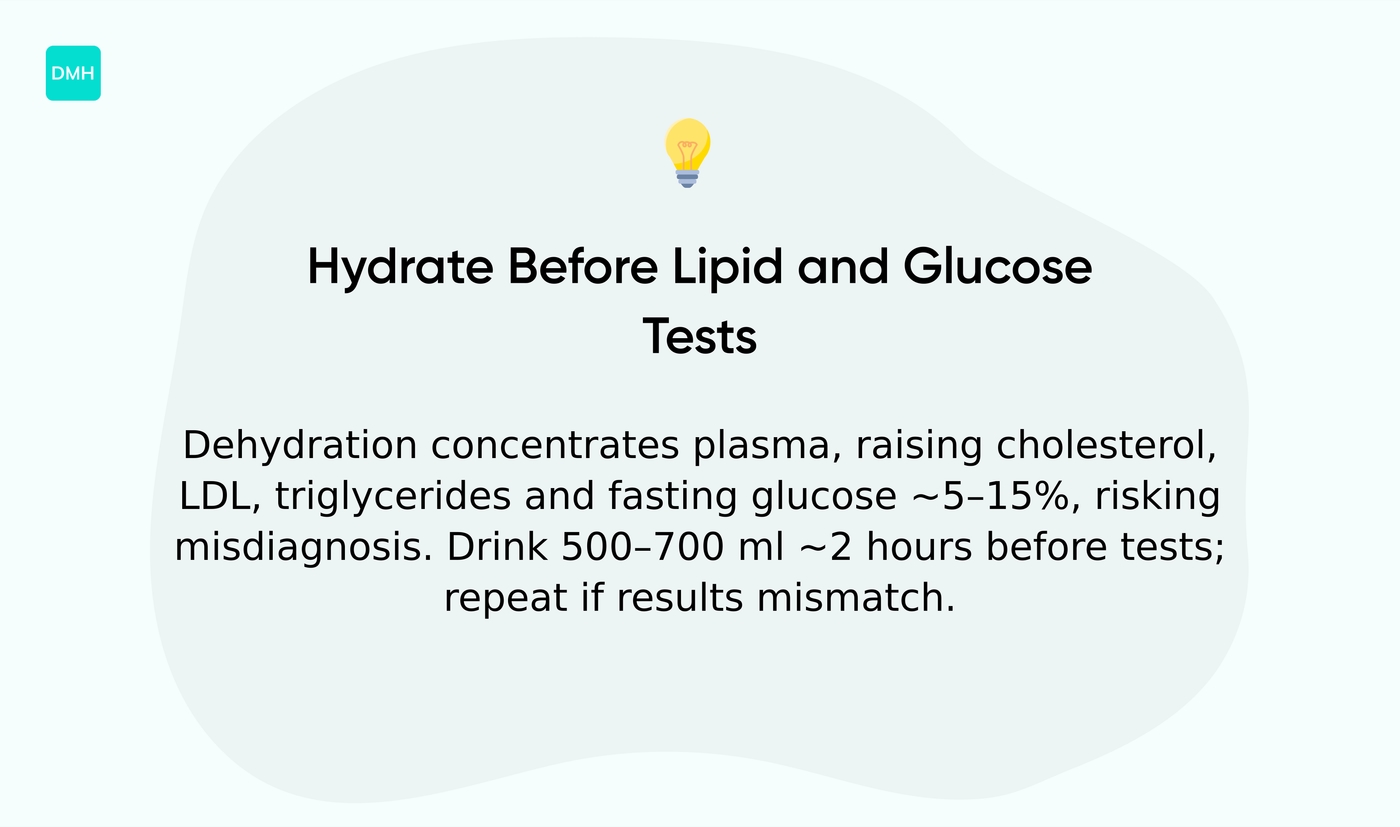
Hemoconcentration raises measured cholesterol, LDL, triglycerides, and fasting glucose. The dehydration effect on cholesterol test and fasting glucose often shows modest rises — typically around 5–15% based on severity and timing.
That shift can change a borderline reading into an abnormal one and prompt unnecessary treatment. A simple water routine prevents many misdiagnoses. If you have diabetes, even a small glucose spike can affect medication decisions.
These changes stem from reduced plasma volume, which creates elevated lipid values and false high readings.
| Test Type | Typical Increase | Main Cause |
|---|---|---|
| Hemoglobin & Hematocrit | 5–15% | Hemoconcentration |
| BUN & Creatinine | Variable, ratio >20:1 | Reduced filtration |
| Cholesterol & Glucose | 5–15% | Plasma volume loss |
| Electrolytes (Na, K, Cl) | Variable | Concentration + metabolic shifts |
Try drinking 500–700 ml of water about two hours before a fasting draw. Ask for a repeat test after hydration if results clash with your symptoms.
Does dehydration raise hemoglobin and hematocrit
Yes — dehydration raises hemoglobin and hematocrit. Reduced plasma volume concentrates red blood cells.
That process, called hemoconcentration, lifts Hgb and Hct on a lab report. Lab values may climb by a few percent with mild dehydration.
Morning values often read higher than afternoon values because you wake relatively dehydrated. This morning effect explains many borderline high results. (Ever wonder why your morning labs look different? Now you know.)
If a CBC shows high hemoglobin, check hydration first. Order a repeat test after drinking fluids or use the high hemoglobin blood test guidance on causes and follow-up.
Look at related markers for context. Elevated BUN and a high BUN/creatinine ratio suggest volume loss. How can you be sure dehydration is the culprit?
Practical step: drink 300–500 mL water in the two hours before routine blood work when allowed. If you have symptoms like dizziness or very dark urine, wait and rehydrate fully before testing.
Morning vs afternoon readings matter. If you want reliable results, hydrate and request a repeat test rather than assume a chronic condition.
Signs you’re too dehydrated for a blood test
We recommend postponing blood work if you show clear dehydration signs. Dehydration lowers plasma volume and raises many lab markers through hemoconcentration.
Skewed values can mimic kidney stress or produce false high hemoglobin. Here’s what to watch for:
- Dry mouth feeling that doesn’t improve after sipping water
- Low blood pressure or a big drop when you stand
- Dark amber urine — far darker than pale straw
- Dizziness, lightheadedness, or blurred vision
- Rapid heart rate or a pulse consistently above 100 bpm
Use simple metrics to decide. If your systolic pressure is under 100 mmHg or your pulse is over 100 bpm, that’s a red flag. If urine looks darker than apple juice, you likely need fluids.
Many people underestimate how much dehydration affects labs. For better hydration before blood work, try this: drink 500–700 mL (16–24 oz) of water 1–2 hours before the draw and rest for 30–60 minutes.
That improves accuracy for fasting tests and helps ensure reliable results. If you still feel unwell, call your clinic and ask to reschedule. You want accurate results, not rushed guesses.
How to properly hydrate before a blood test
How much water should I drink before blood work
We recommend drinking 8 to 16 ounces (240–480 ml) of plain water in the two hours before blood work. Aim for about 1.5 to 2 liters across the prior 24 hours to keep levels steady.
A steady hydration plan gives the most reliable results. If you wonder whether dehydration affects blood test results, the answer is yes — it causes hemoconcentration and can raise hemoglobin, hematocrit, BUN, and creatinine.
Yes, you can drink water before a blood test even when you fast. Plain water rarely interferes with fasting glucose or lipid panels and helps make the draw easier.
Here are practical steps:
- Day before: sip water regularly to reach 1.5–2 L total
- Morning of draw: drink 8–16 oz about 30–90 minutes before the appointment
- Avoid gulping a liter at once; drink water gradually
If you feel dizzy or have dark urine, reschedule and hydrate more. For severe dehydration you may need 24 hours of steady fluids to restore normal lab values.
Can you drink water while fasting for blood tests
We recommend you drink water — it’s safe during fasting for most blood tests. Water doesn’t break fasting and helps prevent hemoconcentration that can raise hemoglobin, hematocrit, BUN, creatinine, lipids, and glucose.
Most metabolic panels and lipid panels allow water. Fasting blood tests for glucose and cholesterol usually permit water. Only skip water if your lab gives a strict order.
Certain specialized panels may need no oral intake at all. Aim for 8 to 16 ounces (240–500 mL) in the two hours before your draw.
Good hydration before blood reduces false highs. Avoid coffee, juice, and sports drinks. What if you’re already feeling parched?
If you’re dehydrated you may have dry mouth, dark urine, or dizziness. Low blood pressure and rapid heartbeat can also occur. These signs mean your results might show falsely high values.
If you suspect dehydration, drink 500–1000 mL over several hours before the test. For severe cases, postpone the draw until you rehydrate for 24 hours. A small pretest drink improves accuracy — if you worry, call your provider and confirm instructions.
Read also: What Is A Dangerous White Blood Cell Count
How long does it take to rehydrate before a blood test
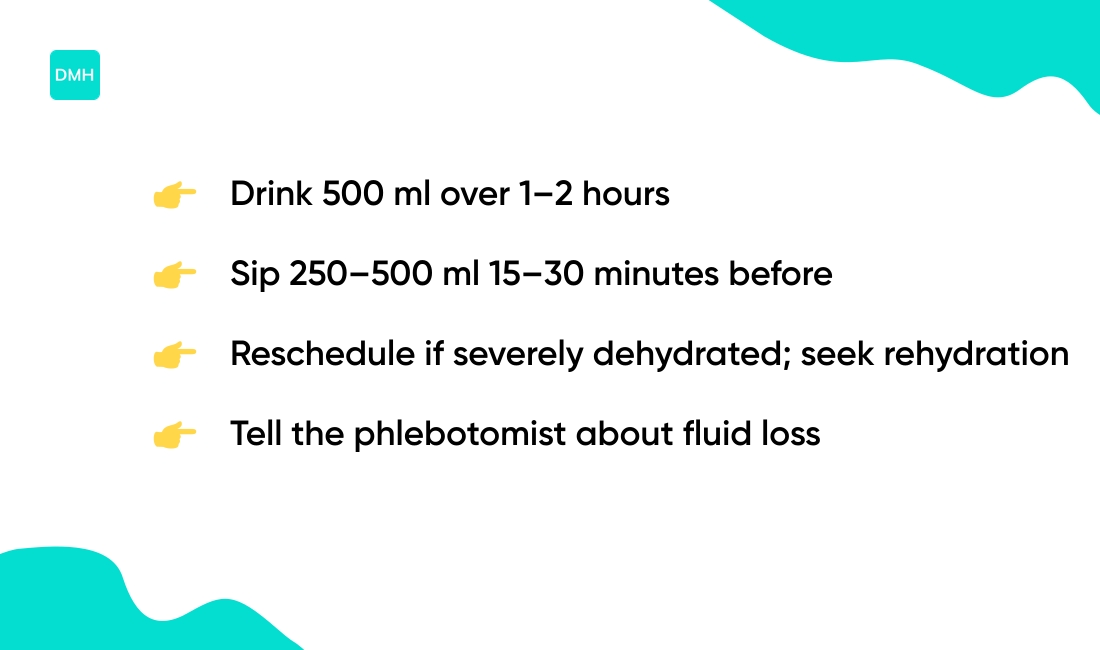
We recommend rehydrating for at least 1 to 2 hours before a blood test to improve accuracy and venous access. Drink about 500 ml of water spread across that period.
Small sips reduce hemoconcentration and help normalize markers like hemoglobin and creatinine. If you feel mildly dehydrated, a single 250–500 ml glass 30 minutes before the draw often helps.
That timing improves hydration needs and makes phlebotomy easier. A short delay gives more reliable results — labs can shift from borderline to normal after modest fluid intake.
If you have fever, vomiting, or signs of severe dehydration, reschedule until you recover or receive clinical rehydration. Aim for 24 to 48 hours in those cases.
- Drink 500 ml over 1–2 hours as a simple guideline
- Have 250–300 ml 15–30 minutes before if allowed by your test rules
- Tell the phlebotomist about recent fluid loss or severe dehydration signs
You’ll also like: What Is Lymphocytes In Blood Test
Can dehydration make blood test results look worse than they are
We advise postponing non-urgent blood tests if you’re dehydrated. Hemoconcentration concentrates blood components when plasma volume falls, and labs then show artificially high values.
That can mimic kidney disease, polycythemia, or high glucose. Dehydration often raises hemoglobin and hematocrit by about 5–15 percent. It can push BUN up and raise the BUN-to-creatinine ratio above 20:1.
Electrolytes like sodium and potassium may shift from concentration effects and metabolic changes. Lipids and fasting glucose can rise by small but misleading amounts. (And nobody wants unnecessary treatment based on skewed numbers!)
Request a retest after you hydrate. Drink 500–1,000 mL of water over one to two hours before a repeat draw. For fasting tests, water is usually allowed.
If you prefer, schedule the test for the next morning after normal fluid intake. Combine lab values with clinical signs for accurate diagnosis.
Low urine output, dizziness, dry mouth, and low blood pressure argue for dehydration. If labs suggest disease but symptoms don’t match, ask your clinician for a repeat test after rehydration.
Many abnormal results are avoidable with simple hydration. For more guidance, check out resources like CPR First Aid’s overview on dehydration effects or the Rupa Health guide on lab values for practical prep tips.
If numbers still worry you, discuss them with your clinician and request targeted follow-up. No single test diagnoses dehydration — you need the full picture.
Read also: What Is Neutrophils In Blood Test
Educational notice: This content is provided for informational and educational purposes only and is not intended as medical advice. Always consult a qualified healthcare professional for medical concerns.