Alkaline phosphatase (ALP) is a protein that removes phosphate groups from molecules.
It helps bone growth, bile flow, and cell repair.
Your body makes ALP in the liver and bones, plus the kidneys and bile ducts.
Doctors measure ALP to check liver function, bone turnover, and bile duct health.
What is alkaline phosphatase and why it matters
The alkaline phosphatase enzyme works like a molecular cleanup crew, stripping phosphate groups from various molecules throughout your body. This process supports critical functions including bone formation, bile transport, and tissue repair.
Your body produces ALP primarily in the liver and bones, though smaller amounts come from your kidneys and bile ducts. Clinicians rely on ALP measurements to assess liver function, track bone turnover rates, and evaluate bile duct health.
Normal adult ALP typically reads between 30 and 130 IU/L, though some labs extend the upper limit to 147 U/L. An elevated alkaline phosphatase level can signal bile duct obstruction, bone disease, certain infections, pregnancy, or medication side effects. Doctors compare ALP with companion tests like GGT and bilirubin to pinpoint the exact source of elevation.
We tell patients to track trends rather than fixating on single numbers. One isolated mild rise rarely means emergency, but sharp increases need quick evaluation. So what level of alkaline phosphatase is dangerous? Values far above your lab’s reference range warrant urgent follow-up, especially when paired with symptoms like jaundice or severe bone pain.
What is the normal range for alkaline phosphatase in adults
The alkaline phosphatase normal range for most adults sits between 30 and 130 IU/L. Some laboratories extend the upper limit to 147 U/L depending on their assay method and calibration standards.
Age affects these values significantly. Children and teens show higher ALP due to active growth, while older adults often display modest rises linked to increased bone turnover. Sex plays a small role in select lab reports, with slight differences appearing between men and women.
Pregnancy commonly elevates ALP two to three times above baseline because the placenta produces its own version of the enzyme. (That’s completely normal, by the way!) Medical causes that raise values include liver disease, bile duct obstruction, healing fractures, and various bone disorders.
Medications, vitamin D status, recent surgery, and even the timing of your blood draw can shift results. Always check your report for the lab reference range and units before you react to any number.
We ask you to compare results with your local reference interval and clinical context. Knowing the test method and your lab’s specific normal limits makes interpretation simpler and far less stressful.
If your ALP sits outside the 30–147 U/L span, or if you’re experiencing symptoms, talk with your clinician about targeted follow-up tests. Elevated alkaline phosphatase needs additional testing like GGT, bilirubin, or imaging to identify the source.
What level of alkaline phosphatase is considered dangerous
How high is too high for alkaline phosphatase
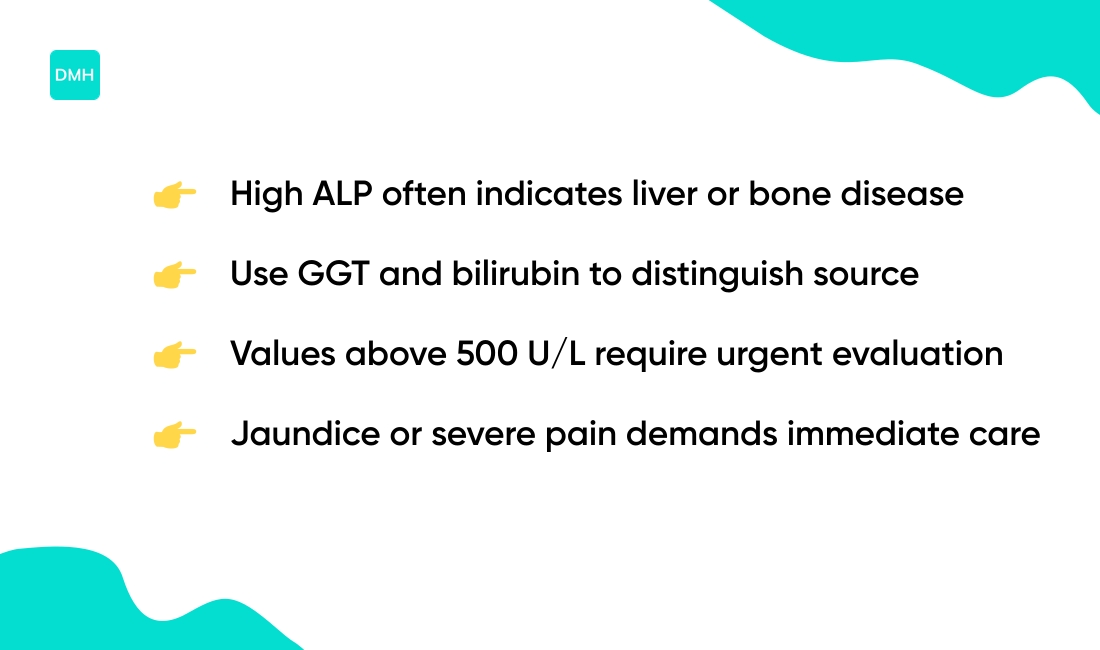
Let’s get straight to the numbers. If you’re asking what level of alkaline phosphatase is dangerous, start with 500 U/L as your red flag threshold. An ALP above 500 U/L counts as dangerously high ALP and needs fast medical evaluation.
Here’s the breakdown: mild elevations run 148 to 300 U/L and usually need monitoring, moderate elevations sit between 301 and 500 U/L and call for prompt follow-up, while levels above 500 U/L often point to serious liver or bone disease. Values above 1,000 U/L frequently signal a medical emergency requiring immediate intervention.
Mayo Clinic guidance treats roughly four times the lab upper limit as highly concerning. For instance, if your lab’s ceiling is 130 U/L, four times that equals 520 U/L.
Act quickly if symptoms appear alongside high ALP. Jaundice, dark urine, severe abdominal pain, or bone pain demand immediate care. Ask your clinician for GGT, bilirubin, imaging, and urgent consultation.
What is a critically high ALP level
Values above 1,000 U/L often signal a medical emergency. Critically high ALP at this level can mean severe liver disease, complete bile duct obstruction, or metastatic cancer spreading to bones or liver. Lab reports showing these numbers need urgent attention—no waiting.
For context, if your lab’s upper limit sits near 130 U/L, four times that threshold equals about 520 U/L. Levels above 500 U/L typically prompt immediate imaging and tests like GGT and bilirubin to locate the source of the elevation.
We advise fast evaluation for ALP above 1,000 U/L. Quick action can be lifesaving. Get to the emergency department or contact your clinician for urgent imaging and specialist referral. Don’t delay when numbers climb this high.
What does ALP two times the upper limit mean
We define ALP twice the normal as moderate elevation. This finding often reflects liver or bone activity that needs investigation. Example: if your lab’s upper limit is 130 U/L, two times equals 260 U/L.
Check GGT and bilirubin to find the source. An isolated ALP rise with normal GGT often points to bone causes rather than liver. Order imaging like ultrasound or a bone scan if labs suggest obstruction or bone disease.
Plan prompt follow-up testing to track trends—repeat ALP in two to four weeks. Refer to hepatology or endocrinology if your elevation persists beyond three months. Elevations under 500 U/L can often be managed with routine evaluation, but seek urgent care for levels above that threshold or if you develop symptoms like jaundice, fever, or severe pain.
What level of alkaline phosphatase is dangerous low
Many people ask about high levels, but low ALP deserves attention too. An alkaline phosphatase level below 44 U/L is generally considered abnormally low and warrants further evaluation.
We recommend additional testing when ALP reads under 44 U/L. Low values need assessment for zinc status, thyroid function, and nutritional deficiencies.
Common causes of low ALP include:
- Malnutrition or inadequate protein intake
- Zinc deficiency affecting enzyme activity
- Hypothyroidism lowering metabolic enzyme levels
- Genetic hypophosphatasia causing very low ALP
- Certain medications or laboratory error
Very low ALP can point to hypophosphatasia, a rare genetic condition that weakens bones and impairs mineralization. Low ALP may signal bone health risks including poor mineralization and increased fracture risk.
Repeat testing often rules out lab error and tracks trends over several weeks. Order repeat ALP, zinc, TSH, vitamin D, and consider a bone density scan when indicated. See your clinician promptly for targeted tests and clear guidance.
What causes dangerously high alkaline phosphatase
Is high alkaline phosphatase a sign of liver problems
High alkaline phosphatase frequently signals liver or bone disease. Common liver causes include cirrhosis, hepatitis, bile duct obstruction, and liver cancer. Very high values suggest the need for urgent evaluation.
We order a GGT and bilirubin panel to separate liver from bone sources. If GGT and ALP rise together, the source is likely liver-related. If GGT stays normal while ALP climbs, think bone causes. You can read about gallbladder attacks and related bile issues here for additional context.
The GGT test gives the fastest clue about the origin of your elevation. Bone-specific markers or ALP isoenzymes can clarify bone origin. Remember, values above 500 U/L are dangerous, while readings above 1,000 U/L are critically high and often link to severe bile duct blockage or cancer.
If you develop jaundice, severe abdominal pain, or your ALP exceeds 500 U/L, seek immediate care. Ask your clinician for GGT, bilirubin, and imaging to pinpoint the cause and guide treatment.
Can bone disorders cause very high alkaline phosphatase levels
Bone conditions can push alkaline phosphatase well above normal ranges. Paget’s disease, healing fractures, osteomalacia, and bone cancer increase bone ALP production, raising blood levels substantially.
We see cases where bone disease drives ALP into the hundreds and sometimes past 1,000 U/L. Unexplained bone pain combined with high ALP deserves prompt investigation—don’t brush it off.
Imaging and ALP isoenzyme testing help identify a bone source definitively. A bone scan or targeted MRI often locates active disease sites. For reference, here’s the risk breakdown: 148–300 U/L is mild, 301–500 U/L is moderate, above 500 U/L counts as dangerously high ALP, and above 1,000 U/L represents critically elevated alkaline phosphatase that can signal urgent problems.
See a specialist if ALP stays high or you experience worsening pain, fractures, fever, or weight loss. A bone specialist or oncologist may be needed for proper treatment and management.
Why are GGT and alkaline phosphatase both high
We see many lab panels where both GGT and ALP are elevated. This pattern points to liver disease or bile duct injury rather than bone disease—it’s a crucial distinction.
GGT and ALP both rise in cholestasis (impaired bile flow). While ALP can also rise with bone disorders, GGT is more liver-specific. When both markers climb together, the liver is the likely culprit, and bilirubin often rises too.
Adding GGT to an ALP result prevents misdiagnosis of bone problems when the real issue is hepatic. Normal ALP ranges sit near 30–130 IU/L, so values above twice that threshold with elevated GGT suggest obstruction or significant liver injury.
Clinicians typically run bilirubin, ALT, and an ultrasound to find blockages or liver damage. If you see both markers high on your lab report, contact your provider for follow-up testing and imaging.
Is high alkaline phosphatase during pregnancy dangerous
Alkaline phosphatase rises naturally during pregnancy. Placental ALP adds to your existing liver and bone sources, creating an expected elevation. A rise up to 2–3 times the usual level often reflects healthy placental activity, which is why an elevated alkaline phosphatase result can be perfectly normal for expectant mothers.
We tell pregnant patients to check patterns rather than single numbers. If your ALP sits near twice the upper limit, your clinician will repeat tests and check GGT and bilirubin to rule out liver causes.
Isolated mild rises without symptoms rarely signal danger. However, values above 500 U/L call for prompt evaluation, and readings above 1,000 U/L suggest a serious problem requiring urgent care. Ask your provider about isoenzyme testing or ultrasound if results worry you.
Trust your symptoms above all else. If you develop jaundice, severe pain, dark urine, or unexpected weight loss, seek care right away. Keep records of your ALP trend and share them with your clinician at each visit.
What symptoms occur with high alkaline phosphatase
We emphasize symptom recognition for dangerously high ALP because early detection changes outcomes. Watch for jaundice—yellowing of your skin or the whites of your eyes. Notice abdominal pain that worsens or keeps returning. Persistent nausea and poor appetite are red flags too.
Dark urine or pale stools point to bile flow problems that need attention. Unexplained weight loss and fatigue suggest chronic disease. New or worsening bone pain, tenderness, or fractures may flag a bone source for your elevated ALP.
When should you seek urgent care? Deep jaundice with intense itching, pale stools, or very dark urine needs quick evaluation. Fever above 101°F, persistent vomiting, severe abdominal pain, or altered mental state demand immediate attention. A rising bilirubin with both GGT and alkaline phosphatase high together often signals bile duct obstruction or severe liver disease.
ALP above 500 U/L often links to serious conditions, while critically high levels above 1,000 U/L may require urgent intervention. Early recognition truly changes outcomes—I’ve seen cases where very high ALP led to fast imaging and lifesaving treatment.
Ask your clinician for repeat ALP, bilirubin, GGT, and a comprehensive liver panel. Imaging such as ultrasound or CT helps locate obstruction or masses. Call emergency services now if you have severe jaundice, confusion, uncontrolled pain, or heavy bleeding.
When should I worry about an elevated alkaline phosphatase
An isolated mild rise in alkaline phosphatase may only need monitoring and repeat testing. Mild elevation (148–300 U/L) usually prompts repeat labs and basic imaging. Moderate elevation (301–500 U/L) needs prompt evaluation with a liver panel and GGT.
Dangerously high ALP (500–1,000 U/L) requires urgent medical review and imaging. Critically high ALP (above 1,000 U/L) may signal severe liver injury, complete obstruction, or malignancy—seek emergency care immediately.
Red flag symptoms that demand immediate attention:
- Yellow skin or eyes (jaundice)
- Severe abdominal pain or sudden swelling
- Dark urine or very pale stools
- High fever, rapid weight loss, or severe bone pain
Even asymptomatic elevated ALP needs follow-up. Check GGT, bilirubin, and repeat ALP within a few weeks. Consider imaging if levels stay high or climb further.
We advise urgent evaluation for ALP above 500 U/L with symptoms and timely specialist referral for sustained high values. Don’t ignore persistent elevations—repeat testing and GGT help pinpoint liver versus bone causes effectively.
If you suspect inflammation, check related markers. Learn more about C-reactive protein by visiting our guide on CRP level danger. Contact your healthcare provider for any abnormal results or worsening symptoms.
You’ll also like: What Is Neutrophils In Blood Test
What tests are needed after a very high ALP result
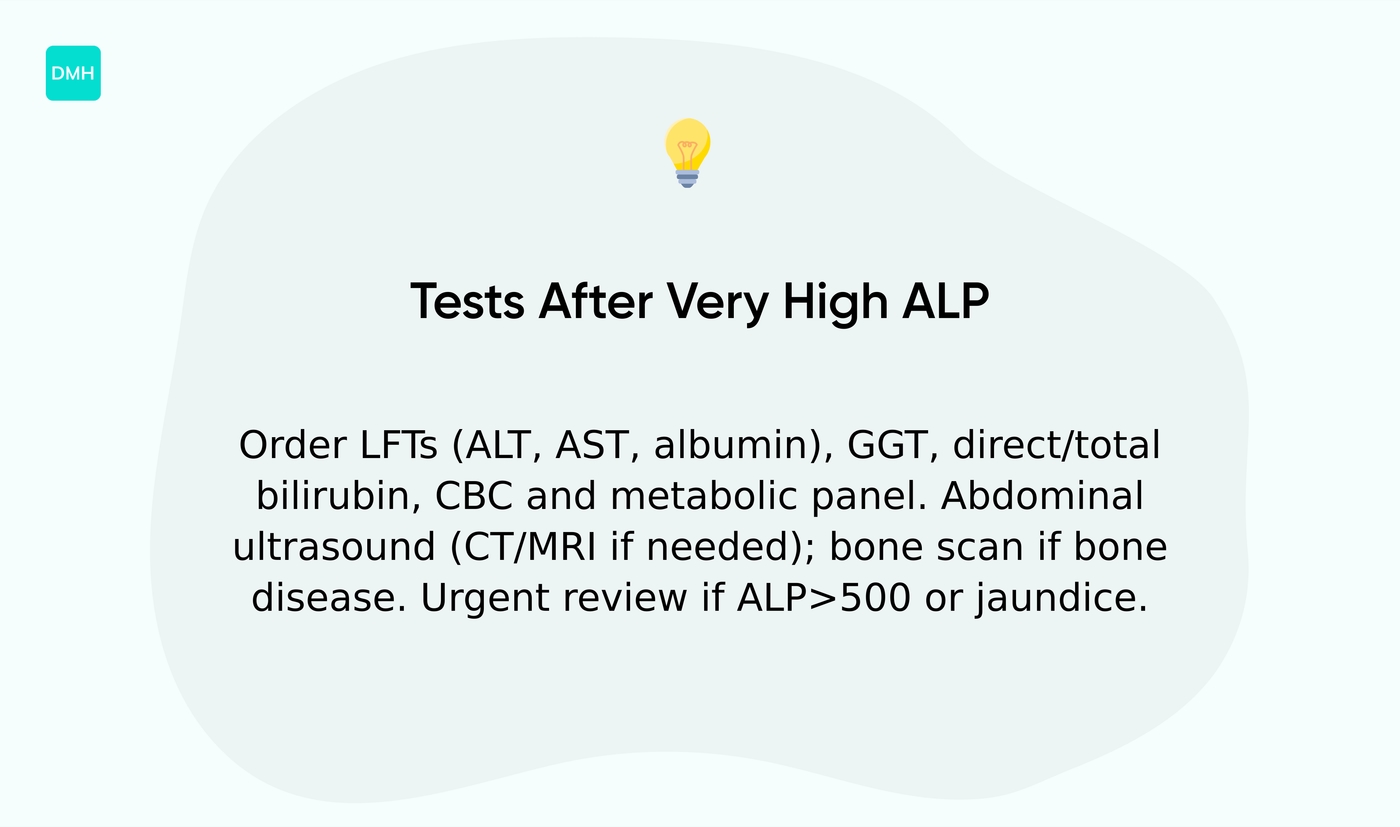
We advise prompt follow-up when your alkaline phosphatase sits far above the normal range. Start with comprehensive blood work—order a full liver function panel including ALT, AST, and albumin.
Add gamma glutamyl transferase (GGT) and both direct and total bilirubin. Include a CBC and metabolic panel for a complete picture. For guidance on blood count interpretation, see our article on CBC with differential values and meanings.
Measure GGT to distinguish liver from bone sources. High GGT plus high ALP points to bile duct or liver injury, while normal GGT with high ALP favors bone disease as the culprit.
Request appropriate imaging next. Start with an abdominal ultrasound to spot ductal dilation or masses. Use CT or MRI if ultrasound lacks clarity or raises new questions. Order a bone scan when bone disease is suspected—consider bone scan imaging for Paget’s disease or metastatic concerns.
Early GGT testing and targeted imaging speed diagnosis and reduce anxiety. If your ALP exceeds 500 U/L, or you develop jaundice, severe pain, fever, or dark urine, seek urgent specialist review without delay.
Plan referrals to hepatology or orthopedics based on your test results. Track trends over weeks rather than reacting to a single value. Treat the underlying cause, not just the number. Ask your clinician to explain the next steps clearly so you understand your care plan.
Read also: High Red Blood Cell Count: Causes, Symptoms And Treatment
What is the treatment for high alkaline phosphatase
Treatment depends entirely on the source of elevation.
For liver or bile duct disease, clinicians use imaging to locate problems, relieve obstruction with procedures like ERCP, and prescribe targeted medications such as ursodeoxycholic acid. For bone disorders, specialists may recommend bisphosphonates, vitamin D supplementation, and calcium.
| ALP Level (U/L) | Severity | Action Needed |
|---|---|---|
| 148–300 | Mild | Repeat tests, monitor trends |
| 301–500 | Moderate | Focused therapy, imaging |
| 500–1,000 | Dangerously high | May require hospital care |
| Above 1,000 | Critically high | Urgent evaluation needed |
Emergency care covers situations like jaundice, coagulopathy, severe abdominal pain, or rapidly rising enzyme levels. Doctors check GGT, bilirubin, and order ultrasound or CT imaging. Prompt imaging speeds accurate treatment—I’ve seen ERCP drop ALP by roughly 60% within 48 hours in one dramatic case.
Long-term management addresses the disease driving the lab change. Monitor labs every one to three months until values stabilize. Stop alcohol consumption, optimize body weight, and follow a liver-friendly diet. Review medications and supplements that may raise enzymes unnecessarily.
See our guidance on what foods to avoid if alkaline phosphatase is high for specific diet tips. If your ALP stays elevated or you develop new symptoms, seek medical care promptly.
Lowering ALP usually means treating the underlying condition rather than chasing the number alone. Elevated alkaline phosphatase needs a targeted treatment plan and ongoing follow-up for the best outcomes and peace of mind.
Read also: High White Blood Cell Count: Causes, Symptoms and more
Educational notice: This content is provided for informational and educational purposes only and is not intended as medical advice. Always consult a qualified healthcare professional for medical concerns.