A white tongue is most commonly caused by poor oral hygiene, where bacteria, food debris, and dead cells build up on the tongue’s papillae (small bumps).
This buildup makes the surface appear coated.
Other frequent causes include dehydration, dry mouth from mouth breathing or medications, tobacco or alcohol use, and infections like oral thrush.
Less common triggers are leukoplakia, oral lichen planus, geographic tongue, nutritional deficiencies, or digestive issues.
For treatment, start with good oral hygiene: brush teeth twice daily, gently scrape the tongue, floss properly, and stay hydrated.
Most cases clear in days to weeks with these steps.
See a doctor if it persists beyond 2–3 weeks, worsens, or includes pain, white patches that won’t scrape off, or difficulty eating.
What causes a white tongue?
If you’re wondering why is my tongue white, start with hygiene and hydration checks. Poor oral hygiene lets bacteria, food debris, and dead cells collect on tongue papillae, creating a visible white layer often called a coated tongue.
Dehydration and dry mouth reduce saliva, so the tongue loses its natural rinse. Some medications and conditions like diabetes lower saliva and raise the risk of a white coating on tongue.
Oral infections can cause white patches on tongue. Candida overgrowth creates oral thrush that looks creamy and can be painful. Antibiotics and weakened immunity increase the chance of candida on tongue.
Smoking and heavy alcohol irritate tissue and promote bacterial growth. A white tongue in the morning often reflects overnight bacterial buildup and reduced saliva flow.
Actually, a tongue scraper helps more than brushing alone for removing surface biofilm. If the coating scrapes away with gentle cleaning, treat it with better brushing, scraping, and more water.
White tongue causes that don’t clear, or white patches that resist scraping, need medical review. White tongue treatment depends on cause, from hydration and scraping to antifungal therapy for thrush.
Common causes of white coating on tongue
Poor oral hygiene and bacterial buildup
Poor brushing causes most white tongue cases. Bacteria, food debris, and dead cells lodge in the tiny papillae on the tongue and form a visible white film.
If you wonder why is my tongue white, this is the common answer. The film thickens when saliva drops or mouth breathing happens during sleep. Biofilm can start within 24 hours and becomes visible within 48 hours.
Nighttime buildup makes the coating worse by morning. Here’s the thing — regular tongue cleaning removes most of this coated tongue issue.
Try these steps to clear bacterial buildup:
- Brush teeth twice daily and reach the tongue surface
- Use a tongue scraper each morning; scrape gently three times
- Drink water often to boost saliva flow
- Replace your toothbrush every three months and after illness
Dehydration and dry mouth
Dehydration cuts saliva flow and lets bacteria build up on tongue papillae. That produces a visible white coating on tongue.
Well, drinking about 8 cups (2 liters) of fluids daily, sipping between meals, and chewing sugar-free gum can trigger saliva. Review medications like antihistamines, diuretics, and some antidepressants with your clinician if dry mouth persists.
Plain water and a nightly saliva boost reduce a coated tongue fast. If you breathe through your mouth at night, try a humidifier and use a tongue scraper gently each morning.
High blood sugar lowers saliva and raises the chance of candida on tongue. See your clinician if white patches last beyond two weeks, cause pain, or resist cleaning.
Many people notice improvement within 48–72 hours after raising fluids and using a gentle scraper. Start with hydration and daily tongue cleaning when you wonder why is my tongue white.
Tobacco and alcohol use
Smoking, vaping, and alcohol often cause a white tongue. Smoke and vape aerosols irritate tiny bumps called papillae and inflame surface tissue.
Alcohol dries the mouth and reduces saliva, so bacteria multiply faster. Bacteria, food debris, and dead cells then form a visible film known as a coated tongue.
Ongoing irritation can harden into stubborn white patches, like leukoplakia, that resist simple cleaning. Clinical reports link tobacco use to higher rates of oral lesions and coating.
Cut back or stop tobacco and alcohol, drink water, and clean the tongue daily with a tongue scraper. Quitting speeds recovery more than extra brushing alone.
White tongue in the morning
Many people ask, “why is my tongue white” after waking. Saliva flow falls during sleep, so natural cleaning slows. Reduced saliva leaves a white tongue and trapped debris.
Overnight mouth breathing dries the mouth and brings air that dries the tongue surface. Dry papillae hold bacteria and dead cells. Bacteria multiply in low-moisture conditions and form a visible film called a coated tongue.
That film often causes bad breath on waking. Short habits stop this fast: drink water before bed, breathe through your nose, and clean your tongue gently each morning.
Try a soft brush or a tongue scraper after brushing. Most people see clear improvement within a day or two.
Is a white tongue a sign of oral thrush?
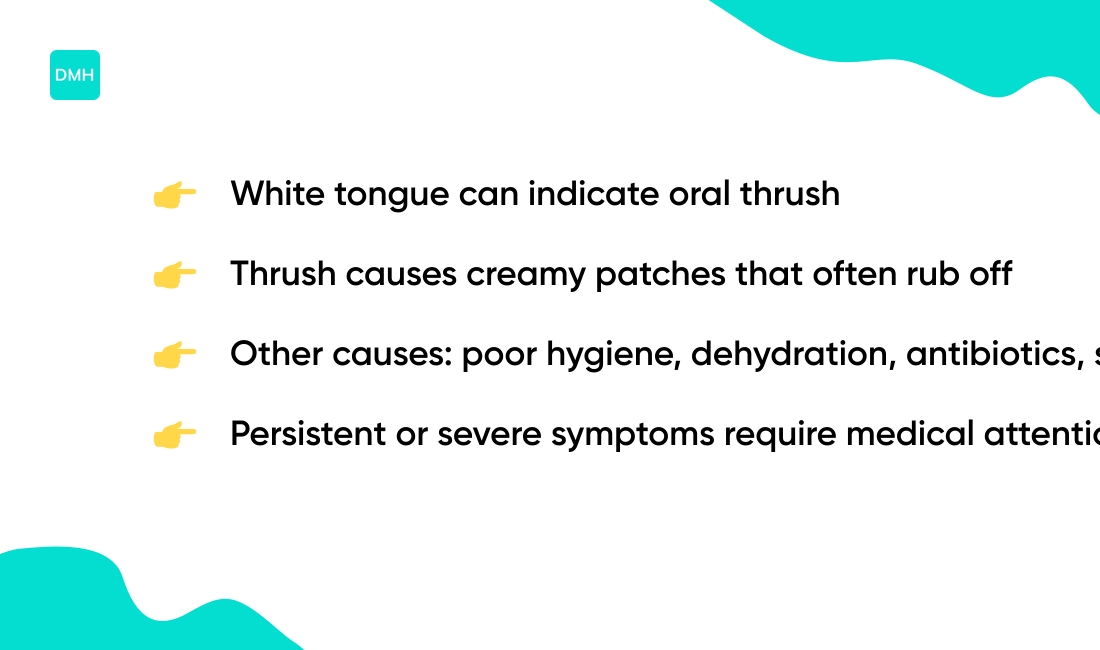
A white tongue can signal oral thrush, but many other issues cause a white coating. Oral thrush stems from a Candida overgrowth on the tongue and mouth.
It forms thick, creamy patches that often rub off and leave red, tender areas. You may feel burning, soreness, a strange taste, or notice white patches on tongue that bleed when scraped. These symptoms point toward oral thrush signs.
Simple coated tongues from poor hygiene, dehydration, or mouth breathing look different. They form a uniform film that usually wipes away. White tongue causes include antibiotics, dry mouth, smoking, and sleeping with the mouth open.
Leukoplakia and lichen planus create white areas that don’t scrape off. Persistent, hard, or painless patches deserve a doctor visit. Painful white patches after antibiotics need prompt review.
If you have difficulty eating, fever, or immune suppression, seek care right away. Use improved brushing, a tongue scraper, and hydrate to help many cases.
A clinician can prescribe antifungal treatment for confirmed Candida. Consider a tongue scraper benefits routine for daily cleanup. Check NHS guidance on sore or white tongue for more signs and self-care steps.
Medical conditions that cause white patches on tongue
Leukoplakia and precancerous patches
Thick white patches that don’t scrape off deserve attention. These patches appear on the tongue or inside the mouth after long irritation from tobacco, rough teeth, or chronic biting.
Any patch that resists gentle scraping needs prompt evaluation. If you ask why is my tongue white, persistent leukoplakia is a concerning cause.
Leukoplakia can appear as firm white patches on the tongue. Roughly 1–5% of lesions show malignant change over time. The risk climbs with smoking, heavy alcohol use, large size, and abnormal cells on biopsy.
Ask your clinician for a targeted exam and a biopsy when a patch cannot be scraped or lasts beyond two weeks. Stop tobacco and cut alcohol. Improve mouth care and use a tongue scraper for white tongue.
If biopsy shows dysplasia, treatment options include surgical removal, laser ablation, or close surveillance. Schedule follow-up every 3–6 months to track changes and act fast if the lesion grows or bleeds.
Oral lichen planus
Oral lichen planus is a chronic inflammatory condition that causes lacy white patches on the tongue and inner cheeks. It affects about 1% of adults.
Symptoms include burning, sensitivity to spicy foods, and occasional ulcers. The patches tend to be symmetrical and cannot be scraped off. That helps tell them apart from oral thrush or debris.
Reported rates of malignant change are low, near 1%. Persistent or changing lesions need biopsy and specialist review. Treatment focuses on reducing inflammation with topical corticosteroids, pain control, and regular dental follow-up.
Quick evaluation speeds diagnosis and reduces complications. Keep gentle oral hygiene, avoid tobacco and spicy foods, and use the mouth care guide for practical tips.
See your dentist if patches persist beyond two weeks or if you have worsening pain.
Geographic tongue and hairy tongue
Two benign tongue conditions may answer why is my tongue white. Geographic tongue shows map-like red patches with irregular white borders.
It affects about 1–3% of people and can cause mild sensitivity to spicy foods. Hairy tongue makes filiform papillae elongate and trap debris, often creating a white or yellow coating.
Smoking, poor oral hygiene, dry mouth, and antibiotics raise risk. Improve brushing and use a tongue scraper twice daily. Keep your mouth hydrated and avoid tobacco.
Gentle scraping clears most cases within weeks. See a clinician if patches persist beyond two weeks, hurt, or can’t be scraped off. A doctor can rule out leukoplakia or oral thrush.
Nutritional deficiencies and glossitis
Many cases explain why is my tongue white when vitamin or mineral levels fall. B12, iron, and folic acid shortages inflame tongue tissue.
Papillae shrink, leaving a sore, smooth surface that may pick up a white coating on tongue. Gastritis or low stomach acid can stop you from absorbing B12 and iron. H. pylori infection and long-term antacid use raise that risk.
Simple blood tests clear up the cause fast. Order a full blood count, B12, ferritin, and folate if the tongue stays white for more than two weeks.
Treat by correcting deficiencies, fixing underlying gastritis, and using a gentle tongue scraper for white tongue while levels recover. Expect symptom improvement in weeks with proper treatment.
Persistent white patches need a clinician check for other diagnoses like leukoplakia or oral thrush.
How to get rid of white coating on your tongue
A stepwise approach starts with better oral care. Brush teeth twice daily and floss every day. Use an alcohol-free mouthwash after brushing to reduce bacterial load.
Clean your tongue every day. Use a toothbrush or a dedicated scraper for 20–30 seconds, twice daily. A tongue cleaning routine removes debris and dead cells that form a white tongue treatment target.
Rinse with warm saltwater (½ teaspoon salt in 8 oz water) once daily to soothe tissue and lower microbes. Hydrate and fix dry mouth by aiming for 1.5–2 liters of water per day.
Chew sugar-free gum to boost saliva when needed. Stop smoking and cut back on alcohol, since both irritate tissue and promote a coated tongue.
Watch for red flags. If the white film doesn’t improve after 10–14 days, causes pain, or can’t be scraped off, seek medical care to rule out oral thrush, leukoplakia, or other conditions.
Read this evidence summary on white tongue treatment for more details. Regular scraping makes the fastest visible change — I’ve used a scraper daily and saw less coating within five days.
Follow these steps and track progress over two weeks.
You’ll also like: Strep Throat Or Mononucleosis
Home remedies and natural solutions for white tongue
You can often treat white tongue at home with simple habits. These steps target bacterial buildup, dryness, and minor fungal overgrowth.
A routine of tongue scraping, saltwater rinses, hydration, and probiotics works well. Use a clean scraper or a soft toothbrush to clean the tongue.
Aim for tongue scraping daily, two times a day. Start at the back and pull forward five to ten times. Rinse the scraper between strokes.
Rinse with warm salt water after scraping. Mix 1/2 teaspoon salt in 8 oz warm water and swish for 30 seconds. Try a saltwater rinse daily to cut surface bacteria and soothe tissue.
Eat probiotic-rich foods like plain yogurt or fermented vegetables. Consider a low-dose supplement if you’ve had recent antibiotics or persistent coating. A probiotic supplement daily helps rebalance oral flora for many people.
Drink water through the day and cut down on sugar, alcohol, and smoking. If you notice a strange taste, read our guide on soapy taste in mouth for related tips.
Brushing teeth and changing your toothbrush every three months helps too. Most coated tongue clears in a few days with care. If the white patches persist beyond two weeks, or if you have pain or bleeding, see a clinician for evaluation.
You might also like: How long does it take for salt water to heal gums
When should I see a doctor about a white tongue?
Quick takeaway: see a clinician if the white coating lasts beyond 2–3 weeks or if you have pain, fever, or trouble eating. If the coating scrapes off easily and clears after better brushing or hydration, you can try home care first.
If the white layer stays after cleaning, get checked. If you have persistent white coating, growing patches, or spots that don’t scrape off, book an appointment. Pain or a sore throat increases urgency.
If you notice difficulty swallowing or weight loss, seek prompt care. A fever suggests infection that needs treatment. Early evaluation prevents complications — I’ve seen mild cases turn into infections when people delayed care.
Start with your dentist or primary care provider. They’ll inspect your mouth, take a swab for candida, and order blood tests if needed. Your provider may refer you to an ENT or oral medicine specialist for biopsies or specialist care.
Look for white patches that bleed or feel unusually firm. For related signs inside the mouth, check red spots on the roof of the mouth for added context.
Have you noticed any pain, bleeding, or patches that won’t scrape off? Track symptoms for two weeks, note pain or fever, then contact your clinician if problems persist.
| Symptom | Home Care | See a Doctor |
|---|---|---|
| White coating scrapes off easily | Yes — improve brushing, scraping, hydration | No — unless it persists beyond 2–3 weeks |
| White patches that don’t scrape off | No | Yes — may indicate leukoplakia or lichen planus |
| Pain, burning, or bleeding | No | Yes — possible infection or inflammation |
| Fever or difficulty swallowing | No | Yes — seek prompt medical care |
Read also: How To Improve Gum Health
Educational notice: This content is provided for informational and educational purposes only and is not intended as medical advice. Always consult a qualified healthcare professional for medical concerns.