That sudden, rolling nausea can ruin work, travel, or sleep.
Knowing what helps with nausea — from simple home remedies to over-the-counter options — makes all the difference.
Deciding which option is safe (for pregnancy, children, or while driving) and actually effective is often confusing and stressful.
This practical guide lays out fast relief tactics, evidence-backed natural remedies, food and drink suggestions, and common OTC choices.
You’ll learn how to stop nausea quickly at home, which anti-nausea foods and drinks help, and specific fixes for motion sickness, morning sickness, or hangovers.
You’ll also get clear signs that mean you may want to see a doctor so you don’t wait too long for medical care.
What is nausea and what causes it
Nausea is an uneasy stomach sensation with an urge to vomit. The feeling can range from mild queasiness to intense discomfort that stops you in your tracks.
Common triggers include motion sickness, pregnancy, food poisoning, medications, anxiety, and digestive disorders. Each cause activates slightly different pathways in your body.
Pregnancy-related nausea affects about 70% of pregnant people, according to available research. Motion-related nausea may affect up to one third of susceptible travelers in some studies.
Foodborne illness often causes abrupt nausea and vomiting within hours to days. Norovirus and Salmonella are frequent culprits in outbreak reports. (Anyone who’s experienced food poisoning knows how miserable those first 24 hours can be!)
Certain medications are commonly linked to nausea in clinical trials. Examples include opioids, some antibiotics, and many chemotherapy agents. Reported rates vary by drug and dose.
Digestive disorders such as gastroparesis, gastroesophageal reflux, and functional dyspepsia can produce ongoing nausea. Symptoms may last weeks to months in chronic conditions.
The physiology involves gut signals, the vagus nerve, and brainstem centers that register nausea and trigger vomiting. Sensory input, toxins, and inner ear motion can all activate this network.
Knowing likely causes clarifies what helps with nausea and which relief approaches fit a situation. Some studies suggest simple measures like hydration, bland foods, and brief rest can reduce mild symptoms.
If nausea is severe, lasts more than 24–48 hours, or comes with blood, high fever, severe pain, fainting, or confusion, consider speaking with a qualified healthcare professional for advice specific to your situation.
How to stop nausea quickly at home
If you wonder what helps with nausea fast, focus on simple steps. These tactics work best for mild to moderate queasiness.
Slow, paced breathing may calm the vagus nerve and reduce that queasy feeling. Try inhaling for four counts and exhaling for six counts to slow your heart rate.
Fresh air exposure can lower sensory triggers linked to nausea. Step outside or open a window — sometimes a breeze is all you need.
Sip cool clear fluids in small amounts to limit dehydration and stomach upset. A cold compress at the back of the neck may lessen sweating and nausea.
Sitting upright or leaning forward reduces stomach pressure and the urge to vomit. Plus, gentle distraction like listening to calm music or watching a neutral video can shift attention away from nausea.
Ginger or peppermint aromas and small sips of ginger ale may offer mild relief for some people. Actually, these two remedies top most lists for natural nausea relief.
Here’s a quick summary of fast-acting home tactics:
- Deep, paced breathing for 2–3 minutes
- Fresh air or open windows
- Small sips of cold water or clear fluids
- Cold compress on neck or forehead
- Upright posture or gentle forward lean
- Ginger or peppermint aroma
Some studies suggest breathing techniques, acupressure, and aromatherapy can reduce nausea symptoms. Evidence varies by cause and by individual response.
Always consult a qualified healthcare professional for medical advice specific to your situation.
Natural remedies for nausea relief
Ginger for nausea and how to use it
Many people ask about ginger for nausea. Ginger contains gingerols and shogaols, compounds that may alter stomach motility and nausea signaling.
Some randomized trials and meta‑analyses suggest ginger lowers nausea scores in pregnancy. These clinical studies vary in size and design. Ginger may be a gentle option for some people with mild nausea.
Ginger is the most widely recommended natural remedy for nausea, supported by studies for mild to moderate cases including pregnancy, chemotherapy, and motion sickness. It appears on lists for how to stop nausea and for nausea relief.
You can use fresh pieces, fresh ginger tea, ginger ale with real ginger, capsules, ginger snaps, or even crystallized ginger. Study doses often range near 0.5–1 g daily.
If you take blood thinners or other medicines, consult a qualified healthcare professional. Always consult a qualified healthcare professional for medical advice specific to your situation. If symptoms persist, seek medical evaluation. See more on ginger benefits.
Peppermint tea and oil for stomach relief
Peppermint can relax stomach smooth muscle and may ease nausea. Menthol, a main component, seems to reduce gut spasms.
A 2021 study in hospitalized patients and people receiving chemotherapy reported lower nausea scores, though sample sizes were small and methods varied. If you search what helps with nausea, peppermint often appears on lists of natural remedies.
People use peppermint as peppermint tea, inhaled oil, capsules, or candy. Tea delivers mild aromatics and warmth. Inhaled oil gives quick nasal relief and is one of the nausea relief methods people try.
Peppermint tea can offer gentle short-term relief for mild nausea. Effects vary by person and by cause. (Personally, I find peppermint tea soothing when my stomach feels off.)
Peppermint may worsen acid reflux and may not suit infants or people with certain conditions. If you’re concerned, consider speaking with a qualified healthcare professional for advice specific to your situation.
Acupressure point for nausea relief
The P6 wrist point sits on the inner forearm. Find it two finger-widths above the wrist crease between the two central tendons.
There are two practical ways to stimulate the point: manual pressure and acupressure bands. For the manual pressure technique, press firmly with your thumb for about one to two minutes. You may repeat pressure every 10 to 20 minutes to seek short-term nausea relief.
Acupressure wrist bands (sometimes called sea bands) use a firm button that applies continuous pressure over P6. Randomized controlled trials and systematic reviews report that P6 stimulation may reduce chemotherapy-induced nausea in some patients.
Trial sizes ranged from roughly 60 to 300 participants, and results showed modest reductions in nausea scores with variability across studies. Clinical trials show this approach helps chemotherapy nausea in particular.
P6 stimulation offers a low-risk option for mild nausea relief, though effects vary by person. Always consult a qualified healthcare professional for advice specific to your situation.
Chamomile and lemon tea benefits
Chamomile and lemon tea combines a mild herbal infusion with a citrus aroma. Chamomile contains compounds that relax smooth muscle in the gut.
This tea often appears among natural remedies. People search it for what helps with nausea and stomach upset. Some small randomized trials and observational studies suggest modest benefit for indigestion and mild nausea.
Citrus scent may reduce queasiness through inhalation. A warm cup can feel soothing and may help settle your stomach.
Calming digestive effects may include reduced cramping and lowered gastric discomfort. Evidence remains limited and varies by individual. The soothing aromatic profile offers gentle relief when used with other approaches like ginger or acupressure.
If pregnant or taking medications, consult your clinician. Always consult a qualified healthcare professional for medical advice specific to your situation.
What to eat and drink when nauseous
Best drinks for nausea relief
Clear fluids may help settle mild nausea while preventing dehydration. Broth supplies sodium and water to replace losses. Sports drinks provide electrolytes but can be high in sugar.
Ginger ale can help if it contains real ginger. Some commercial sodas lack active ginger and may be less helpful. (Check the label — you want actual ginger, not just flavoring!)
Apple juice and lemonade offer gentle calories and mild acidity that some individuals tolerate. Herbal teas like peppermint or chamomile add soothing aroma and warmth.
Some studies suggest ginger and peppermint may reduce nausea in specific settings, such as motion sickness or pregnancy, though results vary by study design and dose.
| Drink | Key Benefit | Best For |
|---|---|---|
| Broth | Sodium and hydration | Dehydration risk |
| Ginger ale (real ginger) | Active ginger compounds | Mild nausea, motion sickness |
| Sports drinks | Electrolyte replacement | Vomiting with fluid loss |
| Peppermint tea | Stomach muscle relaxation | Digestive upset |
| Lemonade | Sour taste, saliva stimulation | Mild queasiness |
If symptoms persist more than 24 to 48 hours or if you see blood, high fever, severe pain, or signs of dehydration, consider speaking with a qualified healthcare professional. Always consult a qualified healthcare professional for medical advice specific to your situation.
Foods that help settle an upset stomach
Bland, easy-to-digest foods can help settle an upset stomach. Bananas, white rice, applesauce, plain toast, crackers, and boiled potatoes often sit well.
Bananas supply potassium that may be lost with vomiting. Rice and potatoes offer bland starch that can absorb excess acid. Applesauce adds mild sweetness and soluble fiber that may soothe digestion.
Plain toast and crackers provide dry carbohydrates that many people tolerate when nauseous. Start with clear fluids like broth, diluted apple juice, or ginger ale and progress to solids once liquids stay down.
People searching what helps with nausea often find these anti-nausea foods listed for recovery. Small portions and slow pacing provide better nausea relief than large meals.
See practical guidance on what to eat after colonoscopy for related food choices. If nausea lasts beyond 24 to 48 hours or severe symptoms appear, consider speaking with a qualified healthcare professional.
Sour foods and their nausea-fighting properties
Sour tastes may ease a queasy stomach. They’re part of tips on how to stop nausea.
Sour foods like lemonade, pickles, lime, and orange can trigger saliva flow. Increased saliva may dilute stomach acid and reduce nausea sensations. Taste signals send reflex commands to digestive organs, which can alter gastric motility and sensory perception.
Some studies suggest sour flavors stimulate salivation and brief stomach settling. Evidence includes small experimental trials and patient reports. They appear in lists of home remedies for nausea. Lemonade is one example of what to drink for nausea.
Small sips of lemonade may help some people. Nausea relief may be temporary, and sour foods might pair well with ginger or plain fluids for better results.
If symptoms persist beyond a day or cause dehydration, consider seeing a healthcare professional. Always consult a qualified healthcare professional for advice specific to your situation.
Best over-the-counter medicine for nausea
Common OTC options target specific causes and come with safety points to consider. Which one actually fits your situation?
Pepto-Bismol may ease nausea from overeating or mild food upset. It contains bismuth subsalicylate. It’s not recommended for children under 12, and pregnant people may want to check with a clinician before use.
Dramamine targets motion sickness. Formulations include dimenhydrinate or meclizine. Drowsiness is a common side effect, so consider timing and activity when choosing this option.
Emetrol and Gravol are used for general nausea. Emetrol is a phosphorated carbohydrate solution that some people use for stomach flu or food-related queasiness. Gravol contains dimenhydrinate and overlaps with motion-sickness products.
Vitamin B6 (pyridoxine) is sometimes discussed for pregnancy nausea, though you may want medical guidance on dosing. Evidence varies by cause and by study design.
Here’s a quick reference list:
- Pepto-Bismol – for overindulgence and mild stomach upset
- Dramamine (dimenhydrinate) – for motion sickness
- Emetrol – for general nausea, including stomach flu
- Gravol – another dimenhydrinate option
- Vitamin B6 – may help pregnancy-related nausea
Matching the medicine to the likely cause of nausea often gives the best chance of relief. If you’re pregnant, breastfeeding, or treating a child, consult a qualified healthcare professional before trying OTC antiemetics. Side effects, age limits, and drug interactions vary across products.
Always consult a qualified healthcare professional for medical advice specific to your situation.
Nausea remedies for specific situations
Pregnancy nausea and morning sickness remedies
Pregnancy nausea is the queasy feeling many people report in early pregnancy. Symptoms can include vomiting and aversion to smells. (Morning sickness is a bit of a misnomer — it can strike any time of day!)
Many people see peak symptoms around gestational weeks 8 to 12. Some studies suggest vitamin B6 may reduce nausea. Ginger is commonly studied for mild nausea and vomiting.
Try small frequent meals and bland snacks. Avoid strong trigger smells and fatty or spicy foods. Use acupressure at the P6 wrist point or wear pressure bands for motion-related relief.
Simple measures often give meaningful relief before seeking medicines. If vomiting is severe, you have signs of dehydration, unexplained weight loss, or can’t keep fluids down, consider contacting a healthcare professional.
Always consult a qualified healthcare professional for medical advice specific to your situation.
Motion sickness and sea sickness prevention
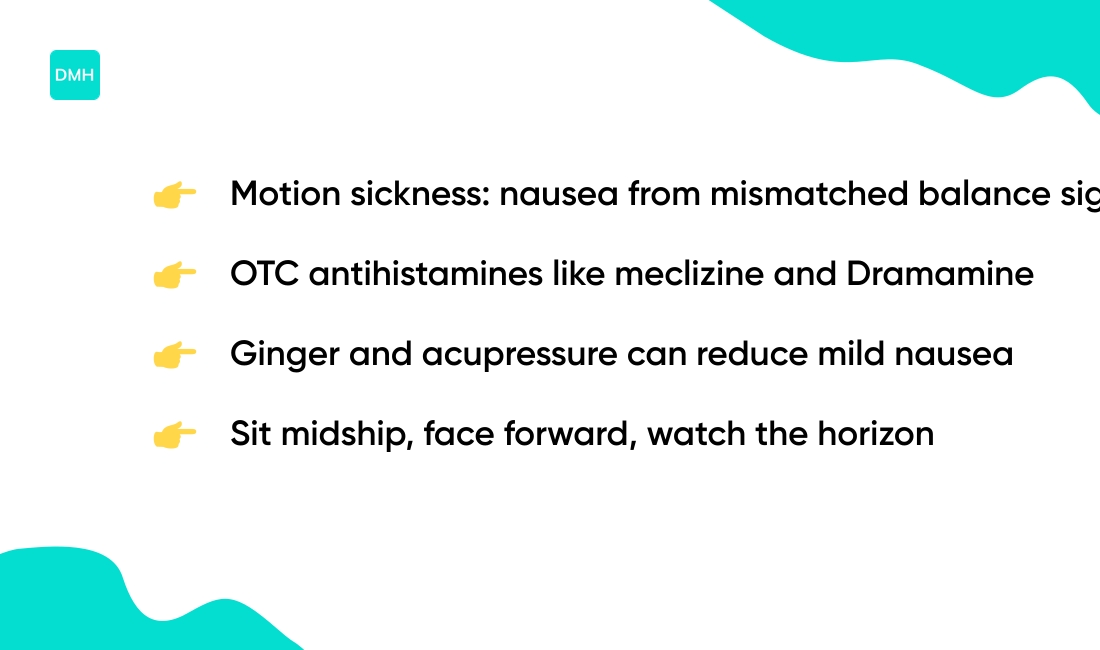
Motion sickness is a feeling of nausea from mismatched balance signals. Sea sickness is motion sickness on boats — and it can turn a pleasant cruise into a nightmare.
Motion sickness remedies include OTC antihistamines such as Dramamine and non-drowsy meclizine. These medicines may cause drowsiness or dizziness in some people.
Ginger is a common natural option for mild nausea. Some studies suggest benefit. Acupressure bands target the P6 wrist point and may reduce nausea in trials.
For how to stop nausea at sea, sit midship, face forward, and keep your eyes on the horizon. Fresh air and steady breathing often add comfort.
Combining ginger and acupressure may help. Careful positioning and fresh air add benefit for many travelers. If you’re concerned, consider speaking with a qualified healthcare professional.
Always consult a qualified healthcare professional for medical advice specific to your situation.
Hangover nausea relief strategies
People often ask what helps with nausea after alcohol. Hangover nausea is stomach upset and queasiness that can follow drinking.
Rehydration with electrolytes is key. Sip oral electrolyte drinks or clear broth to replace fluids. Try bland easy foods like toast, crackers, bananas, or rice once liquids stay down.
Rest and sleep can reduce motion and sensory triggers linked to nausea. Ginger tea can help — some studies suggest ginger reduces mild nausea. OTC options such as antacids or Pepto-Bismol may ease upset stomach.
Rehydration and bland foods bring relief within hours for many people. If vomiting continues beyond 24 hours or dehydration signs appear, consider speaking with a healthcare professional.
Always consult a qualified healthcare professional for medical advice specific to your situation.
Read also: How To Get Rid Of Stomach Ache When Trying To Sleep
Stress can trigger an uneasy stomach and a strong urge to vomit. Simple calming practices often offer measurable nausea relief for many people.
Try paced breathing and short meditation sessions. Use deep breathing with slow inhales for four seconds and slow exhales for six seconds. Practice a brief body scan or guided meditation for five to ten minutes to quiet the nervous system.
Use progressive muscle relaxation by tensing and releasing muscle groups for one minute each. Sit upright and avoid strong odors. Sip cool clear fluids and eat bland snacks if appetite returns.
Some randomized trials and observational studies report reduced nausea after relaxation techniques, but sample sizes vary and outcomes differ by cause. Always consult a qualified healthcare professional for medical advice specific to your situation. If symptoms persist or worsen, seek medical evaluation.
You might also like: Foods to Avoid While Taking Amoxicillin
When to see a doctor about nausea
Nausea that lasts more than 24 to 48 hours warrants attention. Repeated vomiting, very little urine for eight hours, dry mouth, lightheadedness, or fainting suggest dehydration signs and may need prompt care.
Blood in vomit, severe abdominal or chest pain, a high fever above 101°F (38.3°C), a stiff neck, or new confusion are serious symptoms. Watch for vomiting blood or sudden neurologic changes.
A head injury with new nausea or any worrying change after starting a new medication can point to an adverse reaction. Such situations might require rapid assessment — you may want to seek urgent care.
If nausea comes with persistent dizziness or vertigo, see our guide on how to sleep with vertigo for related tips and safety notes.
Early evaluation can help identify treatable causes and reduce the risk of complications. Evidence from public health agencies links prolonged vomiting to dehydration and electrolyte imbalance, but outcomes vary by condition and age.
If you’re concerned, consider speaking with a qualified healthcare professional. Always consult a qualified healthcare professional for medical advice specific to your situation.
You’ll also like: Can you take emergen c while pregnant
Educational notice: This content is provided for informational and educational purposes only and is not intended as medical advice. Always consult a qualified healthcare professional for medical concerns.