Seeing a widening part or extra hair on the pillow is enough to make anyone sit up.
If you’re searching for how to stop hair loss, understanding the cause changes which treatments will work best.
Causes range from DHT-driven pattern baldness and hormonal shifts to stress-related telogen effluvium, nutritional gaps, inflammation, or autoimmune alopecia.
Fortunately, evidence-based options—topical minoxidil, oral finasteride or DHT blockers, targeted therapies, and lifestyle changes—can slow shedding and help regrowth when they’re used consistently.
You’ll learn what typically causes hair fall, which treatments have solid evidence, simple diet and care steps to try, and when it’s time to see a doctor.
Getting evaluated early (especially for sudden, patchy, painful, or very heavy shedding) gives the best chance of stopping loss and preserving hair.
What causes hair loss in men and women
DHT and male pattern baldness
Dihydrotestosterone (DHT) is a testosterone derivative made by 5-alpha-reductase enzymes. DHT binds androgen receptors in scalp follicles and shortens the hair growth, or anagen, phase.
Repeated exposure makes follicles produce thinner, shorter hairs. This process, called miniaturization, causes visible thinning at the crown and temples.
Over years, follicles may stop producing terminal hairs. Genetic susceptibility drives this pattern—certain androgen receptor variants and family history increase risk. Some studies estimate up to 80% of men experience hair loss by age 70.
Blocking DHT can slow follicle shrinkage. Some trials show DHT blockers lower scalp DHT by about 60 to 70 percent. Understanding DHT helps you weigh options for how to stop hair loss.
The mechanism explains male pattern baldness progression and how DHT can shrink hair follicles. Not a medical advice, content for educational purposes, consult a professional.
Hormonal changes and female hair loss
Hormonal hair changes can shift hair growth cycles. You may notice more shedding or thinner hair after big hormonal shifts.
Pregnancy often raises estrogen and prolongs the growth phase. Postpartum hair shedding peaks two to four months after birth and may last six to twelve months—it affects many people and often improves over time.
Menopause brings lower estrogen and relative androgen effects. That shift can reduce hair density and shaft diameter, which makes thinning more visible.
Thyroid disorders, both low and high function, can trigger diffuse telogen effluvium. Polycystic ovary syndrome may raise androgens and lead to follicle miniaturization.
Labs for thyroid and reproductive hormones can clarify causes. Discuss testing and options with a clinician. Learn about related energy and hormonal topics at how to increase masculine energy.
Always consult a qualified healthcare professional for medical advice specific to your situation.
Stress and telogen effluvium
Telogen effluvium describes temporary hair shedding after a physical or emotional stressor. The term means more follicles move into the resting phase.
Stress pushes follicles into telogen. You may notice thinning about 2–3 months after the event—daily shedding can rise above 100 hairs per day and cause visible thinning.
Stress hair loss often follows severe illness, surgery, major life events, or intense emotional strain. Regrowth commonly begins within 3–6 months, and many people see improvement by 6–12 months (though results vary).
Understanding this pattern helps if you search for how to stop hair loss. Managing stress and lifestyle factors may help. Learn practical steps on how to lower cortisol levels for supportive care.
You may feel deeply concerned by sudden shedding. Not a medical advice, content for educational purposes, consult a professional.
Nutritional deficiencies and hair fall
Hair relies on nutrients to keep follicles healthy. Deficits can weaken follicles, increase shedding, and slow regrowth.
Iron deficiency anemia often links to shedding in people with low iron stores. Some studies suggest ferritin under 30–50 ng/mL may be associated with hair fall.
Low iron can show as a low red blood cell count on blood tests. Vitamin D deficiency may affect hair cycle regulation—observational studies report low 25(OH)D in many people with alopecia types, though evidence varies by study design.
Biotin deficiency is rare and usually linked to clear clinical signs or long-term malabsorption. Low protein intake can trigger telogen effluvium by shifting follicles into a resting phase. Typical protein guidelines near 0.8 g/kg/day may be referenced in clinical guidance.
Clinicians may check ferritin, CBC, 25(OH)D, and dietary intake when assessing hair loss. Always consult a qualified healthcare professional for medical advice specific to your situation.
How to stop hair loss with proven treatments
Minoxidil for hair regrowth
Topical minoxidil can stimulate hair follicles by widening small blood vessels and extending the growth phase (anagen). Studies and product labels report available formulations at 2% and 5% strength.
Men commonly use a 5% solution once or twice daily. Women often start with 2% once daily, with 5% used under clinical guidance. Application to a dry scalp works best for many users.
You may notice increased shedding during the first few weeks. Visible regrowth often appears between 3 and 6 months—more complete responses can take up to 12 months.
Hair regrowth timeline ties closely to steady use. Stopping minoxidil usually returns hair to prior levels within months.
Some studies suggest about 40–60% of users see measurable improvement by six months. A recent overview lists minoxidil among top options for managing hair fall (best hair loss treatments).
Consistent daily application appears critical for sustained results. Not a medical advice, content for educational purposes, consult a professional.
Finasteride and DHT blockers
Oral finasteride inhibits the enzyme 5-alpha reductase type II. It lowers conversion of testosterone to dihydrotestosterone (DHT)—scalp DHT can fall by about 60% and blood DHT near 70%.
Clinical trials report 80–90% of men show halted hair loss or measurable regrowth over 6–12 months. Response can vary by age, genetics, and baseline hair loss.
Commonly reported side effects include reduced libido, erectile changes, and mood shifts. Reported rates vary but often fall below about 5% in large studies. Some side effects resolve after stopping the drug; persistent effects have been reported rarely.
Oral finasteride is not recommended for pregnant women due to fetal risk. For female hair loss, clinicians may consider alternatives like spironolactone or topical DHT blockers and topical minoxidil. Evidence and dosing differ between sexes.
Always consult a qualified healthcare professional for medical advice specific to your situation.
Combination therapy for best results
Combining topical minoxidil with oral finasteride improves results for many people.
According to available research, minoxidil plus finasteride yields stable or improved outcomes in about 92% of men with male pattern baldness. This combination targets DHT and stimulates follicles.
Oral minoxidil benefits include simpler dosing and less scalp irritation for some patients. Low-dose oral minoxidil can support hair regrowth when topical treatment falls short, though side effects may occur.
Spironolactone for women can reduce androgen effects linked to female hair loss. Some clinicians combine it with topical minoxidil to address hormonal and follicular drivers together.
Combination approaches can tackle multiple causes of hair fall and may help answer questions about how to stop hair loss. Evidence varies by study and by individual response.
Not a medical advice, content for educational purposes, consult a professional.
Emerging treatments and new options
Clascoterone 5% topical is nearing FDA approval as a topical antiandrogen. Trials report improved scalp hair counts versus placebo, with effects focused on local DHT activity at the follicle—some studies show 168–539% hair count improvement. Evidence shows modest gains that may complement standard therapy.
PRP therapy and Regenera Activa use concentrated cells or platelets to deliver growth factors to the scalp. Some randomized trials report hair density improvements of about 20–30% in selected patients, though results vary by protocol and clinic.
Exosome products such as Calecim are early-stage options. Small studies suggest potential for increased hair regrowth by activating dormant follicles with minimal side effects, but high-quality data remain limited and outcomes can vary from person to person.
JAK inhibitors have produced substantial regrowth for many people with alopecia areata. One oral JAK inhibitor received FDA approval for severe alopecia areata in adults—some data show regrowth in 90% of cases after two years. Systemic immune modulation carries risks and requires specialist oversight.
Evidence varies by condition and patient. Always consult a qualified healthcare professional for medical advice specific to your situation.
Best shampoo and natural remedies for hair loss
Best shampoo options often target scalp inflammation and dandruff. Ketoconazole 1–2% shampoos may lower scalp DHT markers and reduce shedding in some trials. Results usually appear after 8–12 weeks of regular use.
Natural remedies include essential oils, herbal extracts, and dietary supplements. Some studies suggest rosemary oil matched low-dose minoxidil in a small 6-month trial for hair count gains.
Tea tree and peppermint oils can improve scalp itch and circulation in limited studies, but irritation can occur. Well, you know what they say—natural doesn’t always mean risk-free.
Supplements help when a deficiency exists. Low iron or vitamin D links to hair fall appear in several observational studies. Biotin helps only with confirmed biotin deficiency.
Chia seeds offer protein and omega-3s that support hair structure. See more on chia seeds for hair.
Realistic expectations matter. Natural approaches may reduce shedding and improve hair quality. Medical options such as topical minoxidil and oral finasteride show larger measurable gains—some studies report minoxidil-related regrowth in about 30–50% of users over months. Finasteride stabilizes hair in roughly 80–90% of men in clinical series.
Combine strategies for best outcomes. Use scalp care, check nutrient levels, and discuss medical therapies with a clinician if thinning continues. Results vary from person to person and take months to appear.
Not a medical advice, content for educational purposes.
You’ll also like: How Supplements Affect Blood Test Results: Guide
Diet and lifestyle changes to prevent hair loss
How to stop hair loss starts with simple, measurable steps. Diet, stress, sleep, and gentle hair care each play a role in follicle health.
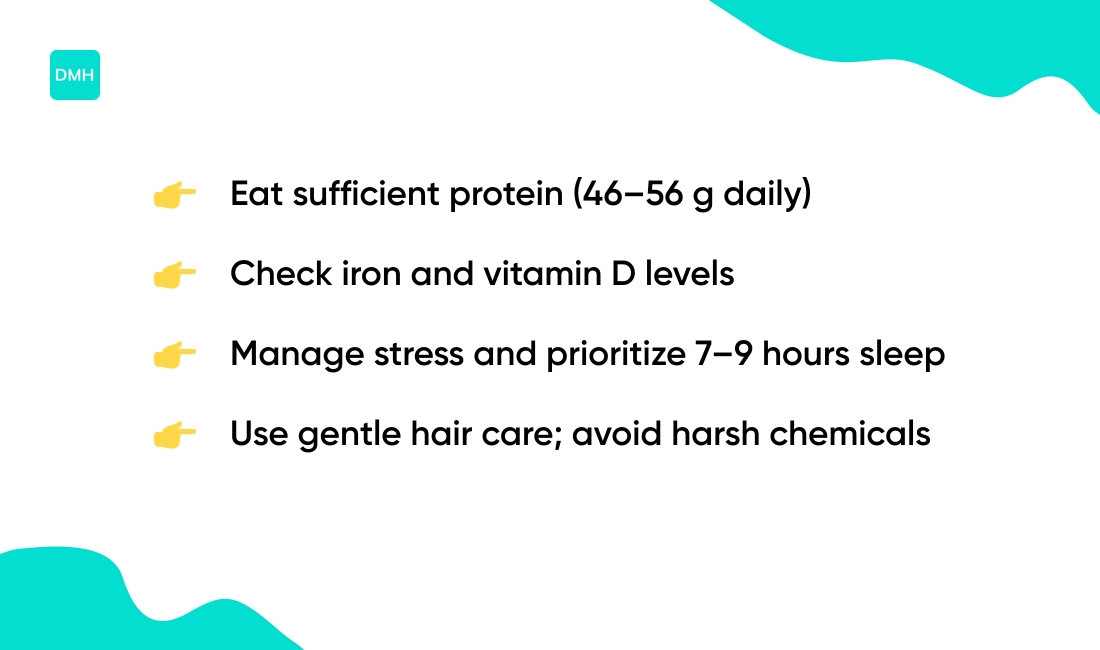
Protein-rich foods support hair structure. Aim for the US RDA of about 46–56 g of protein daily if intake is low. Animal and plant proteins both help keratin production.
|
Nutrient |
Role in Hair Health |
Key Consideration |
|---|---|---|
|
Iron |
Supports follicle function |
Low ferritin under ~50 ng/mL may link to shedding |
|
Vitamin D |
Affects growth cycles |
Levels below 20 ng/mL often indicate deficiency |
|
Zinc & B vitamins |
Reduce hair fall risk |
Biotin evidence remains limited |
Some women use prenatal supplements for extra iron and folate; learn how a prenatal vitamin mechanism may work in those cases.
Manage stress through routines that lower cortisol. Try short breathing exercises, regular moderate exercise, and brief mindfulness sessions. Studies suggest telogen effluvium links to high stress.
Prioritize sleep. Most adults benefit from 7–9 hours nightly to support repair and growth cycles.
Protective hair care limits breakage. Here’s the thing—simple changes can make a big difference:
-
Use wide-tooth combs
-
Keep heat settings low
-
Choose loose styles
-
Avoid harsh chemicals that irritate the scalp
Scalp irritation from harsh chemicals often increases shedding. Results vary between people and can take months to appear.
Always consult a qualified healthcare professional for medical advice specific to your situation.
You might also like: How To Use Oil On Face
When to see a doctor for hair loss
Sudden or patchy hair loss may signal an underlying issue. Patchy bald spots can point to autoimmune conditions such as alopecia areata. Rapid shedding over days or weeks needs attention.
Shedding that totals over 100 hairs daily often exceeds normal loss. You may track loose hairs after brushing or shampooing—visible thinning across the scalp can also indicate a larger problem.
Scalp symptoms matter. Persistent itching, pain, redness, pustules, or scarring may be associated with infection or inflammatory scalp disease. New scalp tenderness often prompts diagnostic testing.
Postpartum thinning frequently appears two to four months after childbirth. This pattern often reflects telogen effluvium, which is usually temporary. Some cases persist longer and may benefit from evaluation.
Sudden changes in hair with weight loss, new medications, or signs of hormonal imbalance may point to treatable causes. A clinician can evaluate thyroid function, iron levels, and hormone panels, or perform a scalp exam and biopsy when needed.
But when should you actually pick up the phone? Early evaluation may increase the chance of stabilizing hair and supporting regrowth.
Plus, telehealth platforms can provide personalized advice and prescriptions for approved treatments. If you research how to stop hair loss, include medical assessment in your plan.
Evidence varies by condition and treatment. Not a medical advice, content for educational purposes. Always consult a qualified healthcare professional for medical advice specific to your situation.
Read also: Foods to Avoid While Taking Spironolactone
Educational notice: This content is provided for informational and educational purposes only and is not intended as medical advice. Always consult a qualified healthcare professional for medical concerns.